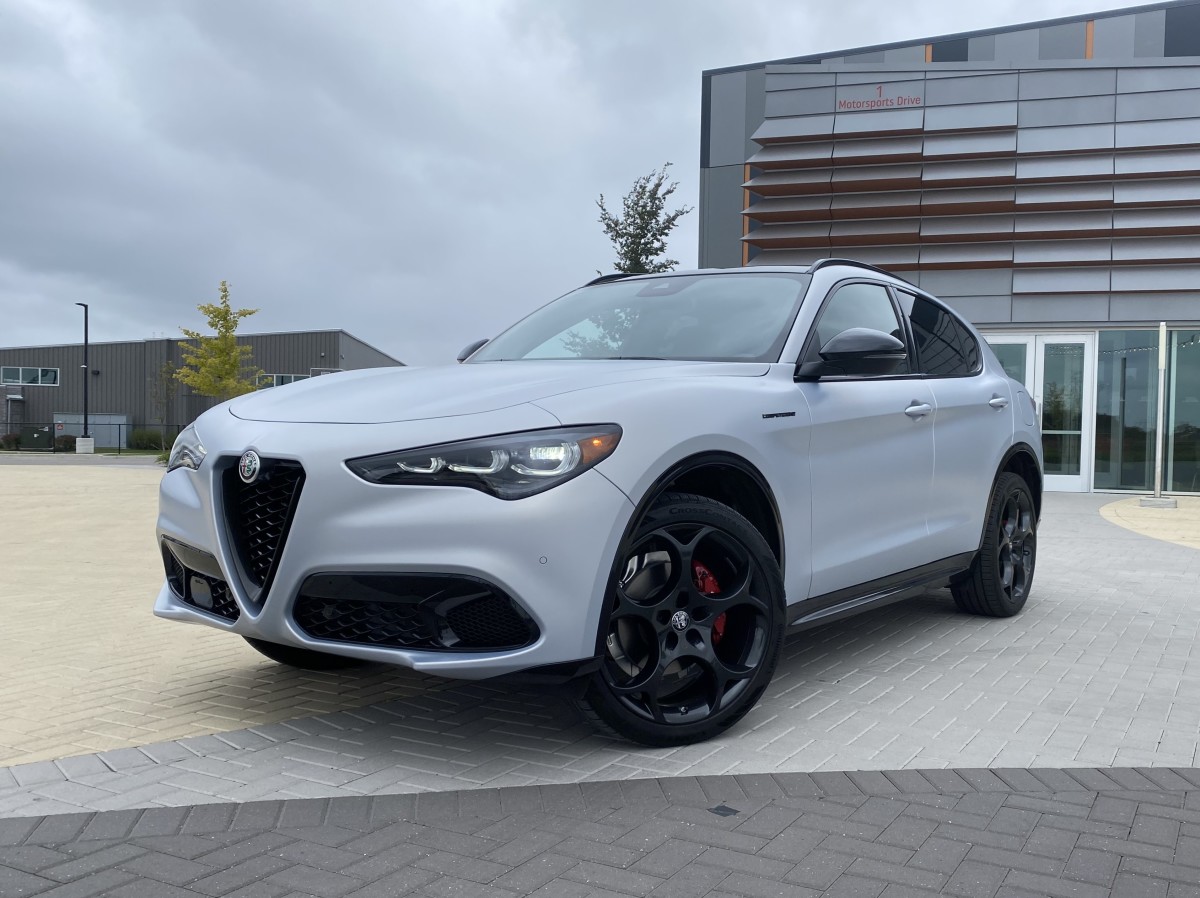
2024 Alfa Romeo Giulia Reviews, Pricing & Specs


Pros & cons
What we like
Great handling
Fun to drive
Stylish design
What to consider
Historically poor reliability
Outdated technology
Very high depreciation rates
The CarGurus verdict
The most dedicated sports sedan in the compact class.
Verdict: The Giulia is a genuine sports sedan. It's best appreciated by people who love to drive and crave the feelings that emerge when they turn the steering wheel of a perfectly tuned car. If wine is wine and cars are just a means to an end, you won't feel anything extra from an Alfa Romeo. In fact, you'll be turned off by the Giulia’s outdated tech and cramped interior. Objectively, it's not the smartest buy in the compact luxury class. Emotionally, the Giulia is a dynamite car that hides its flaws and puts the driver first.
out of 10 expert review
Look & feel
For a car that came out in 2015, the Giulia is remarkably brand-new. Much like Jaguar, Maserati, and other boutique brands with a rich racing heritage, Alfa Romeo designs a beautiful car and doesn't bother fussing with it. Inside and out, the Giulia is distinctive and unlike mass-market Japanese and German cars that receive updates every few years. For 2024, the Giulia receives its first exterior refresh that makes the large, teardrop headlight assemblies even more aggressive. They're called "trilobe" and are comprised of three LEDs separated by thin LED half-moon DRLs in a dark-tinted housing. They replace the bi-xenon bulbs and single DRL strips of last year. The taillights are also tinted.
Else, it's the same classic sedan with textbook proportions. The Giulia sits low and employs short overhangs, gentle curves, and mild creases. It's soft and flowing except for the front end, which has the most eye-catching grille this side of a Bugatti. The downward triangle shape now has a new insert, and still no place to install a front license plate without mounting it on a tow hook or using the factory plate that partially blocks the lower grille. Practicality seemingly comes last to Italian designers, which makes the Giulia that much more special than competitors.
For 2024, the Competizione trim serves as a sportier version of the Veloce. Our test car wore the Moonlight Gray matte paint that's exclusive to this trim, along with blackened five-hole 19-inch wheels, red brake calipers, and black mirrors and body trim. Inside, red stitching adorns a leather-wrapped dash, steering wheel, shifter, and upper door trim. The ribbed, deeply bolstered seats also get the red treatment along with a Competizione badge on the front headrests.
Also new and very rare is the Quadrifoglio 100th Anniversary edition, which includes gold-colored brake calipers, carbon fiber trim on the mirrors and grille, and gold stitching in the cabin. Another new trim, the Tributo Italiano, has tricolore markings on the mirrors, a black roof, and comes with only three paint choices: red, white, and green—the colors of the Italian flag.
There's a new 12.3-inch digital instrument panel, but screens and touch-sensitive controls do not invade the cabin. It's starkly analog, in a very good way. The metal shift paddles, start button on the flat-bottom steering wheel, and the tricolore on the shifter housing are prominent reminders that the Giulia does not follow convention. Materials are adequate, as are fit and finish. It's not luxurious inside a Giulia, and it’s most certainly not pampering.

Performance
Chucking the Giulia into corners is among the most fun you can have in a small, modern sedan. Alfa sweats the small details in the suspension and steering. There's a near 50/50 weight distribution and a double-wishbone front setup, an uncommon design for sedans due to the increased cost and size of the components. Even here, Alfa wasn't satisfied. There's a conventional upper wishbone combined with two unequal-length lower links that Alfa says "perform a scissors movement" which keeps the steering feel uniform and linear. The rear has an extra "half" link to the usual four-link setup. This contributes to an acceptable though slightly rougher ride than cars like the Mercedes C-Class or Audi A4, but it dramatically improves cornering by remaining stiff when under load. Steering response and feel are top of the class, with perhaps only the Cadillac CT4-V to match it. Every turn and each tiny movement transmit a sense of being one with the car. Body roll is minimal, which is why the seats have such great bolstering.
The Competizione is the only regular trim to include adaptive dampers and a limited-slip rear differential to prevent wheelspin when powering out of tight corners. These are helpful features during aggressive driving but unnecessary in most traffic conditions. The chassis is truly the star, while the engine plays a supporting role. The 2.0-liter turbocharged inline four-cylinder engine is strong and sounds good, with 280 horsepower and 306 pound-feet of torque. It's paired to a ZF eight-speed automatic transmission and three driving modes that together spell "DNA." In Normal mode, the Giulia cruises effortlessly but not lazily. Stomp the gas and you'll get a fistful of thrust. In Dynamic mode, the transmission allows faster, rougher shifts but never races the engine when you're off the throttle.
The only thing more perfect is the Quadrifoglio's 2.9-liter twin-turbo V6 with parts based off Ferrari's flat-plane V8. We tested this four-leaf clover at the M1 Concourse in Pontiac, Michigan. (The name and the badge on the flanks honor a winning 1923 Alfa race car with a painted green clover.) With 505 hp, 443 lb-ft of torque, and a wet track, the Quadrifoglio requires more than good luck to drive quickly. Finesse and respect, as with any high-spec rear-wheel drive (RWD) car, grants the most speed. The raspy engine, the snorty exhaust, and the iron-clad brake pedal worked up our confidence until the ground was soaked. At that point, the semi-slick Pirelli P Zero Corsas gave up their grip. In dry conditions, the Giulia Quadrifoglio rips. It's not as savage as the newest BMW M3 and lacks the ultra-fine traction control settings of the Cadillac CT4-V Blackwing, so it's slower and requires more effort. Alfa Romeo doesn't program 3,546 ways to customize the car's controls. That’s because the Giulia is a machine that relies on organic, mechanical connections rather than computer algorithms. Like the Alfa race cars from decades past, the Giulia rewards the driver's skill and delivers a singular setup that's expertly tuned from the start.
RWD, which Alfa calls “Q2,” is standard and, on the Quadrifolgio, is the only choice. All other trims offer all-wheel drive (AWD), known as “Q4,” as a $2,000 option. Fuel economy is EPA-estimated at 24 mpg city, 33 mpg highway, and 27 mpg combined for the normal Q2 trims. Q4 trims drop to 23/31/26. These are average for the class. The Quadrifoglio is relatively efficient for a high-performance sedan at 17/25/20. That's better than the M3 and CT4-V Blackwing.

Form & function
The Giulia's curvaceous exterior and low roofline prioritize looks over space. Assuming you’re not too tall or overweight, the Giulia’s front seats will fit you and one other person of similar size like a silky smooth glove. For the big and tall, however, it’s likely an uncomfortable fit. The footwells are small, the door openings are narrow, and the back seat is best used as a shelf. This is how compact sedans used to be sized a decade ago, and now, only the Genesis G70 matches the Giulia's tight quarters. The trunk is just over 13 cubic feet—also small, but doable. Plus, the seats fold down.
For short trips, our Competizione's back seat was livable with two large air vents, heated outboard seats that come standard on every Giulia, two USB ports, and a separate moonroof. Consider the Giulia as a 2+2 coupe with four doors. Part of this feeling has to do with cars growing in size dramatically with every new generation. If you want more space, buy the Stelvio SUV. It drives and looks nearly the same for just a little bit more money.
Driving the Giulia is easy, thanks to ordinary controls that are not buried in the touchscreen. The new instrument panel is clear and easy to navigate, though the touchscreen suffers from small typefaces and overcrowding in certain menus. The shift paddles—mounted to the steering column—are so enormous that they hide the stalks for the turn signals and wipers. That alone illustrates Alfa's attitude toward driving and what it deems is important. As driving enthusiasts, we’d like to agree, though accessing vital safety features is just a hair more important.

Technology
The Giulia is a pleasant blend of analog and digital, except the 8.8-inch touchscreen gets pretty crowded with text and runs older software. Apple CarPlay and Android Auto cannot take over the entire screen. Selecting menus and functions while driving are distractions. This could all be solved with a better interface, namely the latest Uconnect 5 infotainment software used in other Stellantis vehicles. We'll give Alfa props for integrating the screen instead of going the cheaper route and gluing an ugly tablet on top of the dash.
The new digital instrument panel works much better. It can show full-screen maps and full-screen driver assist layouts, yet this crisp display mimics old Alfas with thin typefaces lifted from the 1960s. There's also a Traffic Jam Assist that can steer the Giulia in marked highway lanes, but we were unable to test it on our drive route.
Standard equipment includes heated front and rear seats, navigation, a wireless charger, and an auto-dimming rearview mirror. A 14-speaker Harman Kardon stereo and panoramic moonroof are optional but included on the Competizione trim. Color choices are limited to black, brown, and a bright red.

Safety
The National Highway Traffic Safety Administration (NHTSA) has not crash-tested a Giulia. The Insurance Institute for Highway Safety (IIHS) did so for the Giulia's debut 2017 model year, and the ratings apply to all later models. The Giulia scored the top "Good" rating in six tests, but the data are unavailable for the front passenger in a front crash.
Forward emergency braking, adaptive cruise control, blind-spot monitoring, and rear parking sensors come standard. On Alfa Romeo Giulia Ti trims and above, an Active Assist Plus package brings lane-keeping assist, traffic-jam assist, a driver-attention monitor, and road-sign recognition. Knee airbags for the driver and front passenger are standard.

Cost-effectiveness

What owners say
Very nice car. I got a great value for my money.
April 4, 2025It's stylish, comfortable, and amazingly quick with the turbo boost.
July 14, 2026Trims & specs
Base MSRP $46,190 | Seating 5 |
Engine 2.0L 280 hp I4 | Cargo Capacity 13.4 cu ft |
Combined MPG 27 | Drivetrain AWD |
Base MSRP $86,770 | Seating 5 |
Engine 2.9L 505 hp V6 | Cargo Capacity 12.0 cu ft |
Combined MPG 21 | Drivetrain RWD |
Base MSRP $44,190 | Seating 5 |
Engine 2.0L 280 hp I4 | Cargo Capacity 13.4 cu ft |
Combined MPG 28 | Drivetrain RWD |
Base MSRP $43,690 | Seating 5 |
Engine 2.0L 280 hp I4 | Cargo Capacity 13.4 cu ft |
Combined MPG 27 | Drivetrain AWD |
Base MSRP $41,690 | Seating 5 |
Engine 2.0L 280 hp I4 | Cargo Capacity 13.4 cu ft |
Combined MPG 28 | Drivetrain RWD |
Base MSRP $85,370 | Seating 5 |
Engine 2.9L 505 hp V6 | Cargo Capacity 12.0 cu ft |
Combined MPG 21 | Drivetrain RWD |
Base MSRP $86,770 | Seating 5 |
Engine 2.9L 505 hp V6 | Cargo Capacity 12.0 cu ft |
Combined MPG 21 | Drivetrain RWD |
Base MSRP $51,190 | Seating 5 |
Engine 2.0L 280 hp I4 | Cargo Capacity 13.4 cu ft |
Combined MPG 28 | Drivetrain RWD |
Base MSRP $53,190 | Seating 5 |
Engine 2.0L 280 hp I4 | Cargo Capacity 13.4 cu ft |
Combined MPG 27 | Drivetrain AWD |
Base MSRP $49,790 | Seating 5 |
Engine 2.0L 280 hp I4 | Cargo Capacity 13.4 cu ft |
Combined MPG 27 | Drivetrain AWD |
Base MSRP $47,790 | Seating 5 |
Engine 2.0L 280 hp I4 | Cargo Capacity 13.4 cu ft |
Combined MPG 28 | Drivetrain RWD |
Base MSRP $81,370 | Seating 5 |
Engine 2.9L 505 hp V6 | Cargo Capacity 12.0 cu ft |
Combined MPG 21 | Drivetrain RWD |


Pricing trends
MSRP range
$41,690 - $86,770
Current avg. market price
$31,596
Trending down by 0.7% this month
May 2026 - November 2026