2024 Honda Prologue Reviews, Pricing & Specs
Write a review--
Original MSRP
7.8
of 10
expert review
avg user rating
(0 reviews)
Pros
Stylish design
Comfortable
Impressive technology
Cons
Every trim comes with large wheels
Some of our favorite features aren't standard
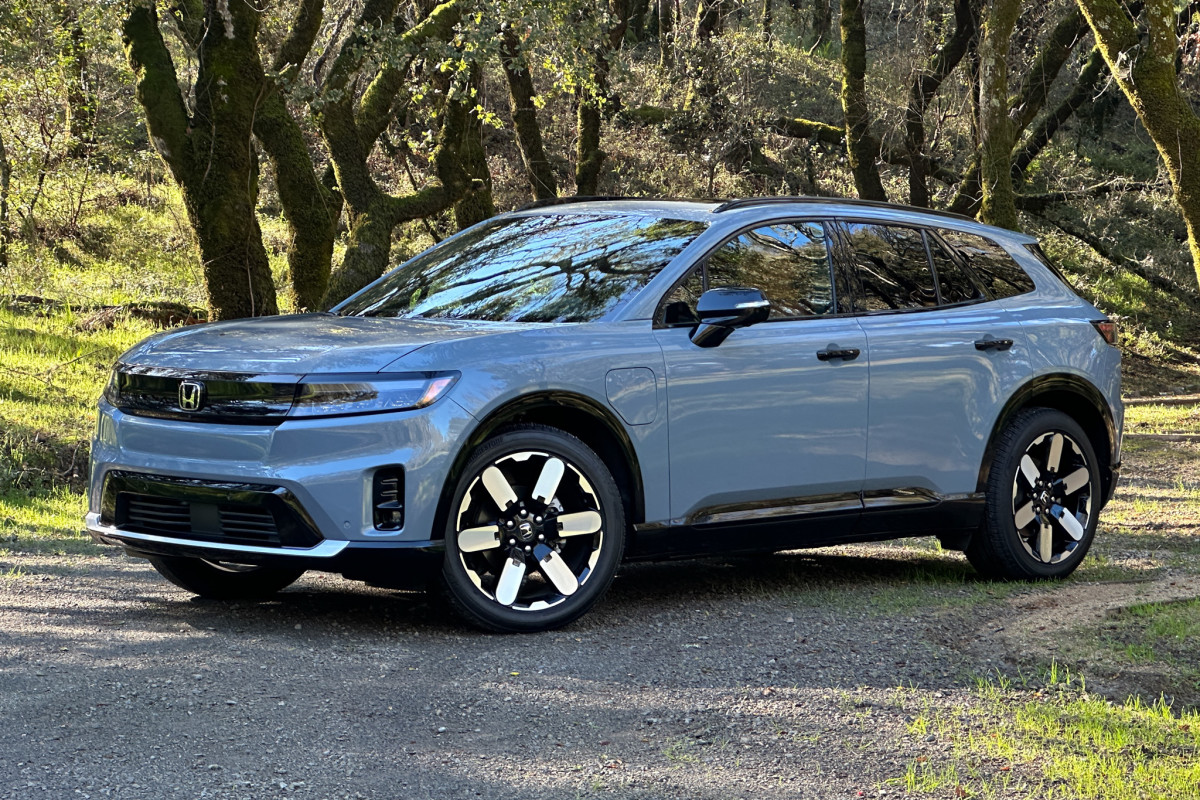
The Honda Prologue is Honda’s first stateside electric vehicle, as well as its first-ever fully electric SUV.
Like Acura with the ZDX, Honda is leveraging the Ultium platform from General Motors to get an EV on the market now rather than waiting to develop its own platform later. The Prologue is offered in three familiar Honda trims–EX, Touring, and Elite–and it treads familiar Honda territory, too.
Verdict: Comfortable, attractive, and carefully avoiding change for change’s sake, the 2024 Honda Prologue is a great choice for anyone who wants to go green without approaching the bleeding edge.

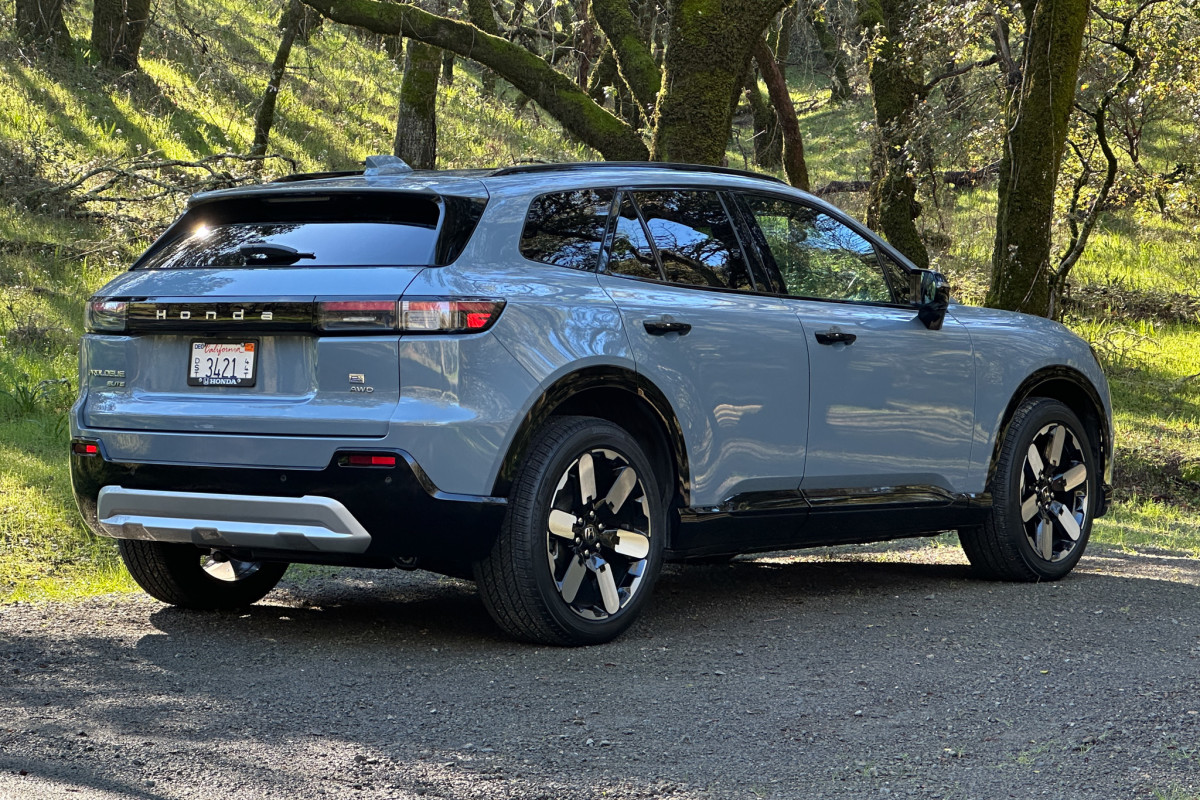
The Prologue is about as near to “normal,” looks-wise, as any EV we’ve seen to date. The base EX trim is available in five colors, but Touring and Elite trim add Sonic Grey as an option and also debut a new color called “North Shore Pearl.” This punchy turquoise might be the most attention-grabbing design element on the Prologue; in any other color, it could easily slip under the radar. The front end sports the traditional Honda “H” logo badge, centered on a completely smooth and flawless black panel which betrays the fact that there’s nothing requiring air cooling on the other side of that sheet metal. Honda offers a variety of accessories, such as skid plates and side cladding, which allow for personalization. One option lends a more rugged and functional look to the space between the headlights, making the grille appear more complex, if that’s your bag.
Viewed from the side, the Prologue appears low, which is really thanks to its length. It’s 3 inches longer than the Honda Passport, but the Passport is 8 inches taller, so the Prologue’s proportions are more like those of a cartoon gangster’s car than an off-road-going SUV. The large wheels–19-inch standard, 21 on Elite–further underscore the low roof, and the new font spelling “Honda” across the back reflects Honda’s foray into new methods of propulsion.
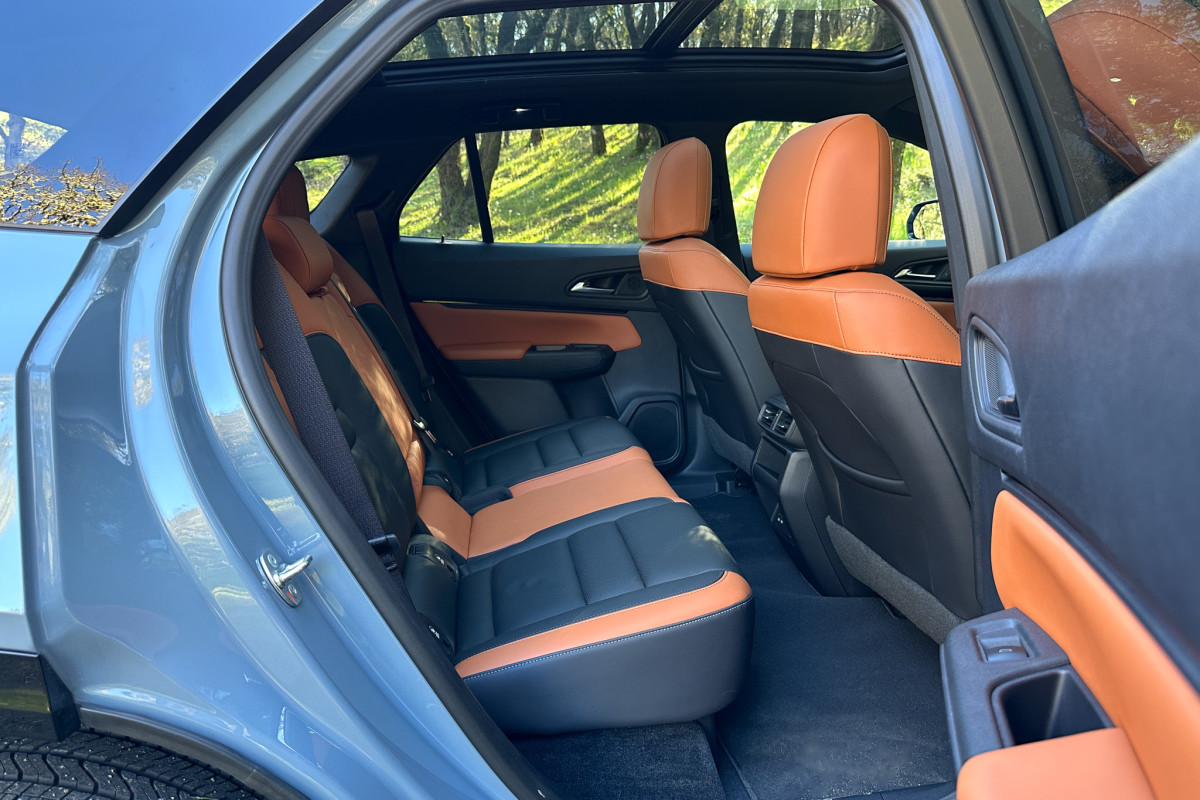
Inside, our Elite trim tester felt quite nice. We liked the brown and black interior color scheme, though it’s exclusive to the top trim; a gray and black two-tone interior is available on every Prologue. The EX comes with cloth seating surfaces, while the other two come with leather. The layout of the dash bears a reasonable resemblance to those of recently revamped stablemates like the Honda CR-V, Accord, and Civic, with one notable omission: The Prologue does not hide air vents behind a honeycomb grille. Piano black plastic occupies that space instead, topped by a swath of upholstery material that spans the dash and appears again inside each door. Like its exterior, the Prologue’s interior feels almost run-of-the-mill, in a good way. It leans upscale, but it is, above all, familiar.
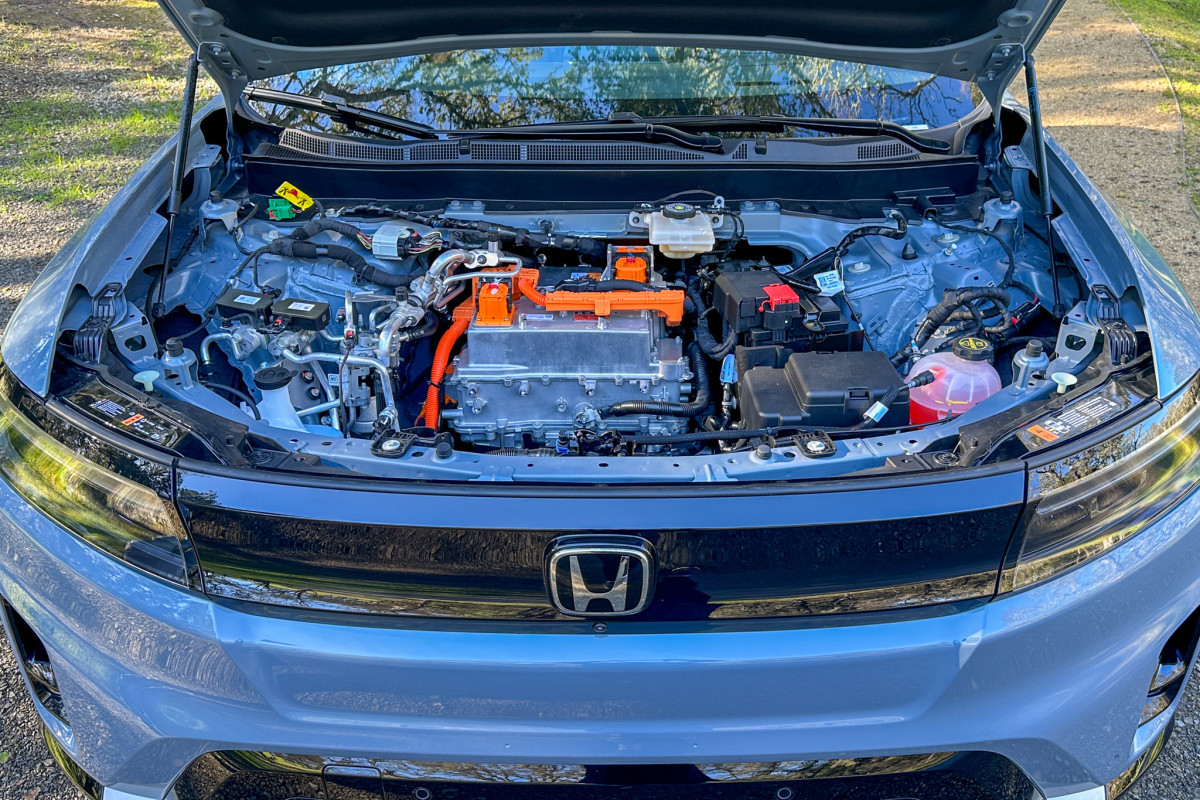
The Prologue is available with either front-wheel drive (FWD) or all-wheel drive (AWD). FWD comes from a single-motor configuration rated for 212 horsepower and 236 pound-feet of torque. This is available on EX and Touring trims, and paired with those trims’ 19-inch wheels, it’s rated for 296 miles of range, making this the most efficient option. AWD is available for EX and Touring and standard for the Elite trim. It comes from a dual-motor setup that combines for 288 hp and 333 lb-ft of torque. With the Elite trim’s 21-inch wheels, this powertrain lands at 273 miles of range. On the EX or Touring trims with the 19s, range comes in at 281 miles.
Out of the Prologue’s competitors, the 296-mile base range is best-in-class. Rivals like the Ford Mustang Mach-E and Tesla Model Y do have longer-range versions available, which cannot be said of the Prologue, but the ranges of their most accessible trims fall short of the Prologue’s.
Honda reps told us they paid particular attention to giving the Prologue authentically Honda driving dynamics, and we were pleased to find that it did feel familiar. We spent most of our time in the middle regenerative braking setting, “Normal,” and observed only minimal extra deceleration–the car still allows you to coast for a while in this mode. The Prologue also has a one-pedal drive setting which delivers a more standard, all-or-nothing EV braking experience in which lifting off the accelerator is followed by immediate deceleration. At the opposite end of the spectrum, the lowest setting makes for a very typical driving experience, and it’s a lovely option to ease the transition for anyone considering the Prologue as their first EV.
The Prologue’s 121.8-inch wheelbase is the longest in its class, and it makes for a comfortable ride, even on the larger wheels. At highway speeds, we felt that the cabin did not quite match Honda’s description: “remarkably serene and quiet.” However, the road and wind noise did emphasize the normalcy of the driving experience.
Throttle, brake, and steering response can all be quickened by simply selecting Sport mode, which also firms up the feel of the Prologue’s steering. We were pleasantly surprised at how much fun we were able to have behind the wheel on the winding mountain roads of Napa Valley, particularly given the size of the vehicle.
Overall, the Prologue delivers a driving experience that belies its size and its powertrain.
In another welcome divergence from a popular EV path, Honda has given the Prologue traditional door handles. This seemingly minor decision helps minimize the number of adjustments a Prologue owner would have to make, thereby greasing the path to EV (or, at least, Prologue) adoption.
In the main cabin area, the Prologue has a total of 111.7 cubic feet of passenger volume, an advantage of more than six cubic feet over its Cadillac platform-mate (the Lyriq). This is most felt in the legroom, which comes to an impressive 39.4 inches in the second row (41.4 in the first). Headroom stats are less compelling, at 39.6 inches up front and 38.1 in the back seat, but the reclinable rear seats do afford back-seat passengers a little extra margin, and the panoramic moonroof (standard on the Touring and Elite trims) helps to further open things up.
Heated front seats and dual-zone climate control are standard. Driver’s seat memory becomes standard with the Touring trim, and the Elite adds front seat ventilation and a heated steering wheel. Front passengers also enjoy two-tier storage thanks to the shelf forming the bottom of the center console, and the space between them is wide enough to easily accommodate two smartphones placed side by side.
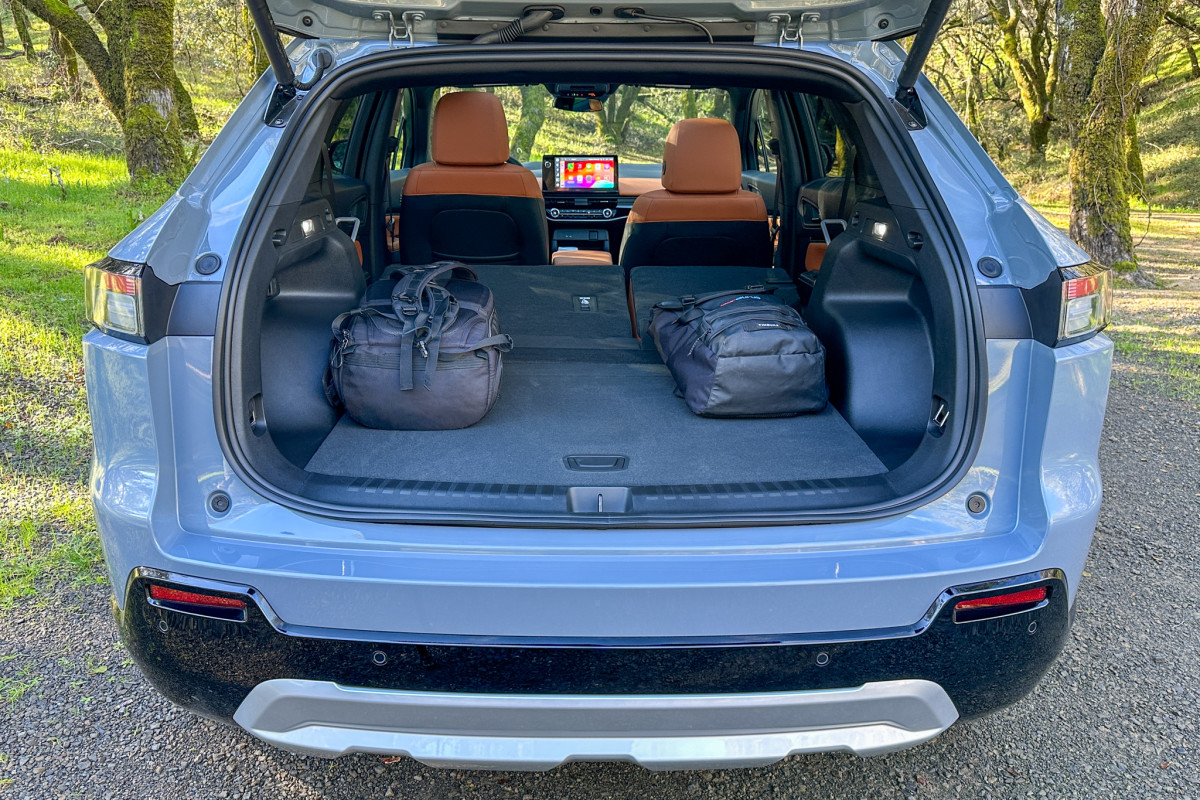
Touring and Elite trims both come with a hands-free power liftgate. The 25.2-cubic-foot cargo area this opens onto has a flat load floor and is relatively high off the ground, both factors which should make for easy loading in and out. However, the hatch area is incredibly long. A shorter person needing to access the full 57.7 cubic feet of available space will struggle to reach the release that folds down the back seats. The Prologue does not have “frunk” storage space beneath the hood, but it does have a deep compartment hidden below the load floor, easily accessed by lifting the liner.
Keyless access is standard on the Prologue. For EX and Touring trims, this comes in the familiar form of a proximity key fob. For the Elite trim, however, the Prologue also gets a card-format key. The size and shape of a credit card, it works just like a hotel room key, except that the user must tap the card again to lock the car (it does not lock upon closing like a hotel door).
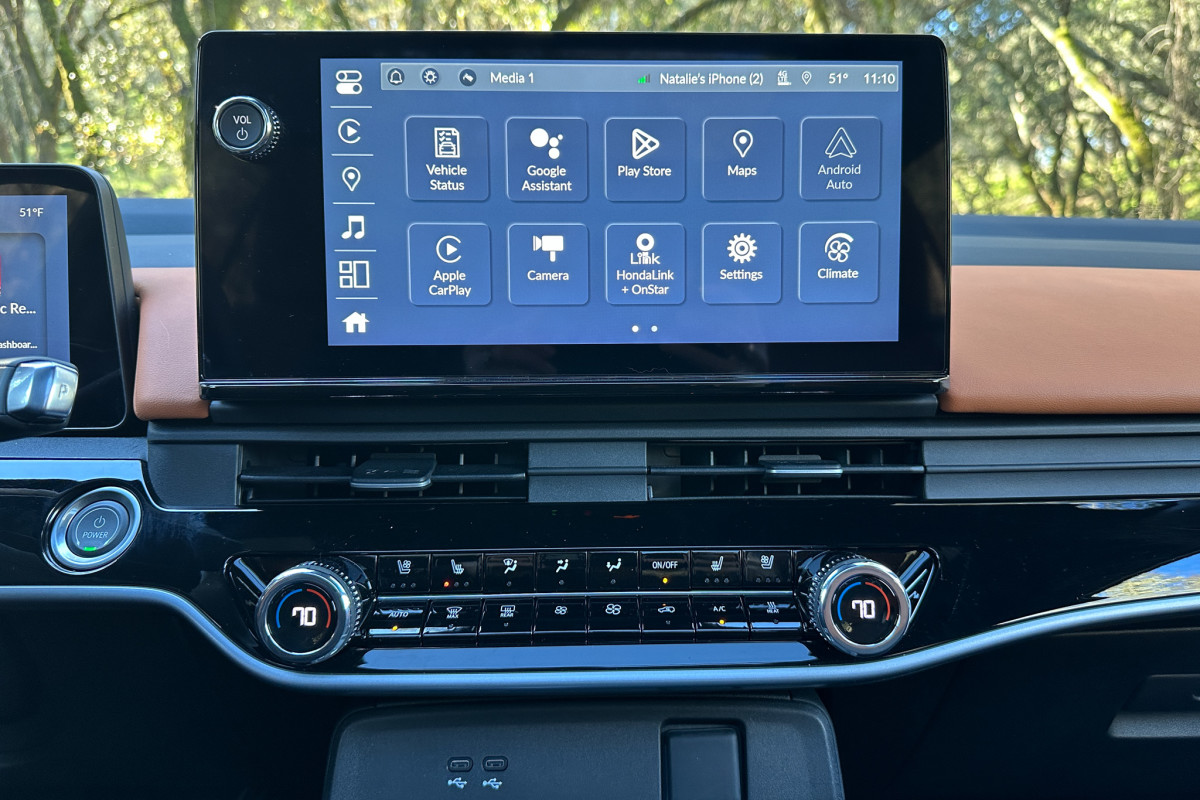
The Prologue features a standard wireless charger, and it’s the pocket-style kind–this is a first for Honda, but familiar territory for GM, which probably explains its presence here. Four total USB-C ports, two in the front and two in the back, offer further charging options. Wireless Apple CarPlay and Android Auto are standard, too, running through an 11.3-inch infotainment screen. A separate 11-inch screen hosts the configurable digital driver-information display. A head-up display can also be had in the Prologue, but only with the Elite trim.
Google Built-In is also standard, meaning Google Maps is native tech for the Prologue. It includes a route-planning feature, as seen in many EVs, which can locate recommended EV chargers and initiate battery preconditioning to prepare the vehicle for DC fast charging.
Touring and Elite trims get a 12-speaker Bose premium audio system, which Honda says was developed with Bose specifically for the Prologue. In addition to your tunes, the speakers also help to highlight the Prologue’s Active Sound Control, a feature Honda developed to compensate for the silence of the powertrain. This adds in artificial sounds accompanying actions like acceleration and deceleration, and it does so more emphatically in Sport mode. We generally skew a tad cynical about such efforts, but the sound effects genuinely did add to the sporty driving experience.
As we would have expected, the Honda Sensing suite of advanced driver-assistance technologies is standard on the Prologue. What we wouldn’t necessarily have expected is the addition of new features to that array. These include standard rear cross-traffic braking and blind-zone steering assist, both interventional technologies new to Honda.
There are a few features limited to higher trims as well: Front-park assist is not available for the Prologue EX, and both the surround-vision system and rear pedestrian alert are Elite-trim exclusives. Automatic emergency braking, forward collision alert, adaptive cruise control, and lane-keep assist are all standard, though, along with other popular and increasingly taken-for-granted features.
The Prologue is too new to have been rated by the Insurance Institute for Highway Safety (IIHS) or the National Highway Traffic Safety Administration (NHTSA) as of this writing, but Honda says it’s targeting Top Safety Pick+ and five-star overall ratings, respectively.
The 2024 Honda Prologue is offered at a base price of $48,795, including the destination fee, while the Prologue Elite starts at $59,295 after destination. Honda expects the Prologue to be eligible for the full $7,500 in federal tax credit.
The base price does fall above those of immediate rivals such as the Ford Mustang Mach-E, Tesla Model Y, Subaru Solterra, and Kia EV6 (as well as the EV6’s corporate cousins, the Hyundai Ioniq 5 and Genesis GV60). Then again, so does the base range. Further, Honda is offering the buyer’s choice of one of three charging packages with every new Prologue purchase. In the most straightforward of the three, a new Prologue owner gets $750 worth of public charging credits included with the car. Alternatively, purchasers can opt for a Level 2 home charging station with a $500 installation credit and $100 in public charging credits, or they can choose a portable charger (Level 1 or Level 2) with a $250 installation credit and $300 in public charging credits. By offering this choice, Honda appears to acknowledge that EVs have not reached the one-size-fits-all refueling solution their ICE-powered counterparts have. The three options allow shoppers to account for personal factors like whether they own or rent their home, the length and environment of their commutes, and whether their employer offers free charging at the office.
Potential Prologue owners who will be relying on public charging will be pleased to know that they’ll have many options, including Tesla Superchargers and EVgo and Electrify America stations. Honda is one of the seven automakers partnering to add 30,000 new charge points in the United States in the coming years, meaning further accessible charging locations are all but guaranteed to be coming soon.
The Prologue may not be the cheapest EV on the market, and it may not have the longest range (that distinction belongs to the (much more expensive Lucid Air). But it hits a sweet spot of affordability, usability, and user-friendliness, and it looks and feels good while doing it.