2025 Cadillac OPTIQ Reviews, Pricing & Specs


Pros & cons
What we like
Stylish design
Impressive electric range
Excellent value for money
What to consider
Fairly pedestrian performance
Limited forward visibility
Torque steers like it doesn’t have all-wheel drive
Expert review
Cadillac adds an entry-level model to its growing EV lineup.
The 2025 Cadillac Optiq arrives as the new entry-level electric vehicle in the General Motors luxury brand’s lineup, giving Caddy a rival to the Audi Q4 e-tron, Genesis GV60, Lexus RZ, Mercedes-Benz EQB, and Volvo EX40 and new car buyers a cheaper entry point below the brand’s larger electric SUVs, such as the Cadillac Escalade IQ and the Vistiq.
Verdict: The Optiq is surprising value among electric luxury SUVs.
out of 10 expert review
Look & feel
Just as the larger Cadillac Lyriq and Chevy Blazer EV are closely related, the 2025 Optiq shares its configuration of GM’s modular EV architecture (formerly known as Ultium) with the Chevrolet Equinox EV. Dimensions are within a few tenths of an inch, including the 116-inch wheelbase.
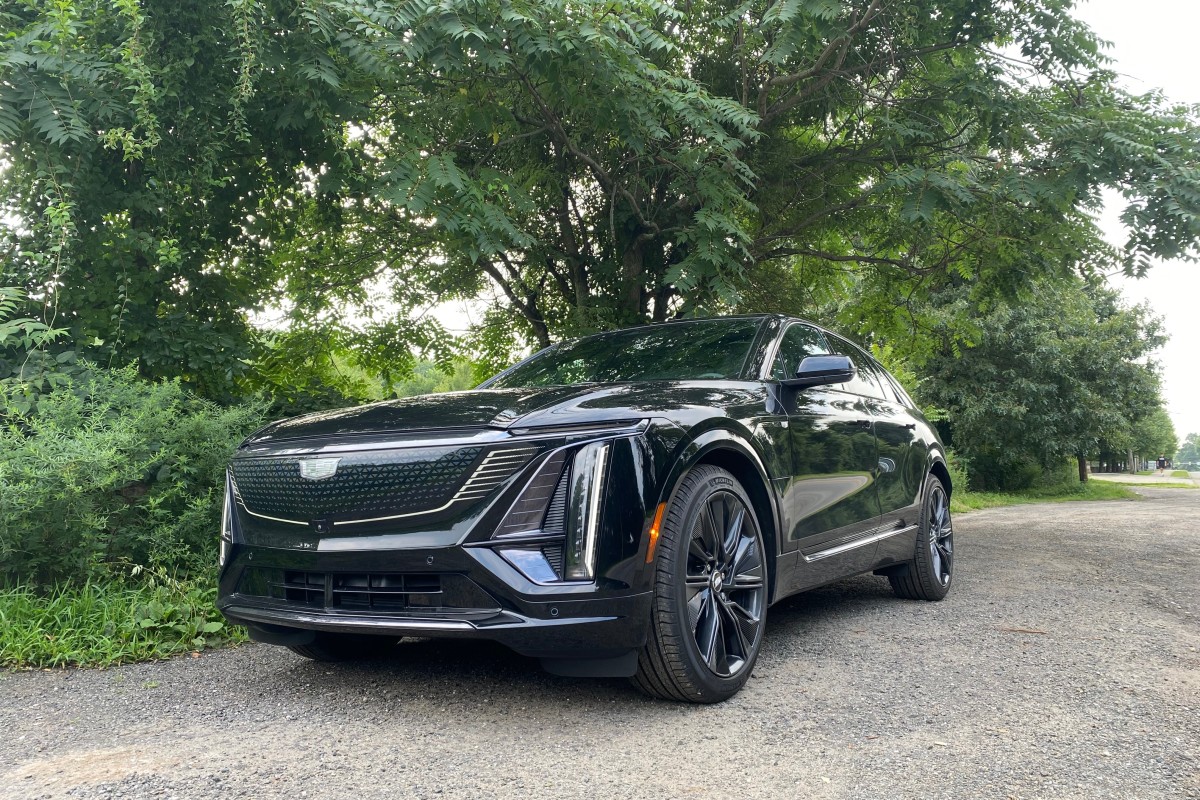
That makes for an electric crossover SUV that looks like a baby version of the Lyriq. Stacked headlights frame the blanked-off grille like gateposts, while the broad grille smiles with its own integrated lighting elements. This front-end treatment and the Optiq’s split taillights carry over from other Cadillac EVs, but they work well with the sleek roofline and high beltline that appear to have been inherited from the Equinox EV.
The Optiq also looks sleeker and tauter than the Audi Q4 e-tron, which embraces the aerodynamic jellybean school of automotive design. Its styling is a lot more cohesive than that of the relentlessly angular Lexus RZ, and might be more appealing to shoppers who find the Lexus or the Genesis GV60 a bit too avant garde. But the proportions are definitely more hatchback than SUV; those looking for a more traditional boxy look would be better served by the Mercedes-Benz EQB or Volvo EX40.
Like other Cadillac models, the Optiq’s lineup of trim levels is divided into Luxury and Sport categories (with two levels for each) that offer slightly different styling while maintaining similar equipment levels. Both versions get painted 20-inch wheels as standard equipment, but with a lighter Pearl Nickel finish on Luxury models and a Dark Android finish on Sport models (21-inch wheels are also available). Optiq Sport models also have more mesh-like grille trim.
The interior’s basic design will look familiar to anyone who has spent time in an Equinox EV, thanks to a distinctive curved dashboard display, but the materials are a big step up. The Chevy’s hard-plastic door bins were replaced with ones made of material that’s softer to the touch, and the dashboard and door panels are covered in a distinctive fabric material made from recycled polyester yarn. Cadillac only offers Interluxe artificial leather, but it feels relatively supple, and looked reasonably upscale with the perforated segments and embroidery on our Optiq Luxury 2 test car.
Performance
The Optiq comes standard with a dual-motor all-wheel drive (AWD) powertrain producing 300 horsepower and 354 pound-feet of torque, powered by an 85-kilowatt-hour battery pack. Cadillac gets credit for making AWD standard where some competitors offer only front-wheel drive (FWD) or rear-wheel drive (RWD) in base models, but some other dual-motor EVs are more potent. The Volvo EX40, for example, makes 402 hp and 486 lb-ft of torque in dual-motor form.
Based on our experience driving up the scenic Pacific Coast Highway north of San Francisco, though, the Optiq already has more power than it can handle. Despite the AWD system, we noticed a bit of torque steer during our test drive, where the application of power to the front wheels tugs at the steering wheel, making it harder to keep the car pointed straight ahead. That’s normally something we’d expect in a FWD car, so perhaps Cadillac needs to retune the powertrain to give the rear motor more of the workload.
For a relatively small car, the Optiq also required a lot of steering input to maneuver. We found ourselves shuffling the wheel quite a bit just to make 90-degree turns on city streets or to follow the Pacific Coast Highway’s many tight turns. A more relaxed steering feel is definitely in line with the character of a Cadillac, but this was taking things a bit too far. Things didn’t improve much when switching from the default Tour drive mode to Sport, as there wasn’t much differentiation between the two modes.
Aside from those issues, the Optiq drove exactly as we’d expect a small crossover from a premium brand to drive. Cabin noise was minimal even by the high standards of electric vehicles, and the ride was comfortable even on our test car’s bigger wheels. While they do look great, filling out the wheel wells lightly, we wonder if the Optiq would ride even better on smaller wheels that allow for more tire sidewall.
Like other GM EVs, the Optiq lets drivers summon a little extra regenerative braking while pulling a steering-wheel paddle. This not only lets drivers choose what they want, but is also fun, approximating the feel of downshifting ahead of corners. However, the relatively low default level of regen had us pulling the paddle a lot more than we expected.
Form & function
Interior space compares favorably to rival EVs. Headroom in both rows is within a few tenths of an inch of those competitors, and the Optiq even offers two more inches of first-row headroom than a Volvo EX40. It’s a similar story with legroom, although the Mercedes-Benz EQB offers a tad more in its second row.
Despite what the spec sheet says, the Optiq’s front seats didn’t feel especially spacious because of the swept-back windshield. That, along with thick forward roof pillars, made outward visibility a bit challenging from the driver’s seat. Still, it’s impressive that Cadillac’s designers and engineers were able to carve out as much headroom as they did while incorporating both that roof angle and a standard glass roof. And rear visibility was better than expected—aided by a standard rearview camera mirror.
Open the standard power liftgate, and the Optiq offers 26 cubic feet of cargo space. That’s nearly identical to the Mercedes, a bit better than the rest of the competition. Fold down the 60/40 split-folding rear seats, and that expands to 57 cubic feet. That’s also more than most rivals, but nearly identical to the Volvo EX40 and less than the Mercedes. Cadillac doesn’t offer a frunk, but that’s not a common feature in this particular corner of the EV market.
If you can’t fit all of your stuff in the car itself, Cadillac also quotes a 1,500-pound maximum towing capacity. While, in the U.S. at least, towing isn’t a huge priority for most buyers of vehicles like these, it’s worth noting that the Genesis GV60 is rated at 2,000 pounds, while AWD versions of the Audi Q4 e-tron can tow up to 2,650 pounds.
Technology
Cadillac’s screen setup immediately shows that the GM luxury brand isn’t messing around. The 33-inch curved display incorporates both the central touchscreen and a digital instrument cluster, with resolution that Cadillac claims is equivalent to 9K. A head-up display is also available.
However, the infotainment system is still the Android-derived one used in other recent GM EVs, meaning standalone Apple CarPlay and Android Auto aren’t available. You do get Google Built-in apps, making Google Maps the default navigation system and Google Assistant the default voice recognition, and everything works well enough if you’re not an iPhone user.
That’s because the display, similar to the one used in the bigger Cadillac Lyriq, is intuitive, with a good division of labor between the different areas of the screen. We didn’t have to go hunting around for specific functions and the reconfigurable cluster portion of the display had some good options ranging from a minimalist setting to a map view. And Cadillac wisely reserved audio volume and climate functions for physical controls.
The standard 19-speaker AKG audio system is the first in a Cadillac to feature Dolby Atmos 3D remixing tech (the rest of Cadillac’s lineup gets it for 2026). Atmos has also been available in Mercedes EVs for a few years now, and is only compatible with certain premium music-streaming services like Amazon Music, but audiophiles will appreciate its added clarity.
Safety
When it comes to driver assistance tech, the Optiq sets itself apart from rivals with its standard Super Cruise hands-free highway driving system. Super Cruise has proven reliable in numerous other GM vehicles, and none of the Optiq’s competitors offer its level of capability—whether was standard or optional equipment.
Other standard driver aids include: forward collision warning, front and rear automatic emergency braking, blind-spot monitoring, rear cross-traffic alert, adaptive cruise control, a driver attention monitor, and a rear-seat reminder. In addition to the standard audio and visual warnings, the Optiq features Cadillac’s vibrating Safety Alert Seat, as well as GM’s teen driver monitoring system.
Crash-test ratings from the Insurance Institute for Highway Safety (IIHS) and National Highway Traffic Safety Administration (NHTSA) were not available at press time, however. That’s not unusual for vehicles just hitting the market, such as the Optiq.
Cost-effectiveness
The Optiq’s 85-kWh battery pack affords an EPA-estimated 302 miles of range. While not officially confirmed by the EPA at press time, that makes the Optiq the only EV in its competitive set to top 300 miles with AWD.
On the other hand, the Optiq’s 150-kilowatt DC fast charging is just adequate. Cadillac says it can recover 79 miles of range in 10 minutes of charging at that peak rate, but our brief time with the car didn’t allow for a charge test to see how long that rate can be maintained.
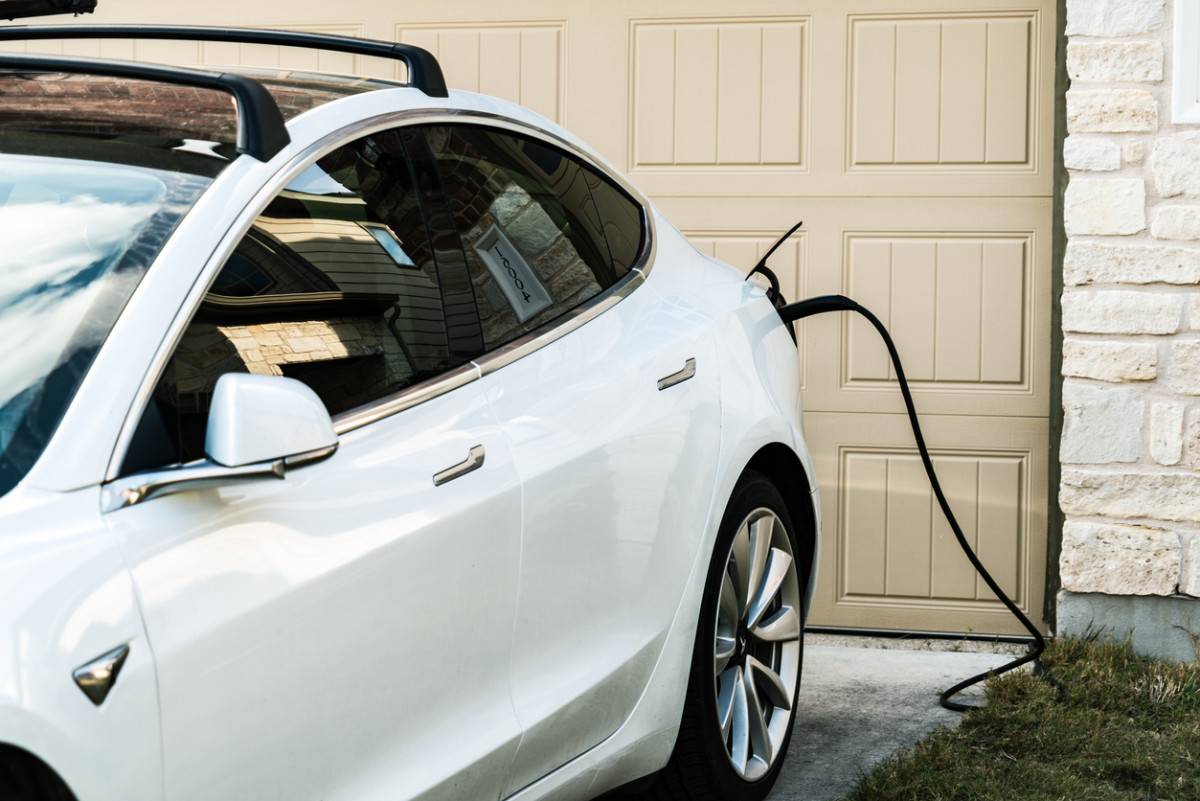
With the standard 11.5-kW onboard charger, the Optiq can recover 33 miles of range per hour connected to a Level 2 AC charging station. That grows to 55 miles with the optional 19.2-kW charger. Cadillac also includes a 20-foot charge cord that can be plugged into household outlets and provide up to 7.7 kW of charging power for slower overnight charges without a home charging station.
Cadillac includes an eight-year/100,000-mile, warranty for the battery pack and related components on top of its standard four-year/50,000-mile, bumper-to-bumper warranty, which is comparable to other EVs.
MSRPs start at $54,390—with the mandatory $1,495 destination charge—for the base Luxury 1 grade. Luxury 2 models add a handful of features, such as surround-view cameras and ventilated front seats, for an additional $2,200. Sport 1 and Sport 2 trims round out the lineup at $54,990 and $57,090, respectively, and it’s eligible for the $7,500 Federal Tax Credit.
With standard equipment such as AWD, Super Cruise, and a high-end audio system, plus 302 miles of range and a reasonably spacious, upscale interior, the Optiq is an impressive value in its competitive set. Only the Lexus RZ significantly undercuts it, but only if you’re willing to settle for FWD and much less range. That more than compensates for the Optiq’s less-impressive driving experience and low-power charging.

What owners say
Trims & specs
Base MSRP $52,895 | Seating 5 |
Engine N/A | Cargo Capacity 26.3 cu ft |
Combined MPG N/A | Drivetrain N/A |
Base MSRP $55,095 | Seating 5 |
Engine N/A | Cargo Capacity 26.3 cu ft |
Combined MPG N/A | Drivetrain N/A |
Base MSRP $55,595 | Seating 5 |
Engine N/A | Cargo Capacity 26.3 cu ft |
Combined MPG N/A | Drivetrain N/A |
Base MSRP $53,495 | Seating 5 |
Engine N/A | Cargo Capacity 26.3 cu ft |
Combined MPG N/A | Drivetrain N/A |


Pricing trends
MSRP range
$52,895 - $55,595
Current avg. market price
$42,204
Trending up by 0.9% this month
May 2026 - October 2026