2025 Chevrolet Equinox EV Reviews, Pricing & Specs


Pros & cons
What we like
Comfortable
Plenty of cargo space
Excellent value for money
What to consider
Apple CarPlay is not offered
Lacks typical EV performance
Expert review
The Chevrolet Equinox EV makes its mark with affordability, comfort, and range.
While the Chevrolet Equinox EV may not have the performance or pizzazz of some other electric vehicles, it concentrates on what really matters: price and range. With more than 300 miles on a single charge and a bottom line that competes against non-electric SUVs, it brings EV ownership within reach for many shoppers who were previously left out.
Verdict: The Equinox EV’s combination of an affordable price and generous range makes it a standout value among electric vehicles.
out of 10 expert review
Look & feel
The Equinox EV is Chevrolet's smallest all-electric SUV, but not by much, as it's only 1.6 inches shorter than the related Blazer EV. There's a lot in common between these two EVs, but there are also enough styling differences to tell them apart. The Equinox EV has a more rounded and graceful design, and were it not for the solid grille, it could be mistaken for an internal combustion vehicle. Gently flared fenders add a hint of an athletic stance, while the horizontal light stripe between the hood and grille gives the Equinox an appropriately futuristic look. Overall, it's more subtle than the somewhat extroverted Chevrolet Blazer EV.
The interiors of the Equinox and Blazer EVs are more similar, with both featuring beveled dual screens for instrumentation and infotainment. These glossy sheets of glass are the centerpiece of the cockpit, and without them, the dashboard would probably look more like a previous-generation Chevrolet.
Outward visibility is good when in the driver's seat, but the louvered dashboard top can cause some reflections that can be rather unsettling. In certain lighting conditions (driving toward the sun when it's lower in the sky), it's a bit like trying to peer out from some mini blinds. At its best, it can be annoying. At its worst, it can be a safety issue.
Material quality is about what we'd expect from any compact SUV. While there are plenty of hard plastic surfaces, common elbow touchpoints are lightly padded, and the textures are similarly grained. Overall, the 2025 Equinox EV is an attractive choice in the compact SUV class, but it doesn't stand out for better or worse in any significant way.
Performance
In standard form, the Chevrolet Equinox EV comes with a single 220-horsepower electric motor and front-wheel drive (FWD). That's an increase of 7 hp over last year's output. All-wheel-drive (AWD) is available as an option and adds a second motor to power the rear wheels. Combined output is 300 hp, which is 12 hp more than last year. Both versions draw power from an 85-kWh lithium-ion battery pack in the floor.
The EPA estimates the front-drive Equinox EV will return up to 319 miles of range on a single charge. In our experience, it would seem easy to exceed this estimate by 20 or 30 miles. Opting for two-motor AWD drops the estimate to 307 miles. Either choice gets you plenty of EV range for daily duties and enough to lessen some anxiety on longer road trips.
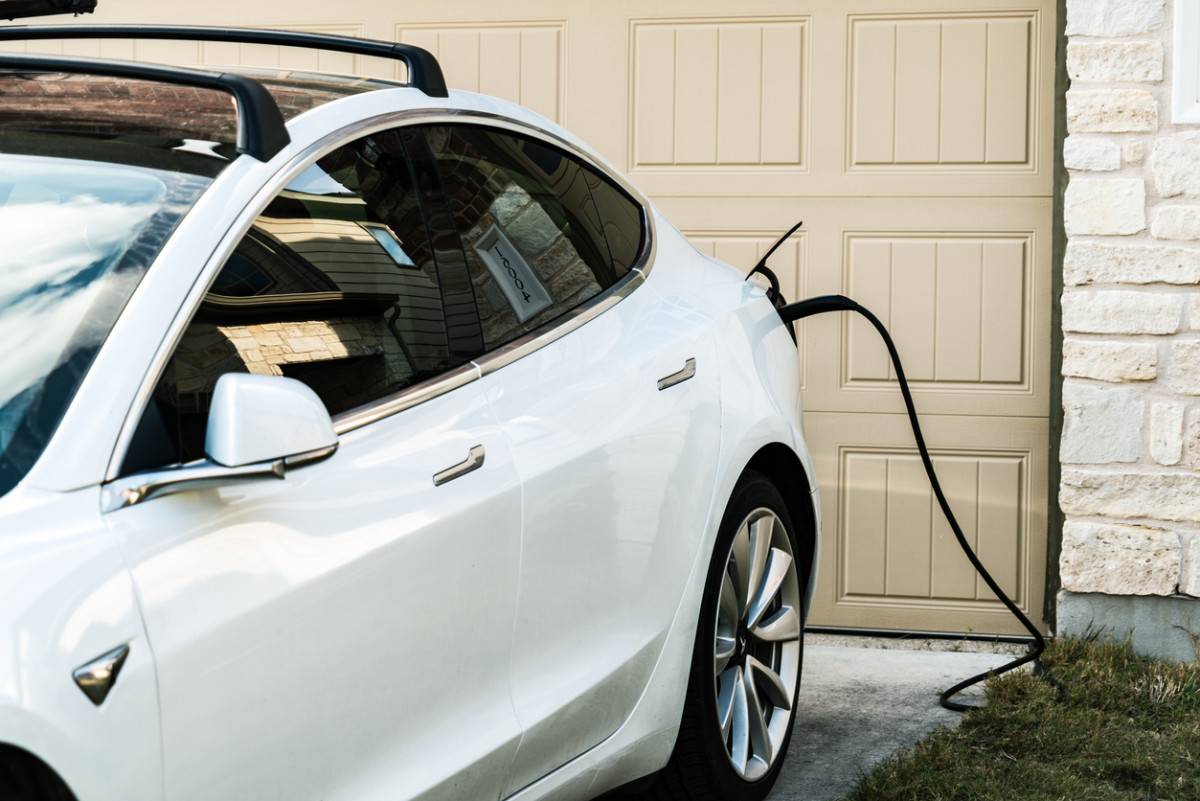
The Equinox EV comes standard with an 11.5 kW AC charger, but a 19.2-kW upgrade is available on the RS trim. It will charge faster than the standard unit but will end up costing you a little more over time due to some efficiency losses. DC fast charging is also included and has a maximum rate of 150 kW. That's slower than some competing EVs, but should still be able to replenish 70 miles of driving range in about 10 minutes.
The front-drive Equinox EV is estimated to reach 60 mph in 8.0 seconds, which is slow for an SUV of this size and especially leisurely for an electric car, at least on paper. In practice, acceleration feels much quicker than those specs suggest. As with almost any EV, the initial pedal response is immediate when compared to a gas-powered car, and under continued motivation, it never feels weak. The AWD variant is estimated to reach 60 mph in only 6.0 seconds and should deliver more of the typical breathtaking launch that other EVs have.
The Equinox EV comes to a stop just as smoothly as it gathers speed. The brake pedal is appropriately firm to instill confidence and is also easy to modulate. One-pedal driving is available in the drive settings and does not have to be reset every time you get in the vehicle. You also have two levels of regeneration when you lift your foot off the accelerator. In its most aggressive setting, it can be a little jumpy when trying to carefully squeeze into a tight parking spot but it gets easier with experience.
The ride quality is pleasantly smooth as the suspension smooths over small to moderate bumps and ruts in the road. It's neither too soft or floaty, nor is it too firm or jittery, yet it still corners with confidence and poise. Compared to many other EVs in its class, the Equinox is one of the more comfortable choices.
The cabin is also much quieter than a gas-powered SUV, but perhaps an indication that Chevy is still playing catch-up in the EV space, there is a noticeable boominess on the highway. This low-frequency murmur was something we've noted on earlier electric vehicles over the last decade but has since been reduced or silenced. Most will be able to ignore this by turning up the entertainment volume, but more sensitive passengers could find it fatiguing over long distances.
Form & function
The front seats offer a good amount of comfort thanks to their adequate padding and support. Most features are operated through the touchscreen menus, but thankfully the climate controls also have physical knobs and buttons below for easier and less distracting use. The air conditioning gets the cabin cooled fairly quickly, but on a cold morning (at least by Los Angeles standards) it took several minutes for the system to start blowing warm air.
This is likely due to the implementation of a heat pump instead of a traditional air conditioning system. Heat pumps are much more energy efficient though, and help to extend the Equinox's range. If you live in legitimately cold regions, we suggest taking advantage of cabin preconditioning to not only bypass the wait for heat, but to also keep the vehicle plugged in so you won't needlessly draw power from the battery.
The rear seats are flatter and firmer than the front and do not slide or recline. The cushion is mounted rather low to the floor, reducing thigh support but increasing headroom. There is enough vertical space to accommodate average-sized adults back there, but six-footers will likely be bumping up against the headliner. Conversely, there's plenty of legroom to stretch out.
Storage for your personal items is adequate but not generous. You get some smallish trays and cupholders, medium-sized cupholders, and narrow door pockets. Cargo space is much more useful, with a 26.4 cubic-foot capacity that is slightly larger than many rivals. A hands-free power liftgate is available as an option, but unlike many EVs, there's no front trunk (frunk).
Technology
The Equinox EV's infotainment system benefits from the large 17.7-inch touchscreen that displays sharp graphics with quick responses. Having the screen atop the dash and using large on-screen icons makes operation easy and reduces distraction when driving. The system is powered with Google Built-in, which integrates several map, traffic, and productivity features that give it an advantage over some other systems. Users can also download additional apps that include Spotify.
On the whole, the infotainment system works well and without any glitches. The only problem we have is the lack of Apple CarPlay integration. Unfortunately, it's a big problem because Chevy's interface with Apple Music is akin to rooting through your raw storage folders and files to select a particular song. The lack of messaging and a familiar interface may also seem trivial, but after relying on Apple CarPlay for the last decade, its absence could be a deal-breaker for nearly 60 percent of smartphone owners. This could turn shoppers toward the related Honda Prologue, which is based on the same GM platform (albeit upsized so that it’s dimensionally closer to the Chevy Blazer EV) yet offers CarPlay. At least a wireless charging pad is available.
The six-speaker audio system is helped by the relative silence of the interior but is otherwise unimpressive. It's not particularly powerful when it comes to bass, and some distortion can be detected in the higher registers, too. Unfortunately, there is no premium audio upgrade.
Safety
In crash tests conducted by the National Highway Traffic Safety Administration (NHTSA), the 2025 Chevrolet Equinox essentially aced all of the evaluations. It received a full five out of five stars in its overall rating, frontal and side impacts, and rollover protection. As of this writing, results from the Insurance Institute for Highway Safety (IIHS) are not yet available.
All Equinox models come with the typical advanced safety features expected of almost any vehicle today. These include frontal collision warning with automatic emergency braking, adaptive cruise control, lane-keep assist, a blind-spot monitor with steering intervention, and automatic high beams. Also standard is GM's safety alert seat that buzzes when a warning is activated, making it less jarring than the usual blinking lights and beeps.
For added assurance, the optional Active Safety Package 2 upgrades to a surround-view camera system with rear pedestrian alerts. The Active Safety Package 3 steps it up with a semi-automated parking system and the Super Cruise automated hands-free highway driving system. Technologically, Super Cruise is the Equinox's killer app that almost puts it on another level. Only the Ford Mustang Mach-E has a similar system called BlueCruise in the class. Otherwise, you'll have to move to much more expensive luxury vehicles for something similar.
In our time with the base Equinox EV LT, we experienced only a few isolated false alarms from the frontal collision warning system. The other features were just as dependable and unintrusive.
Cost-effectiveness
The 2025 Chevrolet Equinox EV has a manufacturer’s suggested retail price (MSRP) starting at $34,995 (including $1,395 in destination fees) for the LT base model with FWD. Upgrading to the dual-motor AWD powertrain increases the price by $5,300, for a starting price of $40,295. The RS trim is the sportier version with larger wheels, blacked-out styling elements, red interior accents, and a few added convenience and safety packages. Prices start at $45,790 for the single-motor, while the dual-motor version increases by $3,300 to $49,090.
The entry-level LT is the economical choice, but you also won't feel as though you're getting a stripped-out version. Besides the RS' sporty embellishments, it doesn't hold a real advantage for the added cost. Whichever route you pick, the Equinox EV holds a significant advantage over many of its competitors in the form of the desirable $7,500 federal EV tax credit. If you're eligible for the full savings, the Equinox EV is one of the best deals on an EV today. Fair warning, though, those incentives may not be around forever.
Credits notwithstanding, the Chevy Equinox EV remains a strong choice among today's crop of EVs. It benefits from plenty of range, enjoyable driving dynamics, and a smooth and comfy ride. The biggest sore thumb is the lack of Apple CarPlay, and depending on how much you rely on it, could be a deciding factor.
Outside of that glaring omission, the Equinox EV is an excellent alternative to other electric crossovers such as the Ford Mustang Mach-E, Hyundai Ioniq 5, Kia EV6, Tesla Model Y, and Volkswagen ID.4. The related Chevrolet Blazer EV and Honda Prologue will deliver a similar driving experience, though the Honda further benefits by including Apple CarPlay.

What owners say
Trims & specs
Base MSRP N/A | Seating N/A |
Engine N/A | Cargo Capacity 26.4 cu ft |
Combined MPG N/A | Drivetrain N/A |
Base MSRP N/A | Seating N/A |
Engine N/A | Cargo Capacity 26.4 cu ft |
Combined MPG N/A | Drivetrain N/A |
Base MSRP $40,295 | Seating 5 |
Engine N/A | Cargo Capacity 26.4 cu ft |
Combined MPG N/A | Drivetrain N/A |
Base MSRP $44,395 | Seating 5 |
Engine N/A | Cargo Capacity 26.4 cu ft |
Combined MPG N/A | Drivetrain N/A |
Base MSRP $34,995 | Seating 5 |
Engine N/A | Cargo Capacity 26.4 cu ft |
Combined MPG N/A | Drivetrain N/A |
Base MSRP $45,395 | Seating 5 |
Engine N/A | Cargo Capacity 26.4 cu ft |
Combined MPG N/A | Drivetrain N/A |
Base MSRP $42,095 | Seating 5 |
Engine N/A | Cargo Capacity 26.4 cu ft |
Combined MPG N/A | Drivetrain N/A |
Base MSRP $47,695 | Seating 5 |
Engine N/A | Cargo Capacity 26.4 cu ft |
Combined MPG N/A | Drivetrain N/A |


Pricing trends
MSRP range
$33,600 - $46,700
Current avg. market price
$26,784
Trending down by 1.5% this month
May 2026 - October 2026