2026 Cadillac Escalade IQL Reviews, Pricing & Specs
Pros & cons
What we like
Stylish design
Spacious
Standard advanced safety features
What to consider
Poor ride quality
Unintuitive technology
Needs high-power chargers to be practical
Expert review
The IQL body style adds more third-row space to Cadillac’s electric Escalade.
Cadillac is adding a second body-style option to the electric Escalade for its second model year. The IQL has a more upright roofline that adds a little more cargo space than the standard Escalade IQ that debuted for the 2025 model year, but has the same mechanical and tech features. It fulfills the same role in the EV world as the gasoline Escalade does among full-size luxury SUVs—lots of space and towing capacity at the expense of handling and efficiency.
Verdict: The IQL has plenty of space and towing capacity, but the ride and handling are unsophisticated and become liabilities when combined with this EV’s incredible power.
out of 10 expert review
Look & feel
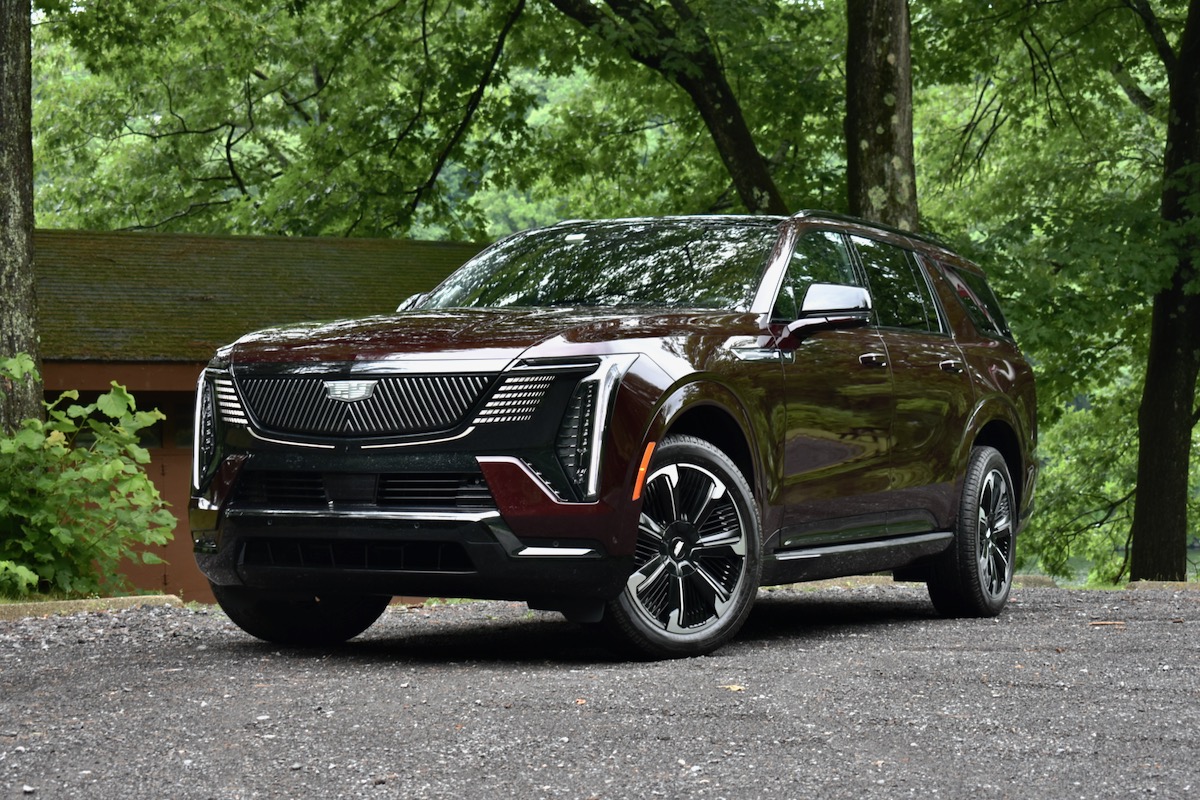
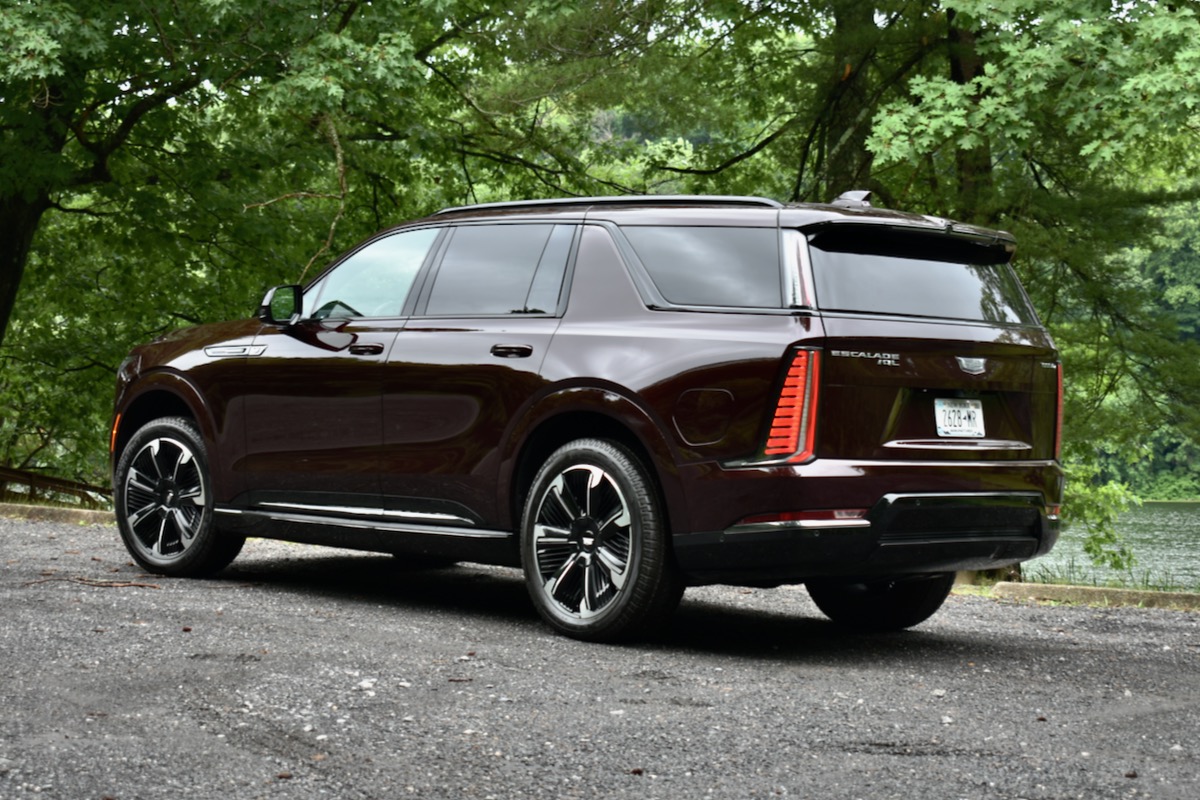
To spot the difference between the Escalade IQL and the Escalade IQ without cheating and looking at the badge, take a look at each electric SUV in profile. The IQ’s roof drops a bit at the back, while the IQL’s is more or less a straight line from windshield to tailgate. This also gives the IQL a boxier appearance in rear-three-quarter view, but otherwise the difference isn’t that noticeable. The imposing illuminated grille flanked by vertical headlights makes a much stronger impression, and the front-end treatment is identical whether it's IQL or an IQ.
The electric Escalade models definitely have the presence that has always been one of this SUV’s biggest selling points, but the gasoline Escalade’s 2025 refresh, which brought styling elements similar to the electric models, made the IQL and IQ less distinctive. It’s an impressive feat of design, though, because the gasoline and electric models are based on completely different platforms and dimensionally different. The electric IQL and IQ sit between the standard-wheelbase Escalade and the Escalade ESV in length, and the IQL stands almost two inches taller. The electric models can also be equipped with 24-inch wheels (22-inch wheels are standard on the IQL).
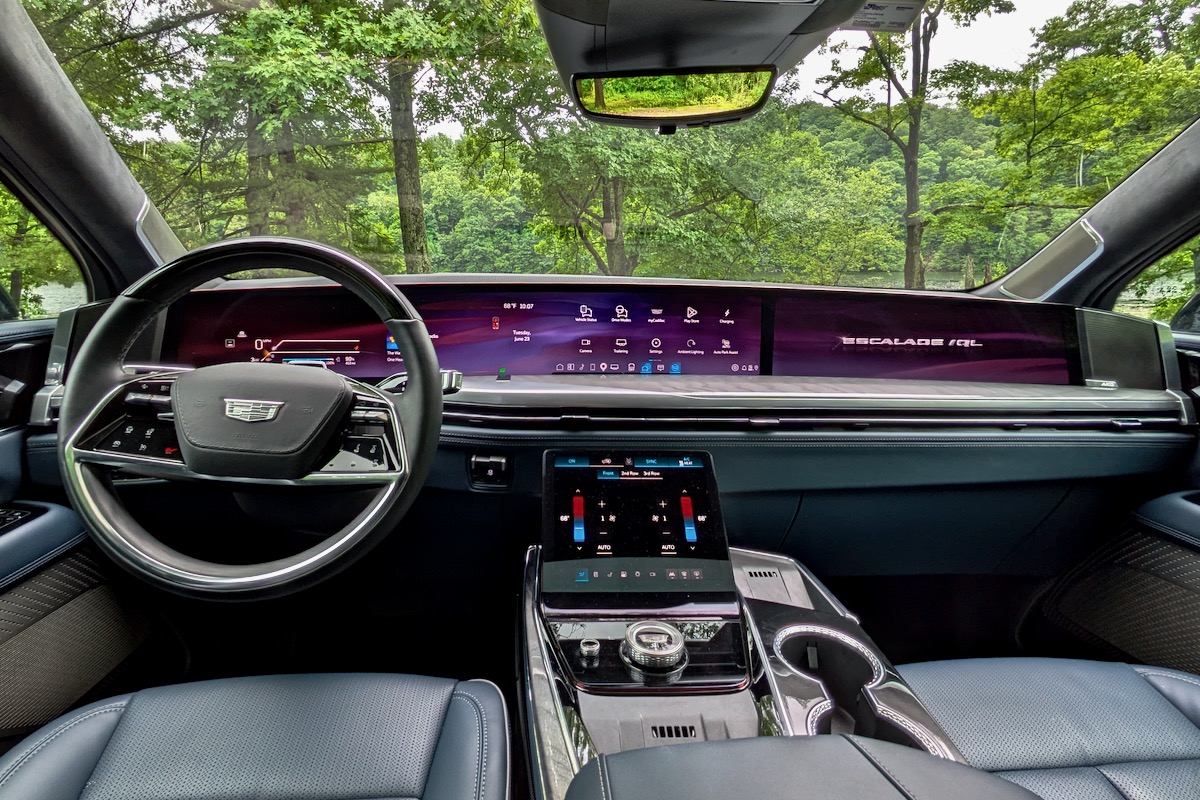
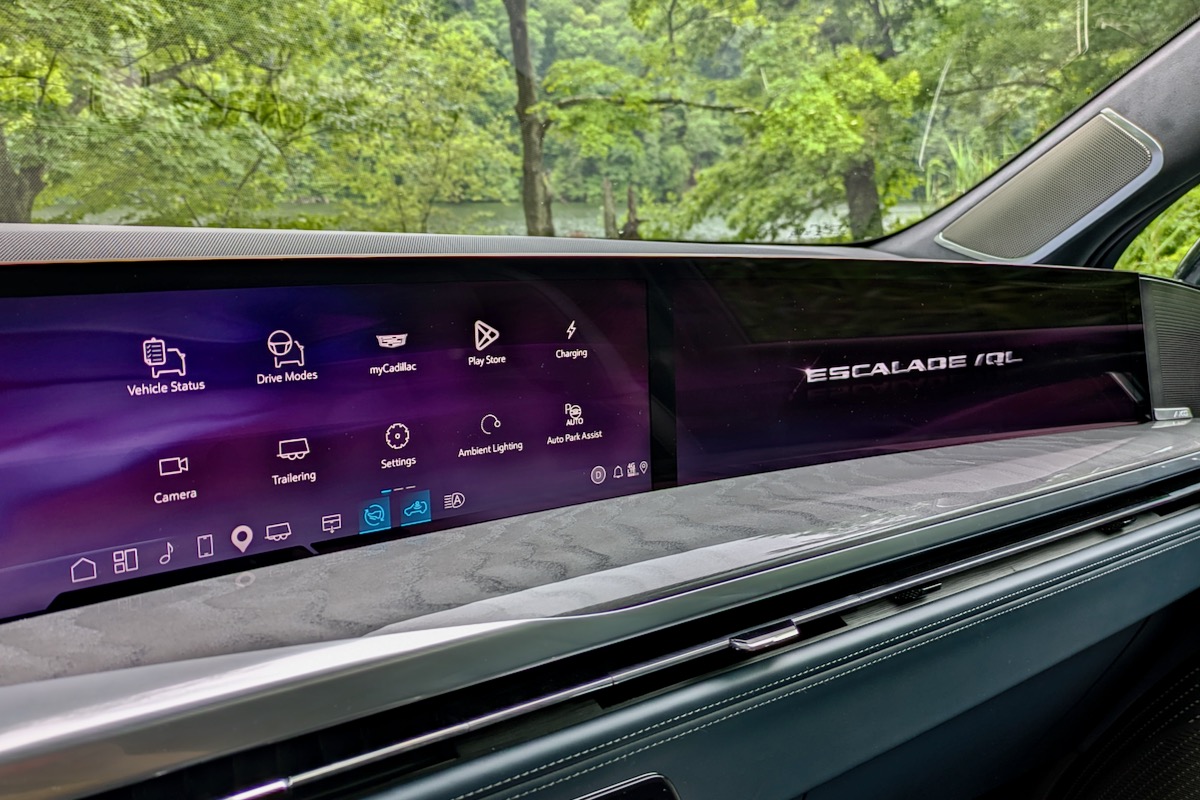
There’s more visual drama inside, courtesy of a dashboard-spanning screen, but this is also available in the gasoline Escalade. The deep dash necessitated by that screen, as well as thick door cards, make the front seats snugger than expected, but buyers still get all the features typical of a luxury vehicle.
Cadillac offers the 2026 Escalade IQL in Luxury and Sport design themes, with a Premium trim level for each. Our test car arrived in Premium Sport trim, meaning it had diamond-cut wheels and darkened trim on the outside, and 16-way power-adjustable massaging front seats inside (heated and ventilated front seats are standard).
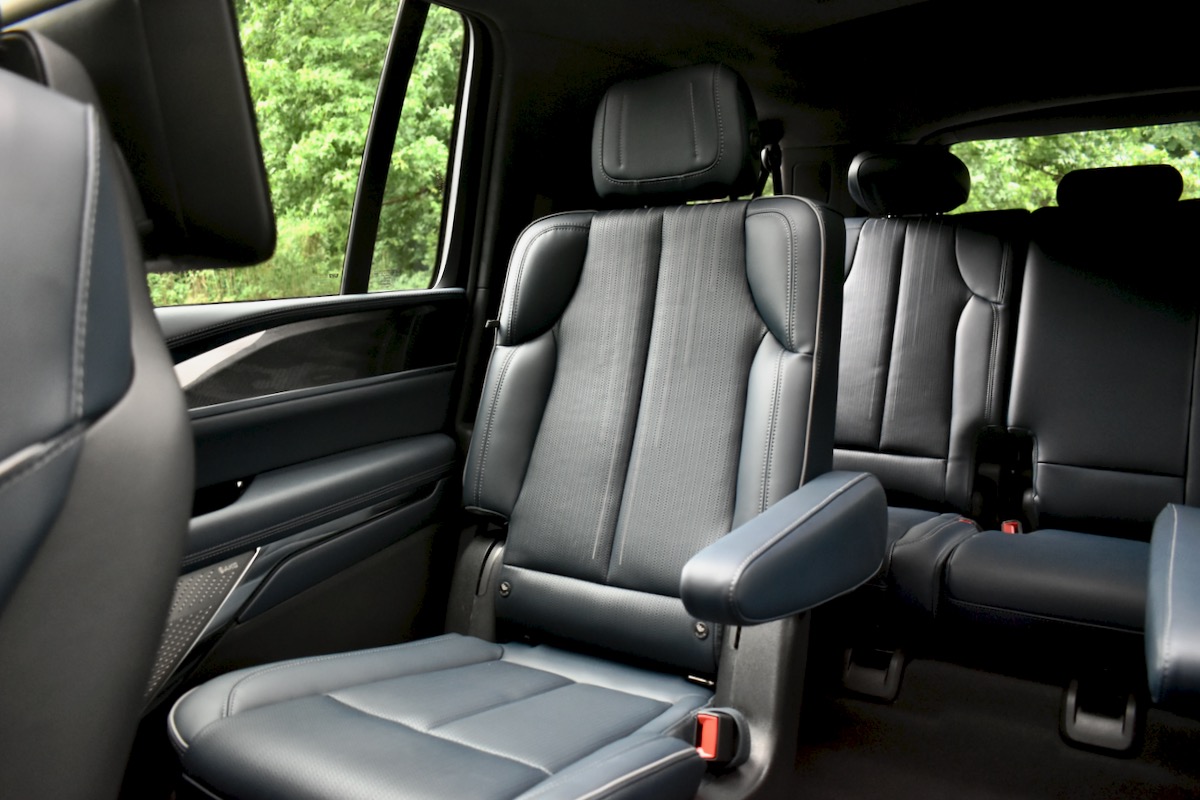
Our test car still had synthetic leather upholstery, which Cadillac pitches as a sustainability play in line with the IQL’s electric powertrain. It felt like the real thing, though, and looked immaculate thanks to intricate stitching and perforation. That combined with smartly detailed speaker grilles and glossy wood trim to give the cabin an appropriately luxurious feel. And Cadillac gets points for creativity by offering a blue interior option.
Performance
Like the Escalade IQ, the IQL is based on a dedicated EV platform shared with the GMC Hummer EV and the Chevrolet Silverado EV and GMC Sierra EV pickups, with a standard dual-motor all-wheel drive (AWD) powertrain. Output is unchanged from the IQ at 750 horsepower and 785 pound-feet of torque when using the driver-selectable Velocity Max mode, a rebranded version of GMC’s Watts to Freedom (WTF) and Chevy’s Wide Open Watts (WOW) modes.
Velocity Max both unlocks full power and acts as launch control to get the Escalade IQL from 0-60 mph in 4.7 seconds, according to Cadillac. That’s just 0.3 second slower than the gasoline Escalade-V performance model, which is impressive considering that the IQL is likely quite a bit heavier. Thanks to a double-layer 200-kilowatt-hour battery pack shared with its platform mates, the IQL is pushing 9,000 pounds.
While the powertrain can overcome that weight, the chassis cannot. Our test car was equipped with adaptive air suspension and magnetic dampers, but even the firmest settings made for indifferent handling. The friction brakes also didn’t feel up to the task of stopping such a heavy vehicle in a hurry, and even the strongest regenerative braking setting wasn’t strong enough to one-pedal this beast.
Despite being based on a unibody architecture that should provide greater rigidity, the IQL also felt disappointingly similar to the gasoline Escalade and its old school body-on-frame platform in the ride-quality department. We still felt a lot of shuddering, and our test car’s 24-inch wheels did not help.
The one area where the electric IQL has an advantage over the gasoline Escalade is in parking-lot maneuvering. A four-wheel steering system dramatically reduces the turning radius at low speeds, and while the steering was uncommunicative, it was precise enough to aid in docking this land yacht. Low-speed diagonal maneuvers are also possible with Arrival Mode, Cadillac’s name for the CrabWalk feature also seen on the GMC EVs, but real-world uses for this are rare.
The IQL also offers towing capacity worthy of a full-size SUV, at 7,500 pounds. That’s a little lower than the standard Escalade IQ’s 8,000 pounds, likely due to a difference in curb weight, but it’s still more than most other electric SUVs.
Form & function
The Escalade IQL isn’t the only three-row electric SUV on the market right now, but it is the only one with a footprint that matches that of gasoline equivalents. The IQL further improves on that with more than four inches of additional third-row legroom and about an inch of extra third-row headroom compared to the standard Escalade IQ. That makes for one of the few third rows that adults might actually be able to occupy comfortably for more than short trips.
Headroom and legroom across all three rows beat other premium-priced three-row EVs, but they should, because the IQL is absolutely massive. It’s over two feet longer than a Lucid Gravity, a Rivian R1S, or a Volvo EX90. However, differences in space between the IQL and the gasoline Escalade are smaller than expected, despite the ostensible packaging efficiencies of an electric powertrain.
In addition to offering plenty of space, the Escalade IQL can be equipped with amenities worthy of a true luxury vehicle. Like the Escalade IQ and the gasoline Escalade, it’s available with an Executive Second Row seating setup that includes 16-way power adjustable captain’s chairs with heating, ventilation, and lumbar massage, and aircraft-style tray tables. This option also increases legroom by approximately 3.5 inches so occupants can really stretch out. We’re definitely hoping our next Uber Black has this option.
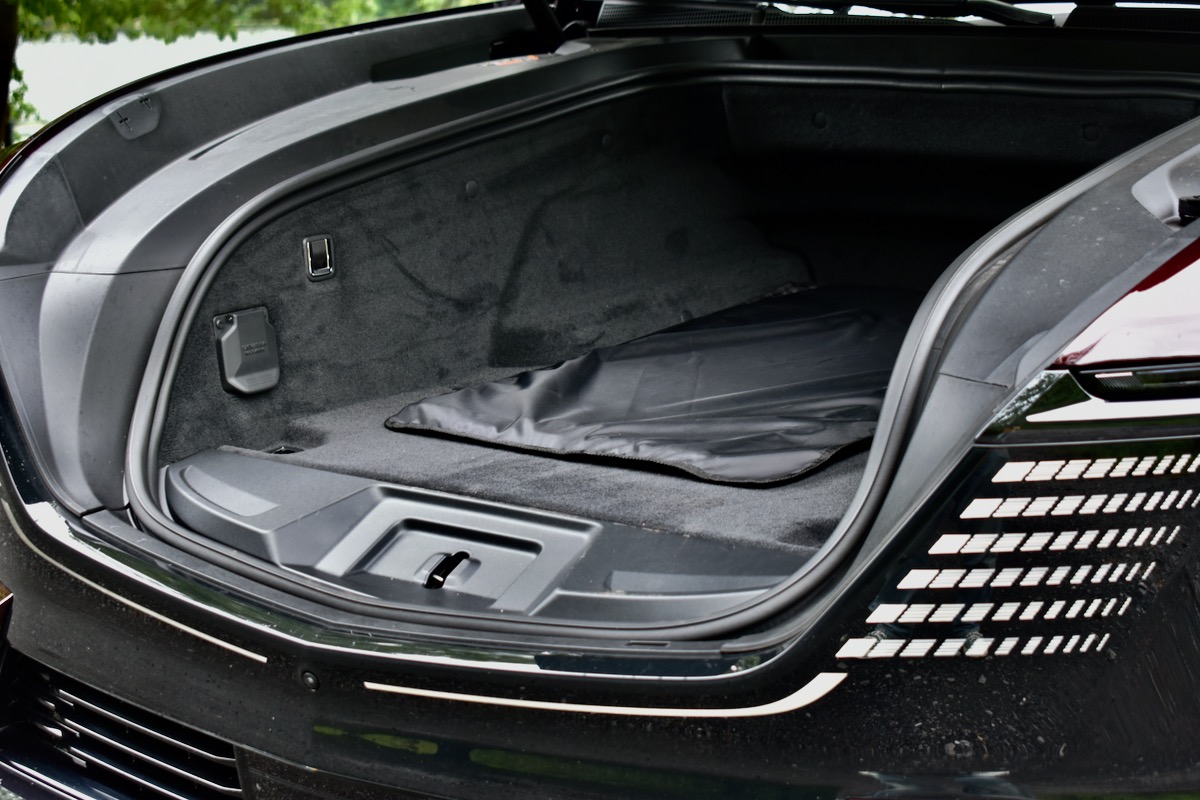
Unlike the IQ, the IQL also offers a true advantage over the gasoline Escalade in cargo space. The 24.2 cubic feet behind the third row is slightly less than that of the standard-wheelbase gasoline model, but the 75.4 cubic feet behind the second row and 125.2 cubic feet behind the first row exceed it. Both the IQ and IQL also have a standard 12.2-cubic-foot frunk that’s bigger than those of most other EVs, although its narrow, deep shape can make it difficult to reach items at the back.
Technology
As we noted, all Escalade models—gasoline or electric—have the same door-to-door display. At 55 inches, it’s certainly scaled to the IQL’s size, although it effectively operates as three independent elements: an instrument cluster, a central touchscreen, and a supplementary front-passenger touchscreen. There’s a standard head-up display for the driver as well. An additional touchscreen below it handles most controls, including temperature, seat adjustments, and the available power-operated doors. Closing the doors with a finger swipe was undeniably cool.
While the display looked high-tech, it also showed that more tech isn’t necessarily better. General Motors uses a Google-based infotainment system in all of its vehicles, but doesn’t enable Apple CarPlay and standalone Android Auto in its EVs. The automaker wants drivers to use the native apps, but that requires an unusually high level of familiarization with the controls. The Escalade IQL relies on the touchscreens for a lot of functions (even the headlights), but others, such as the air-suspension height adjustment and frunk release, are hard buttons located on a different part of the dash. And while we always appreciate a volume knob, it’s quite a stretch for the front passenger to reach.
We also struggled to find a use for front-passenger screens. The Escalade IQL’s allows passengers to watch YouTube videos while moving, but doesn’t mandate headphones, so drivers may be subjected to distracting audio. Speaking of audio, receiving a text message via a Bluetooth-connected phone caused SiriusXM to freeze on one occasion. It’s a glitch we haven’t experienced in other GM vehicles with this infotainment software, though.
The IQL audio systems demand higher quality than satellite radio, anyway. A 21-speaker AKG system is standard, while Premium models get a 38-speaker version with Dolby Atmos compatibility. The latter exhibited impressive power and clarity in the IQL’s cavernous interior, but the Atmos enhancements only work on certain tracks remixed for it and streamed through participating services.
Safety
Like the Escalade IQ, the IQL comes standard with expected driver-assistance features such as forward-collision warning, automatic emergency braking, adaptive cruise control, lane-keep assist, lane-departure warning, and blind spot monitors (with steering assist). Night vision is standard, too, along with a surround-view camera system and a digital rear-view mirror—both helpful on an SUV of this size.
GM-specific features include a vibrating seat to convey warnings from the various driver aids, a teen-driver monitoring system, and the Super Cruise hands-free driving system. Standard on the Escalade IQL, Super Cruise can handle acceleration, braking, and steering on pre-mapped roads as long the driver keeps their eyes on the road. It does all of that impressively well—even in a vehicle as big and ungraceful as the IQL—but drivers still have to remain on alert for situations that might confuse the system, such as construction zones or blind spots in its maps.
Crash-test ratings from the Insurance Institute for Highway Safety (IIHS) and National Highway Traffic Safety Administration (NHTSA) were not available at the time of writing. Note that while the NHTSA gave the gasoline 2026 Escalade a five-star overall safety rating, that does not apply to electric Escalade models, as they’re structurally and mechanically different.
Cost-effectiveness
At a GM-estimated 460 miles (the same as the Escalade IQ), the IQL has among the longest ranges of any current EV, but because GM achieved that by simply making the battery pack bigger rather than focusing on efficiency, making the most of that range can lead to headaches when it's time to charge.
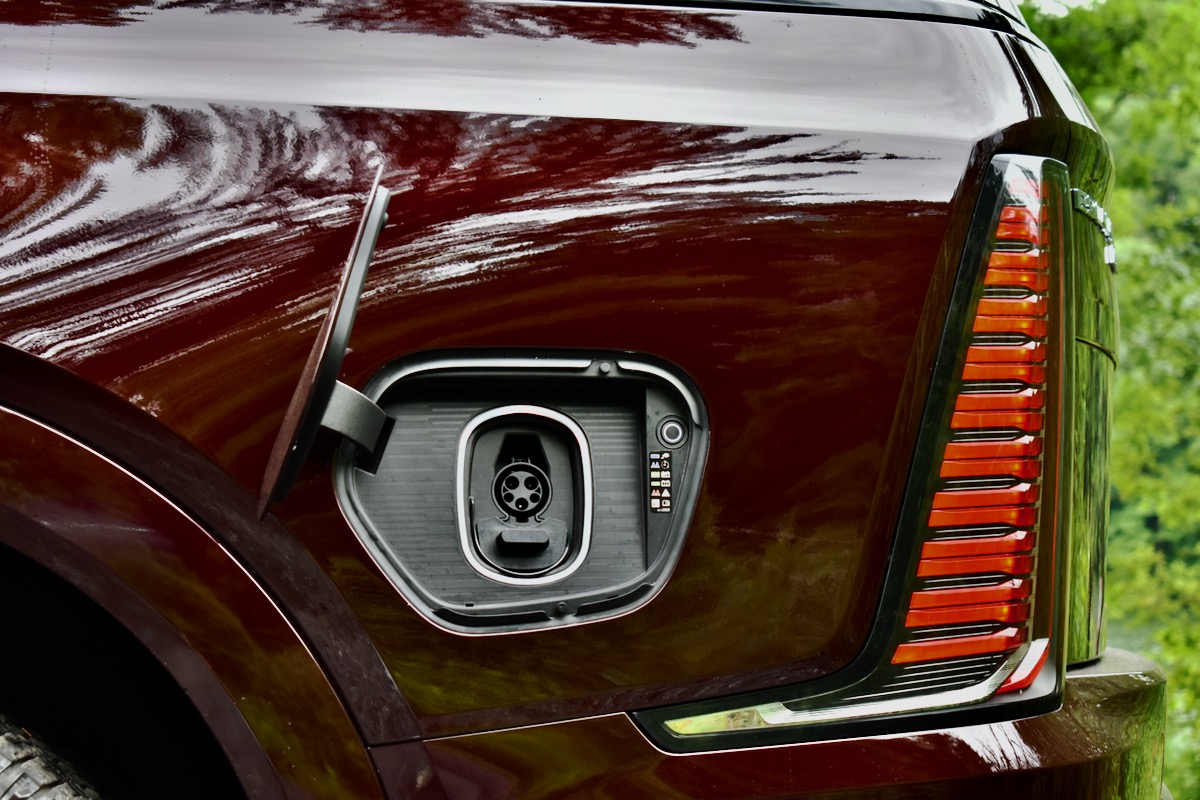
The Escalade IQL can nominally DC fast-charge at 350 kilowatts, recovering 100 miles in 10 minutes, but charging speed will likely slow significantly with lower-power stations. And with so much battery capacity to fill, that means going from a low state of charge to the typical 80% could take a while in less-than-perfect conditions. The IQL still has a CCS charge port, but can charge at Tesla Supercharger stations with a $275 NACS adapter.
Cadillac says the IQL can recover 36.5 miles of range per hour using the optional 19.2-kilowatt AC onboard charger (an 11.5-kW charger is standard), which means a full recharge should take about 12 hours. That’s right on the bubble of inconvenience, especially if a home charger can’t match the IQL’s maximum power level.
However, that big battery pack means the Escalade IQL could power a house for several days during a blackout. All current GM EVs have bidirectional charging capability, and GM has an entire home-energy division that will sell buyers the hardware (at a cost of thousands of dollars, granted) and coordinate installation.
Pricing for the Escalade IQL itself starts at $133,300 with the frankly ridiculous $2,895 destination charge. That base price is $3,000 more than the standard Escalade IQ and applies to the Luxury trim level; the Sport is an additional $500. Premium Luxury and Premium Sport trim levels are also available at $153,600 and $154,100, respectively. They add 24-inch wheels, the 38-speaker audio system, and a handful of other features, but the difference in equipment isn’t as great as the price gap suggests.
Our Premium Sport test vehicle’s Black Cherry Tintcoat paint, rear-seat entertainment system, center-console refrigerator, NACS adapter, and Bluetooth headphones brought its as-tested price to $159,845 with destination. Unless shoppers have their hearts set on an Escalade and feel guilty about burning gasoline, that’s hard to justify. A Rivian R1S can tow about as much as the Cadillac, the Lucid Gravity is a much better use of space and much more efficient, and the Mercedes-Benz G-Class EV has a similar wow factor. The IQL is good at being an Escalade, but that’s about it. And in the ride and handling department, it hews too closely to its gas-guzzling progenitor.

What owners say
Trims & specs
Base MSRP $130,905 | Seating 7 |
Engine N/A | Cargo Capacity 24.2 cu ft |
Combined MPG N/A | Drivetrain N/A |
Base MSRP $150,705 | Seating 7 |
Engine N/A | Cargo Capacity 24.2 cu ft |
Combined MPG N/A | Drivetrain N/A |
Base MSRP $151,205 | Seating 7 |
Engine N/A | Cargo Capacity 24.2 cu ft |
Combined MPG N/A | Drivetrain N/A |
Base MSRP $130,405 | Seating 7 |
Engine N/A | Cargo Capacity 24.2 cu ft |
Combined MPG N/A | Drivetrain N/A |


