2026 Ford Explorer Reviews, Pricing & Specs


Pros & cons
What we like
Comfortable
Optional twin-turbo V6
Impressive safety ratings
What to consider
Bland styling
Nondescript interior
Gets expensive with options
The CarGurus verdict
Ford has relaunched the Explorer’s off-road trim level for 2026, but kept almost everything else the same.
The Explorer was one of the first truly family-friendly SUVs, and continues in that role today as a midsize three-row crossover competing against the likes of the Chevrolet Traverse, the Honda Pilot, the Jeep Grand Cherokee, the Nissan Pathfinder, and the Toyota Highlander. The current-generation Explorer has been around since the 2020 model year, and the big news for 2026 is a Tremor model that replaces the Timberline as the most off-road-capable Explorer. The available BlueCruise driver-assist system also gets an update.
Verdict: Ford’s SUV stalwart still gets the job done, but lacks personality unless you go for the ST or Tremor models.
out of 10 expert review
Look & feel
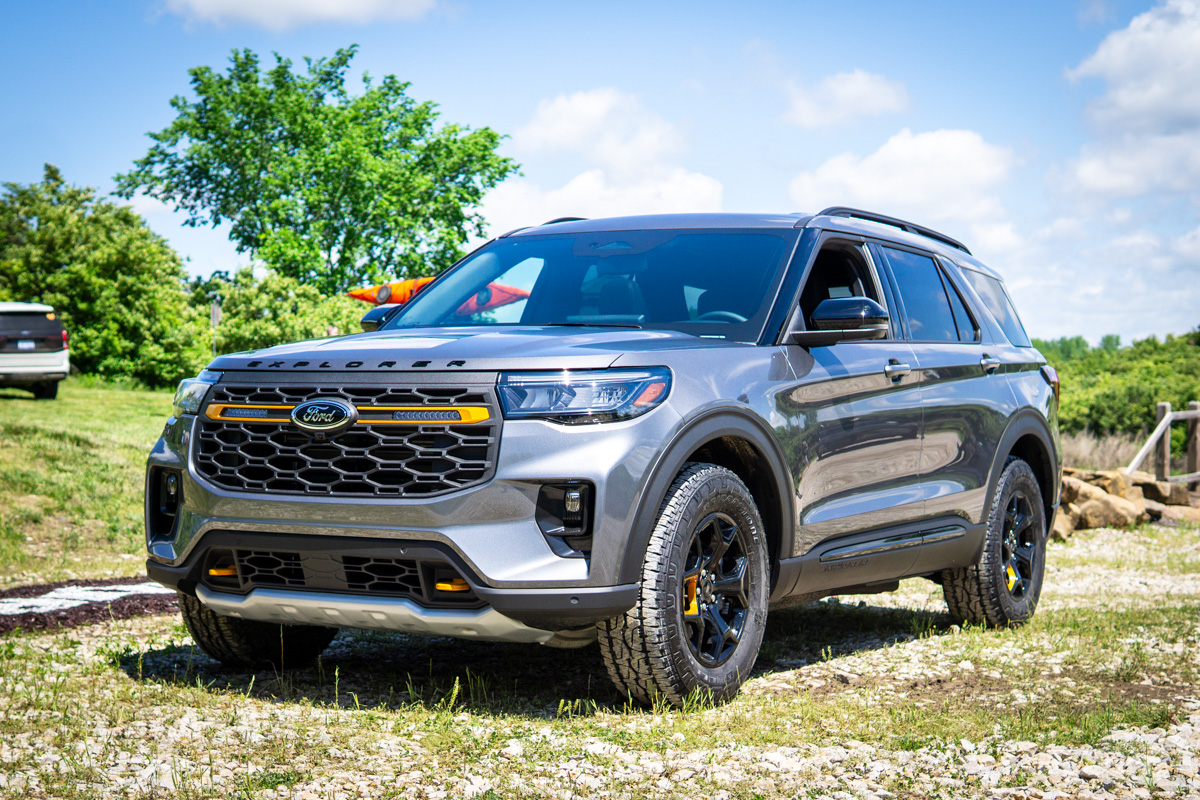
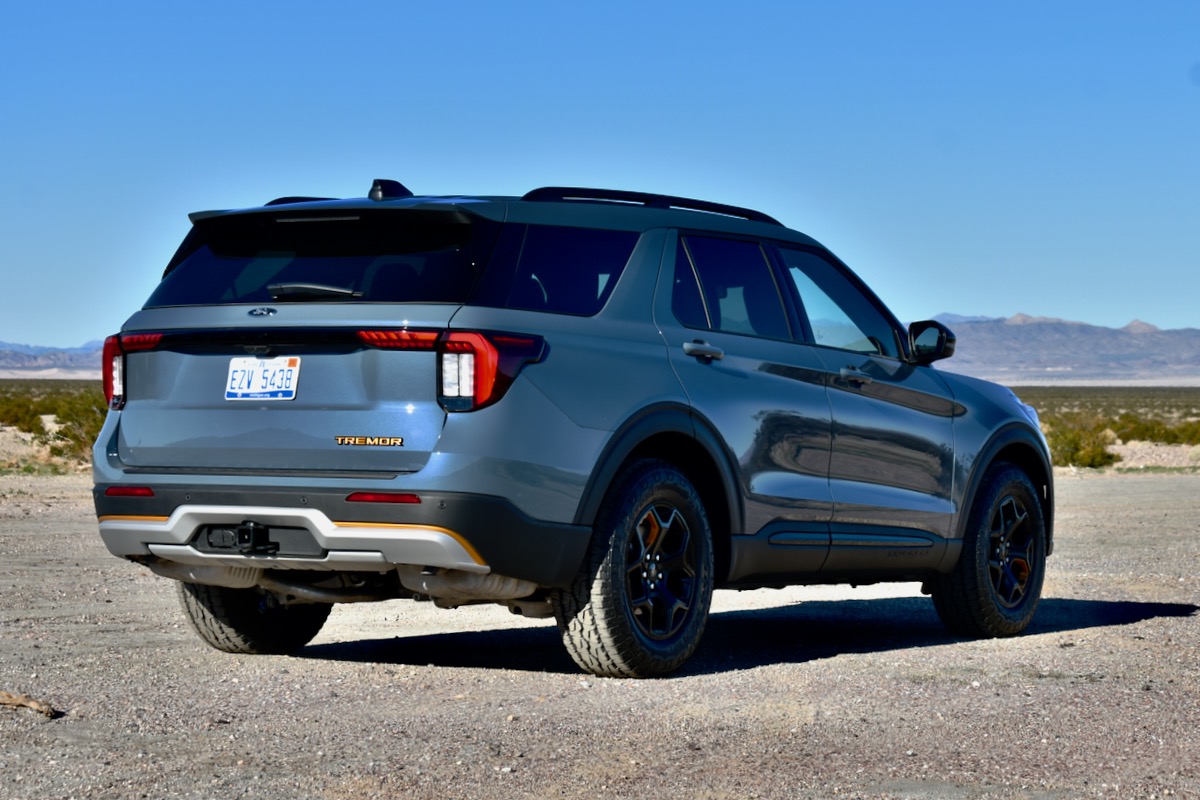
The 2026 Ford Explorer looks pretty much the same as before, but that’s because it got a facelift for the 2025 model year. That facelift gave the Explorer a slightly less streamlined and more truck-like appearance, which serves as the perfect canvas for the 2026 Tremor model. It dials up the ruggedness even further with all-terrain tires mounted on 18-inch wheels, a raised ride height, and off-road lights in the grille. It also wears splashes of what Ford calls Electric Spice—a golden color that looks a bit like the anodized shade Subaru uses on its Wilderness models. That extends to a pocket on each wheel to make it easier to find the tire valve stem.
Raised suspension gives the Tremor 8.7 inches of ground clearance—the most of any Explorer model—and improves approach, breakover, and departure angles to 23.5 degrees, 18.7 degrees, and 23.7 degrees, respectively. The Tremor also has an inch more ground clearance than a Chevrolet Traverse Z71, and a few tenths of an inch more than a Honda Pilot TrailSport or a Jeep Grand Cherokee without air suspension.
Aside from the new Tremor model, the Explorer lineup is unchanged. The Active is the base model, the Platinum is the most luxurious, and the ST-Line and ST have styling that's more at home on the road than on the trail. Both feature blacked-out grilles and exterior trim, along with bigger wheels on lower-profile tires. The Explorer ST adds some actual performance upgrades in the form of sport-tuned suspension and beefier brakes. However it’s equipped, though, the Explorer looks like a generic SUV, with very little flair in the basic design.
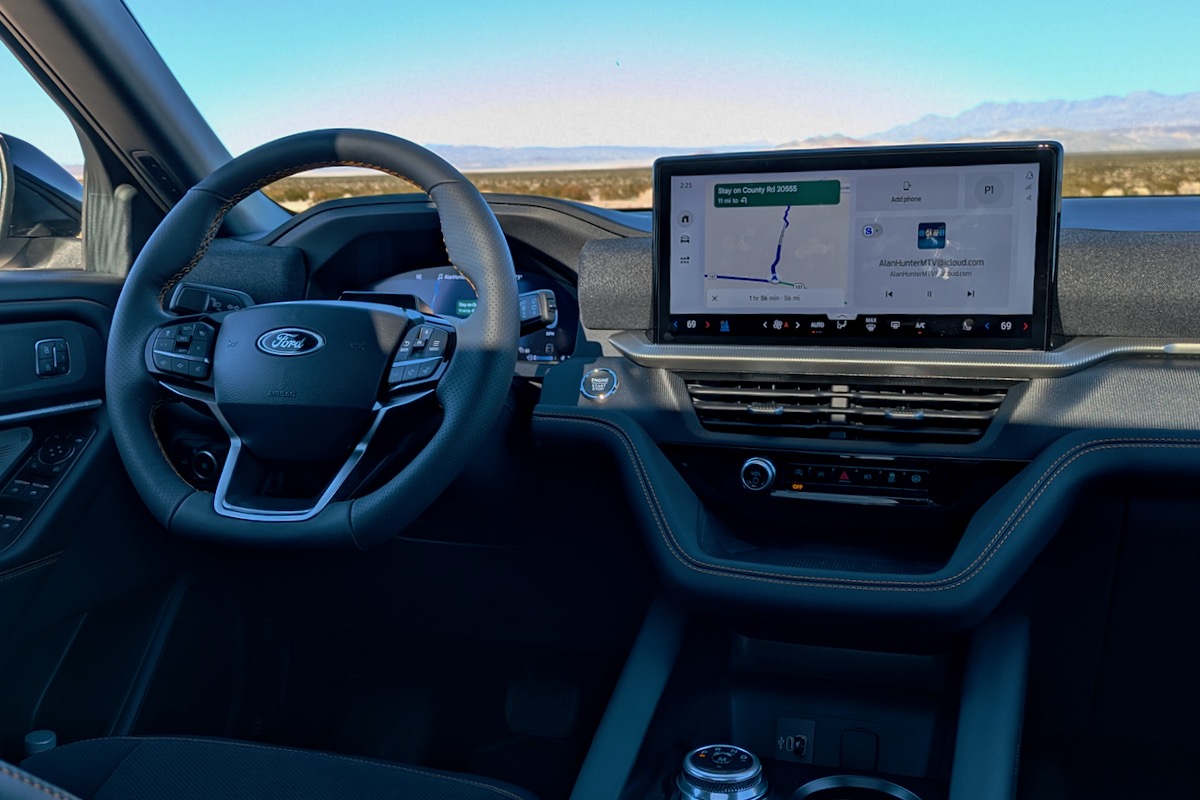
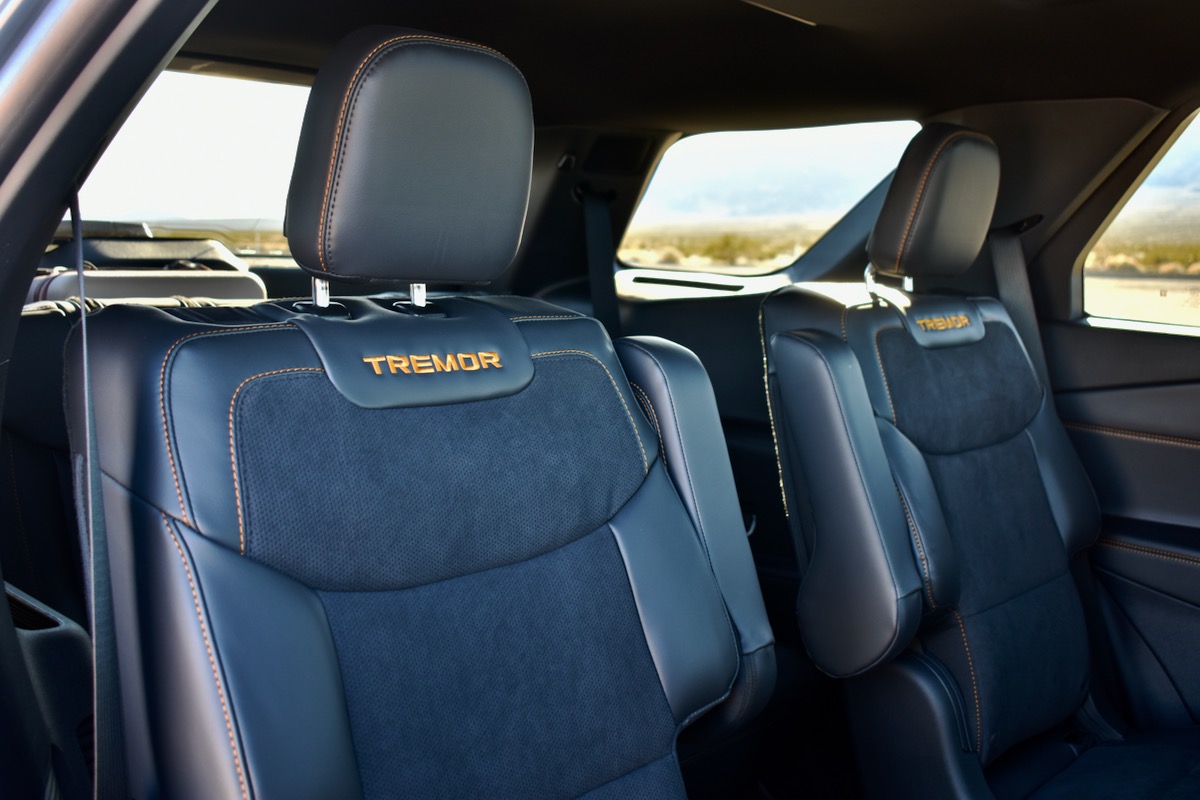
As with the exterior, things don’t change much inside for 2026. Ford already overhauled the interior for the 2025 model year, integrating a new infotainment system and doing away with the awkward-looking screens from previous years. Beyond that, the design doesn’t make much of an impression, and the materials in our generously-optioned Tremor test vehicle didn’t feel worthy of its price. Ford offers lots of different options, though, from the basic cloth seats in the Active to the leather upholstery of the Explorer Platinum.
Performance
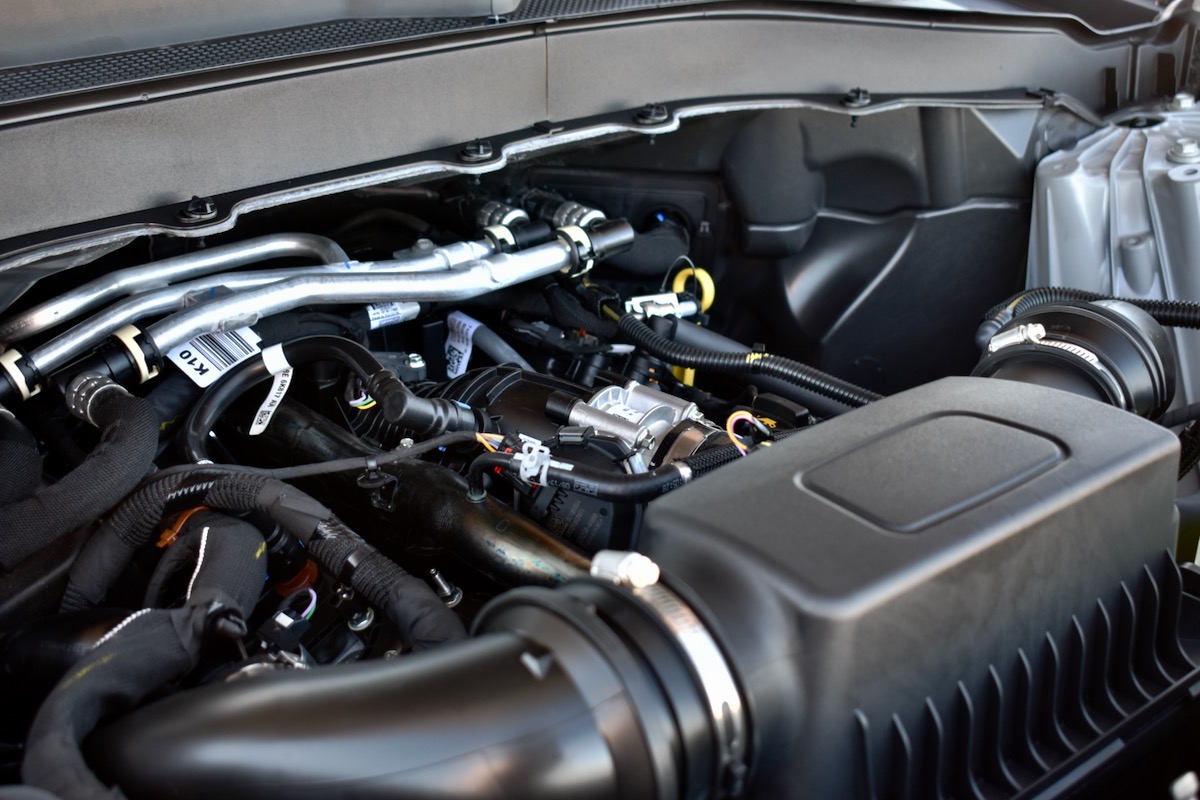
Powertrain options are unchanged for 2026. The standard 2.3-liter turbocharged four-cylinder engine produces 300 horsepower and 310 pound-feet of torque. A twin-turbo 3.0-liter V6 is available on the Tremor grade, and standard on the Explorer ST, producing 400 hp and 415 lb-ft of torque. Both engines comes with a 10-speed automatic transmission and rear-wheel drive (RWD) is standard on the Active, ST-Line, Platinum, and ST trim levels. All-wheel drive (AWD) is optional on those models and standard on the Tremor, which also gets a Torsen limited-slip rear differential, off-road drive mode, and steel skid plates.
The Explorer was once a traditional body-on-frame SUV, but it morphed into a unibody crossover in the 2010s. The current-generation Explorer shares its platform with the Mustang and the Lincoln Aviator, which shows in its on-road poise. Even in a Tremor model with raised suspension and less-grippy all-terrain tires, we were impressed by the Explorer’s confident handling and comfortable ride. You can still sense its size on tight, technical roads, but on highways and roads with faster, sweeping corners, this SUV eats up the miles. The tires were also quieter than we expected, for which we can probably thank the active noise cancellation (standard on all but the base Explorer).
Our test car’s twin-turbo V6 was a reminder that, even in a midsize three-row SUV, 400 hp is more than enough. Those turbos spooled up quickly for near-instant passing power, aided by the impressive 10-speed automatic. Used in everything from the Mustang to the F-150, this gearbox quickly snaps through upshifts and drops down multiple gears without hesitation, which keeps the engine in its powerband—all without the hesitation that can bedevil multi-speed automatics. Based on past experience, the 10-speed also makes the most of the turbo-four engine’s available power, but that engine can feel a little stressed when the Explorer is loaded up with passengers and cargo, or when towing.
When it comes to off-road capability, the Tremor is about the same as the previous Explorer Timberline—which is still way more capability than most people are likely to need. For this test drive, we explored (no pun intended) Death Valley on trails full of protruding rocks, sheer drop-offs, and steep ascents. The Tremor handled everything fine (we only needed the skid plates a couple of times) and while this trek likely would’ve been easier in a Bronco, the drive to and from the trail wouldn’t have been nearly as comfortable.
Form & function
The Explorer can seat up to seven across its three rows (six if you opt for second-row captain’s chairs) and passengers will find a similar amount of space to other midsize three-row crossovers. The Explorer has a bit less headroom in its third row, but still more than you'd find in the cramped third row of a Hyundai Santa Fe. Second-row passengers will also find a bit less legroom than in some competitors. The Honda Pilot, for example, offers an additional 3.8 inches of second-row legroom and also beats the Explorer on third-row legroom by 0.7 inches. Nonetheless, the Ford's available space is still reasonable for a vehicle of this size.
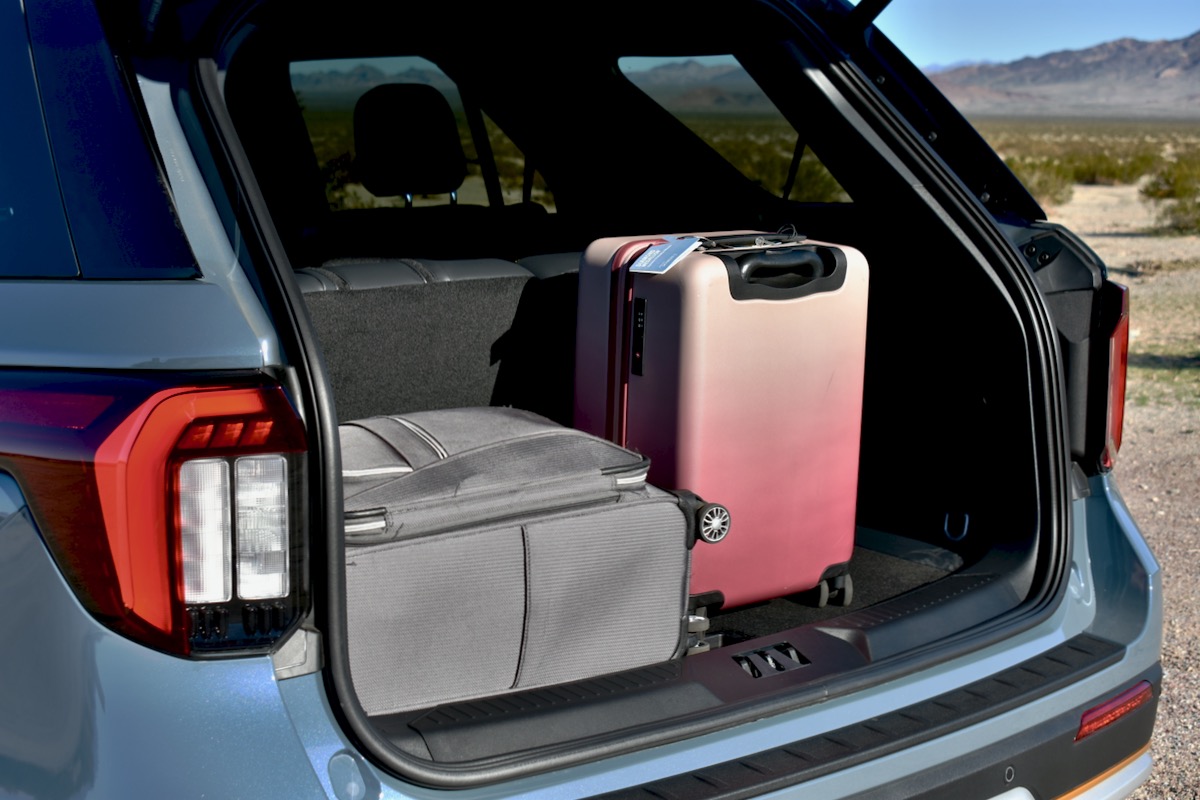
The default 16.3 cubic feet of cargo space with all three rows of seats in place is about the same as a Toyota Highlander's and about two cubic feet more than a Santa Fe's, but it trails the Pilot and the Chevy Traverse. Folding the rear seats nets a more competitive 46 cubic feet, and cargo space expands to 85.3 cubic feet with the second row folded. Again, that’s less than what some rivals offer. In our test vehicle, which was equipped with captain’s chairs, we appreciated the wide channel between the seats, which added a bit more effective cargo space.
Ford doesn’t offer anything unexpected like the Nissan Pathfinder’s underfloor storage bin, but we weren’t wanting for places to put stuff. Two tiers of phone trays, large door pockets, and a big center console storage bin took care of smaller items. The Explorer’s rotary shift knob also makes it easy to reach across to drinks in the adjacent cupholders.
Whether you choose the four-cylinder engine or the V6, the Explorer can tow up to 5,000 pounds when properly equipped. That’s the average towing capacity for a midsize crossover these days, but the Jeep Grand Cherokee and the Nissan Pathfinder are rated for up to 6,200 pounds and 6,000 pounds, respectively.
Technology
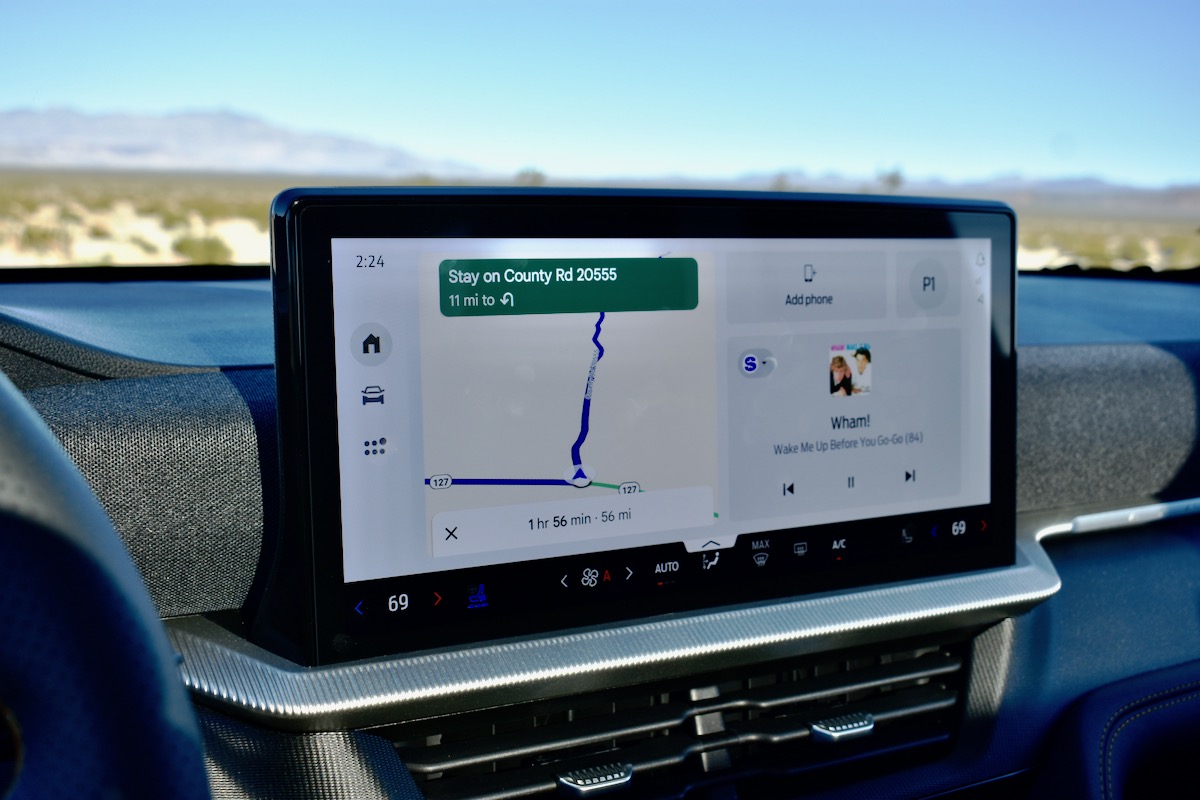
A 13.2-inch touchscreen and 12.3-inch digital instrument cluster are standard on all models, along with wireless Apple CarPlay/Android Auto connectivity, Google Maps, Google Play Store, and SiriusXM with 360L satellite radio (including a free three-month trial). This was the same setup introduced for the 2025 model year, with screens that are better integrated with the dashboard and the newer Ford Digital Experience infotainment system.
First-row and second-row USB-C ports are also standard (there’s a USB-A port for first-row occupants, too), as are two third-row USB-C ports on all but the base Active trim level. That model also has an unbranded six-speaker audio system, while a 10-speaker B&O by Bang & Olufsen system is included with the other trim levels with the option of a 14-speaker version.
The horizontal central touchscreen has simple but functional graphics and is quick to respond to inputs, but the thin row of icons at the bottom, handling climate control functions, could be easier to use. The simple graphic design carries over to the instrument cluster, with large numbers and a bold typeface for the tachometer and speedometer. The cluster has all the functions one could want, including a map view, but it’s easy to forget which combination of steering wheel control inputs is needed to bring up a given display.
The available 360-degree camera system includes an overhead view as well as front and side views that really came in handy off-road. Unlike some brands that pitch such camera systems as off-road features, Ford ensures the cameras don’t turn off when you exceed a certain speed. That makes this tech much more useful for people who actually want to take advantage of the Explorer Tremor’s off-road capability.
Safety
The CoPilot 360+ that’s standard on Active models includes most of the driver-assist features you’d expect on a new car. Adaptive cruise control (with stop-and-go and lane centering), automatic high beams, a blind-spot monitor (with trailer coverage and safety-exit assist), rear cross traffic alert, lane departure warning, lane-keep assist, forward collision warning, automatic emergency braking, rear parking sensors, rear cross traffic braking, post-collision braking, and traffic sign recognition are all part of this package.
Higher trim levels have CoPilot 360 2.0, which adds the 360-degree camera system, a predictive speed assist feature for the adaptive cruise control, and road-edge detection for the lane-keep assist systems.
Ford brought its BlueCruise hands-free highway driving system to the Explorer for the 2025 model year, but for 2026 it’s upgraded from version 1.2 to version 1.5, adding automated lane-change capability. In theory, the system will initiate a lane change if the car ahead is traveling at least 5 mph slower than the set speed and the left lane is clear. The Explorer Tremor stayed put when those conditions were met during our test drive, but initiating lane changes by flicking a turn signal still worked. We didn’t witness any concerning behavior, although we would have preferred more gradual braking when approaching stopped traffic.
The 2026 Ford Explorer is an Insurance Institute for Highway Safety (IIHS) Top Safety Pick+. That’s the insurance industry-funded nonprofit’s highest safety award, and signifies top-notch crash protection as well as top-rated headlights and front-crash prevention tech. The 2026 Explorer also received the highest five-star overall safety rating from the National Highway Traffic Safety Administration (NHTSA), with five stars in frontal and side crash testing and four stars in rollover testing.
Cost-effectiveness
The Explorer delivers acceptable fuel economy for a midsize SUV. The turbo-four engine returns an EPA-rated 24 mpg combined (20 mpg city; 29 mpg highway) with RWD and 23 mpg combined (20 mpg city; 27 mpg highway) with AWD. V6 models are rated at 21 mpg combined (18 mpg city; 25 mpg highway) with RWD and lose 1 mpg combined with AWD.
Thanks to its all-terrain tires, the Tremor is rated at a lower 21 mpg combined (19 mpg city; 23 mpg highway) with the inline-four engine and 19 mpg combined (17 mpg city; 22 mpg highway) with the V6. Ford offered an Explorer hybrid at one point, but dropped that option a few years ago.
Ford’s three-year/36,000-mile bumper-to-bumper warranty and five-year/60,000-mile powertrain warranty match those of most other brands, aside from the Korean duo of Hyundai and Kia, which continue to offer longer warranty terms than the rest of the industry.
Pricing starts at $40,160 (all prices include a $1,965 destination charge) for the most basic Active 100A spec. Ford also lists another version of the Active with a few added convenience features for an additional $2,120. The ST-Line starts at $46,850, the Platinum starts at $52,660, and the ST starts at $56,600. The new-for-2026 Tremor starts at $50,160—about the same as a comparable Chevy Traverse Z71 or Honda Pilot TrailSport—but options such as the V6 engine and the Ultimate Package ballooned the as-tested price of our Tremor to $64,405.
With its powerful engine, off-road capability, and array of convenience features such as massaging front seats, our heavily-optioned Tremor was a very complete vehicle. For those who simply want the most of everything, it’s a good value, but subjectively, the driving experience and interior fit and finish didn’t live up to that price point. Take away even some of those extra-cost features, and the Explorer starts to fade into the background of a crowded midsize SUV segment.
What owners say
super good value for all of the options and features it has!
February 22, 2026Trims & specs
Base MSRP $47,155 | Seating 7 |
Engine 2.3L 300 hp I4 | Cargo Capacity 16.3 cu ft |
Combined MPG 23 | Drivetrain AWD |
Base MSRP $45,155 | Seating 7 |
Engine 2.3L 300 hp I4 | Cargo Capacity 16.3 cu ft |
Combined MPG 24 | Drivetrain RWD |
Base MSRP $40,465 | Seating 7 |
Engine 2.3L 300 hp I4 | Cargo Capacity 16.3 cu ft |
Combined MPG 23 | Drivetrain AWD |
Base MSRP $38,465 | Seating 7 |
Engine 2.3L 300 hp I4 | Cargo Capacity 16.3 cu ft |
Combined MPG 24 | Drivetrain RWD |
Base MSRP $48,965 | Seating 6 |
Engine 2.3L 300 hp I4 | Cargo Capacity 16.3 cu ft |
Combined MPG 21 | Drivetrain AWD |
Base MSRP $48,550 | Seating 5 |
Engine N/A | Cargo Capacity 52.3 cu ft |
Combined MPG N/A | Drivetrain N/A |
Base MSRP $52,965 | Seating 7 |
Engine 2.3L 300 hp I4 | Cargo Capacity 16.3 cu ft |
Combined MPG 23 | Drivetrain AWD |
Base MSRP $50,965 | Seating 7 |
Engine 2.3L 300 hp I4 | Cargo Capacity 16.3 cu ft |
Combined MPG 24 | Drivetrain RWD |
Base MSRP $56,905 | Seating 7 |
Engine 3.0L 400 hp V6 | Cargo Capacity 16.3 cu ft |
Combined MPG 21 | Drivetrain AWD |
Base MSRP $54,905 | Seating 7 |
Engine 3.0L 400 hp V6 | Cargo Capacity 16.3 cu ft |
Combined MPG 21 | Drivetrain RWD |


Pricing trends
MSRP range
$38,465 - $56,905
Current avg. market price
$43,986
Trending down by 1.0% this month
May 2026 - November 2026