2026 Kia Sportage Reviews, Pricing & Specs
Write a review--
Original MSRP
7.3
of 10
expert review
avg user rating
(0 reviews)
Pros
Stylish design
Great safety ratings
Impressive technology
Cons
Fairly pedestrian performance
X-Pro’s underwhelming value proposition
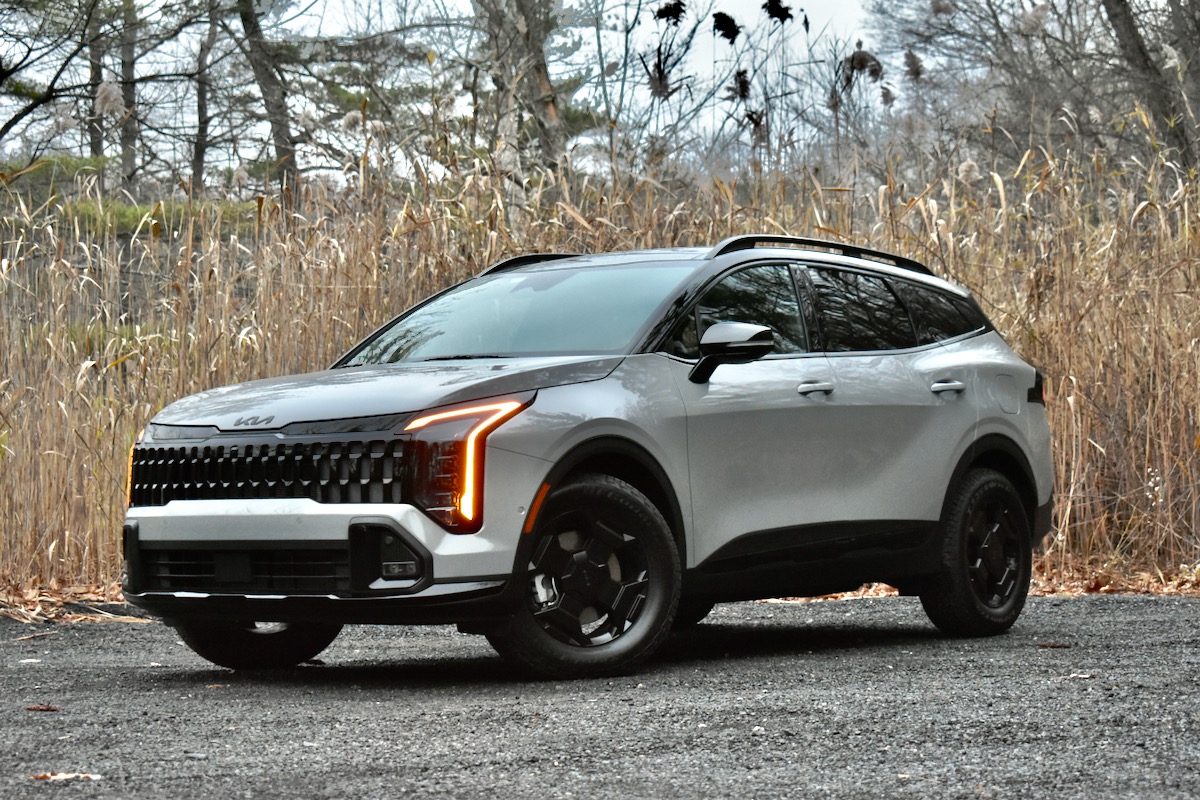
The long-running Kia nameplate gets another update for the 2026 model year.
No model demonstrates Kia’s growth like the Sportage compact crossover SUV. The nameplate has been around since Kia’s early days in the United States, and has evolved into a true rival for popular crossovers like the Honda CR-V, Subaru Forester, and Toyota RAV4. The current-generation Sportage was introduced for the 2023 model year; it gets revised styling for 2026.
Verdict: The refreshed Sportage arrives with the competent execution we’ve come to expect from Kia, but the X-Pro Prestige model doesn’t live up to the brand’s reputation for value.
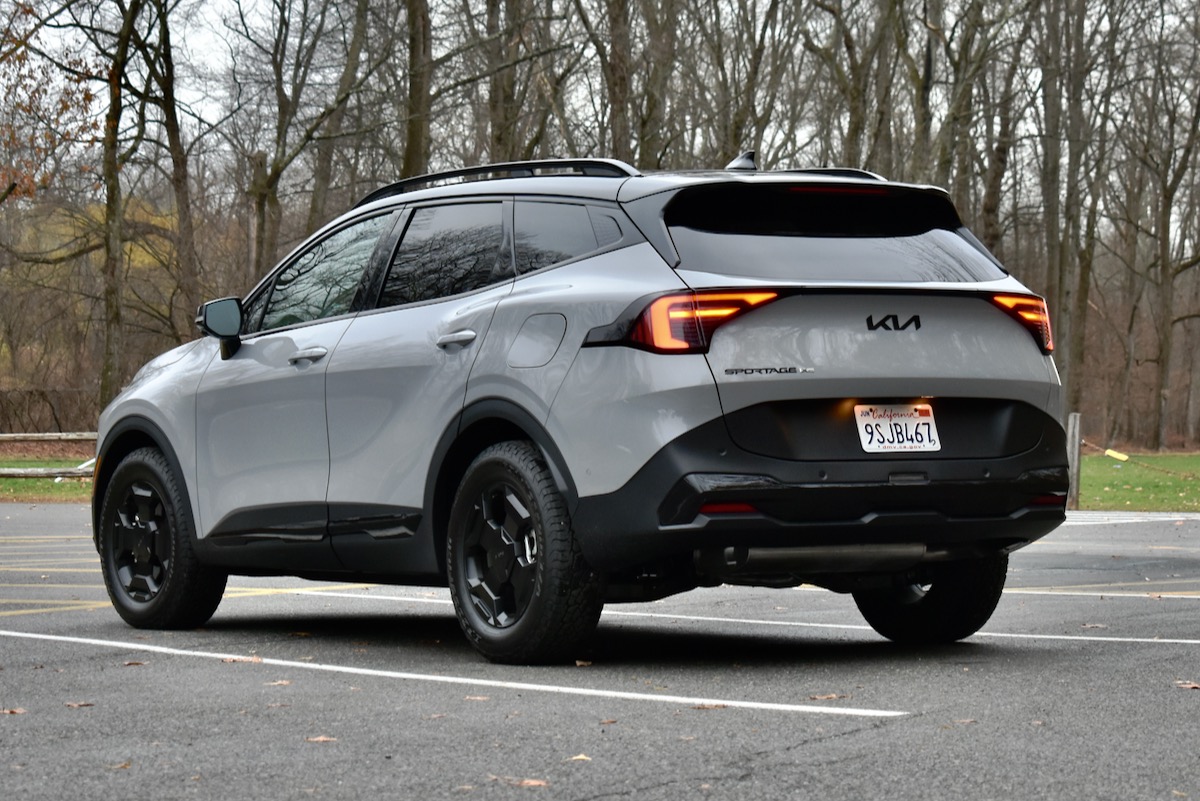
Refreshed styling gives the 2026 Sportage a more truck-like vibe, while ensuring Kia’s compact crossover will continue to stand out from the competition. The current-generation Sportage upended convention with a wide grille that pushes the headlights to the corners of the front fascia. That continues for 2026, but the grille has become more rectangular, and the headlights and accompanying daytime running lights more vertical. That aligns the Sportage with refreshed versions of the larger Sorento and Telluride crossovers, while dialing up the ruggedness.
The rest of the vehicle doesn’t actually look that different. The more curvaceous rear end and taillights don’t match the restyled bits as a result. A 108.5-inch wheelbase—3.4 inches longer than that of a Subaru Forester and two inches longer than a Nissan Rogue’s—is apparent in profile view, with crisp body lines adding some visual interest to the resulting vast expanse of sheetmetal.
The real beneficiary of the 2026 model year refresh is our Sportage X-Pro test vehicle. The new styling is a closer match for this model’s off-road pretensions, addressing the fact that the last X-Pro wasn’t that visually distinct from other Sportage models. An X-Line model is also available with different front and rear bumpers and a tread-like stitching pattern for its SynTex artificial leather upholstery. However, X-Pro models have all-terrain tires on 17-inch wheels, while X-Line models have all-seasons on 19-inch wheels. There’s also an 18-inch wheel option for certain trim levels.
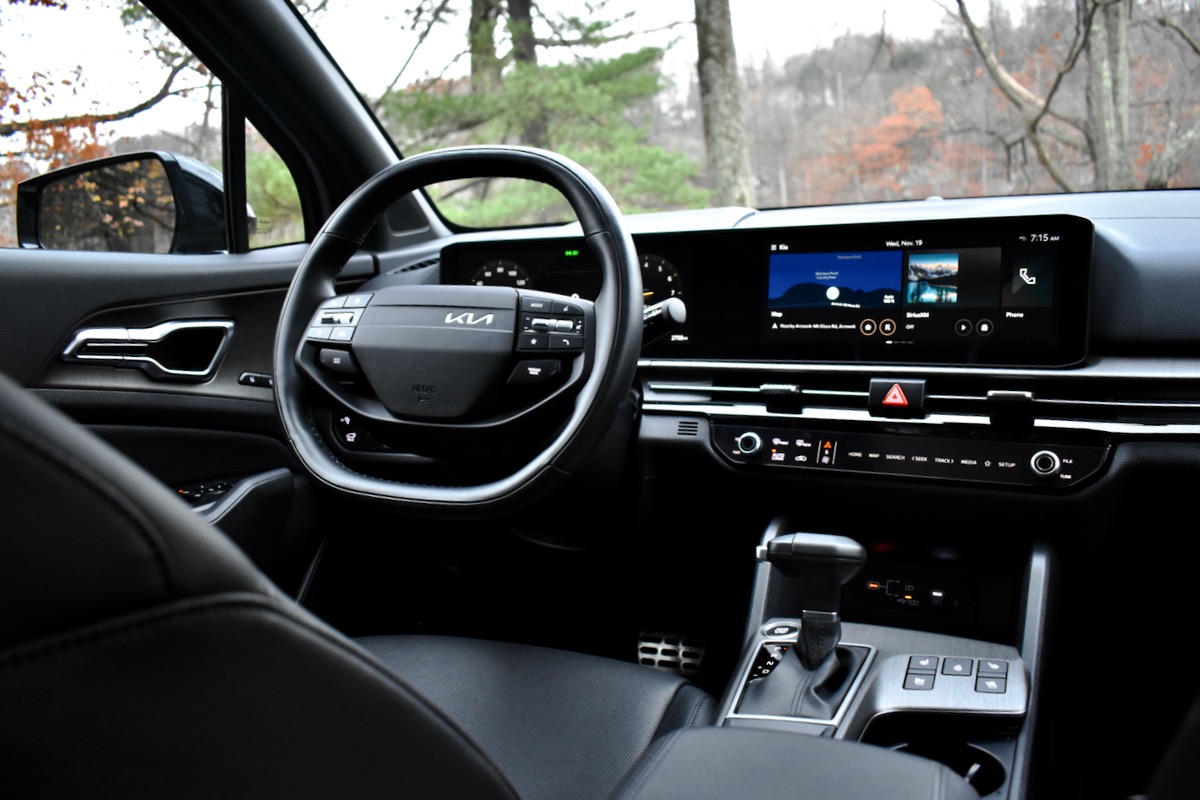
Inside, the 2026 Sportage gets a new steering wheel with a squared-off rim and large rectangular center that reminds us of the earliest airbag-equipped wheels from the late 1980s. It’s another distinctive visual touch in an otherwise straightforward interior. The dashboard has lost its large air vents, making the curved screen even more prominent. Materials in our X-Pro test car weren’t fancy, but had a quality feel and seemed appropriate for a model designed for supporting active lifestyles.
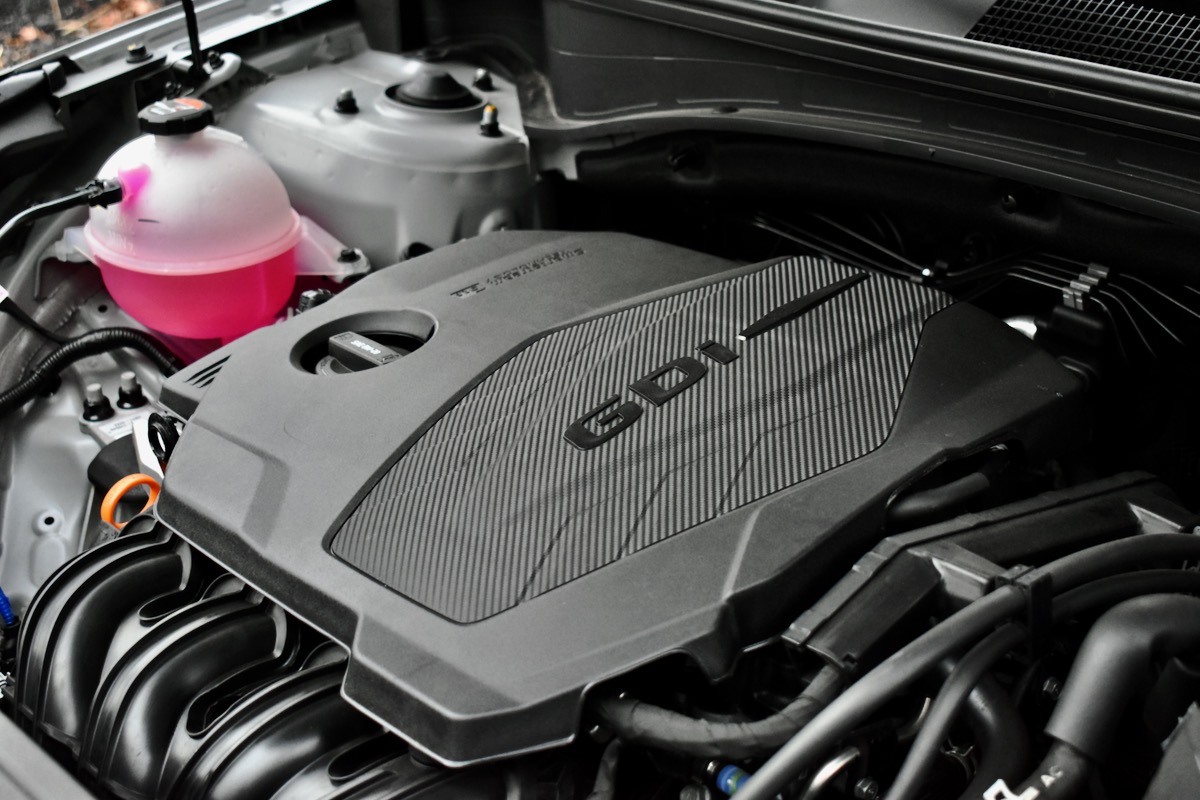
The 2026 Sportage is available with conventional gasoline, hybrid, and plug-in hybrid powertrains. That’s becoming more common in this segment, but it’s appreciated nonetheless. The base and hybrid powertrains are available with front-wheel drive (FWD) or all-wheel drive (AWD), depending on the trim level, while the Sportage plug-in hybrid is AWD-only.
Non-hybrid models use a naturally-aspirated 2.5-liter four-cylinder engine that produces 187 horsepower and 178 pound-feet of torque, and is connected to a six-speed automatic transmission. The other powertrains use a 1.6-liter turbocharged four-cylinder engine and add an electric motor, integrated with the transmission. Hybrids are rated at 232 hp and 271 lb-ft of torque. Plug-in hybrids get a further boost to 268 hp, while torque remains unchanged from the hybrid powertrain.
It may be the least-powerful option in the lineup, but the unassisted four-cylinder engine in our Sportage X-Pro Prestige test car was on par with competitors. The hybrid and plug-in hybrid powertrains are more refined, but that’s to be expected given that they have turbos and electric motors to generate more torque more consistently. For the base powertrain in the lineup, the 2.5-liter inline-four does just fine. We would’ve appreciated quicker reactions from the transmission, though.
The X-Pro is the off-road model of the lineup, but its only unique features are all-terrain tires (mounted on 17-inch wheels that look like they were designed in Minecraft) and different drive-mode tuning. A Terrain Mode with snow, mud, and sand settings is included with AWD for 2026, so the other Sportage trim levels are already fairly capable by segment standards. Mild modifications are also the case for rivals like the Hyundai Tucson XRT that shares the Sportage’s platform and the new Honda CR-V TrailSport Hybrid. Ground clearance is the same no matter which Sportage model you choose, at 8.3 inches. If you want more capability, check out the Subaru Forester Wilderness.
An X-Pro will go further off-road than one might expect of an ordinary crossover, but that comes at the expense of the everyday driving experience. Those all-terrain tires make a lot of noise, and their grip advantage only extends to loose surfaces. Despite its name, the Sportage isn’t a sporty vehicle to begin with; those tires ruin any potential for fun. And while their generous sidewalls, combined with very compliant suspension tuning, absorbed bumps like radar waves hitting the skin of a stealth fighter, a lack of body control meant there was quite a bit of shaking and jostling.
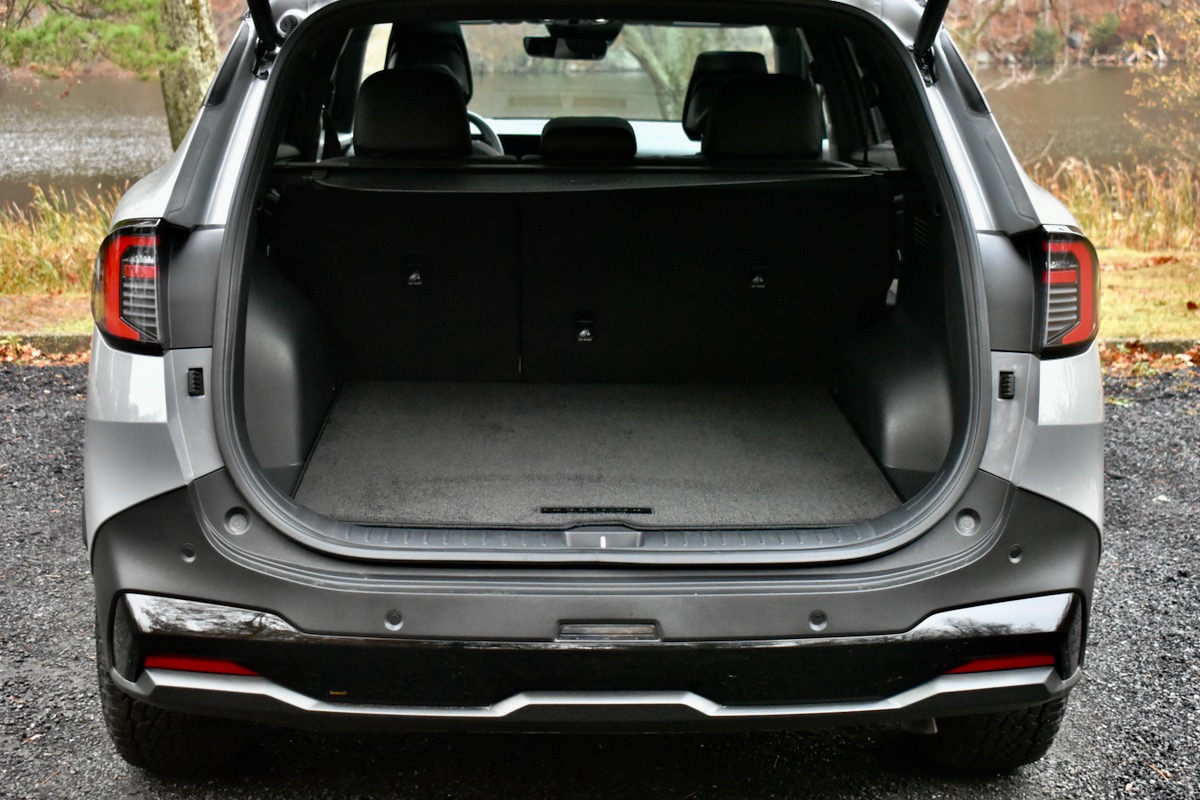
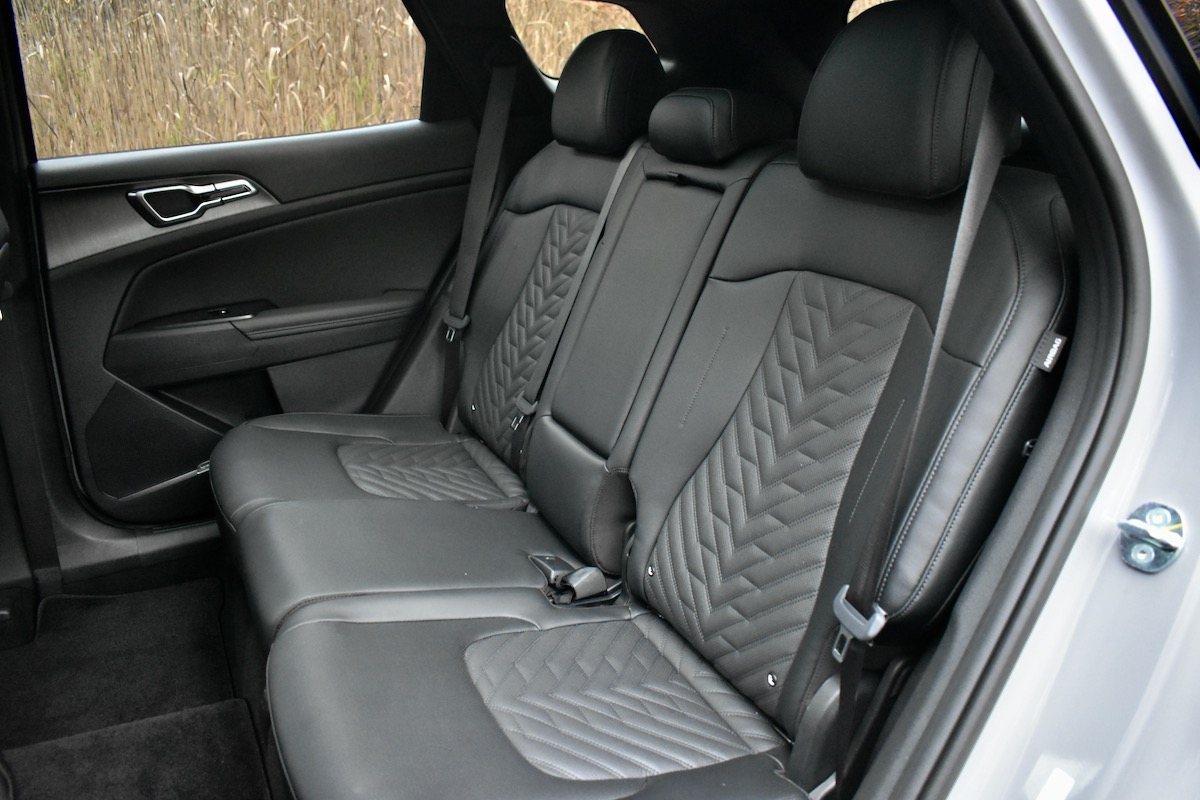
The exterior styling changes don’t affect interior space, which remains competitive for the segment. Headroom in both rows is nearly identical to key rivals, although both the Nissan Rogue and Subaru Forester offer a bit more first-row if you forego a sunroof or moonroof. It’s a similar story with legroom. Front-seat occupants get about the same amount as in other small crossovers. Rear-seat legroom matches the best in the segment, and surpasses the Nissan, Subaru, and the redesigned 2026 Toyota RAV4.
Cargo space is nominally 36.6 cubic feet with the 60/40 rear bench seat in place, and 69.3 cubic feet with that second-row bench folded. However, that can be expanded to 39.6 cubic feet behind the first row and 74.1 cubic feet behind the second row by moving the standard dual-level cargo floor into its lower position. Either way, the numbers are pretty good for the segment but don’t set a new bar. The same goes for the non-hybrid Sportage’s 2,500-pound towing capacity (hybrid and plug-in hybrid models are rated at 2,000 pounds). That’s more than a CR-V can tow, but less than a RAV4.
The center console provides an impressive amount of storage space for small items. A large and easily-accessible wireless charging pad handles phones, the cupholders have movable elements to accommodate drinks of different sizes, and a large storage bin sits aft of them. Kia found room for all of this despite keeping a large shift lever and prominent buttons for our test car’s front-seat and steering-wheel heating. It’s an impressive utilization of the available space.
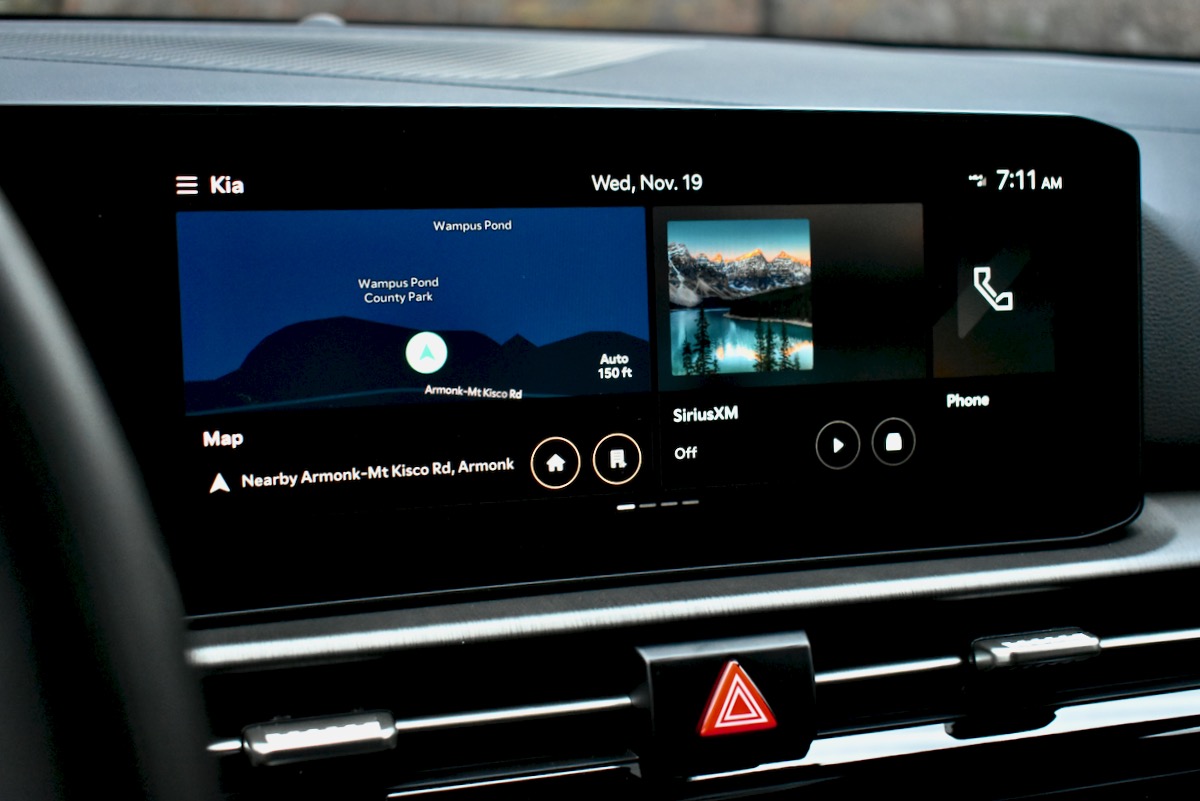
A 12.3-inch digital instrument cluster and 12.3-inch touchscreen are standard. Kia no longer bothers with a smaller screen on lower trim levels, as it did earlier in the production run of this generation of Sportage. Wireless Apple CarPlay and Android Auto are both standard, along with SiriusXM satellite radio. Wireless phone charging is standard on all but the base LX trim level. A Harman Kardon premium audio system is standard on SX and higher grades, and X-Line and X-Pro models feature digital key functionality.
The horizontal display blends the instrument cluster and touchscreen into one unit in a format normally seen on luxury cars from the likes of BMW and Mercedes-Benz. A similar setup is also available on the Sportage’s Hyundai Tucson platform-mate—but not as standard equipment. Kia makes good use of the available space with sharp graphics and large icons that are easy to read at a glance.
When it comes to usability, the Sportage fails to address the shortcomings of such screen-centric interfaces. Those large icons mean only a few things can fit on the home screen at once, so regular swiping is required. Exiting out of Android Auto was also more complicated than it needed to be.
And while buttons and knobs may not look slick and high-tech, they’re much easier to use than touchscreens. Kia does provide some buttons, but climate control and audio-system functions are doubled up on the same control panel. The functions shift depending on what was last used, so you need to look first in order to make sure you’re not lowering the volume when you meant to lower the temperature.
Standard driver-assist features include: adaptive cruise control (with stop-and-go functionality), forward collision warning, automatic emergency braking, lane keep assist, lane departure warning, lane following assist, and front and rear parking sensors. The Sportage will also warn you if it detects fatigue, remind you to check the back seats before leaving the vehicle, and watch for oncoming cars or cyclists as you open the door.
Higher trim levels also feature adaptive cruise control synced with the navigation system to provide smoother driving through curves, and the even more advanced Highway Driving Assist system, which adds automated lane centering. Also available are a surround-view camera system and the Blind-spot View Monitor, which shows a camera feed of the blind spot in the instrument cluster when a turn signal is activated.
In addition to its long list of driver-assist tech, the 2026 Kia Sportage received the highest Top Safety Pick+ award from the Insurance Institute for Highway Safety (IIHS). It also received a five-star overall safety rating from the National Highway Traffic Safety Administration (NHTSA), with five stars in frontal and side crash testing and four stars for rollover crash performance.
EPA fuel-economy ratings for the non-hybrid Sportage are 28 mpg combined (25 mpg city, 33 mpg highway) with FWD and 26 mpg combined (24 mpg city, 30 mpg highway) with AWD. Unless you opt for the Sportage X-Pro, that is. It’s rated at a lower 24 mpg combined (23 mpg city, 26 mpg highway). The other powertrain options are more efficient—the FWD Sportage hybrid is rated at 42 mpg combined, and the plug-in hybrid gets up to 34 miles of all-electric—but these numbers are comparable to the non-hybrid competition.
The non-hybrid powertrain is also the cheapest option. Pricing starts at $30,135 (all prices include a mandatory $1,445 destination charge) for a FWD Sportage LX. That’s about $2,000 less than the hybrid model’s base price. EX, SX, SX-Prestige, X-Line, and X-Pro Prestige trim levels are also available. AWD is an $1,800 option on LX, EX, and SX-Prestige grades, standard on the X-Line and X-Pro Prestige, and unavailable on the SX.
Starting at $41,035, our X-Pro Prestige test car was as expensive as non-hybrid Sportage gets. It’s also nearly the same price as a Honda CR-V TrailSport or Toyota RAV4 Woodland—both of which have hybrid powertrains. And a Subaru Forester—with standard AWD—costs about the same as a base Sportage with FWD.
What those competitors can’t match is Kia’s 10-year/100,00-mile powertrain warranty and five-year/60,000-mile limited warranty. Hyundai dealers offer that same warranty on the Tucson, which shares a platform and powertrains with the Sportage. Base prices are also close, but you get more standard tech features in the Kia. You can also get the plusher Tucson Limited for about the same price as a Sportage X-Pro Prestige, while the equivalent XRT diet off-road model is a few grand cheaper. It’s as if Hyundai and Kia forgot that they were part of the same company.
When the Sportage launched in 1993, it would have been impossible to think of it not being the cheapest option in any context. The current Sportage can still rely on a unique design, excellent safety ratings, and that legendary warranty. But—at least when it comes to the X-Pro grade—it’s not the stellar value Kia is known for.


