2026 Toyota bZ Reviews, Pricing & Specs

Pros & cons
What we like
Comfortable seats
Easy-to-use technology
Low cost of ownership
What to consider
Poor driver display
Irritating driver monitoring system
Not a “Top Safety Pick”
The CarGurus verdict
Improvements and an affordable price make the 2026 Toyota bZ more appealing than its previous iteration.
Readers are looking at the electric vehicle formerly known as the bZ4X. It wears a shorter name for 2026, but that’s not the big news. More power, over 300 miles of range, a standard NACS charging port (with a CCS adapter), and Plug & Charge capability are all major improvements. Toyota has also tidied-up the styling—inside and out—and added a larger infotainment screen.
Verdict: With the refreshed 2026 bZ, Toyota has fixed the bZ4X’s most significant flaws, making this a genuinely competitive model at a comparatively affordable price.
out of 10 expert review
Look & feel
Toyota sells the 2026 bZ in XLE and Limited trim levels with single-motor front-wheel drive (FWD) or dual-motor all-wheel drive (AWD) and a choice of two battery sizes. Models with the larger battery cost more, but offer added power, performance, and range. Prices range from $36,495 to $46,895, including the destination charge.
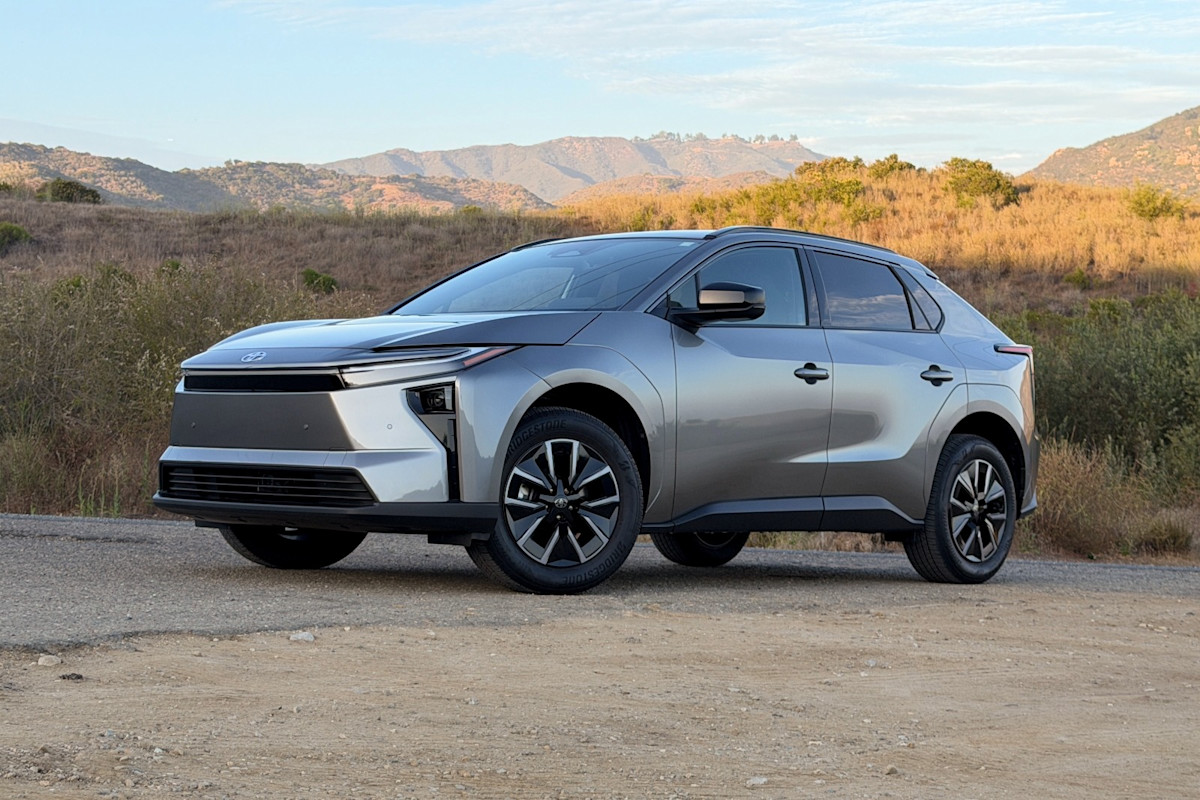
Our XLE test vehicle had FWD and the optional larger battery (which is standard with Limited trim). The upgrade costs $3,000 and turns the XLE into the XLE Plus. Additional options included Heavy Metal paint, carpeted floor mats, a carpeted cargo mat, door sill protectors, and wheel locks. All in, the manufacturer’s suggested retail price (MSRP) came to $40,468.
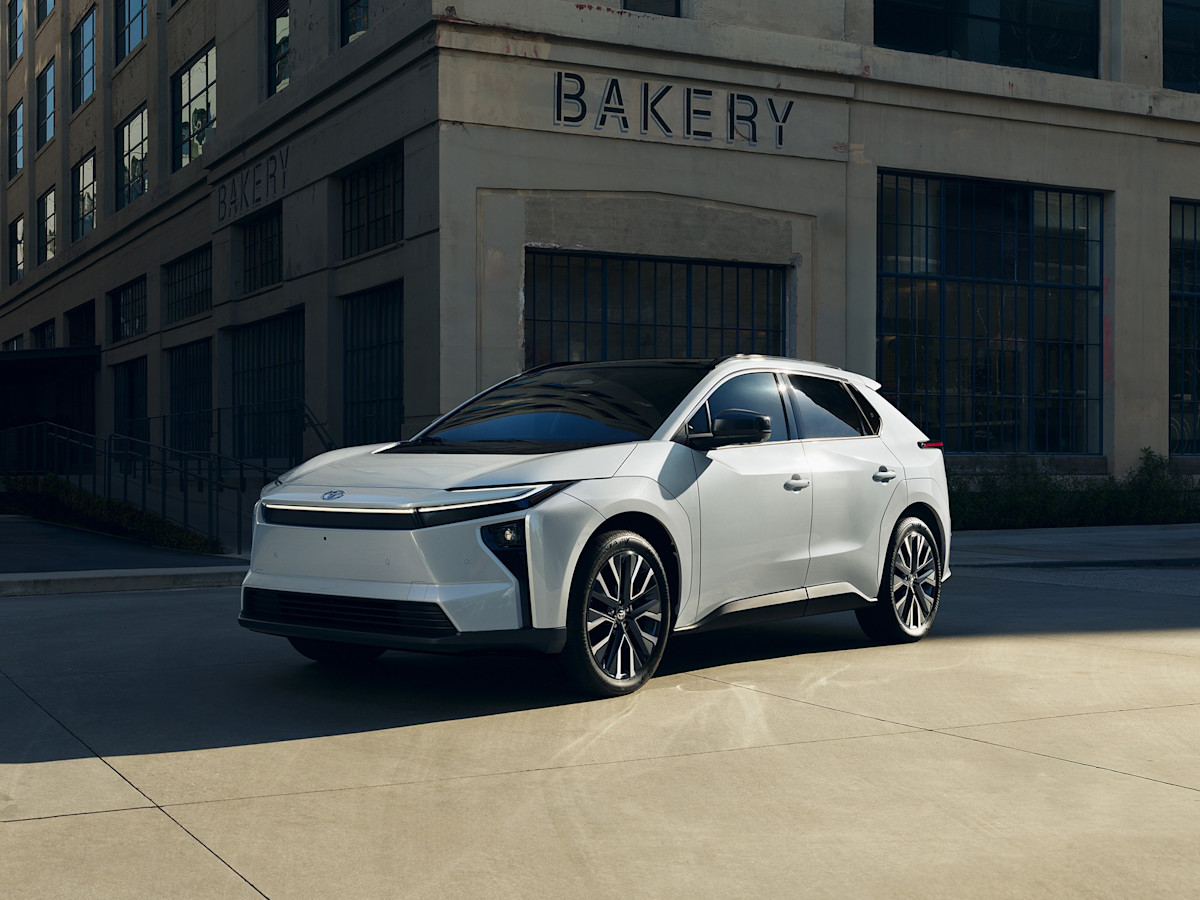
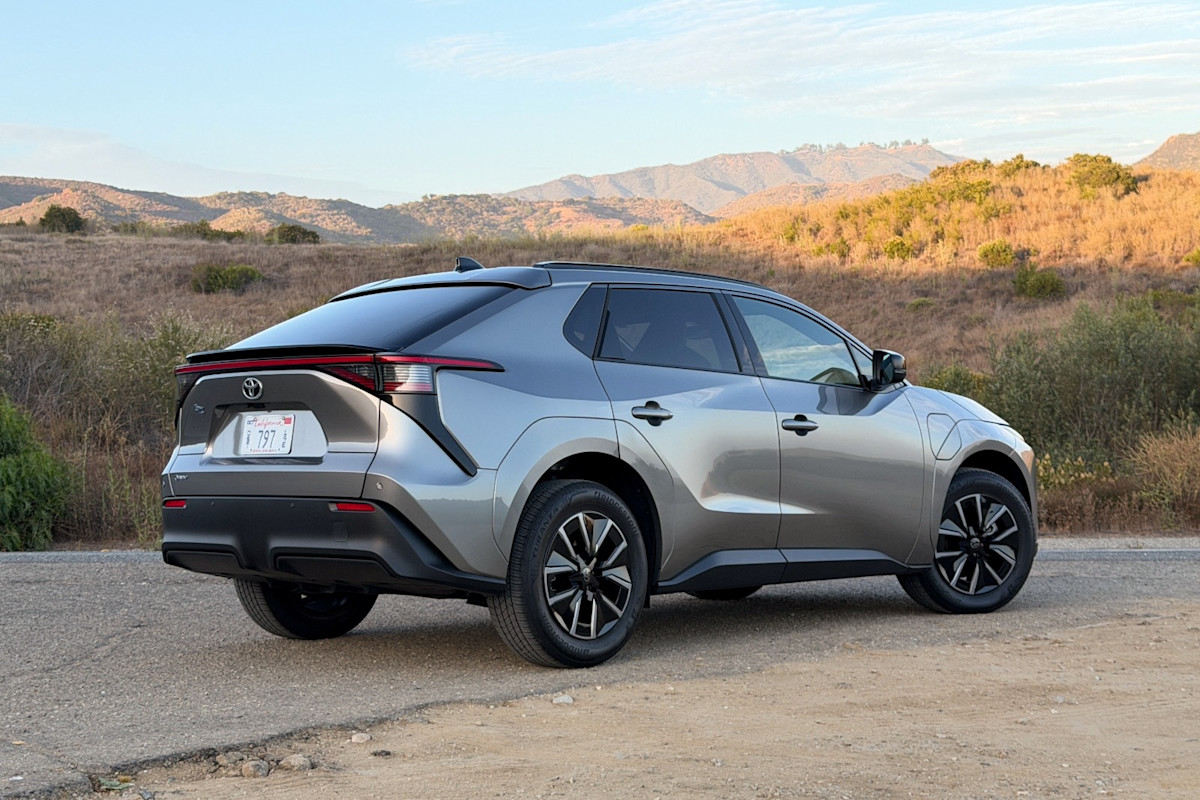
For some reason, certain bZ colors still have the black overfender trim that made the bZ4X so off-putting to some potential buyers. In our opinion, the restyled 2026 bZ looks much better with body-color trim. Perhaps Toyota thinks shoppers have a more expressive personality if they choose Blueprint or Supersonic Red. Regardless, the new bZ looks better than it did before.
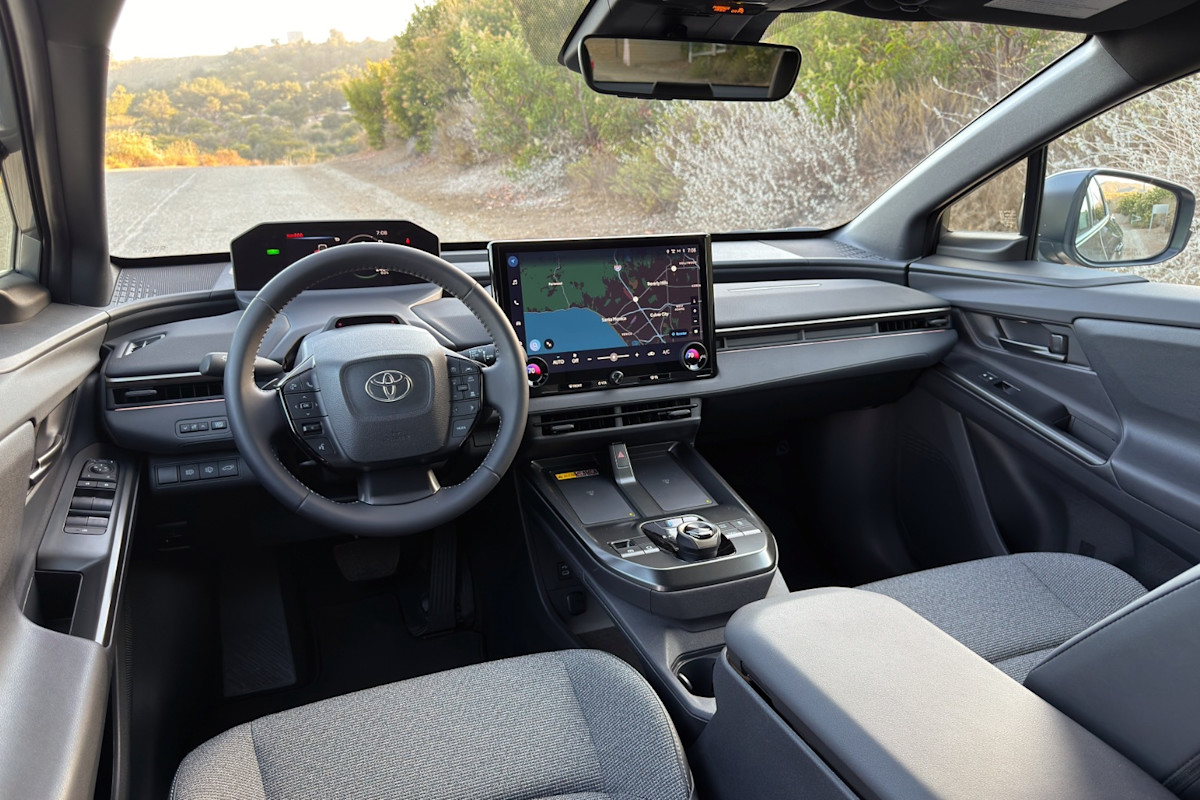
Inside, the new dashboard and center console are cleaner in appearance and impart a higher sense of quality while better organizing the storage and controls. Our XLE’s fabric seats wore a distinctive and upscale pattern that should hide dirt fairly well.
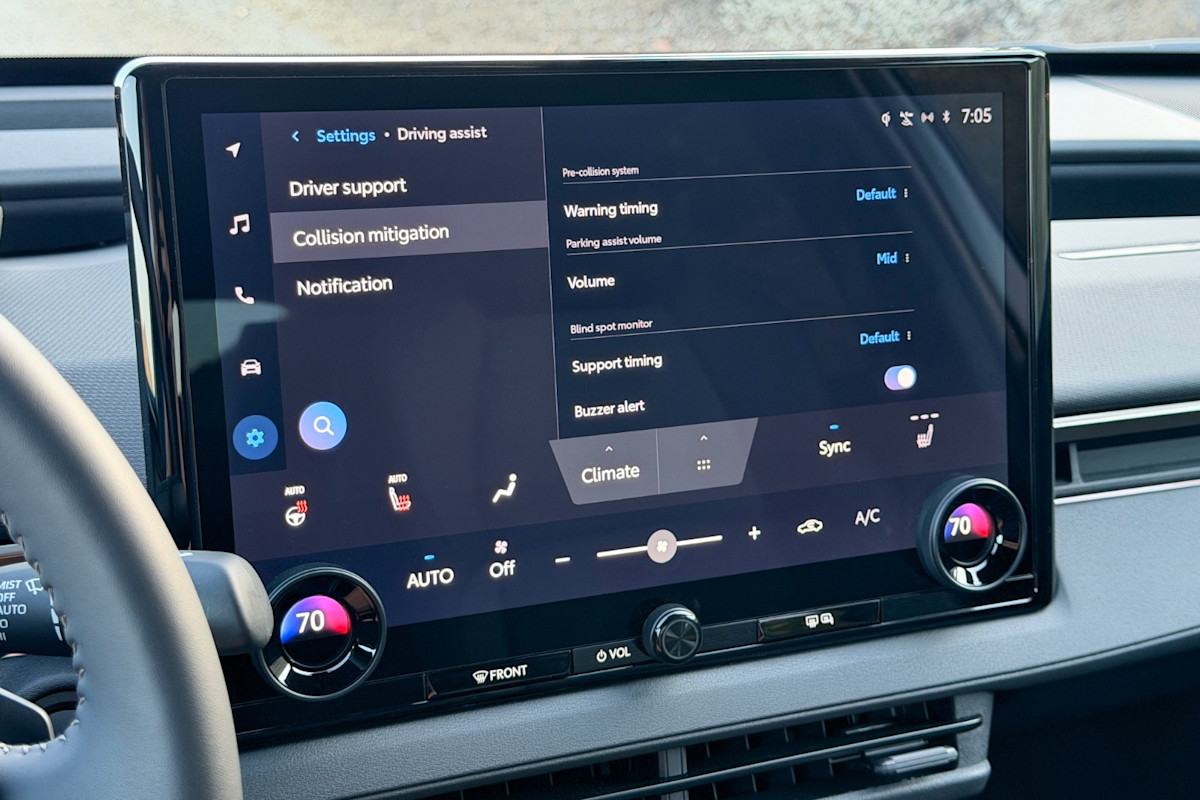
Toyota increased the size of the center touchscreen to 14 inches and integrated the climate control with the display. That sounds like a bad decision, but the dual-zone automatic setup includes two large temperature adjustment dials, buttons for the defog/defrost functions, and large icons on the display for other functions, such as the heated front seats.
A chief complaint about the bZ4X remains in the new bZ—the digital driver display. It’s mounted far away near the base of the windshield, and the steering wheel can block visibility depending on the driving position. The 7-inch display also crams so much information into a small area that reading it can prove challenging.
Performance
Choose a bZ XLE with FWD, and you get a single electric motor and a 57.7-kilowatt-hour battery pack. This provides 165 horsepower and 198 pound-feet of torque, with an EPA-estimated range of 236 miles and efficiency rating of 26 kWh/100 miles.
Add the optional 74.7-kWh battery, and the XLE FWD offers 224 hp (torque is unchanged) and an EPA-rated 314 miles of range with the same 26 kWh/100 miles efficiency rating. Range for the Limited trim drops to 299 miles, and efficiency to 27 kWh/100 miles.
Dual-motor bZ models come only with the 74.7-kWh battery. Combined, the electric motors produce 338 hp, with 198 lb-ft in front and 125 at the back. The XLE AWD offers 288 miles of range and 28 kWh/100 miles, while the Limited can travel 278 miles while consuming electricity at a rate of 29 kWh/100 miles.
According to Toyota, recharging the bZ using a DC fast charger supplying at least 150 kW will bring the battery from 10% to 80% in about 30 minutes. This year’s switch to a NACS port means the bZ is now compatible with Tesla Superchargers; buyers should just make sure to check the Tesla app for stations open to all makes and models. Toyota also supplies a CCS adapter, so it's possible to use nearly any charging station to juice up.
Using a 240-volt, 48-amp Level 2 home charger, the larger battery needs seven hours to recharge from 10% to 100%, according to Toyota. Stick with the base XLE’s smaller battery, and it's possible to get it done in five hours and 30 minutes.
We performed two efficiency tests with our XLE Plus test vehicle. The first one was on our Southern California fuel economy loop, on a sunny 90-degree day with the bZ in Eco mode, mid-level brake regeneration, and the climate control set to 68 degrees. The bZ averaged 4.5 miles per kWh, or 22.2 kWh/100 miles, a more favorable result than the EPA estimate.
On our mountainous test vehicle evaluation route, in identical conditions but with the bZ in Normal mode instead of Eco mode, it averaged 3.9 miles/kWh, or 25.6 kWh/100 miles, just a little under the official rating.
Paddles on the steering wheel adjust the amount of brake regeneration, but the bZ does not offer one-pedal driving capability. In maximum-regen mode, it brings the EV nearly to a full stop, but the driver must do the last bit of braking.
With 198 lb-ft of instant torque flowing to the bZ’s front wheels, it is easy to break them loose and experience the traction control system when making a left turn through a hole in oncoming traffic or a right turn on a red light to enter a fast-flowing boulevard. Otherwise, the bZ is an agreeable around-town conveyance, and its large side mirrors and clear view to the rear ensure good outward visibility. Standard front and rear parking sensors with automatic braking are helpful, too.
On the highway, the bZ is a comfortable and relatively quiet cruiser. With FWD, the mid-range passing power isn’t robust, so drivers should plan accordingly. Nevertheless, driven as a low-stress commuter or cross-town day-tripper, it works well. However, on undulating pavement, the bZ can produce a somewhat choppy ride.
For those who like to tackle winding roads when time allows, a FWD bZ is not a good choice. The Bridgestone Turanza all-season tires are primarily to blame, as they cause the Toyota’s nose to push wide in curves. The lifeless steering isn’t rewarding, and the front wheelspin issue is problematic when accelerating out of tight corners.
Form & function
Built on a skateboard-style EV platform with the battery under the passenger compartment, and featuring 8.1 inches of ground clearance, the Toyota bZ is easy to get in and out of. Both front seats feature standard height adjustment, so entering and exiting is even more comfortable.
So are the seats themselves. Drivers benefit from eight-way power adjustment in both XLE and Limited trims, and that results in variable levels of lumbar and thigh support, accommodating a variety of people and preferences. Matching eight-way power adjustment is included with the Limited trim level. Heated front seats and a heated steering wheel are standard in every bZ, and the Limited has ventilated front seats.
The bZ lacks a traditional glove compartment, but makes up for that in other ways, including a large bin located under the center armrest and a sizable tray beneath the center console control panel. Dual wireless smartphone chargers, roomy cupholders, and lower door panel pockets all help to organize items, and small trays are embedded in the armrests.
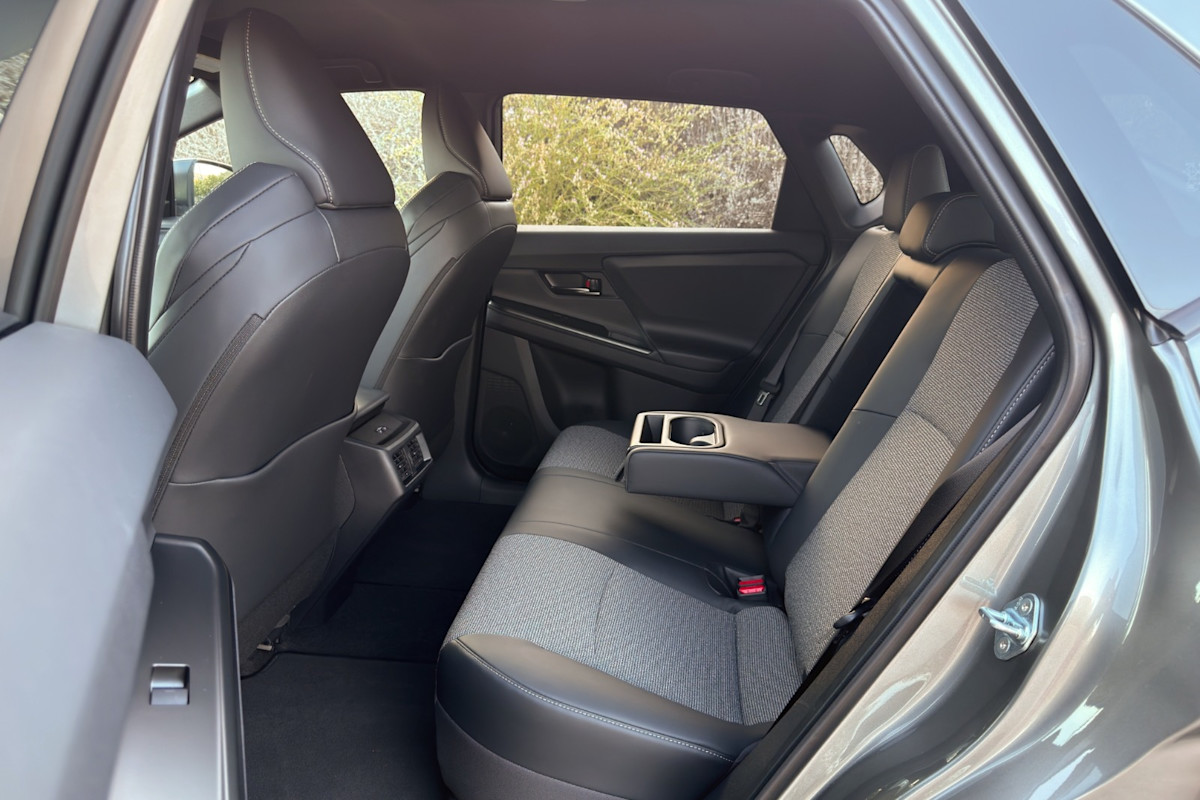
Rear-seat passengers enjoy plenty of legroom and a comfortable seating position, but foot space under the front seats is a little tight. Rear air conditioning vents and USB ports are also standard.
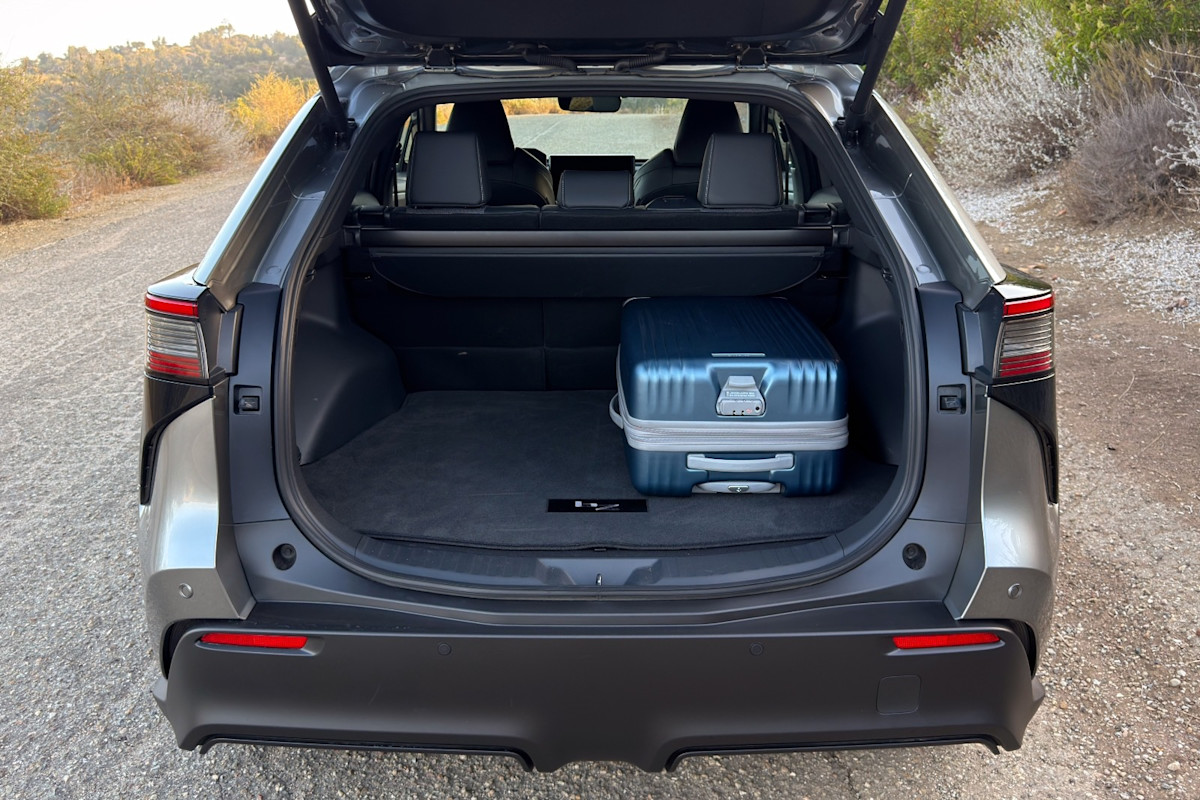
Behind the power rear liftgate are 27.7 cubic feet of cargo space (25.8 cubic feet with Limited trim, which has a JBL subwoofer in the back). There is an underfloor storage well with lots of extra room, but the bZ’s rakishly angled rear window limits maximum cargo space. Fold the back seats down, and the bZ offers 56.9 cubic feet of cargo room (55 cubes in the Limited trim level).
Technology
A 7-inch digital driver display and, new for 2026, a 14-inch touchscreen infotainment display are standard. As we mentioned in the Look and Feel section, the 7-inch driver display is located too far away and crams too much data into too small a small space, making it hard to reference and read, and it may be blocked by the steering wheel rim depending on the driving position.
The 14-inch display in the middle of the dashboard runs the Toyota Audio Multimedia infotainment system, which has been around for several years. Generally, this is an easy system to understand and use, with a few exceptions.
First, there isn’t a home screen that allows drivers to display different main menu data panels simultaneously. For example, it isn't possible pull up the navigation map and the radio or entertainment panel simultaneously. Second, in daytime mode, it can be hard to read data on the screen due to low-contrast colors and a thin font style. Of course, the new 14-inch size helps, but we recommend bumping up the contrast and illumination or switching to night mode even during the day. We’d also prefer a tuning knob as well as the volume knob.
The system supports wireless Apple CarPlay and Android Auto and offers SiriusXM satellite radio with a three-month trial subscription. Five different connected service plans are also complimentary. The shortest trial is Wi-Fi Connect, for 30 days or three gigabytes of data, whichever comes first. Remote Connect and Drive Connect are free for three years, while Service Connect and Safety Connect won’t cost anything for the first five years.
Drive Connect powers the native navigation system and the Intelligent Assistant conversational voice assistant. Drivers can say 'Hey Toyota' to wake the assistant, then issue a command or ask a question. The tech works really well and stumbled only on one of our testing prompts that trips up nearly all voice assistants, and modifications to that command produced a better result than in many other test vehicles.
Safety
Toyota Safety Sense 3.0 (TSS 3.0) is standard on every 2026 bZ. It includes high-beam assist, forward-collision warning with pedestrian detection, automatic emergency braking, lane-departure warning, lane-keep assist, lane-centering assist, and adaptive cruise control.
Proactive Driving Assist (PDA) is also part of TSS 3.0 and can automatically add subtle braking and steering inputs while driving to provide an extra layer of safety. As installed in the bZ, we found it worked well and didn't seem intrusive as it can in other Toyota models. Partly, we think that’s because unusual slowing is expected in an electric vehicle equipped with regenerative braking, so PDA’s braking activity seems more natural.
Other standard features include blind-spot monitors, rear cross-traffic alert, safe-exit assist, and front and rear parking sensors with automatic low-speed braking. The Limited trim upgrades to Traffic Jam Assist, which is a hands-free, low-speed driving aid. The bZ Limited also features lane-change assist, front cross-traffic assist, and a semi-autonomous Advanced Park Assist system.
In variable traffic conditions on a Los Angeles-area freeway, the adaptive cruise control’s response to other motorists cutting into the gap ahead proved inconsistent. Sometimes, it responded smoothly and in a refined way. Other times, it would brake sharply, taking at least one Volvo that was driving close to the bZ’s rear bumper by surprise. The lack of a touch-sensitive steering wheel for the driver monitoring system was also a major aggravation, as the camera-based system was overly sensitive.
As far as official safety ratings go, the National Highway Traffic Safety Administration (NHTSA) had not published any for the 2026 bZ at the time of writing. Ratings from the Insurance Institute for Highway Safety (IIHS) were available—and they could be better.
The IIHS gave the bZ’s front-crash avoidance tech the highest Good rating, but the headlights received a Poor rating and, in frontal-impact crash-tests, the bZ earned Acceptable ratings. These fall short of the criteria for a Top Safety Pick award.
Cost-effectiveness
The 2026 Toyota bZ is a roomy, five-passenger electric vehicle that offers the utility of a crossover SUV or station wagon, over 300 miles of range in XLE Plus FWD spec, Tesla Supercharger compatibility, and can recharge at home on a Level 2 charger in less than seven hours. Add the generous complimentary subscriptions to connected services, free scheduled maintenance for two years or 25,000 miles, and a base price of just $36,495, and it’s an undeniably cost-effective EV.
However, it’s not the only game in town. The Hyundai Ioniq 5 has quicker DC fast charging and an impressive package of ownership perks for $155 more, while a Ford Mustang Mach-E with a lot more rizz costs $39,840—a little less than our $40,468 bZ test vehicle. Other players in the same price range include the Chevrolet Equinox EV, the Kia EV6, and the Subaru Uncharted and Solterra. The latter is a virtual twin of the bZ.
The changes made for the 2026 model year ensure the bZ is now competitive with these rivals instead of being a compromised also-ran. Though imperfect, it is a much more likeable electric crossover than it was in bZ4X guise. All it needs now is a new driver display, a less intense driver monitoring system, and better IIHS safety ratings.
What owners say
Trims & specs
Base MSRP $45,380 | Seating 5 |
Engine N/A | Cargo Capacity 27.7 cu ft |
Combined MPG N/A | Drivetrain N/A |
Base MSRP $37,980 | Seating 5 |
Engine N/A | Cargo Capacity 27.7 cu ft |
Combined MPG N/A | Drivetrain N/A |
Base MSRP $43,380 | Seating 5 |
Engine N/A | Cargo Capacity 27.7 cu ft |
Combined MPG N/A | Drivetrain N/A |
Base MSRP $34,980 | Seating 5 |
Engine N/A | Cargo Capacity 27.7 cu ft |
Combined MPG N/A | Drivetrain N/A |
Base MSRP $39,980 | Seating 5 |
Engine N/A | Cargo Capacity 27.7 cu ft |
Combined MPG N/A | Drivetrain N/A |


Pricing trends
MSRP range
$34,900 - $45,300
Current avg. market price
$33,722
Trending down by 1.6% this month
May 2026 - November 2026