2027 Mercedes-Benz GLS Reviews, Pricing & Specs

Pros & cons
What we like
Multiple powertrain options
Comfortable
Easy-to-use technology
What to consider
Potentially polarizing design
Some ergonomic issues
Expert review
Mercedes’ biggest SUV gets a major update for the 2027 model year.
The full-size, three-row GLS is for anyone who needs extra space and towing capacity in their luxury SUV. Mercedes also considers the GLS to be the SUV equivalent of its flagship S-Class sedan, so it can be equipped with virtually every feature in the automaker’s catalog. For 2027, the GLS receives updated styling, powertrains, and tech features. Its competition includes the BMW X7, the Cadillac Escalade, the Land Rover Range Rover, the Lexus LX, the Lincoln Navigator, and the all-new Audi Q9.
Verdict: The extensive updates don’t make as much difference as expected from behind the wheel, but that’s okay because the GLS was already a well-executed luxury SUV.
out of 10 expert review
Look & feel
The 2027 GLS is the same third-generation version (known internally as the X167) that’s been around since the 2020 model year. It already received one facelift for the 2024 model year, but the changes for 2027 are more significant.
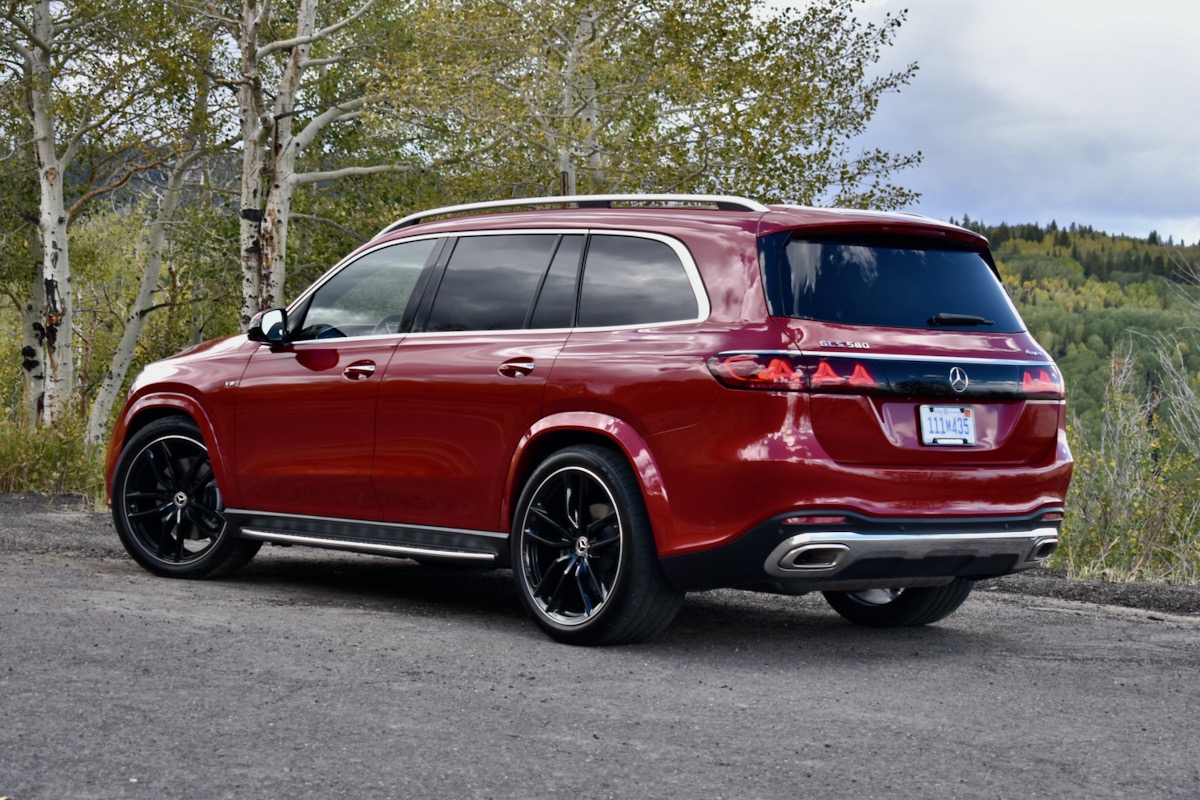
A new front end presents a virtual galaxy in other drivers’ rearview mirrors. The headlights have three-pointed star elements representing the Mercedes logo, as does the grille. Instead of mesh or bars, Mercedes used miniature three-pointed stars as textural elements. A black surround ties the headlights and grille together, but leaves a noticeable gap with the hood, a reminder that these pieces were grafted onto existing sheet metal. The star lighting motif is repeated at the back with new taillights set into a one-piece panel running the width of the tailgate.
For 2027, the standard series includes six-cylinder GLS 450 4Matic and V8 GLS 580 4Matic models. An AMG GLS 63 performance model and ultra-luxury Maybach GLS 680 are also available. The GLS 580 has a large Mercedes star in the grille center, as is traditional for the automaker’s SUVs, while the GLS 450 has an illuminated hood ornament. The latter was previously restricted to the Maybach model, which still stands out thanks to extra chrome and 22-inch monobloc wheels. The AMG gets a sporty body kit and unique 21-inch wheels of its own. Even the standard models can be equipped with 22-inch or 23-inch wheels, though.
To our eyes, the facelifted 2027 model looks a bit gauche compared to the previous version, which had a nice honesty thanks to its boxy shape, wide stance, and restrained exterior detailing (on base models, at least). But the 2027 GLS is less likely to be overshadowed by an Escalade or a Range Rover, so Mercedes’ decision to up the bling quotient makes sense.
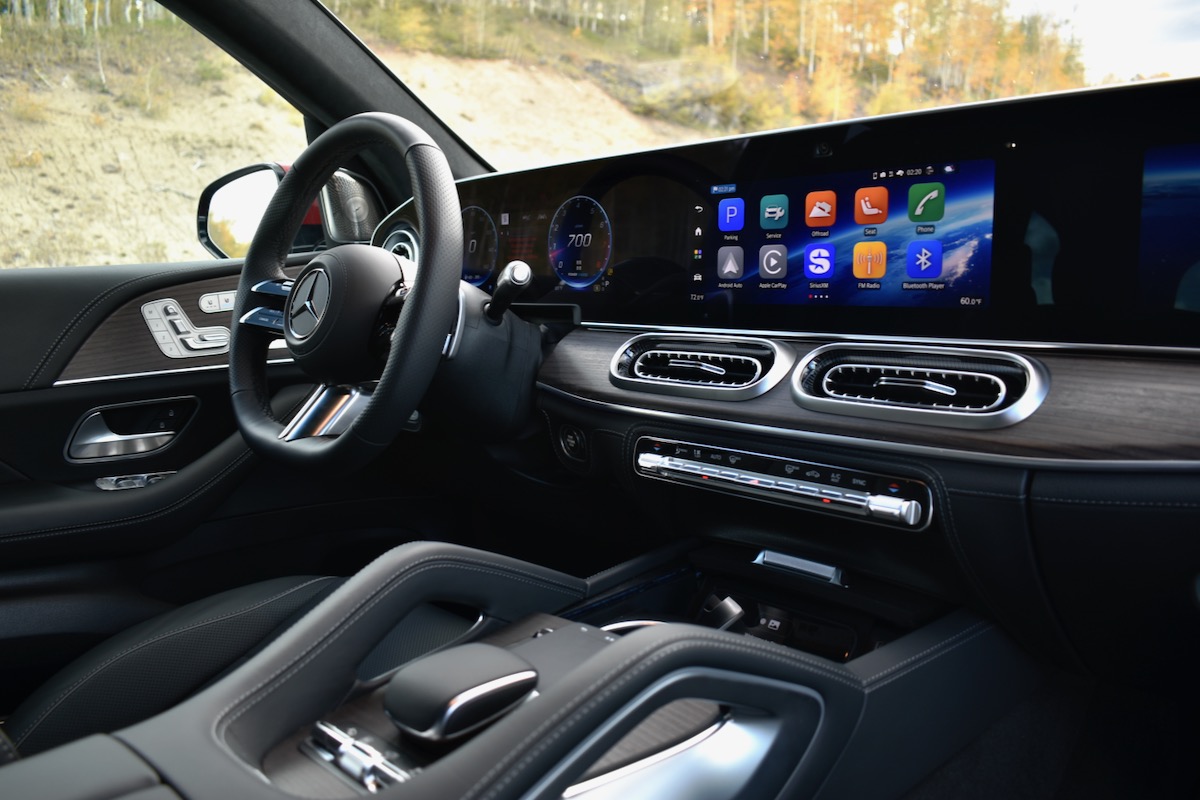
The interior is also more in-your-face thanks to the new Superscreen display that spans the entire dashboard. It’s certainly bold, but not exactly charming. The rest of the interior hasn’t changed much, but thankfully neither has the level of fit and finish or the ambient lighting that makes the cabin feel a bit more special. Standard leather upholstery, heated and ventilated front seats (massagers are standard on all but the base GLS 450), and a panoramic glass roof justify the S-Class comparisons.
Performance
Mercedes continues to offer an array of powertrains, all of which have been updated for 2027 to improve responsiveness and reduce noise, vibration, and harshness. All GLS models feature an integrated starter/generator electric motor to improve efficiency, as well as nine-speed automatic transmissions and 4Matic all-wheel drive (AWD).
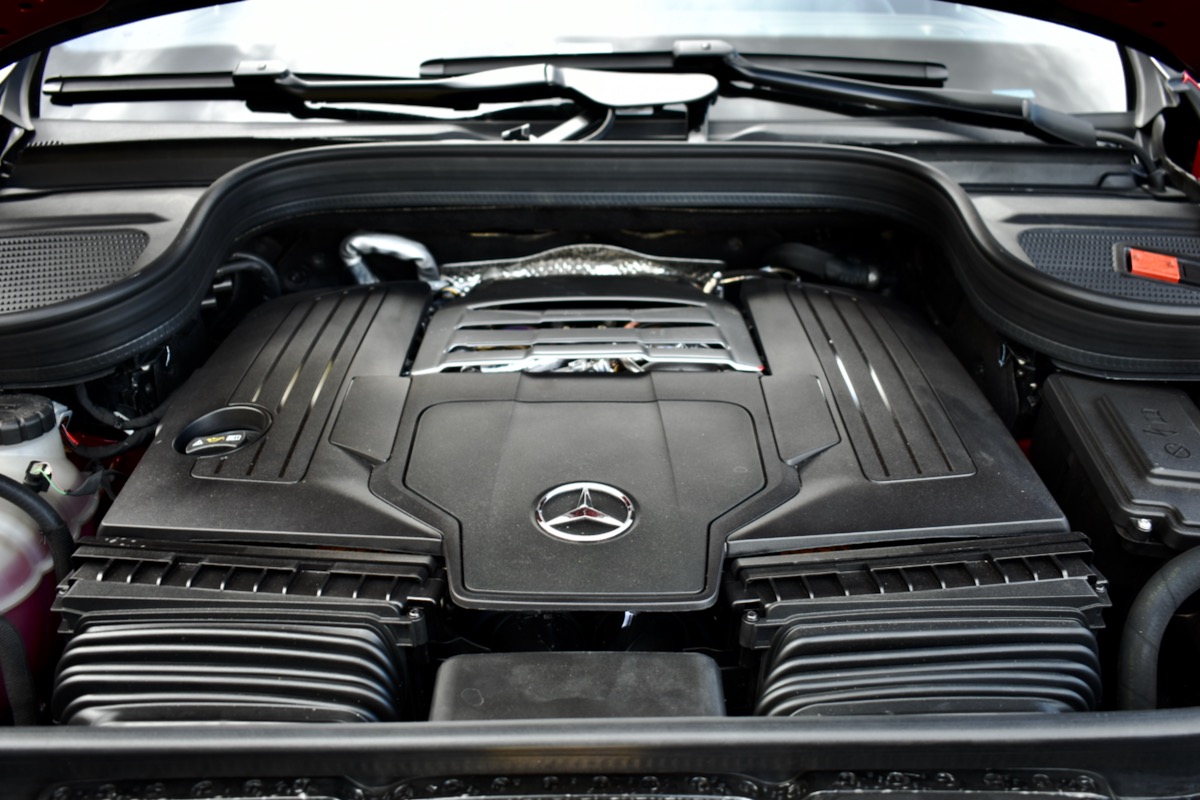
The GLS 450 is powered by a turbocharged 3.0-liter inline-six that produces 375 horsepower and 413 pound-feet of torque. The latter is up 44 lb-ft from the 2026 model thanks to a more powerful auxiliary electric compressor (a device that helps to limit turbo lag), changes to the intake and exhaust ports, and a new intake camshaft, among other updates. Mercedes says the GLS 450 will do 0–60 mph in 5.4 seconds.
The GLS 580 has a twin-turbo 4.0-liter V8 making 530 hp and 553 lb-ft of torque—increases of 20 hp and 15 lb-ft over the 2026 model. Mercedes also switched from a cross-plane crankshaft to a flat-plane crank design typically used in high-performance engines from the likes of Ferrari—a move the automaker claims will help reduce emissions. The GLS 580 may not win a drag race against a new Ferrari, but its manufacturer-estimated 0–60 mph time of 4.5 seconds is enough to dust some older ones.
We drove a GLS 580 and were indeed impressed by how quickly the V8 could get this big SUV moving. And while flat-plane cranks tend to give engines a more frenetic, metallic yelp, the GLS engine retains its signature bassy rumble, something Mercedes claims it achieved without pumping artificial sounds into the cabin.
Our test car also had the optional E-Active Body Control system, which goes above and beyond the standard air suspension by applying opposing forces to counteract pitch and roll. This gives the GLS a soft, well-cushioned ride without making drivers feel like they're on a water bed. E-Active Body Control also provides load leveling, raises the ride height for off-roading, and can even make the GLS bounce up and down to get it unstuck.
The AMG GLS 63 and Maybach GLS 680 use a higher-output version of the twin-turbo V8, tuned for 603 hp and 627 lb-ft of torque. The AMG model—which does 0–60 mph in a Mercedes-estimated 3.9 seconds—has a performance-tuned transmission and suspension, as well as a limited-slip differential and beefier brakes.
Form & function
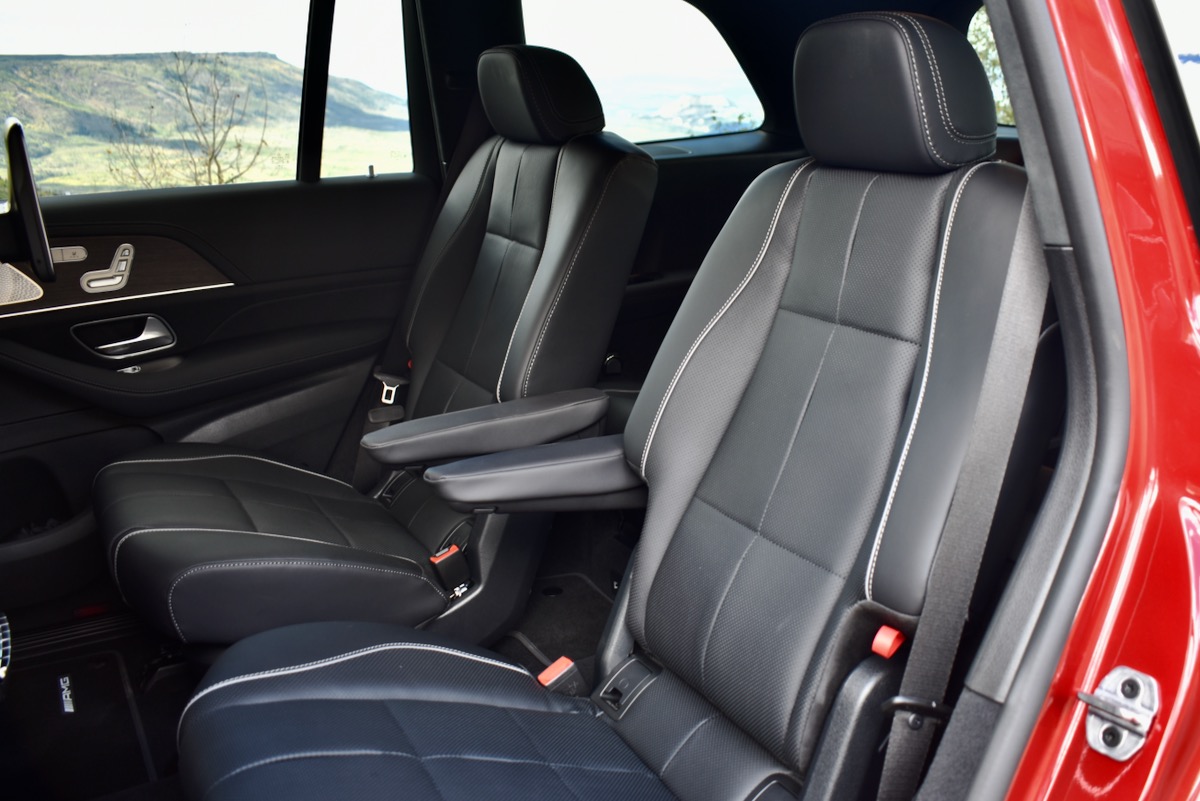
The 2027 Mercedes-Benz GLS is a six-seater as standard, but the second-row captain’s chairs can be swapped out for a bench that converts it into a seven-seater at no cost. Dimensions haven’t changed, but that still leaves plenty of headroom and legroom across all three rows. Third-row legroom is even comparable to the larger Cadillac Escalade and Infiniti QX80.
The standard front seats are very comfortable (especially with the available headrest pillows), but we found it difficult to get into a proper driving position without sitting bolt upright with our knees close to the dashboard. Tall drivers may have difficulty, which shouldn’t be the case in such a big vehicle. As with the pre-facelift model, the center console is ringed by large grab handles that are only useful when off-roading and always block the controls on the console. The sun visors also remain useless for blocking glare coming through the side windows.
The optional Executive Rear Seat Package Plus includes massaging seats, remote controls for the infotainment system, sun blinds, and a large center armrest with built-in storage and cupholders. The person behind the front passenger seat can also move that seat forward at the touch of a button to expand legroom, Uber style. The third row includes USB ports and heated seats, while an available five-zone climate control system ensures occupants of each row can set the temperature to their liking.
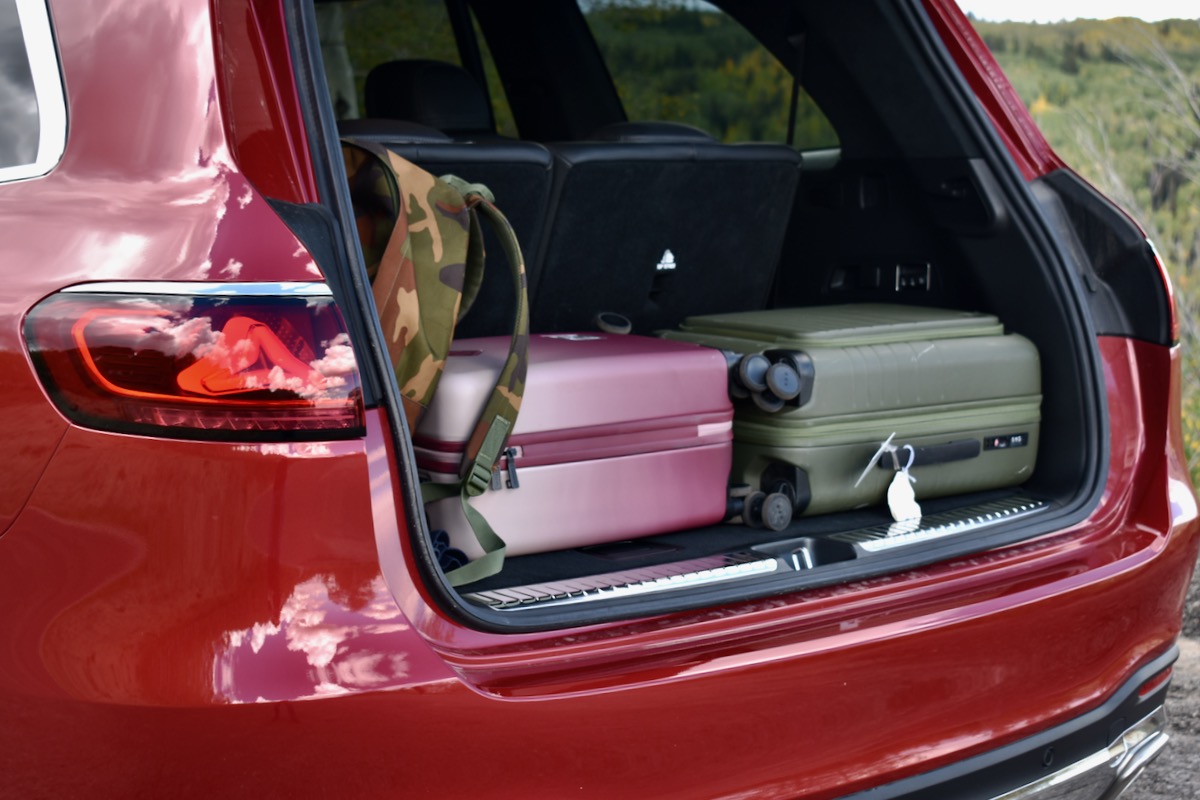
Access to the third row is made easier thanks to a power-sliding second row that motors forward with one touch of a button. From the opposite side, a standard power tailgate provides access to 17.4 cubic feet of cargo space, expanding to 42.7 cubic feet with the third row folded and 84.7 cubic feet with the second row folded. That trails the larger Cadillac Escalade, the Infiniti QX80, and the Lincoln Navigator, but it’s more than buyers get in a Range Rover.
The maximum towing capacity of 7,700 pounds is unchanged for 2027, and while it’s not a class-leading figure, it’s still pretty good. Mercedes also offers an optional trailer-backup assist system to take some of the hassle out of maneuvering a trailer.
Technology
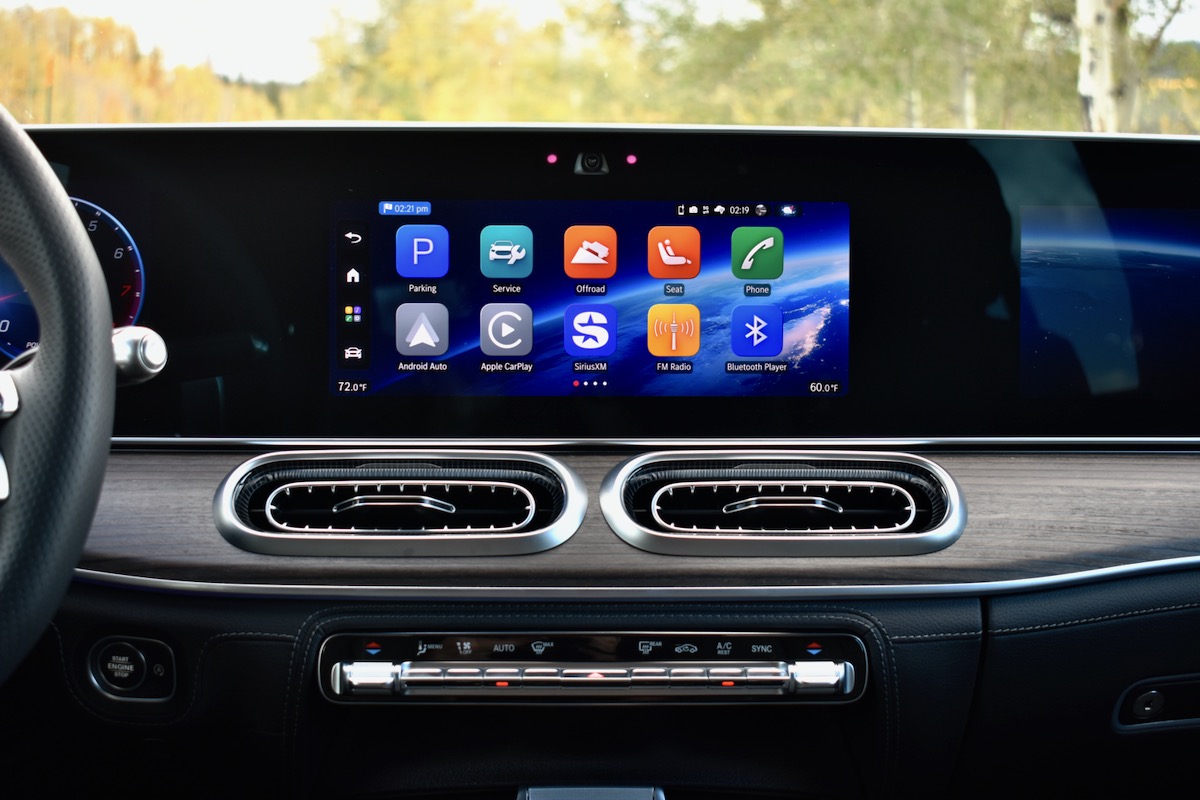
New for 2027, the standard Superscreen is actually three 12.3-inch screens in one dashboard-spanning housing. One serves as the instrument cluster, while the other two are touchscreens, with one in the typical central location and the other positioned directly in front of the passenger. The screens run a new version of the MBUX infotainment system based on Mercedes’ own MB.OS operating system, developed in-house.
Despite all the new hardware and software, the interface will be familiar to anyone coming off a GLS lease. The central touchscreen’s home screen has widgets placed over a map view as before, although a more conventional icon layout is now available. Wireless Apple CarPlay and Android Auto have been retained, while the voice recognition system gets AI enhancements that were hard to detect—but that’s as much a testament to how good the old system was as anything else. The new operating system offers more headroom for additional features, but right now the experience just isn’t that different.
Mercedes also offers entertainment options for passengers who left their tablets at home. The front-passenger screen can show videos and includes some very basic games, while an optional rear-seat entertainment system adds 11.6-inch screens for the second row. For those attempting to be productive, inward-facing cameras and an integrated Microsoft Teams app enable videoconferencing.
A 15-speaker Burmester audio system with Dolby Atmos tech is standard, but a 26-speaker Burmester system is also available. Other notable tech options include a head-up display and digital-key functionality.
Safety
Standard driver-assistance features include lane-keep assist, forward-collision warning, automatic emergency braking, blind-spot monitors, and features that will keep track of stop signs, traffic lights, and the speed limit. Adaptive cruise control is also standard, with stop-and-go functionality and the ability to automatically adjust speed based on the route and speed limits.
Optional features available at launch include steering assist, lane-change assist, parking assist, and a surround-view camera system. Additionally, Mercedes claims the GLS’ sensor suite can handle a more advanced driver-assistance system that will be released as an over-the-air update pending regulatory approval.
Crash-test ratings from the Insurance Institute for Highway Safety and National Highway Traffic Safety Administration were not available at the time of writing. In the event of a collision, Mercedes’ Pre-Safe system will close windows and tighten seatbelts to minimize the potential for injuries, while Pre-Safe Sound plays “pink noise” through the audio system to prevent hearing loss.
Cost-effectiveness
Mercedes expects the six-cylinder GLS 450 to achieve 21 mpg combined (19 mpg city, 24 mpg highway) in EPA testing. That’s identical to the 2026 model. While Mercedes didn’t have estimates for the V8 models available at the time of writing, the 2026 models’ EPA ratings should serve as a guide. Those are 16 mpg combined (14 mpg city, 20 mpg highway) for the GLS 580, 17 mpg combined (15 mpg city, 20 mpg highway) for the AMG GLS 63, and 15 mpg combined (13 mpg city, 18 mpg highway) for the Maybach model.
Pricing starts at $95,500 for the GLS 450 (all prices include a $1,550 destination charge). The GLS 580 starts at $122,500, while the AMG GLS 63 starts at $156,800. Pricing for the Maybach GLS 680 was not available at the time of writing, but it’s likely to be a significant upcharge over the other models, and that’s before shoppers delve into its extensive list of personalization options.
A base price of less than $100,000 for a full-size luxury SUV is quite an achievement these days. Buyers will pay at least six figures for a Cadillac Escalade, a Land Rover Range Rover, a Lexus LX, or a Lincoln Navigator. And while we didn’t get to test drive it this time around, we can say based on past experience that the base GLS 450’s inline-six is all the engine drivers need.
However, the BMW X7 undercuts the GLS with an $89,050 base price. The X7 has nice turbocharged inline-six and twin-turbo V8 engines of its own, and sharper handling for those that care. Audi is also entering this segment for the 2027 model year with the Q9, which starts at $89,095 and comes standard with a twin-turbo V6 that’s more powerful than the GLS’ inline-six.
While Mercedes made a lot of big changes for 2027, we’d probably be saying similar things about the 2026 GLS. As before, this is a well-executed luxury SUV worthy of consideration. Flashier styling and more screens don’t hurt, but they don’t help either.

What owners say
Trims & specs
Base MSRP $93,950 | Seating 7 |
Engine N/A | Cargo Capacity N/A |
Combined MPG N/A | Drivetrain N/A |
Base MSRP $120,950 | Seating 7 |
Engine N/A | Cargo Capacity N/A |
Combined MPG N/A | Drivetrain N/A |


