2027 Toyota Tundra Reviews, Pricing & Specs

Pros & cons
What we like
Good ride for the class
Very capable
A workhorse
What to consider
No full-time four-wheel drive
Not as efficient as we would like
Cumbersome size and handling
The CarGurus verdict
Toyota clearly knows that Americans like their trucks big, brawny, and capable.
The Toyota Tundra fits that "brawny" bill in every way, and for 2027 it improves the capability of its top off-road model, adds another off-road variant, and upgrades its interior technology as well. The changes make a good truck even better, though we would like Toyota to improve the interior quality, the sightlines, and the four-wheel-drive (4WD) system.
Verdict: The Toyota Tundra is as big and brawny as full-size trucks from Ford, GM, and Ram, and it boasts the advantages of a smooth ride, ample power in all versions, and an available hybrid powertrain that improves both power and fuel economy. But it could use more interior refinement, we wish it were better to see out of, and the 4WD system isn’t as convenient as those offered by some rivals.
out of 10 expert review
Look & feel
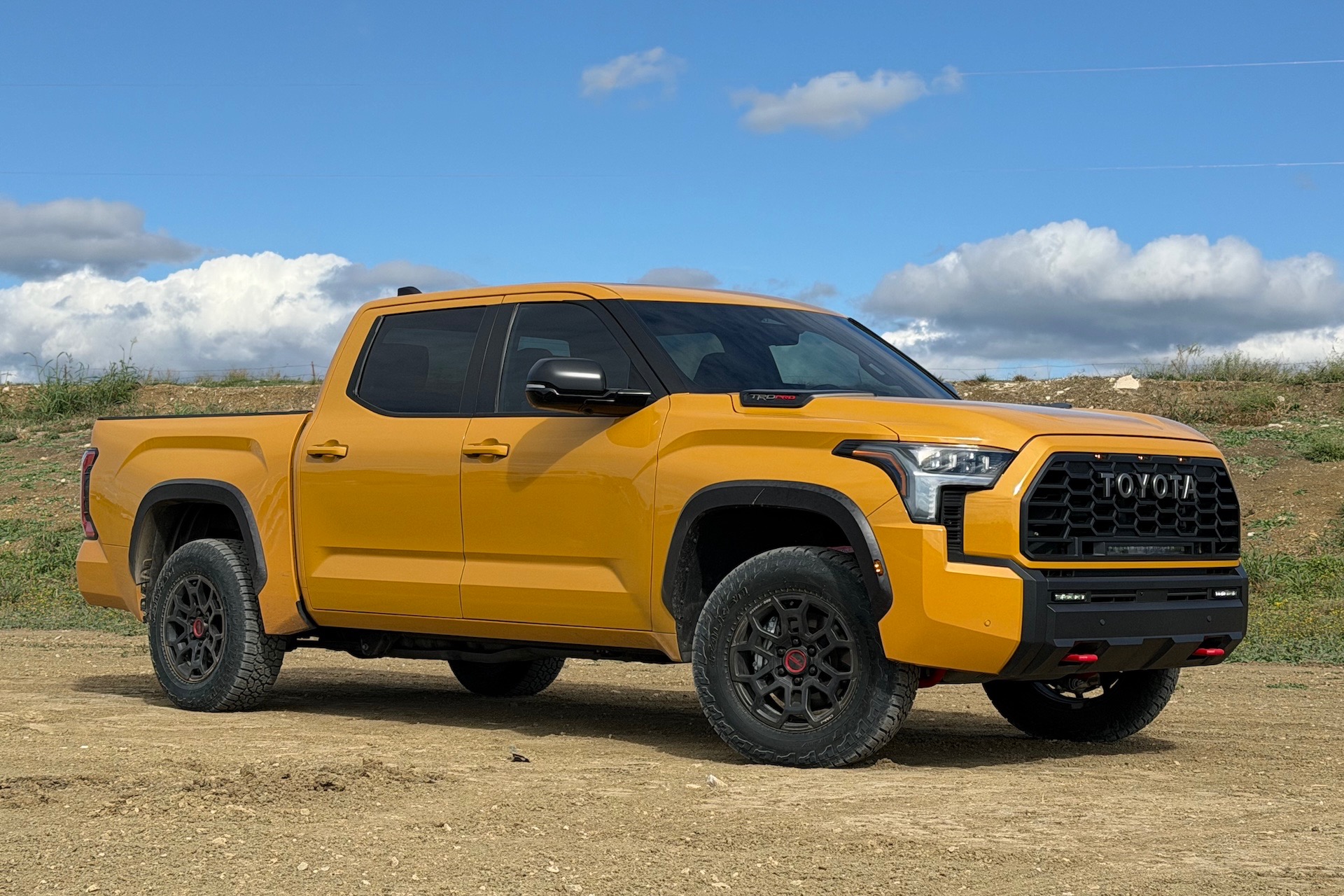
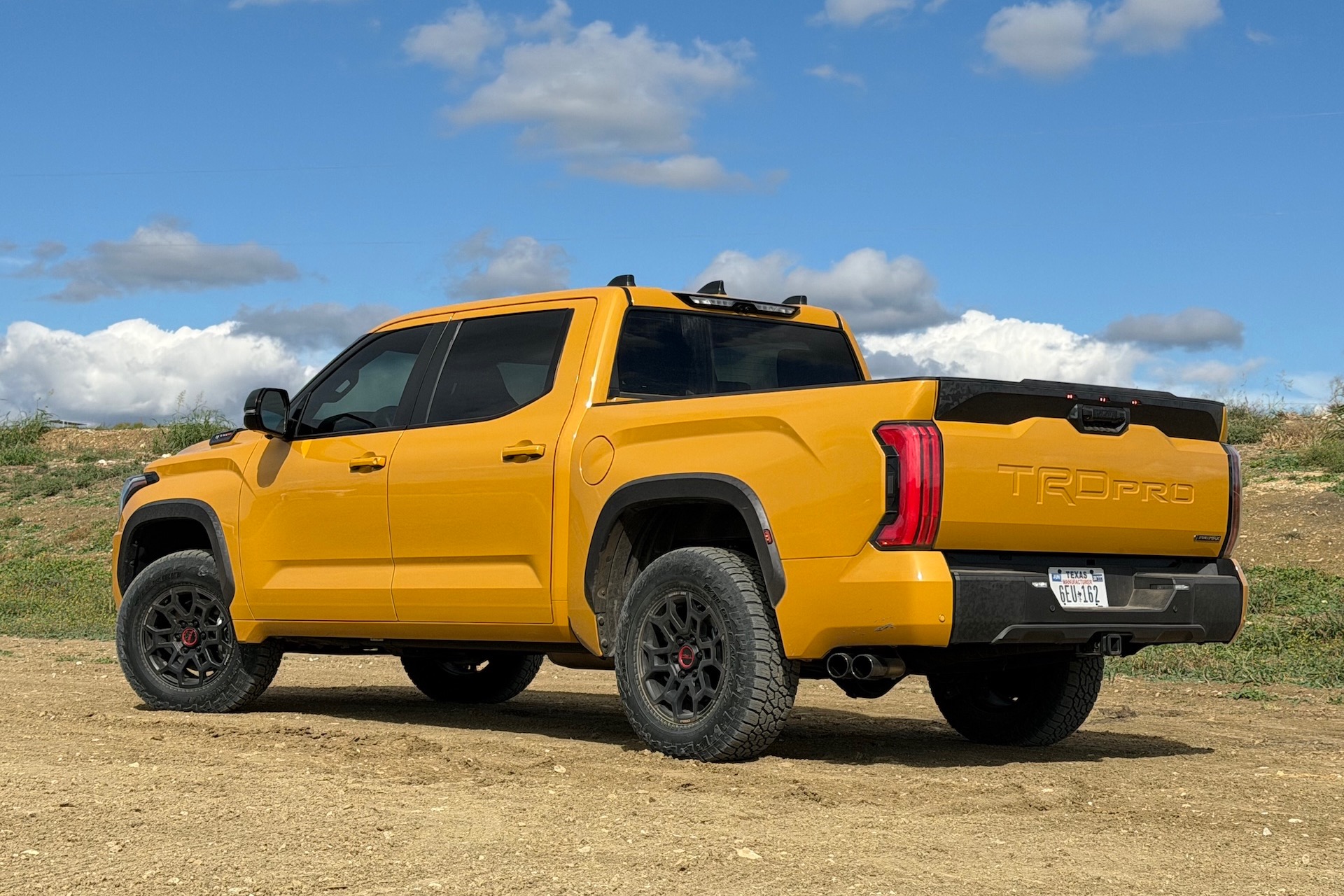
The Tundra gets a revised look for 2027, but it consists of minor changes to the grille and front bumper by trim level. The nose features an upright and wide six-sided grille that angles in at the top. Like the rest of the vehicle, the face has a chunky look, with squared-off shapes for the bumper, grille, and headlights.
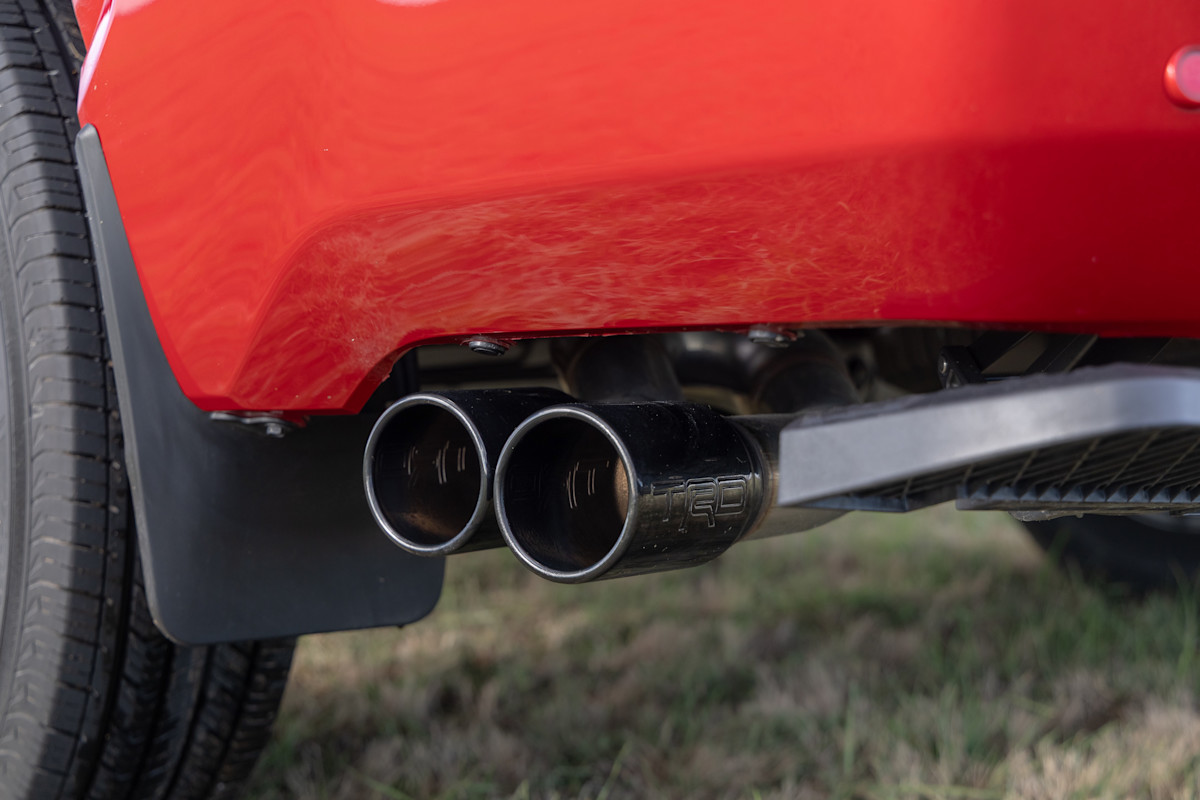
That extends to the sides, where the fenders sport sharp lines that define the wheel haunches and the doors feature rectangular character lines that tuck in to suggest a bit of a Coke-bottle shape. Also along the sides, you’ll notice that the hood line sits high and the sheet metal drops down to the doors, then kicks back up at the rear window line. The rear end is marked by vertical LED taillights, stamped Tundra lettering, and a chunky bumper that plays off the front bumper’s design. Toyota sets it all on 18- or 20-inch wheels that come in steel on the base trim but are otherwise alloys.
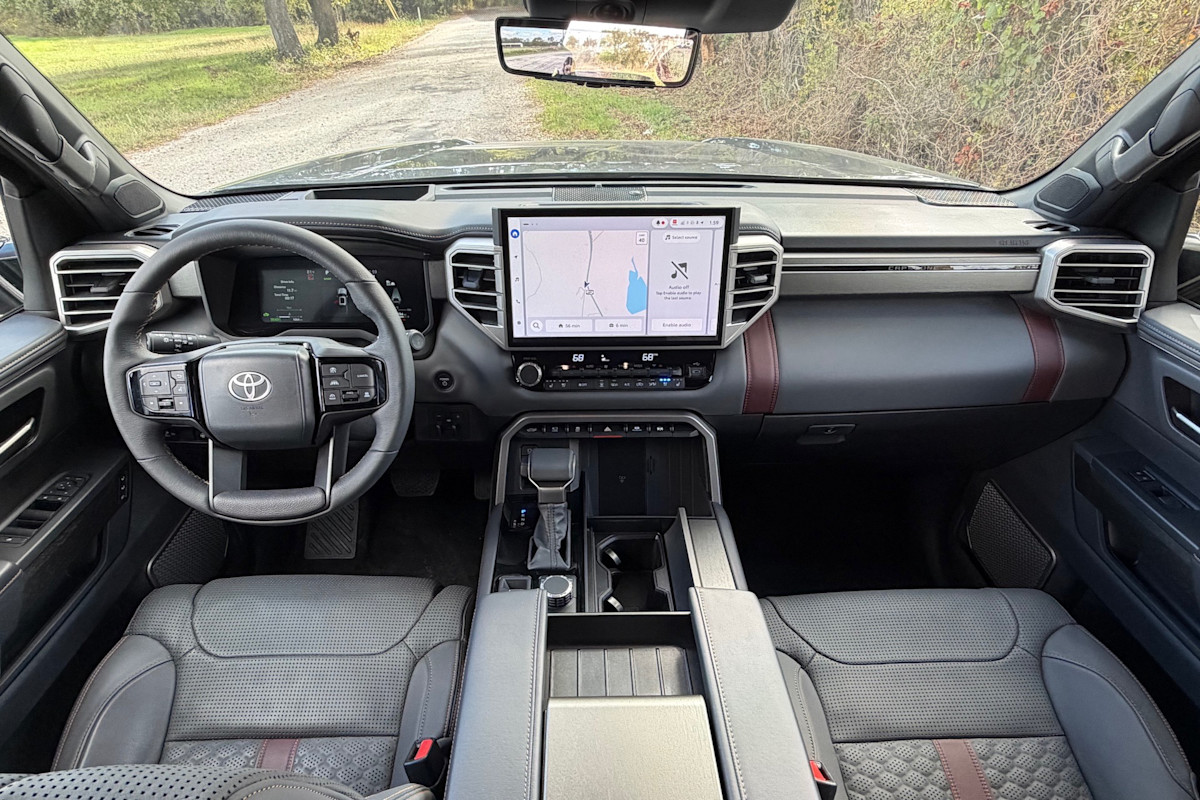
The interior gets points for utility but not so much for refinement. It has a wide, deep, and versatile center console and big, chunky controls that are easy to reach and use with gloved hands. The big center screen dominates the dash and it’s bracketed by plastic air vents, while two more sit at the ends of the dash. Plastic is a theme here, as Toyota adorns much of the cabin with hard plastic that doesn’t have a high enough level of quality for the high prices some Tundra models can command. There are some soft-touch surfaces in areas where people are likely to rest their weary limbs, namely the door panels and center console.
The base SR is rather spartan, with a polyurethane steering wheel and cloth upholstery. Leather upholstery, seat heating and ventilation, seat massagers, and a heated steering wheel are available further up the trim-level ladder, and they’re all standard on the Capstone we tested.
Performance
No Tundra lacks for power, and all are motivated by a twin-turbocharged 3.4-liter V6. In its non-hybrid i-Force form it makes 389 horsepower (detuned to 348 hp in the base SR trim) and 479 pound-feet of torque (405 lb-ft in the SR). The powertrain in hybrid models is called i-Force Max. It adds an electric motor good for 48 hp and 184 lb-ft to assist with acceleration, and total output rises to 437 hp and 583 lb-ft in hybrid operation. The motor is powered by a 1.87-kWh battery pack, and both powertrains are mated to a 10-speed automatic transmission.
The Tundra may not be powered by a V8, but it feels like it is, especially in the hybrid TRD Pro and Capstone trims we drove. The hybrid’s 0–60 mph time is in the six-second range, and it always has good oomph for passing. It even growls like a V8 when pushed hard, and the transmission keeps it in its power range whenever needed.
Towing capacity ranges from 8,300 to 12,000 pounds for the base engine, and 10,340 to 11,450 pounds for the hybrid. That doesn’t top the class, but it’s quite capable.
Rear-wheel drive (RWD) is standard, and the Tundra’s optional 4WD system isn’t as convenient as systems offered by some of the competition. That’s because it’s a part-time system that shouldn’t be used on dry pavement. It has low-range gearing for low-speed crawling, but it lacks an automatic mode that allows it to be used all the time.
The Tundra rides well thanks to its double-wishbone front suspension and multi-link coil-spring rear suspension. The coil springs give it less of the bounce and judder pickups with rear leaf springs are prone to. The ride gets even better with the available Adaptive Variable Suspension that uses adaptive dampers. Toyota retuned this suspension for 2027 to give the Tundra less body lean in corners and a more comfortable ride the rest of the time. We experienced it in the Capstone model and found it to be in line with the benchmark Ram 1500 for smooth ride quality. Handling, however, is predictably cumbersome given how tall and long the Tundra is. Still, it’s generally well controlled, with direct-if-slow steering and a natural brake pedal feel.
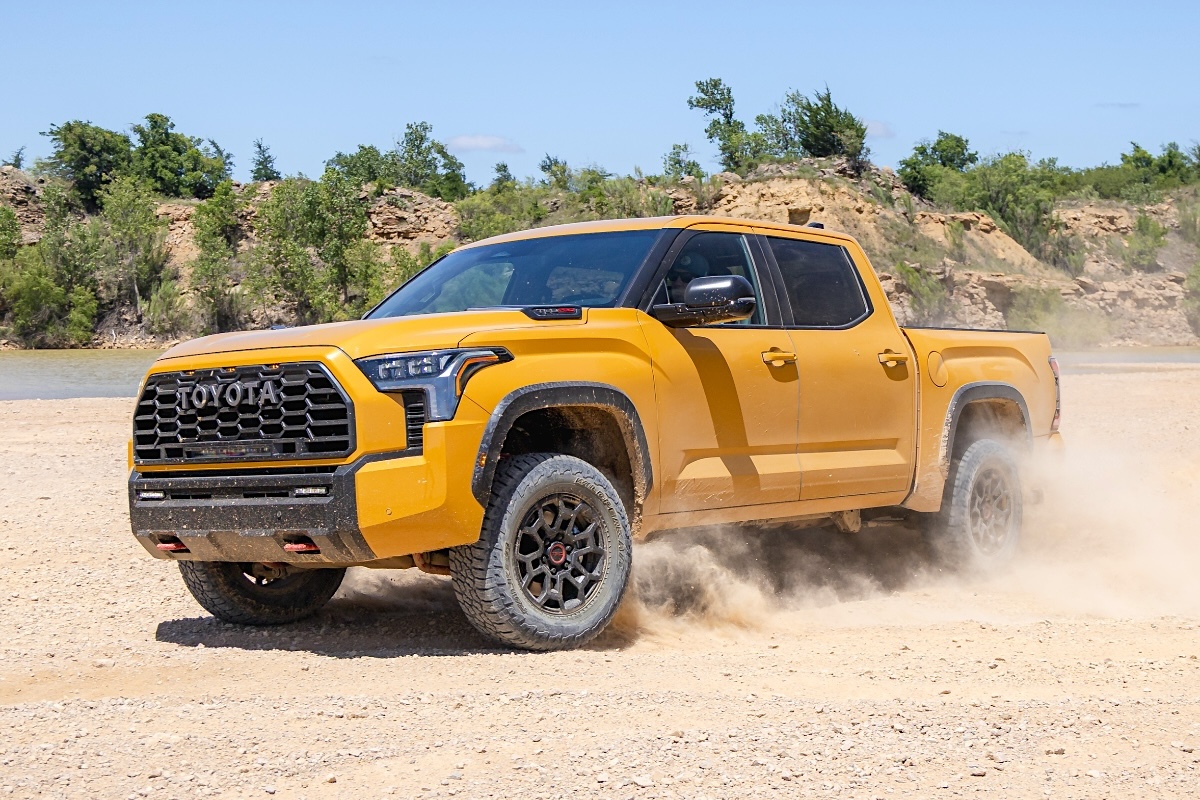
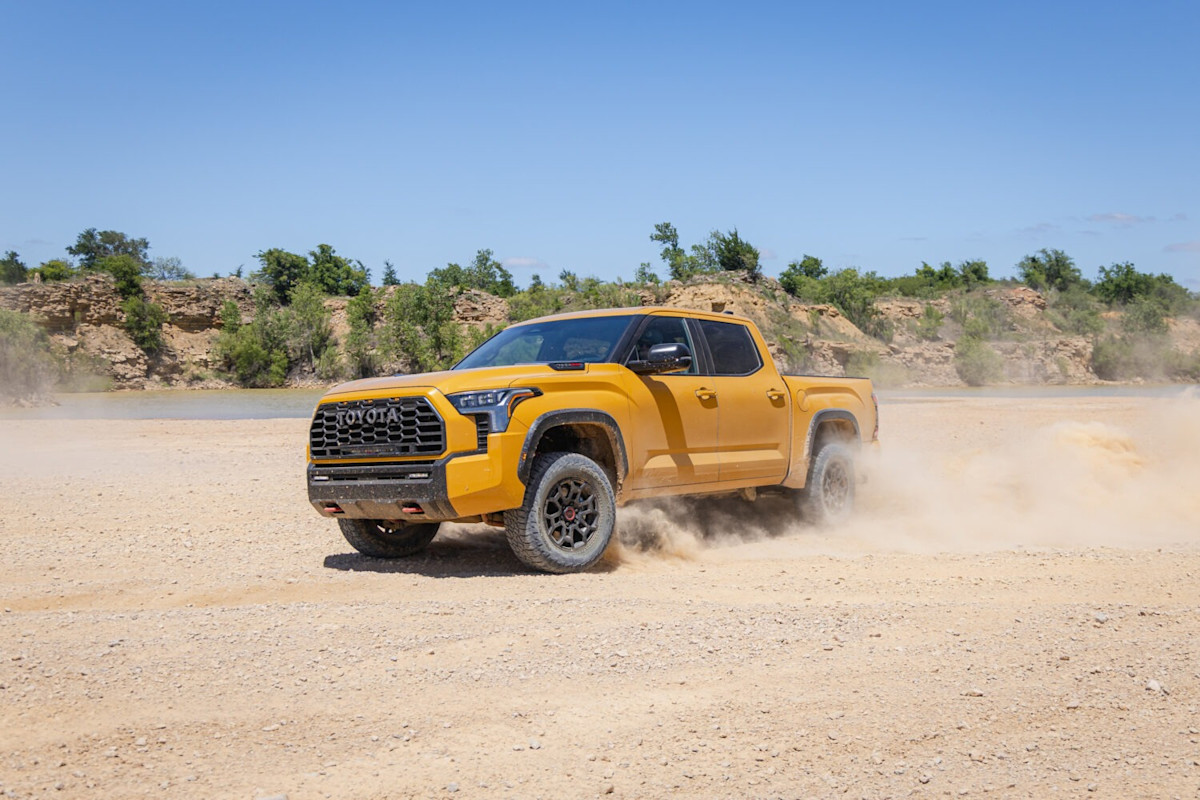
We also drove the TRD Pro, which gets an updated suspension as well, with Fox QS3 three-way adjustable dampers. The adjustments are made at each damper; the base setting is softer than last year, the middle setting is about the same as last year but also firmer than the base Tundra tuning, and the top setting is firmer. These dampers are made to handle the rigors of high-speed off-road driving, and they worked well on an off-road course that felt like a rally stage at Toyota’s 2027 Tundra media drive. An additional 1.1 inches of ground clearance helps the TRD Pro clear rocks and ruts that trucks with the base suspension might not.
For those who want something softer, Toyota is introducing a Trailhunter package for the SR5 trim for 2027 with squishier Old Man Emu dampers that are tuned more for comfort. This package is aimed at those who are interested in overlanding, which is essentially living out of your truck off the beaten path. Both off-road variants come with all-terrain tires that work well in the mud and dirt.
With 4WD comes Toyota’s Multi-Terrain Select system with settings for Deep Snow, Mud, Sand, and Dirt conditions, as well as an Auto mode that automatically adjusts the traction control, transmission, and throttle to handle the current surface. Further help comes from the available surround-view camera system that has forward, rear, and front and rear side views to help negotiate tight clearances.
Form & function
Toyota offers the Tundra with two cab styles and three bed lengths. The Double Cab (extended cab) has four doors but the rear doors don’t open independently of the fronts; it’s offered for only the two base trims and comes with all bed lengths: 5.5, 6.5, and 8.1 feet. The CrewMax (Toyota’s name for a crew cab) gets the two shorter beds only.
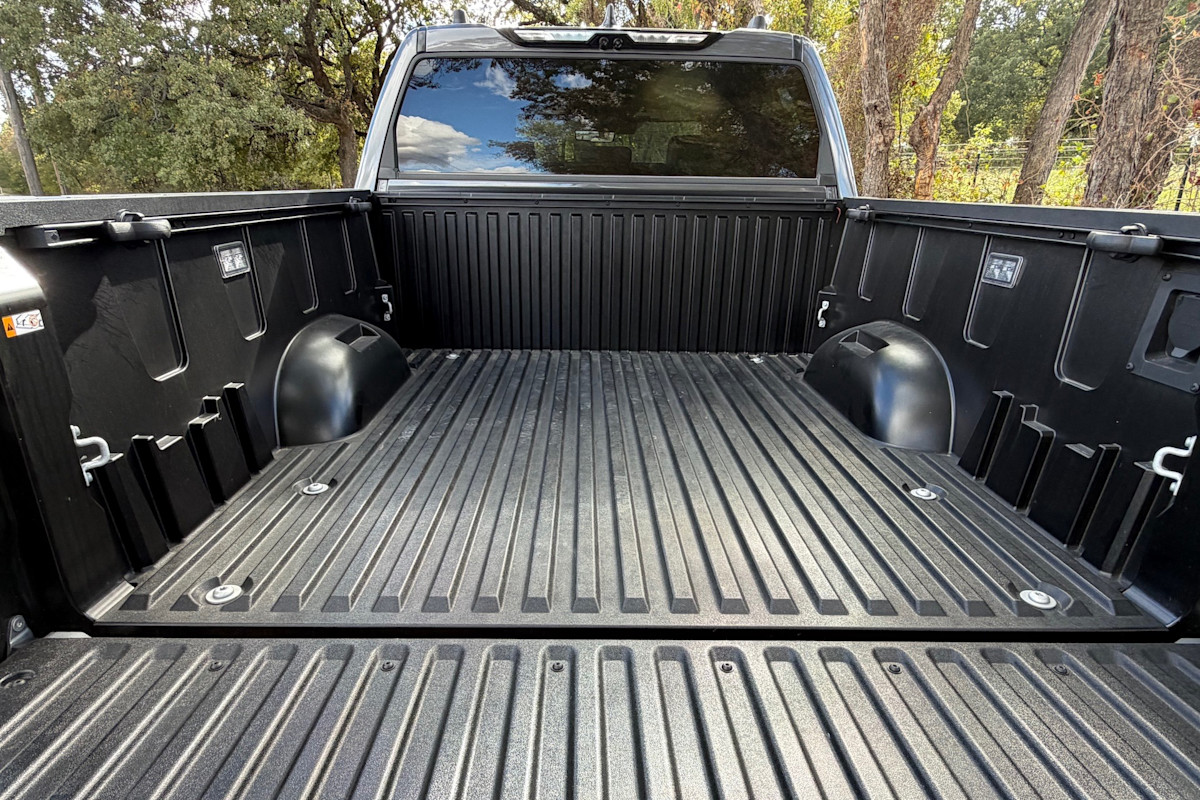
The bed can be outfitted with plenty of convenience features, including a power rear window, a power tailgate that can be lifted with a knee or activated with the key fob, power running boards and a power side step to help people get into the bed, buttons near the taillights that drop the tailgate, LED bed lighting, a 400-watt/120-volt bed-mounted power plug, and a spray-in bedliner. Three features in particular are quite convenient. The power rear window lets occupants access the bed from the cab, the buttons along the bed sides can be hit with an elbow when your arms are full to drop the tailgate for easier loading, and the side step is necessary given how tall truck beds are these days (though it isn’t as tough to reach into the Tundra’s bed as it is with GM’s trucks).
The front seat is quite roomy in all directions. Both body styles seat five, which means that Toyota doesn’t offer a front bench seat. The seats are wide but rather flat, so they don’t keep passengers from sliding around in hard cornering. The base truck has manually adjustable cloth seats, but moving up just one trim level brings power seat adjustments.
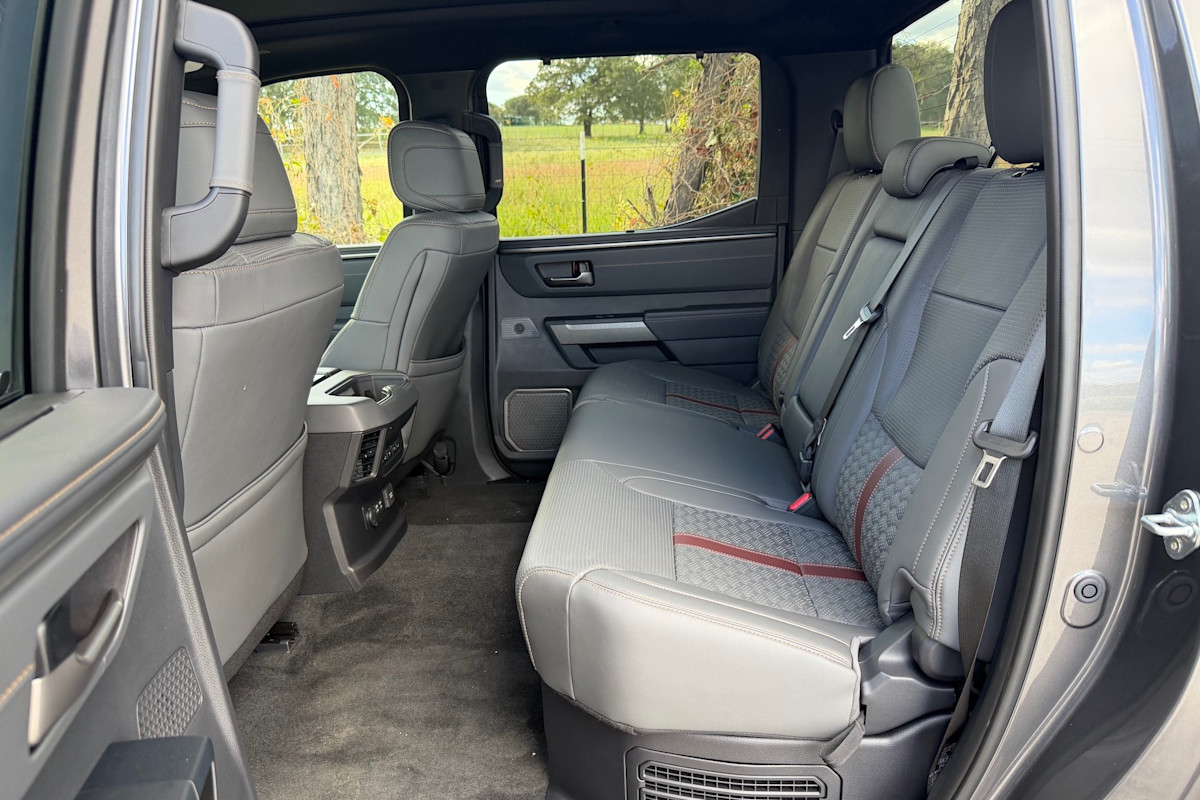
Rear-seat riders have excellent room in the CrewMax, but they lose some legroom in the Double Cab, which might result in some negotiations for knee room with taller front passengers. There is also available rear under-seat storage with removable and adjustable partitions.
Technology
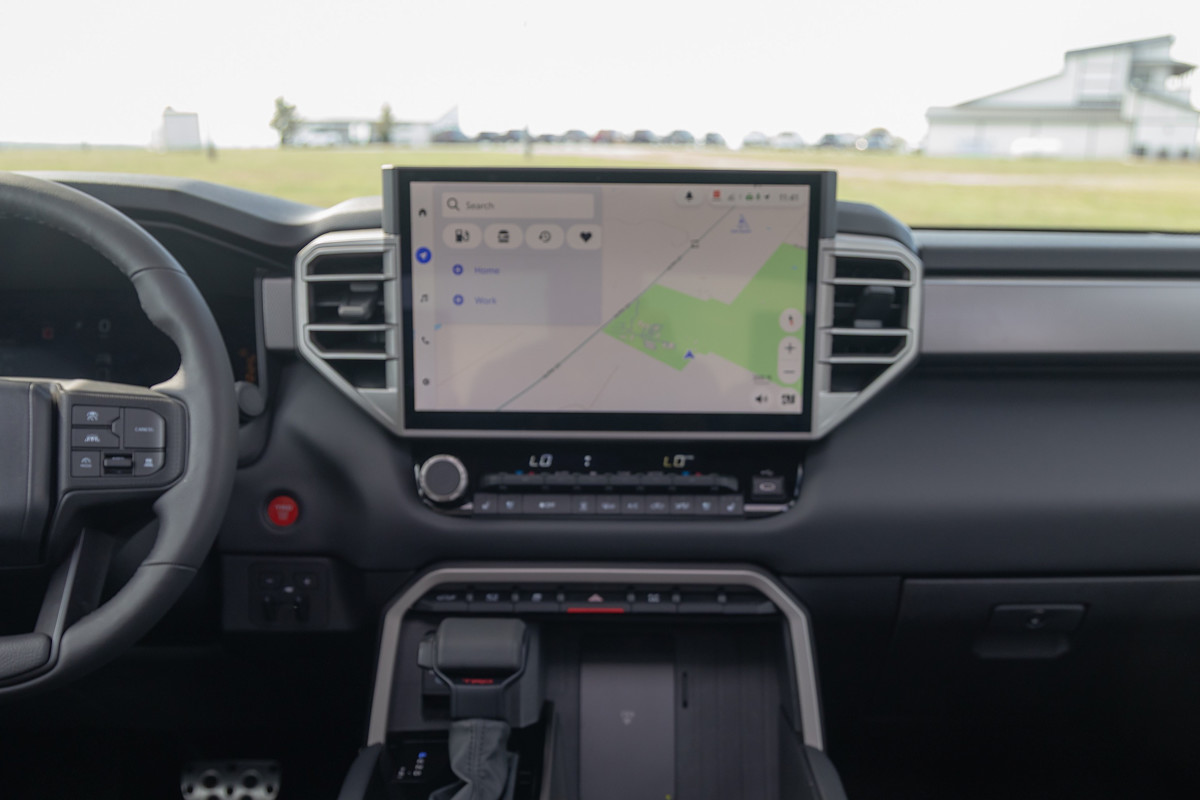
For 2027, Toyota upgrades the Tundra’s interior tech suite for every trim level, especially the base versions. A 4.2-inch digital information center is standard, while Limited and above trims get a 12.3-inch fully digital instrument cluster. A new larger 14-inch infotainment touchscreen now comes standard, replacing the former 8-inch unit on lower trims.
Using a new software platform called Arene, the Tundra upgrades its connectivity, voice recognition, and safety and security features while adding the ability to receive over-the-air updates. AT&T 5G network connectivity allows for a Wi-Fi hotspot as well.
The large touchscreen is easy to reach and a Quick Control menu on its left side features icons for home, phone, entertainment, navigation, and settings menus. It also offers split-screen capability so you can use the standard wireless Apple CarPlay or Android Auto for maps and control the satellite radio stations on the same screen. It’s a good idea that we’d like to see implemented across the industry. Toyota also keeps the climate controls separate from the screen, which makes them easy to use without thinking. That’s another good idea.
A dash cam is also newly standard this year. It accesses the external cameras to record 20-second clips of events either prompted by the way the truck is driven or manually by the driver. It worked automatically when we were drifting the Tundra around a high-speed off-road course (we’d like to see that footage).
Other standard tech features include a three-month satellite radio trial, a wireless smartphone charger, and a six-speaker audio system. Most trims have a better 14-speaker JBL audio system.
The Tundra also comes with various subscriptions in trials both long and short. On the short end are Wi-Fi Connect, which provides a Wi-Fi hotspot for a month, and Drive Connect, which provides three months of destination assist, cloud navigation, and Google points of interest. Safety Connect is free for five years; it comes with a stolen-vehicle locator and emergency roadside assistance. Remote Connect is also free for five years, adding access to the Toyota app and a digital key. Service Connect is another five-year subscription; it includes vehicle health reports and maintenance reminders.
Safety
The 2027 Tundra’s upgraded Toyota Safety Sense 4.0 adds some driver-assistance features and boasts improved sensing capabilities. Standard features include forward-collision warning with pedestrian detection, blind-spot monitoring, rear cross-traffic alert, lane-departure warning, lane-tracing assist, adaptive cruise control, traffic-sign recognition, high-beam assist, and a system that pulls the truck over if the driver isn’t attentive when using lane-tracing assist. Options include front and rear parking sensors with automatic braking, safe-exit alert, and the surround-view camera system.
The Tundra also offers some safety features for trailering. They include blind-spot monitors that cover the length of the trailer, trailer lane-tracing assist, automatic trailer detection, and a trailer backup assist system that can turn the steering wheel and show the trailer’s path when backing up. The driver uses a slider on the touchscreen to tell the truck how to steer. Touching the screen isn’t as stable as using a dial like some other systems use, but it is effective nonetheless.
The Tundra has a short windshield caused by a tall hood, and that blocks the view to the sides immediately in front of the truck.
The 2027 Tundra gets a perfect five out of five stars in National Highway Traffic Safety Administration (NHTSA) crash testing, but the Insurance Institute for Highway Safety (IIHS) had not released safety ratings at the time of writing. However, the 2026 Tundra was an IIHS Top Safety Pick. It didn’t qualify for a Top Safety Pick+ award because its vehicle-to-vehicle front crash prevention system was not tested and its vehicle-to-pedestrian front crash prevention system received an Acceptable instead of a Good score. This year’s improvement in sensing capability may improve those scores.
Cost-effectiveness
Toyota offers the 2027 Toyota Tundra in a trim level for every purpose, from base work truck to luxury liner. Those trims are SR, SR5, Limited, Platinum, 1794, TRD Pro, and Capstone. The SR starts at $45,085, including a $2,195 destination fee. The CrewMax cab adds $2,000, 4WD costs an additional $3,000, and, where it’s available, the hybrid powertrain adds another $7,300. Prices rise precipitously from there, all the way up to $77,595 for the TRD Pro off-roader and $85,120 for the top Capstone grade.
It’s a good thing that the hybrid powertrain adds power because it doesn’t do much for fuel economy. All i-Force Max models get standard 4WD and carry EPA-estimated fuel economy figures of 19 mpg city, 22 mpg highway, and 20 mpg combined. That essentially matches the RWD fuel economy of non-hybrid models, which comes in at 18/24/20 city/highway/combined for the SR, and 18/23/20 for the SR5, Limited, Platinum, and 1794. Gas-only models with 4WD get 19 mpg combined. Given the modest fuel savings, the extra cost for the hybrid system will never really pay off, so you'd better enjoy its extra power.
The high pricing of all full-size pickups makes a mid-range Tundra with 4WD and the CrewMax cab the best choice for most. From there, pick the features that you really want and you’ll end up spending around $61,000 for a 4WD Limited, which adds such niceties as leather upholstery, heated and ventilated front seats, the power tailgate, the 12.3-inch digital instrument cluster, front and rear parking sensors, and 20-inch wheels.
What owners say
Trims & specs
Base MSRP N/A | Seating 5 |
Engine N/A | Cargo Capacity N/A |
Fuel Economy N/A | Drivetrain N/A |
Base MSRP N/A | Seating 5 |
Engine N/A | Cargo Capacity N/A |
Fuel Economy N/A | Drivetrain N/A |
Base MSRP N/A | Seating 5 |
Engine N/A | Cargo Capacity N/A |
Fuel Economy N/A | Drivetrain N/A |
Base MSRP N/A | Seating N/A |
Engine N/A | Cargo Capacity N/A |
Fuel Economy N/A | Drivetrain N/A |
Base MSRP N/A | Seating N/A |
Engine N/A | Cargo Capacity N/A |
Fuel Economy N/A | Drivetrain N/A |
Base MSRP N/A | Seating N/A |
Engine N/A | Cargo Capacity N/A |
Fuel Economy N/A | Drivetrain N/A |
Base MSRP N/A | Seating N/A |
Engine N/A | Cargo Capacity N/A |
Fuel Economy N/A | Drivetrain N/A |
Base MSRP N/A | Seating N/A |
Engine N/A | Cargo Capacity N/A |
Fuel Economy N/A | Drivetrain N/A |
Base MSRP N/A | Seating 5 |
Engine N/A | Cargo Capacity N/A |
Fuel Economy N/A | Drivetrain N/A |
Base MSRP N/A | Seating 5 |
Engine N/A | Cargo Capacity N/A |
Fuel Economy N/A | Drivetrain N/A |
Base MSRP N/A | Seating 5 |
Engine N/A | Cargo Capacity N/A |
Fuel Economy N/A | Drivetrain N/A |
Base MSRP N/A | Seating 5 |
Engine N/A | Cargo Capacity N/A |
Fuel Economy N/A | Drivetrain N/A |
Base MSRP N/A | Seating 5 |
Engine N/A | Cargo Capacity N/A |
Fuel Economy N/A | Drivetrain N/A |
Base MSRP N/A | Seating 5 |
Engine N/A | Cargo Capacity N/A |
Fuel Economy N/A | Drivetrain N/A |
Base MSRP N/A | Seating 5 |
Engine N/A | Cargo Capacity N/A |
Fuel Economy N/A | Drivetrain N/A |
Base MSRP N/A | Seating 5 |
Engine N/A | Cargo Capacity N/A |
Fuel Economy N/A | Drivetrain N/A |
Base MSRP N/A | Seating 5 |
Engine N/A | Cargo Capacity N/A |
Fuel Economy N/A | Drivetrain N/A |
Base MSRP N/A | Seating 5 |
Engine N/A | Cargo Capacity N/A |
Fuel Economy N/A | Drivetrain N/A |
Base MSRP N/A | Seating 5 |
Engine N/A | Cargo Capacity N/A |
Fuel Economy N/A | Drivetrain N/A |
Base MSRP N/A | Seating 5 |
Engine N/A | Cargo Capacity N/A |
Fuel Economy N/A | Drivetrain N/A |
Base MSRP N/A | Seating 5 |
Engine N/A | Cargo Capacity N/A |
Fuel Economy N/A | Drivetrain N/A |
Base MSRP N/A | Seating 5 |
Engine N/A | Cargo Capacity N/A |
Fuel Economy N/A | Drivetrain N/A |
Base MSRP N/A | Seating 5 |
Engine N/A | Cargo Capacity N/A |
Fuel Economy N/A | Drivetrain N/A |
Base MSRP N/A | Seating 5 |
Engine N/A | Cargo Capacity N/A |
Fuel Economy N/A | Drivetrain N/A |
Base MSRP N/A | Seating 5 |
Engine N/A | Cargo Capacity N/A |
Fuel Economy N/A | Drivetrain N/A |
Base MSRP N/A | Seating 5 |
Engine N/A | Cargo Capacity N/A |
Fuel Economy N/A | Drivetrain N/A |
Base MSRP N/A | Seating 5 |
Engine N/A | Cargo Capacity N/A |
Fuel Economy N/A | Drivetrain N/A |