This full-size, three-row SUV is slated to become Audi’s new flagship.
2027 Audi Q9 Pricing, Specs, and Release Date
- What’s New for the 2027 Audi Q9
- Design
- Powertrain
- Interior
- Technology
- Safety
- Pricing and Release Date
- Further Research

What’s New for the 2027 Audi Q9
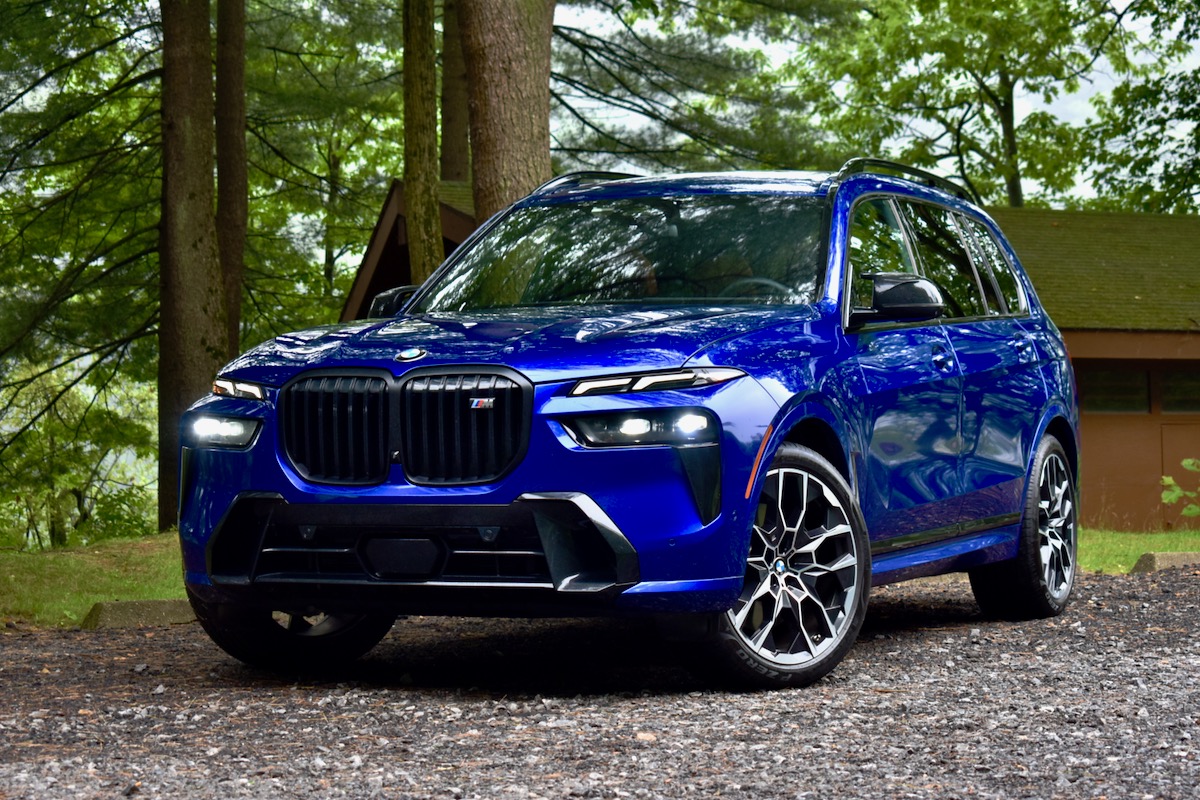
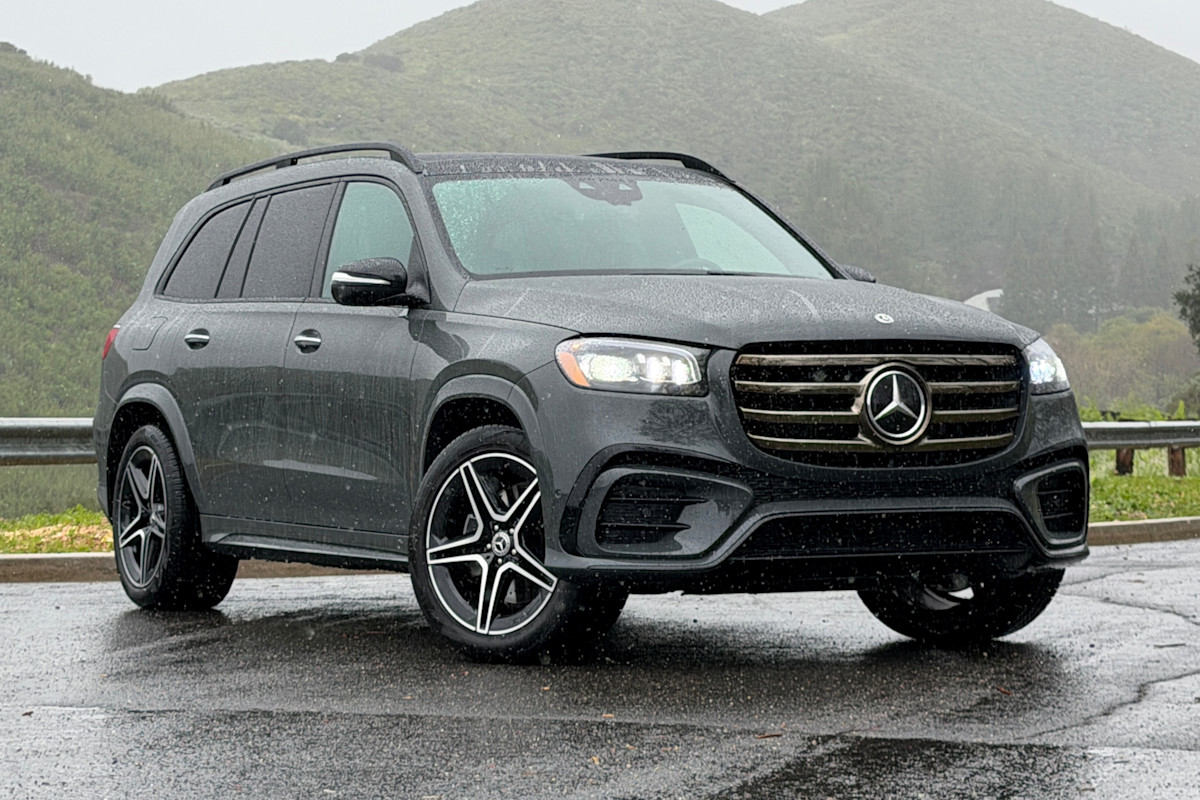
The Q9 is a new addition to the Audi lineup. As the name suggests, it’s bigger than the Q7 (which itself gets redesigned for 2027), finally giving Audi a full-size luxury SUV rival to the BMW X7, Mercedes-Benz GLS-Class, and Land Rover Range Rover while offering more space and a more luxurious cabin than any previous Audi SUV ever has.
Design
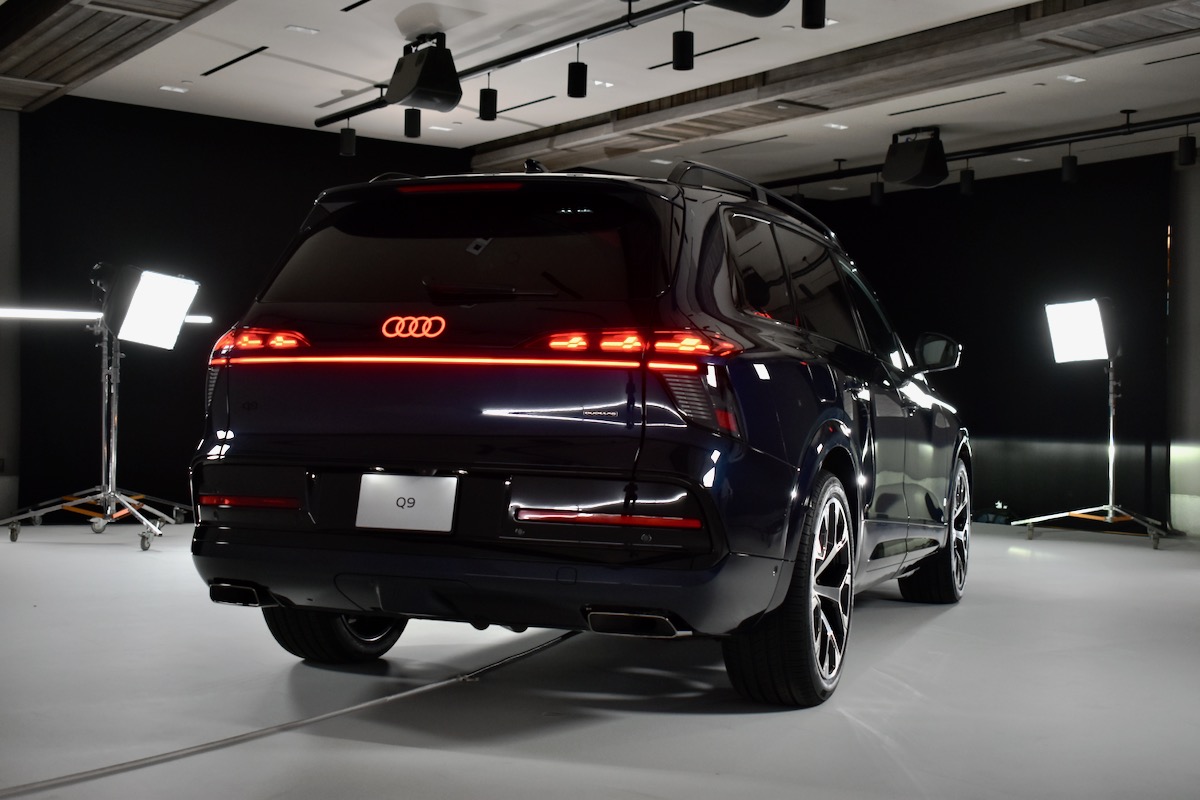
The Q9's exterior styling largely carries over from other recent Audi models, which makes sense given how fresh the rest of the lineup is. The typical large grille is framed by stacked lighting elements, and the sides are fairly plain aside from creases meant to represent the box fender flares of the old Audi Quattro. However, the roof is more upright, giving the Q9 a more squared-off, broader look in rear three quarter view than other Audi SUVs.
Notably, the Q9 will also be the first U.S.-market Audi model with fully-adaptive matrix headlights. The matrix system precisely aims individual LED elements to provide maximum illumination at night without blinding oncoming drivers. This tech has been available in Europe for about a decade, but hasn’t been enabled in the U.S. because of more-restrictive regulations. OLED taillights are also available on higher trim levels.
A range of 21-inch, 22-inch, and 23-inch wheel designs are available. All-season run-flat tires are standard with the 21s and 22s, while the 23s wear summer tires. Advanced Line and S Line trim packages give the Q9 slightly different exterior vibes, with more restrained details for the Advanced Line and sporty touches like a more open grille and rear spoiler for the S Line. An SQ9 performance model is also available with racier bodywork and staggered 23-inch wheels.
Powertrain
The Q9 launches with the same powertrains as the recently-introduced 2027 Audi Q7. The standard twin-turbocharged 2.9-liter V6 produces the same 429 horsepower and 442 pound-feet of torque as it does in the midsize Q7, and sends that power to all four wheels through an eight-speed automatic transmission. Audi quotes a zero-to-60-mph time of 4.9 seconds-just 0.1 slower than the Q7, despite the Q9’s added weight. Top speed is electronically limited to 130 mph on all-season tires or 155 mph with summer tires.
The SQ9 has a twin-turbo 4.0-liter V8 that carries over from the SQ7. It produces the same 591 hp and 590 lb-ft as it does in that SUV, and is also harnessed to an eight-speed automatic transmission and standard all-wheel drive. Audi estimates a zero to 60 mph time of 3.8 seconds that just 0.1 second behind the SQ7, and quicker than most competitors.
Adaptive air suspension and four-wheel steering are both standard on the Q9, while the SQ9 gets sportier tuning for both the suspension and the all-wheel drive (AWD) system. The latter sends more power to the rear wheels by default, and there’s a fully-lockable rear differential to further enhance tail-happiness.
EPA fuel-economy ratings were unavailable at the time of publication, but don’t expect to be impressed by the numbers as full-size SUVs aren’t exactly known for their efficiency.
Interior
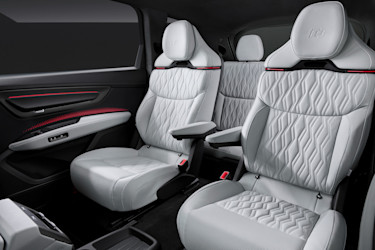
A seven-seat configuration with a second-row bench seat is standard, but a six-seat version that replaces the bench with captain’s chairs will be optional. Second-row seats have a power-operated slide-and-tilt function for third-row access that works with child car seats in place, according to Audi. A power-folding third row is standard, and optional Sport Seat Plus front seats add ventilation and massage.
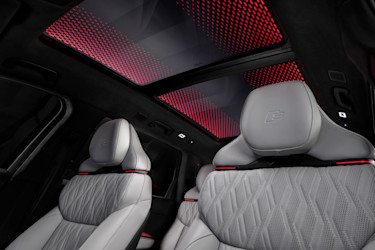
Power-operated doors—a first for an Audi—are standard, along with a massive (16-square-foot) panoramic sunroof that’s the largest ever in a production Audi. It also features Polymer Dispersed Liquid Crystal (PDLC) tech that can electronically switch from transparent to opaque, and a Tron-like lighting overlay will be available at a later date. Nine segments allow the roof to be partially transparent or opaque, and LED ambient lighting around the roof is also available.
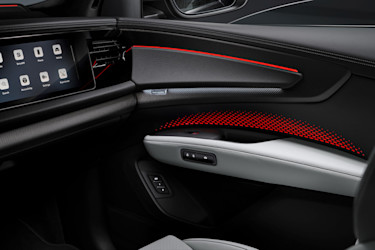
Leatherette, real leather, and Nappa leather seating options will be available. Audi also claims to have reduced the amount of hard plastics compared to its previous models, and will offer premium trim materials like wood and carbon fiber. Designers also eschewed glossy surfaces in favor of matte and textured finishes to create a more premium feel.
Technology
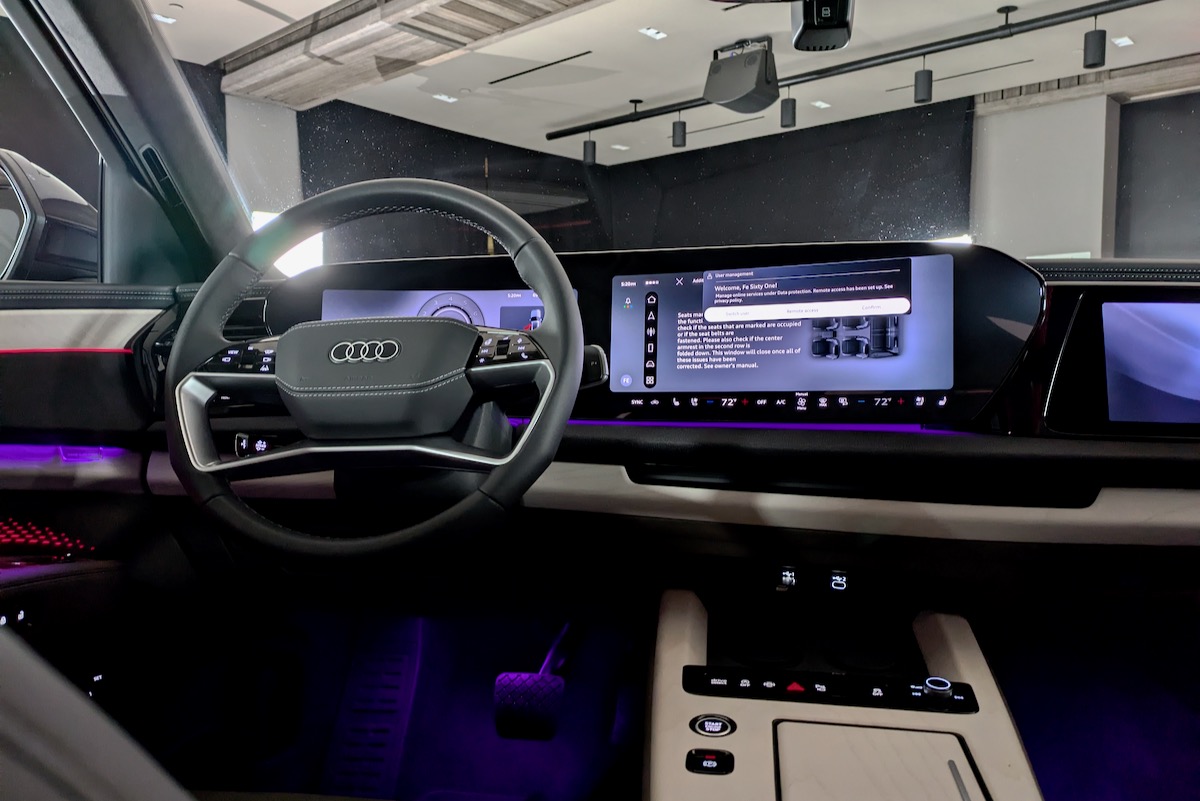
The Q9 adopts Audi’s current three-screen layout, with an 11.9-inch digital instrument cluster and 14.5-inch main infotainment touchscreen housed together, and a separate 12.3-inch touchscreen for the front passenger off to the side.
The current version of Audi’s Multimedia Interface (MMI) infotainment system is based on the Android Automotive operating system, but retains wireless Apple CarPlay and Android Auto. Native voice recognition is available as part of the Audi Connect Nav subscription package and integrates ChatGPT for assistance with general knowledge queries the native system can’t answer.
A 1,360-watt Bang & Olufsen audio system with 22 speakers—including some in the front-seat headrests—is available, along with a dashcam that record onto a microSD card.