Audi was late to the midsize luxury SUV market among the major German luxury brands, and when the original 2007 Q7 finally went on sale, it gave consumers an alternative to the BMW X5 and the Mercedes-Benz M-Class, which had been wooing luxury SUV buyers for almost 10 years.
The first Q7 had seven seats, responsive handling, and Audi’s classic and clean design, inside and out. Made for use on the pavement with some light-duty off-roading thrown in for good measure, the Audi Q7 featured a V6 or a V8 engine and standard quattro all-wheel drive (AWD). A turbocharged diesel engine (TDI) was also available during some model years until Audi dropped it as diesel engines fell out of fashion. Some versions had an adaptive air suspension that improved the ride and handling but could prove expensive to repair.
It is a testament to the first-generation Q7’s design that it lasted nine years. However, after skipping 2016, a redesigned 2017 Q7 arrived to take its place. It adhered to the Audi design language of the time but lost some of the original’s organic character. Upgraded technology, improved utility, and better fuel economy characterized the second-generation Q7, while a performance-tuned Audi SQ7 model with a twin-turbocharged V8 engine arrived in 2020. For 2027, Audi redesigned the Q7 again, ushering in a third generation with fresh styling, more powerful engines, and updated technology.
Audi Q7 reliability is average, according to Repair Pal, with relatively high repair costs. For each generation, the first couple of model years show a higher incidence of reported problems. The EPA says the gasoline engines require premium fuel, increasing ownership costs.
The V8s guzzle gas, with economy figures ranging from 12 mpg in the city to 21 mpg on the highway, depending on the model year. Second-generation Q7s offered a turbocharged four-cylinder engine that worked overtime to motivate the heavy SUV, resulting in unimpressive gas mileage. Of all the Q7 powertrains, the turbocharged six-cylinder versions supply the best blend of performance, efficiency, and clean emissions.
Unless you can afford the premium gas and higher-than-average maintenance costs, buying a used Audi Q7 could prove disappointing unless you’re a hardcore diesel fan or need to tow a heavy trailer.
Audi Q7 Buying Guide: Cost, Reliability, and the Best Years to Buy
Frequently Asked Questions
Which Audi Q7 years are the best?
According to CarComplaints.com, Q7 owners lodged some complaints about the first-generation Q7s from the 2010-2013 model years. In 2011, new supercharged 3.0-liter V6 TFSI engines replaced the original 3.6-liter V6 and 4.2-liter V8, and a new eight-speed automatic transmission debuted, which dramatically improved fuel economy.
If your budget permits, we’d recommend sticking to model years from the 2019 or later and choosing the turbocharged V6 engine. A 2019 Q7 averages around $19,000, while a 2020 model averages about $25,500. If you can stretch to models built from 2020, you’ll benefit from a styling update, next-generation infotainment systems, and a little more power, while cars under four years old and with less than 50,000 miles on the clock will still be covered by the manufacturer’s warranty.
What are the worst Audi Q7 years?
CarComplaints.com says the 2007/2008 and 2017/2018 Q7s are the worst years for owner complaints about this SUV – the first years each generation was on sale. Engine problems are most commonly cited by owners across all years, followed by squealing brakes and excessive oil consumption in the redesigned 2017 Q7.
How much does a late-model Audi Q7 cost?
Based on current CarGurus listings, a one-year-old 2025 Audi Q7 averages around $50,400, a three-year-old 2023 model averages about $38,900, and a five-year-old 2021 Q7 averages approximately $27,400. Prices vary by trim, mileage, and condition.
Research Audi Q7 Price Trends on CarGurus.
Is a used Audi Q7 a good deal?
Luxury vehicles depreciate rapidly and the Audi Q7 has always had a high MSRP, so it might seem like a good deal when it’s only a few years old. Q7 values have dropped 7.6% year over year, while the broader used car market rose 2.3% over the same period, so buyers benefit from steeper-than-average depreciation. However, reliability is average, and maintenance costs are higher than normal, so when a Q7 breaks, it might be expensive to fix.
Audi Q7 Pros and Cons
Pros
- Good driving dynamics
- Supercharged and turbocharged V6 engines
- Significant towing capacity with second-generation Q7
Cons
- Requires premium fuel
- Repair costs can be high
- Awful fuel economy from the V8 engines
Audi Q7 Generations
Third Generation (2027 - present)
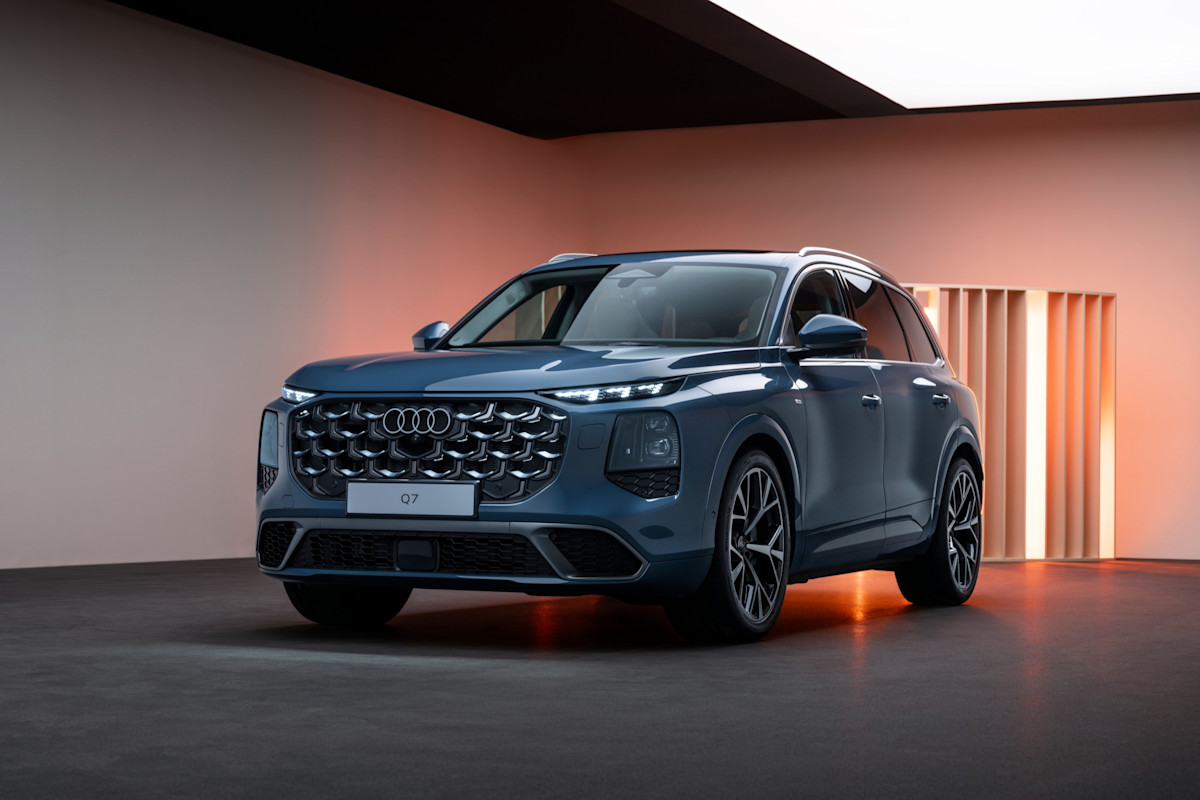
The Q7 was fully redesigned for 2027, its first ground-up overhaul since 2017, and it keeps three rows of seating. Its look borrows from the smaller Q5 and electric Q6 e-tron, then supersizes it with a large textured grille and crease-like fender flares. This is also the first US Audi to offer matrix LED lighting, with individually aimable LED elements, OLED taillights, and a projected advanced turn signal.
Q7 trims run Premium, Premium Plus, and Prestige, while the SQ7 comes in Premium Plus and Prestige. Standard Premium Advanced styling includes aluminum trim and 20-inch wheels. A Prestige Launch Edition adds an S Line package with an illuminated grille, sportier bumpers, 22-inch wheels, and blackout trim.
The powertrain is all new: the turbo 2.0-liter four and old 3.0-liter V6 are both gone. A twin-turbo 2.9-liter V6 is now standard, making 429 hp and 442 lb-ft. That’s up 94 hp and 73 lb-ft over last year’s optional V6, with an estimated 0-60 mph of 4.8 seconds.
The SQ7 returns with a twin-turbo 4.0-liter V8, now rated at 591 hp and 590 lb-ft. That’s a gain of 91 hp and 22 lb-ft, dropping its 0-60 time to 3.7 seconds. An eight-speed automatic and all-wheel drive are standard, and both models tow up to 7,700 pounds when properly equipped.
Steel springs are standard, with air suspension optional on the Q7 and standard on the SQ7. The SQ7 also offers an optional sport air suspension, and rear-wheel steering is available on both.
Inside, the minimalist dash hides its vents and pairs open-pore wood with leather. A panoramic sunroof covers all three rows, with an optional dimmable PDLC layer. Buyers can choose a seven-seat second-row bench or six-seat captain’s chairs.
Cargo space grows over the previous generation. It measures 15.1 cubic feet behind the third row, 43.9 behind the second, and 78.1 at maximum.
Technology centers on the Audi Digital Stage, a curved display combining an OLED instrument cluster with the infotainment touchscreen. A front passenger screen is included, and the MMI system adds wireless Apple CarPlay, Android Auto, and new ChatGPT voice-assistant integration. Options include a head-up display, a dashcam, and a 22-speaker, 1,360-watt Bang & Olufsen audio system.
Standard driver aids include automatic emergency braking, blind-spot monitoring, rear cross-traffic alert, a 360-degree camera, and lane-departure warning. Available options add trailer-sway and trailer-maneuvering assist, plus a trained parking self-parking feature. IIHS and NHTSA ratings weren’t available at launch because the model is new.
The third-generation Q7 reaches dealerships in the fourth quarter of 2026, with pricing announced closer to its on-sale date. For reference, the 2026 Q7 started at $63,295 and the SQ7 at $95,095, both including the mandatory $1,295 destination charge, so expect at least a small increase for 2027. Because this generation is brand new, there’s no meaningful used-market pricing yet, and values will take time to settle as early examples reach resale.
Second Generation (2017-2026)
Audi redesigned the Q7 for the first time in 2017. The new car’s trim levels included Premium, Premium Plus, and Prestige trim, and the midsize three-row luxury SUV offered a choice between two engines. A turbocharged, 252-horsepower 2.0-liter four-cylinder made the Q7 more affordable, but it didn’t provide enough power, and because it had to work hard, fuel economy failed to impress. Better to choose the turbocharged, 333hp 3.0-liter V6, which is also your ticket to 7,700 pounds of towing capacity.
Instantly identifiable as both an Audi and a Q7, the second-generation version of the SUV had a cleaner, more angular appearance. This included matrix-design LED headlights and signature daytime running lights up front (incidentally, Audi’s laser light system is said to double the range of the high-beam assist headlamps) and a power-folding panoramic sunroof up top and neater taillights at the rear. It might not have been the most exciting SUV on the block, but the uncluttered design has aged well, especially when paired with neutral, metallic exterior colors. Inside, the Q7 had a somewhat cold and technical interior, but certain upholstery, interior lighting, and trim combinations added much-needed warmth.
Every Q7 has three rows of seats. The front seats are comfortable and spacious, and the same applies to the second row. The third-row seat is smaller and best reserved for children so, given the option, it’s better to fold it down and make use of the plentiful cargo space. Open the tailgate, and you’ll find 14.2 cubic feet of volume behind the third-row seat, but if you fold it down, the Q7 carries 37.5 cu-ft. The maximum cargo volume is 69.6 cu-ft.
At first, the Q7 offered digital instrumentation (Audi Virtual Cockpit) and a small infotainment screen requiring the use of controls on the center console. However, compared to the previous Q7, it was a technological marvel in terms of its infotainment systems and advanced driver assistance systems. For example, apps such as Apple CarPlay and Android Auto were available in the Q7 for the first time with the Navigation Plus package.
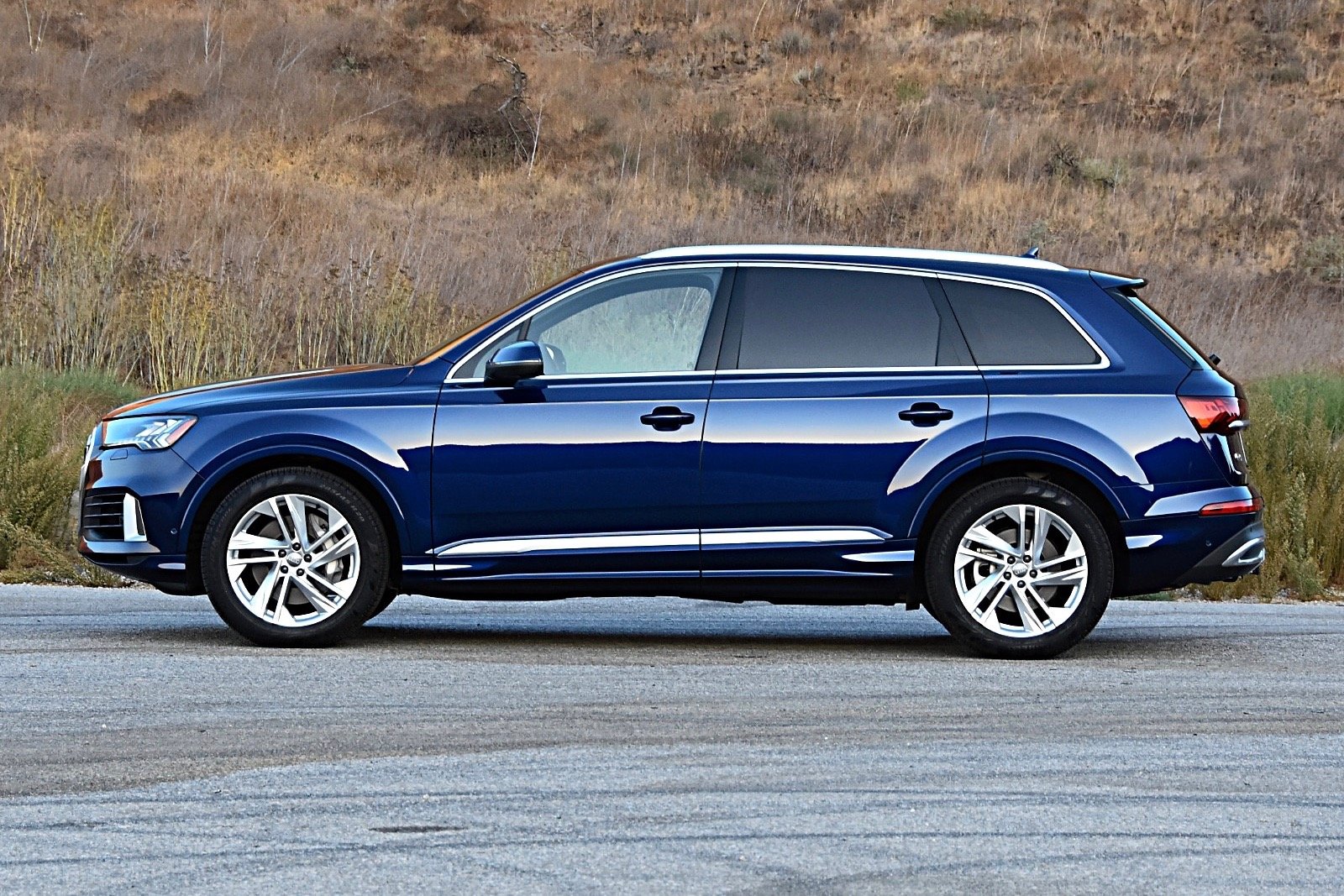
Starting in 2020, the Q7 got even better. Audi swapped out the standard analog gauges and little display seemingly glued to the top of the dashboard in favor of a high-tech arrangement with three separate digital displays. The impressive Audi Virtual Cockpit display, an upper touchscreen for infotainment functions, a head-up display, and a lower touchscreen providing access to the climate controls and other functions were new that year.
Also in 2020, the turbocharged V6 added power and the new performance-tuned SQ7 arrived with a sonorous twin-turbocharged V8 engine and hardware upgrades to make the SUV handle just as well as it accelerated. The base turbo four got an injection of power in 2023, but still not enough to make it a wise choice.
As time passed, the Q7 added more safety features to the SUV, such as lane guidance, either as standard or optional equipment. When shopping for a used example, be sure the technology you want most is on the vehicle you’re considering. Since 2017, the Q7 has performed well in crash tests conducted by the Insurance Institute for Highway Safety (IIHS). However, headlight performance was consistently poor through 2023.
By 2025, the Q7 needed a full redesign. Instead, it got a facelift. Updated styling, new wheels, and enhanced infotainment features gave the aging SUV a jolt to keep it competitive. For 2026, Audi continued to refine the Q7 with revised exterior styling, a new Convenience Plus package bringing 20-inch wheels and upgraded interior features, available all-wheel steering, and OLED taillights with a lightbar stretching across the rear liftgate. The base turbo four now makes 261 hp and the V6 produces 335 hp.
Prices of second-generation Q7s can vary widely according to age, miles, specification and condition. Excluding Q7s with accident histories and with more than 100,000 miles, you can find them ranging in price from about $15,000 to more than $67,000.
CarGurus has reviewed the second-generation Q7 several times, and our ratings have declined over the years, even as Audi has improved the SUV. In 2017, we rated it 8.2 out of 10. In response to the 2020 refresh, we gave it a 7.7 (7.5 for the new SQ7 performance model). The most recent refresh for 2025 netted a 7.3 rating.
First Generation (2007-2015)
Luxury SUVs, such as the BMW X5 and the Volvo XC90, streamed onto the market in the late 1990s, joining longer-term competitors such as the Land Rover Discovery and the Range River, so Audi decided to get in on the act in the mid-2000s.
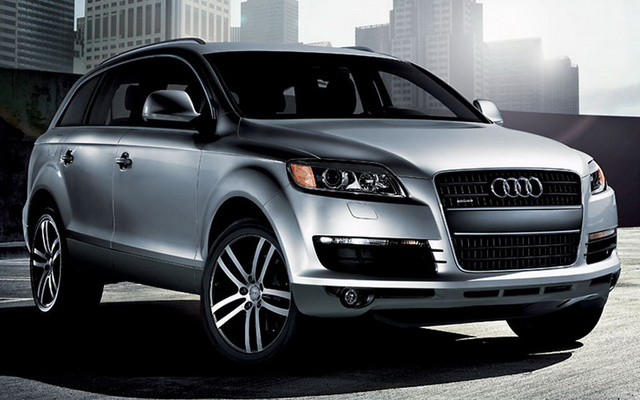
That effort produced the 2007 Audi Q7, which shared many parts with the Porsche Cayenne and the Volkswagen Touareg. Longer than its Volkswagen Group siblings, the Q7 offered three rows of seats and ride and handling qualities focused on daily driving in cities and suburbs. Equipped with a stylish exterior and a luxurious interior, the Q7 proved a popular alternative to the BMW X5 and the Mercedes-Benz M-Class.
For its first two years, the Q7 had an adequate 3.6-liter V6 or a thirsty 4.2-liter V8 underneath its hood. A turbocharged diesel V6 arrived in 2009, touted as a “clean” diesel but ultimately proved anything but. In 2011, Audi dropped the V6 and the V8 in favor of new supercharged V6 engines and a new Tiptronic eight-speed automatic gearbox. Fuel economy instantly improved, though it still fell short of the Q7 TDI model’s diesel engine.
Depending on the model year, the first-generation Q7 came in base, Premium, Premium Plus, or Prestige trim levels. Audi freshened the SUV’s styling in 2010, just before the gas engine overhaul in 2011. After that, aside from minor equipment changes and powertrain modifications, the Q7 remained the same.
Like other large and heavy SUVs of the era, the Q7’s front and second-row seats were comfortable. The third row was cramped for adults and took up most of the available cargo room, leaving only 10.9 cubic feet for luggage when in use. When folded down, the Q7’s cargo volume measures a generous 42 cu-ft, expandable to 72.5 cu-ft after flattening the second-row seats.
The first-gen Q7 does not have an impressive technology array by modern standards. If you have an old iPod that still works, you can connect it. Or dust off your old CD collection and pop in a disc. Fortunately, the infotainment system added Bluetooth with wireless music streaming in 2010. Some versions of this SUV even had a Bang & Olufsen premium sound system.
Safety systems were skimpy, too, though a blind-spot monitoring system was available from the get-go. Early in its lifespan, the Q7 earned a handful of Top Safety Pick nods from the IIHS. However, it couldn’t keep pace with more demanding requirements and didn’t receive the honor after the 2009 model year.
It’s not impossible to find a first-generation Audi Q7 with a clean vehicle history and fewer than 100,000 miles, but it is getting harder. If you do, expect to pay $9,000 to $25,000, depending on the year and mileage. Also, remember to stick with the supercharged V6 models, avoiding the TDI diesel, V8, and early-build versions of the SUV.
Related Topics