Americans have maintained a deep-rooted fascination with motorhomes and large RVs, seduced by the comfort and the promise of carrying the conveniences of home wherever the road leads. The drawbacks, however, are difficult to overlook: high purchase prices, the seasonal headache of finding somewhere to store them, and depreciation that can rival the worst offenders among European luxury cars. For those who want the freedom of the open road without all that overhead, vans make a compelling case for themselves.
We'll sidestep the lifestyle jargon and simply say that buyers are in an enviable position when it comes to used van options — there's a wide and varied selection out there, all waiting to be transformed into a compact motorhome, a rolling tiny home, or whatever your imagination conjures. Vans typically offer significantly more room than SUVs, many are nimble enough to handle city parking without too much drama, and some even bring genuine off-road capability to the mix. Their versatility is tough to match — roof racks, bike carriers, flat-screen TVs, mini-fridges, propane stoves, and custom living space upgrades are all within reach, whether you're sourcing materials from a hardware store or tapping into a robust aftermarket. Certain models, like Volkswagen's older EuroVan and Vanagon, can even be found pre-built as factory camper vans.
For this guide to the best vans for camper conversions, we've cast a wide net across new and used options. On the smaller end of the spectrum, you'll find crossover-style vans and minivans such as the Ford Transit Connect and Dodge Caravan. At the other extreme, full-size American workhorses like the Chevrolet Express square off against European-style cargo haulers like the Mercedes-Benz Sprinter. The Volkswagens occupy an appealing middle ground. Ultimately, the best camper van for your situation comes down to how you intend to use it and what your budget will support.
What Makes CarGurus Best Cars Guides Different
The Best Vans for Camper Conversions in 2026
FAQs
Shopping Tools
Related Topics
Chevrolet Express/GMC Savana
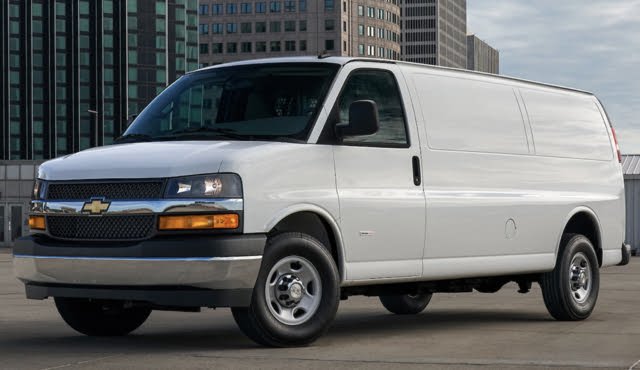
Mechanically identical under the skin despite their different badges, the Chevy Express and GMC Savana hold the unusual distinction of being the oldest vehicles still in production in 2026 and the last true traditional American vans, having first rolled off assembly lines in 1997. The years haven't diminished their appeal, though. These vans remain a durable and spacious choice, and their extraordinarily long production run means examples are never hard to come by. A service life stretching to 250,000 miles with minimal drama is entirely realistic, and when something does eventually need fixing, the nearest auto parts store is likely to have everything on the shelf.
Under the bodywork, the Express and Savana share a robust full-size truck frame and well-proven mechanical components. Their extensive production history means a wide variety of engine options exist, with most examples equipped with either the reliable gas-powered 4.3-liter Vortec or EcoTec V6, or the 5.3-liter V8. Diesel variants — ranging from a more recent 2.8-liter four-cylinder to a massive 8.1-liter V8 — do exist and help offset the predictably modest fuel economy, though tracking one down requires patience. Handling is another area where expectations should be calibrated accordingly; these vans look, feel, and drive exactly like trucks.
They may not turn heads in a parking lot, but the Express and Savana more than make up for it with sheer, uncompromising practicality. The cavernous cargo area rivals Ford's E-Series for raw gear-hauling ability, 2003 to 2014 models were available with all-wheel drive (AWD), and both GM brands have incrementally added modern features like Bluetooth over the years. Passenger versions are also available, and some have been professionally converted into road-ready campers by outfitters like Mark III — a useful head start for anyone planning a DIY build.
Search for Chevrolet Express Cargo
See all
Chrysler Pacifica Hybrid
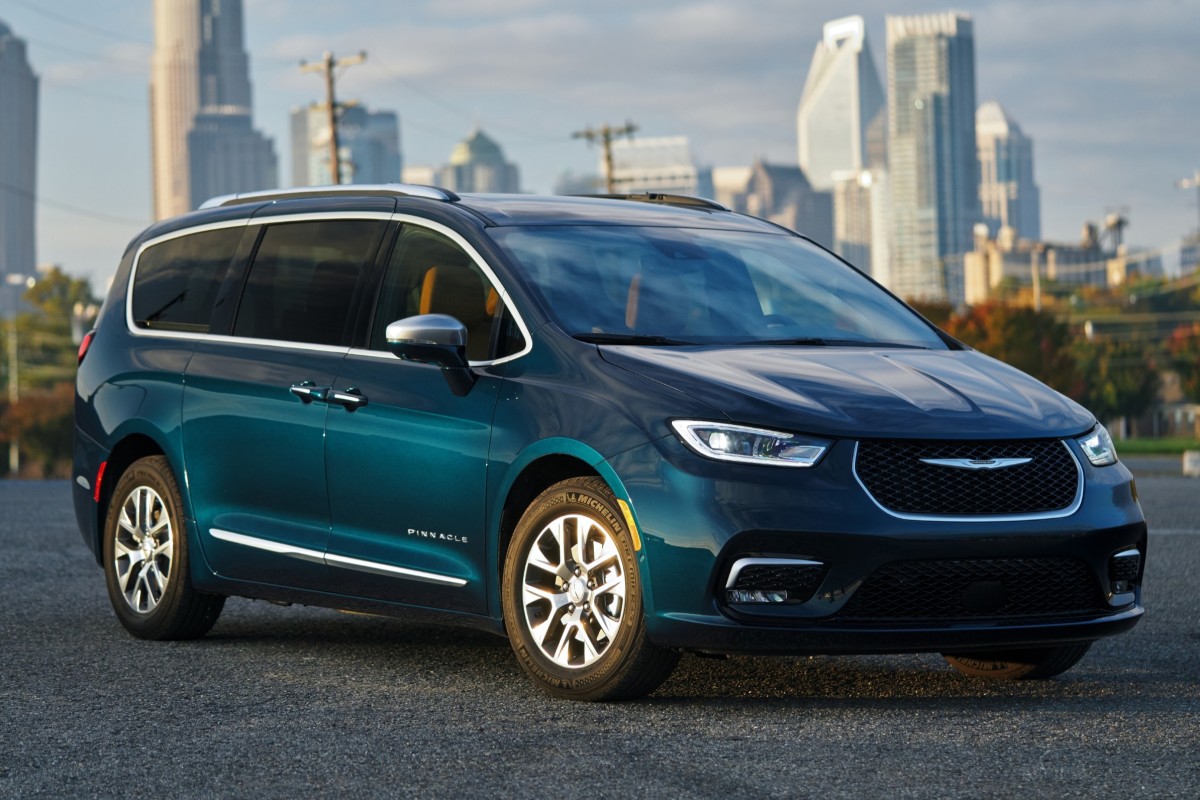
Introduced in 2017, the Chrysler Pacifica Plug-In Hybrid stands alone on this list as the only camper conversion candidate with a hybrid powertrain. Its headline feature is up to 32 miles of battery-only electric range, making it a particularly attractive option for buyers who want to reduce their environmental impact without the anxiety of running out of charge — or for those who need a camper that doubles as a fuel-efficient daily driver.
Resourceful DIY builders have already shown what the Pacifica Hybrid is capable of, producing impressive conversions complete with sleeping platforms, clever storage solutions, cabinetry, and even compact refrigerators and microwaves. The van comes standard with a 115-volt, 150-watt outlet positioned on the right side of the vehicle ahead of the third-row seats, useful for charging devices and powering smaller electronics. Bear in mind, however, that most microwaves and refrigerators draw more than 150 watts, so a supplemental power source will be necessary for more ambitious builds.
One particularly clever advantage for campers who frequent RV parks: plugging an aftermarket Level 2 portable charger into a 50-amp RV outlet delivers a significantly faster charge than the standard Level 1 charger that ships with the Pacifica. In practice, this means you can arrive at your destination, charge overnight, and handle all your local driving on electricity alone — meaningfully stretching your overall fuel economy across the course of a trip.
Search for Chrysler Pacifica Hybrid
See all
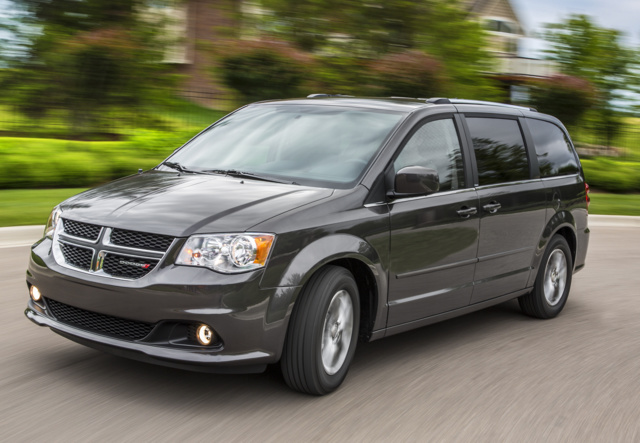
Dodge Grand Caravan
If style points aren't anywhere near the top of your priority list, the Dodge Grand Caravan — and its extended family of platform-mates — might just be the most affordable and practical jumping-off point for van life in America. Grand Caravans show up everywhere, spanning every price bracket, and were sold under as many as four different nameplates: the upscale Chrysler Town & Country, the entry-level Plymouth Voyager, the stripped-down cargo-only Ram C/V, and the Volkswagen Routan. Five generations of Caravan exist, tracing their lineage back to the original 1984 model, though the vast majority of what you'll encounter on the used market today dates from the 1996–2020 era.
The fifth and final generation — discontinued after 2020 — is generally the strongest pick. These vans earn solid marks for mechanical reliability, interior roominess, and the kind of modern comfort, convenience, and safety features that buyers expect today. The same generation underpinned the plusher Town & Country (which was replaced by the Pacifica in 2017) and the Routan, though the VW-branded version missed out on the clever Stow'n Go seats that fold flush into the floor, as well as the optional swiveling seat configuration. The no-frills Ram C/V, meanwhile, arrives stripped of interior trim entirely — an ideal blank canvas for builders.
From 2011 onward, the entire lineup was standardized around the 3.6-liter Pentastar V6 paired with a six-speed automatic, which simplifies maintenance considerably. Performance is modest, but these vans handle more like a midsize family sedan than a truck and can return around 20 mpg in combined driving. The fact that rental fleets absorbed roughly a third of all Grand Caravan sales by 2010 pushed resale values down considerably — good news for budget-minded buyers hunting for a late-model example.
Read our Dodge Grand Caravan Buying Guide
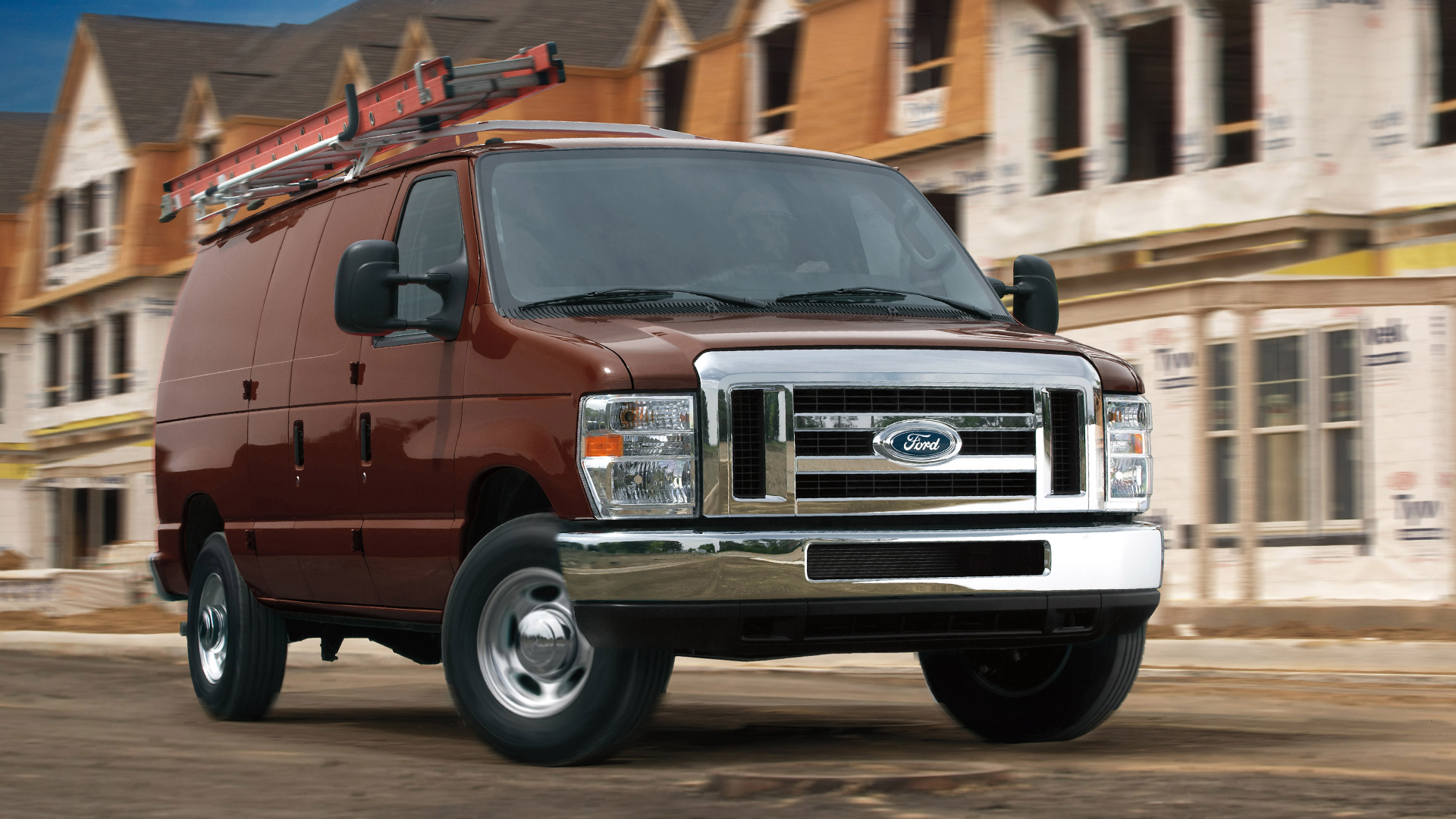
Ford Econoline
Ask most Americans to picture a van, and the E-Series is almost certainly what comes to mind. Sold as the Econoline through 1999, this nameplate stretches all the way back to 1961, and its final full-production generation — built from 1992 to 2014 — represented a significant step forward from the 1975–1991 model it succeeded. Ford continues to build a cutaway cab-and-chassis E-Series for commercial applications. While any generation of this body-on-frame van can serve as a capable camper foundation, and dedicated conversion companies like Glaval and Mark III have built plenty of them over the years, the post-1992 examples are the easiest to source and the most livable day to day.
The original Econoline, produced from 1961 to 1967 and powered exclusively by straight-six engines, holds genuine charm for enthusiasts who appreciate the same forward-control design philosophy as the classic VW T1s and T2s. Prices for clean examples, however, can approach classic VW territory. The second generation (1968–1974) had a brief production run but became a beloved fixture of 1970s surf culture and custom van builds, benefiting from optional V8 power. Most survivors from that era have long since been converted to campers, as have many early third-generation examples.
The third and fourth generations share a common chassis and many mechanical components, with engine choices ranging from a 4.2-liter V6 all the way up to a 7.5-liter V8, plus diesel V8 options. The most common powerplants are Ford's 4.6 and 5.4-liter Triton V8s, both well-regarded for their strength and longevity. Four-wheel drive (4WD) conversions from Quigley are available for buyers who want genuine off-road capability, though they're uncommon and carry a price premium. On the whole, the E-Series sits in the same territory as the Chevy Express and GMC Savana when it comes to interior space, driving dynamics, and fuel economy.
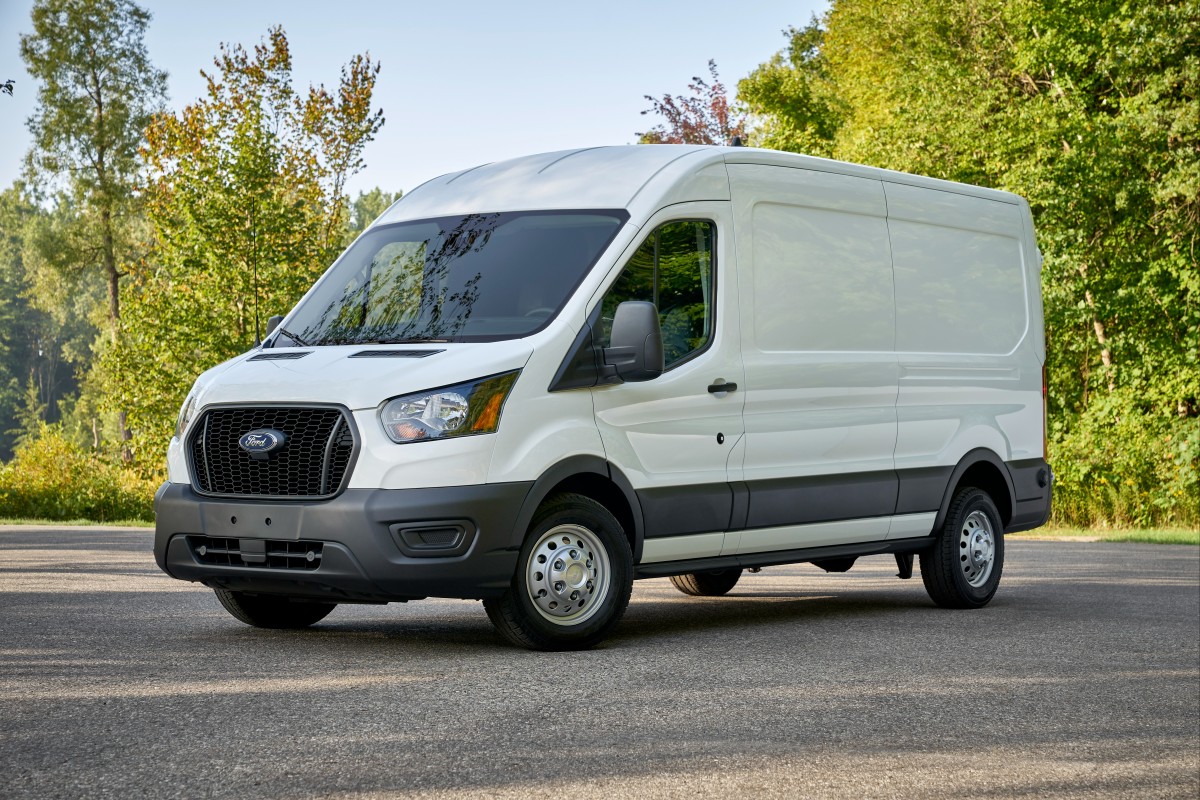
Ford Transit
A European staple since 1965, the Ford Transit made its North American debut in 2014, stepping in to replace the long-running E-Series. Any nostalgia that tradespeople carried for the old Econoline faded quickly once they discovered that the Transit offered greater cargo volume and payload capacity, sharper driving dynamics, and better fuel economy — all at a comparable price. Ford had watched buyers migrate toward the Mercedes-Benz Sprinter and decided to compete directly with a proper European-style van of its own. Used examples carry a premium over traditional American vans, but the added capability justifies the cost for most buyers.
The Transit remains in production today, with an all-electric variant now part of the lineup. The base vehicle is available in two wheelbases — 129.9 and 147.6 inches — three body lengths stretching to nearly 22 feet, and three distinct roof heights. The tallest configuration measures 110.1 inches from floor to ceiling, providing genuine stand-up headroom even for taller occupants and making a high-roof Transit a legitimate full-time home on wheels rather than just a weekend escape vehicle.
Despite its generous dimensions, the Transit returns better fuel economy and handles more confidently than any E-Series. Engine choices include 3.5 and 3.7-liter V6s — among them a 310-horsepower EcoBoost variant — along with a torquey, fuel-efficient turbodiesel inline five-cylinder. A six-speed automatic handled shifting duties through 2019, when a ten-speed unit took over. Factory-built Transit conversions are available through outfitters like Explorer and Sportsmobile, and the DIY community has embraced the platform enthusiastically, with countless creative builds documented across social media.
Search for Ford Transit Cargo
See all
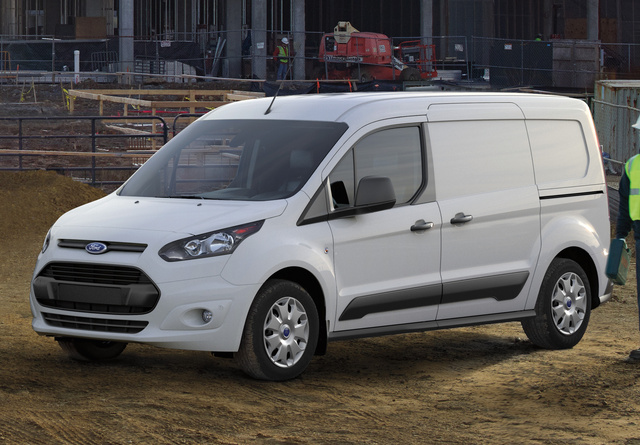
Ford Transit Connect
Like its larger sibling, the Transit Connect has European roots. Designed to navigate the narrow streets of cities like Rome, it debuted in 2002 and arrived in the U.S. market in late 2009. Two generations exist — the second arriving with a thorough redesign for the 2014 model year — but both are compact by van standards. The original Connect's footprint was no larger than a Ford Focus, and the second-generation model grew only modestly. In essence, these are van-crossover hybrids: car-like to drive and economical to run, yet available with a proper high-roof van body built on a car-derived platform shared with the Focus.
Despite its modest exterior dimensions, the first-generation Transit Connect packs a surprisingly useful cargo area: 81 inches long, 53.7 inches tall, and offering 129 cubic feet of volume — only 15 cubic feet less than a fully loaded Dodge Caravan with all seats stowed. The second-generation model comes in two wheelbase lengths, 104.8 or 120.6 inches, with the extended version offering an 87.3-inch cargo bay and 149 cubic feet of total volume. Second-gen models also bring more features to the table and are easier to find in passenger-configured form.
Diesel engines were offered in other markets, but U.S.-spec Transit Connects have always run on gasoline — starting with a 2.0-liter four-cylinder (rated at 22 mpg combined) in the first generation, followed by 2.0, 2.5, and 1.6-liter turbocharged four-cylinder options in the second, with the best returning up to 26 mpg. The result is a van that works equally well as a cozy weekend camper and a practical, easy-to-park everyday vehicle — a combination that's hard to beat for buyers who don't want to commit to a full-size van.
Search for Ford Transit Connect
See all
Mercedes-Benz Sprinter
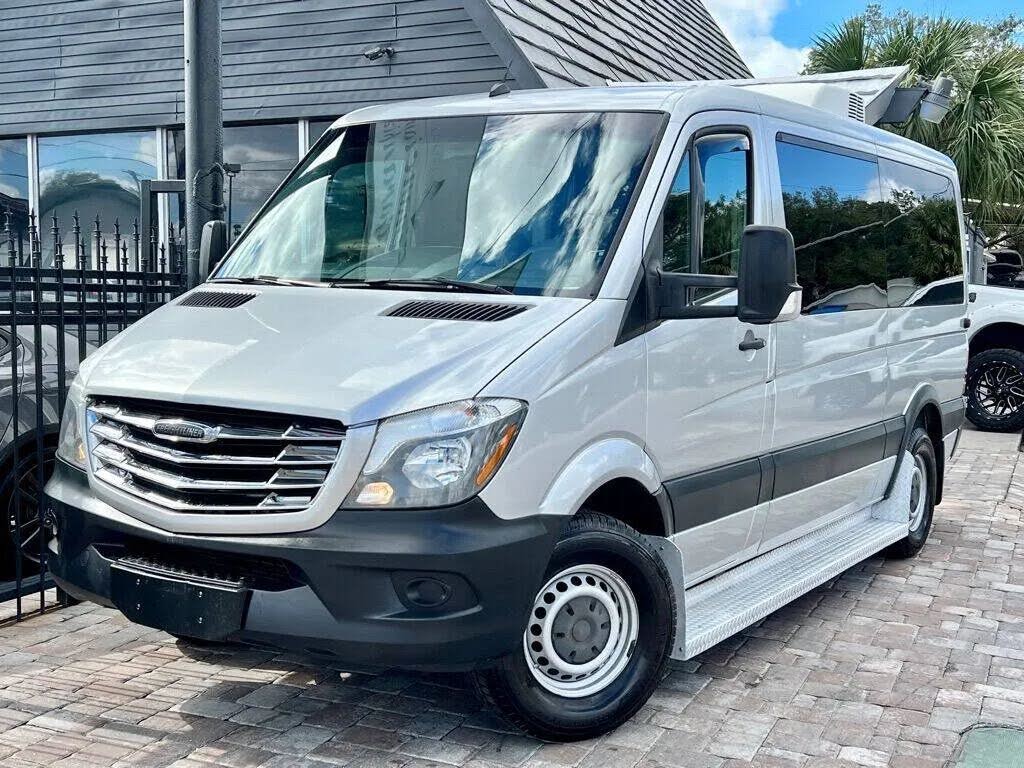
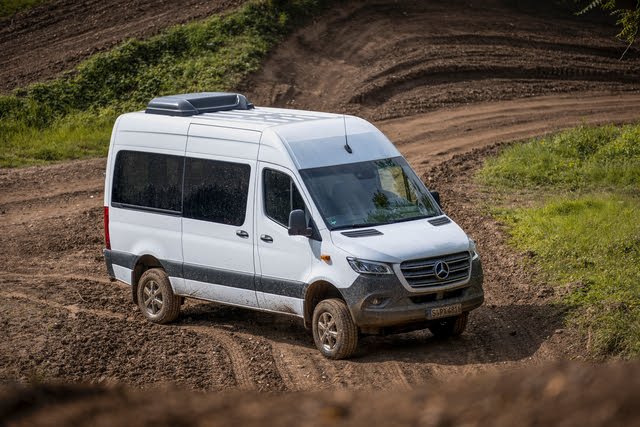
While the Sprinter carries the Mercedes-Benz name globally, American buyers should know that these vans have also been sold stateside under the Dodge and Freightliner banners — so casting a wider net in your search will turn up more options. The Sprinter was the first modern European-style van to establish itself in the U.S. market, arriving in 2003 to replace the aging Dodge Ram Van and effectively signaling the direction the entire industry would follow — with GM as the notable holdout. Unibody construction, compact yet capable engines, multiple body configurations, and a cavernous interior became the new template, and conversion builders took notice immediately.
It was that interior volume that truly cemented the Sprinter's reputation in America. Once tradespeople discovered how much a Sprinter cargo van could swallow, the writing was on the wall for the old body-on-frame vans that had been doing the job since the 1960s.
Available in two wheelbases, multiple roof heights, and three lengths, the Sprinter could serve everyone from a small florist to a full-scale plumbing operation. Later second-generation Sprinters (2006 to 2018) were offered here with both a diesel engine and four-wheel drive — a combination that made them irresistible to camper van converters. Scroll through any van life community online today and you'll find Sprinter builds by the thousands, decked out with solar arrays, gas stoves, fold-out screen rooms, and everything in between. The Sprinter commands a higher price than most alternatives, but it remains arguably the finest camper conversion platform available.
Search for Mercedes-Benz Sprinter Cargo
See all
Search for Dodge Sprinter Cargo
See all
Search for Freightliner Sprinter
See all
Ram ProMaster
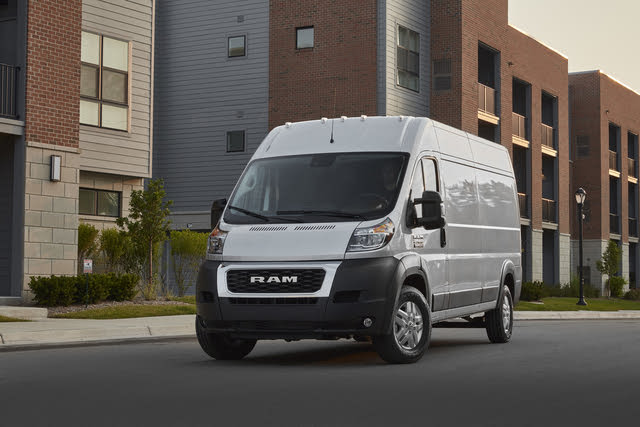
The Sprinter's arrival in the U.S. was a direct result of DaimlerChrysler's need to retire the old Dodge Ram Van. When Daimler and Chrysler eventually parted ways, Dodge dealers lost access to the Sprinter. Their replacement came in 2014, by which point Ram had become its own standalone brand: the Ram ProMaster, courtesy of new parent company Fiat Chrysler Automobiles (now Stellantis). Built on the same platform as the European Fiat Ducato, the ProMaster bears a strong family resemblance to both the Sprinter and the Ford Transit but takes a simpler, more streamlined approach to design and configuration.
Like its two main rivals, the ProMaster is offered in multiple lengths (up to 250.9 inches) and heights, though North American buyers are limited to low (89-inch) and medium (99-inch) roof options — Ford and Mercedes both offer taller configurations. Similarly, while the Sprinter and Transit provide a range of engine choices and drivetrain configurations, the ProMaster is now offered exclusively with front-wheel drive (FWD) and the 3.6-liter Pentastar V6 — the same engine found in the Dodge Caravan. A 3.0-liter turbodiesel was on the options list through 2016 but found few takers, even though diesel power is a natural fit for high-mileage van life.
Mechanically, the ProMaster is the least complicated of the three big modern vans, and its notably boxy shape actually simplifies the process of designing and building a custom interior. The tradeoff is a thinner aftermarket ecosystem compared to the Sprinter and Transit. Other limitations include restricted ground clearance, an engine that can feel strained by the van's bulk, and the absence of any AWD option. That said, the ProMaster consistently offers the lowest entry price among the big Euro-style vans, whether you're shopping new or used.
Ram ProMaster City
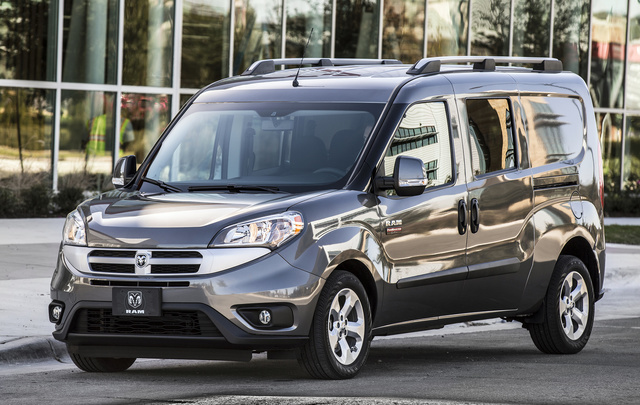
Positioned as a direct rival to the Ford Transit Connect and Nissan NV200, the Ram ProMaster City is a compact van assembled in Turkey and sold across Europe as the Fiat Doblò. Though it shares its basic concept with the Transit Connect, the ProMaster City is slightly smaller on the outside while offering a touch more usable space within, and it leans more heavily toward commercial cargo duty in its overall character. Powertrain choices are straightforward: a single option pairing the 2.4-liter "Tigershark" four-cylinder engine — once shared with the Jeep Compass and Cherokee — with a nine-speed automatic driving the front wheels.
The ProMaster City wears its work-van identity proudly; even the passenger variant features blanked-out metal rear side panels rather than windows, and the interior is unapologetically functional and hard-wearing. Despite this, it makes a genuinely capable micro-camper that can be built out without breaking the bank. The cargo area measures 87.3 inches long and 51.3 inches tall — 2.5 inches taller than the Transit Connect — yielding slightly more usable volume. The roof comes pre-fitted with six anchor points rated for 150 pounds in motion, and the van's 1,820-pound payload rating edges out the Ford's 1,550-pound figure.
That extra payload headroom makes it a bit more forgiving when loading up with furnishings and gear. A growing selection of pre-made camper van conversion kits caters specifically to the ProMaster City, allowing determined DIY-ers to transform their van into a functional camper over a single weekend. Fuel economy holds up reasonably well at up to 24 mpg combined, and the van transitions comfortably between camping trips and daily commuting duties. It's not the most exciting vehicle in this segment, but it gets the job done on both fronts. 2022 marked the ProMaster City's final model year.
Search for Ram ProMaster City
See all
Volkswagen EuroVan
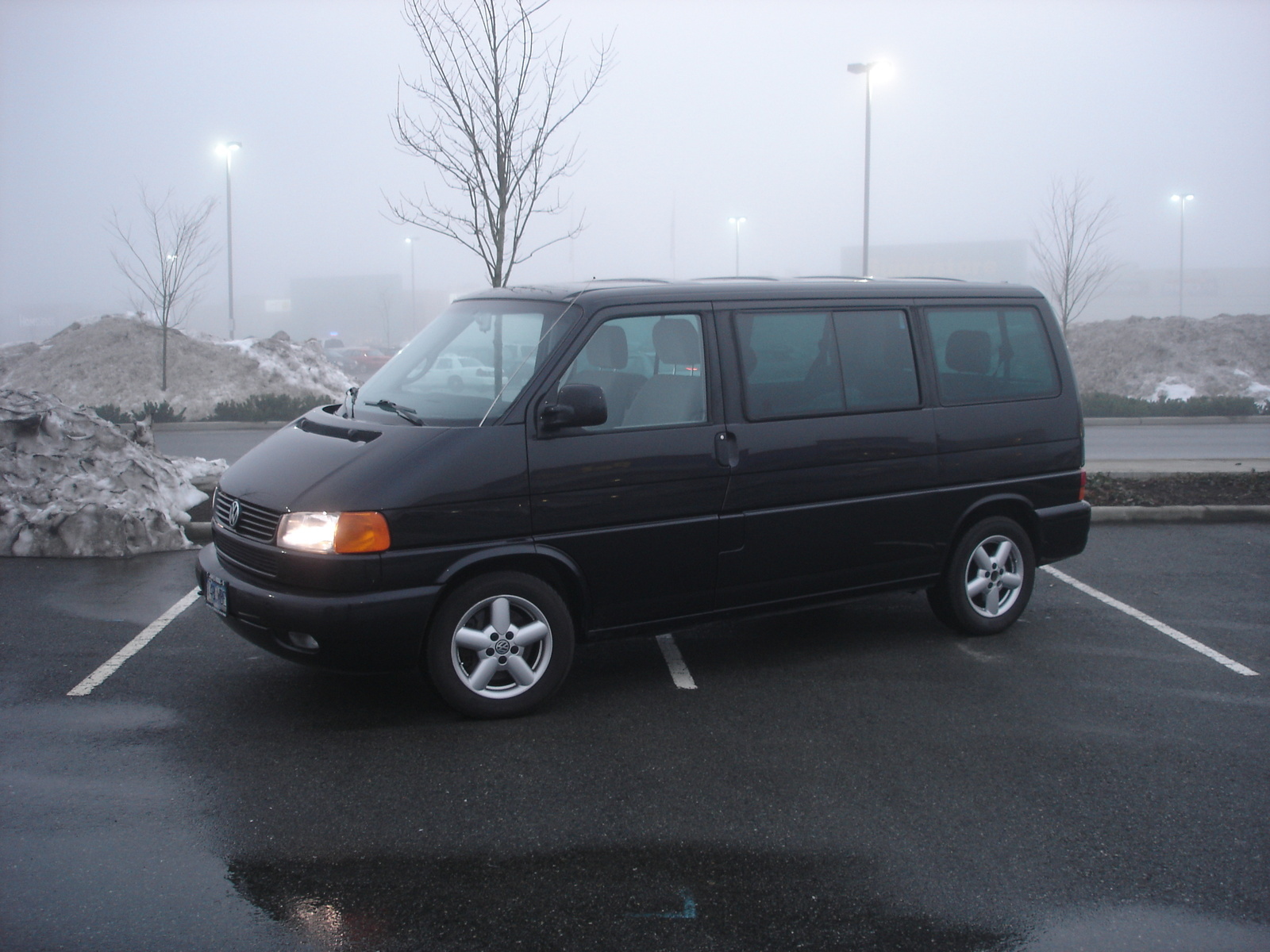
Bridging the gap between the beloved Vanagon and the modern electric ID.Buzz, the Volkswagen EuroVan puts a more contemporary spin on the classic VW van formula while remaining accessible to buyers on a reasonable budget. Clean examples can still be found in the neighborhood of $7,500 with sensible mileage, though that window is closing — EuroVan prices have been creeping upward in the same way Vanagon values did before them. With many examples built from the factory with camping in mind — including full RV configurations, pop-top Westfalia campers, and the more understated MultiVan — they're a natural fit for anyone drawn to the van life lifestyle.
When the EuroVan arrived in the U.S. in 1993, it was both larger and taller than any minivan on the market, yet smaller than full-size American vans like the E-Series. Its substantial proportions combined with a sluggish 109-horsepower 2.5-liter engine meant it appealed mainly to committed VW enthusiasts, and disappointing sales prompted Volkswagen to suspend passenger EuroVan imports after that first year, not resuming until 1999. During the gap years from 1994 to 1998, however, EuroVan campers built by Winnebago continued to be sold and found a loyal following. The returning 1999 passenger model came with meaningful improvements, headlined by a 140-horsepower 2.8-liter V6 that was later bumped to 201 hp for 2002.
Because so many EuroVans left the factory with camper amenities already in place, they require far less work to get road-ready than most alternatives. They're also solidly built and genuinely spacious, though fuel efficiency isn't a strong suit — even with the most powerful V6 on tap, expect no better than 16 mpg combined. Now that EuroVans have cleared the EPA's 25-year importation threshold, diesel-powered European versions — known at home as T4 Transporters — are starting to trickle into the U.S. market. Budget accordingly for those, as well as for desirable Westfalia and Winnebago models.
Search for Volkswagen Eurovan
See all
The Best Vans for Camper Conversions in 2026 FAQs
What is the best van to convert into a camper?
The right van depends on your budget and how you plan to use it. The Mercedes-Benz Sprinter is widely considered the finest camper conversion platform available, thanks to its multiple roof heights, diesel engine option, and massive aftermarket support — but it commands a premium price. If you're working with a tighter budget, the Ford Transit, Ram ProMaster, and even the humble Dodge Grand Caravan all make capable and practical starting points.
What is the cheapest van to buy for a camper conversion?
The Dodge Grand Caravan is one of the most affordable entry points on the market, with used examples starting around $7,000. Heavy use by rental fleets pushed resale values down significantly, which is a genuine advantage for budget-conscious buyers looking for a late-model example. The Chevrolet Express and GMC Savana are similarly priced and offer a more spacious cargo area, though they drive more like trucks than the car-like Caravan.
Which camper van conversion is best for full-time living?
For anyone planning to live out of their van full-time, a high-roof Ford Transit or Mercedes-Benz Sprinter is the most practical choice, as both offer configurations with over 110 inches of interior ceiling height — enough to stand upright comfortably. The Transit's multiple body lengths, including options stretching to nearly 22 feet, give it enough room to build out a genuine home on wheels with sleeping, cooking, and storage areas. Both platforms also have thriving DIY communities and professional outfitters who specialize in full-time-livable builds.
Is a minivan or a full-size van better for camping?
It comes down to how much space and capability you need. Full-size vans like the Ford Transit and Ram ProMaster offer far more cargo volume, taller rooflines, and greater payload capacity, making them better suited for elaborate builds or extended trips. Minivans like the Dodge Grand Caravan and Chrysler Pacifica Hybrid are easier to park, more fuel-efficient, and better suited to weekend getaways or buyers who need the vehicle to double as a daily driver.
What Makes CarGurus Best Cars Guides Different?
Most car-shopping websites publish lists of the best cars across a variety of categories, with recommendations generally driven by editorial expertise. Here's what makes ours different: In addition to the insights and verdicts of our team of car-testing experts, our best cars guides take into account other factors that we know matter to buyers-real owner experiences and current market value.
Our expert reviewers are among this country's most trusted automotive journalists, also writing for publications including US News and World Report, Edmunds, Digital Trends, J.D. Power, and Car & Driver. They put each car through real-world testing and create detailed reviews of performance in a range of categories, from practicality and driving manners to cost-effectiveness and safety.
We also analyze hundreds of thousands of used car listings on CarGurus.com to track which models consistently offer the highest percentage of best deals relative to how many are listed for sale. Then we factor in reviews from owners-people who actually live with these cars every day. Our proprietary Best Cars algorithm then creates a final Overall CarGurus rating combining expert scores, user reviews, and the percentage of listings that have earned the Good or Great Deal rating. This multi-pronged approach reveals not just which cars excel on paper, but which ones deliver satisfaction and value when you're ready to buy.
The CarGurus market data used in this guide was last updated in July 2026. Values were accurate at time of publication and should be used as a guide only.
Shopping Tools
Related Topics