Almost everyone has a Honda Civic connection. You either owned one or knew someone who did, and there was probably bragging involved about how many miles it covered before it finally gave up. The Civic has been a fixture of American roads for more than 50 years, and it is so famously durable that Nixon-era examples are still rolling around.
The original Civic was a pint-sized hatchback that went on sale in the U.S. for 1973, offering cheap, efficient, and reliable transportation. That formula has not really changed, though the car has. It gained sedan and coupe bodies, performance variants, hybrid powertrains, and a great deal of size. Honda has sold more than 27 million Civics across 170 countries over 11 generations, making it one of the best-known and longest-running nameplates in the world.
The Civic entered its 11th generation for 2022 in sedan and hatchback form, with the high-performance Type R above them and a dual-motor hybrid powertrain added in 2025. It still sets the benchmark for compact cars that are efficient, safe, practical, and affordable, and most versions are genuinely fun to drive, even base models. Honda has made the occasional misstep along the way, and this guide covers those too.
Because Civics have been built in enormous numbers since the 1970s, the used market is full of them and many are available at strong prices. Below, we break down every generation, including the hatchback and hybrid variants, with the known issues and prices you should expect.
Which Honda Civic years are the best?
Civics from 2016 onward are roomy for compact cars, well equipped with active safety features, and genuinely fun to drive. Within that span, the 2020 and 2021 model years stand out at the end of the 10th generation, and Consumer Reports gives them the highest reliability rankings of that generation. The 11th generation, from 2022, is where Consumer Reports begins rating the Civic better than average for reliability. If your budget stretches to a current car, the 2025-and-newer Civic Hybrid is the most complete version Honda has built, combining the quickness of a Civic Si with roughly 50 mpg.
What are the worst Honda Civic years?
The seventh generation, 2001 through 2005, has one of the worst reliability records of any Civic. Transmission problems are a common complaint, and the early hybrid brought its own bugs. The 2001 and 2002 model years, and hybrids of any year in that span, are the ones to approach most carefully.
Two other groups deserve caution. The 2017 to 2019 model years were the first three of the returning hatchback and logged a high number of consumer complaints, with infotainment glitches, air conditioning condenser failures, and oil dilution in the 1.5-liter turbo. Separately, the ninth generation, built from 2012 to 2015, has a stellar reliability record but is widely considered the least engaging Civic to drive.
Is a used Honda Civic a good deal?
Yes. Civics deliver strong fuel economy and good driving dynamics, particularly newer models, and they hold value well. That resale strength cuts both ways: a used Civic often costs more up front than a comparable compact car. The value shows up over time. iSeeCars.com puts the average lifespan of a Civic Hatchback at 17.4 years and 192,000 miles, and RepairPal.com puts average annual maintenance for a used Civic between $350 and $500, below the national average for compact cars.
Worth noting is that stiff competition from the Hyundai Elantra and Kia Forte has eroded the grip the Civic and Toyota Corolla once had on the compact segment.
Which Honda Civic is Right for You?
Sedan: The volume seller and the easiest version to find at any price point. If you want maximum choice and the lowest entry cost, start here.
Hatchback: Adds real utility through its liftback design and flat-folding rear seats. In the current generation, the difference is substantial: the hatchback offers 24.5 cubic feet of cargo space against 15 cubic feet for the sedan. Its primary rivals are the Toyota Corolla Hatchback, Mazda3 Hatchback, and Subaru Impreza.
Hybrid: The efficiency play, and since 2025 the performance play as well. Current hybrids deliver 200 horsepower and roughly 50 mpg. Older hybrids are cheap but carry battery risk.
Si and Type R: The Si has appeared across most generations in coupe, sedan, and hatchback form depending on the era. The Honda Civic Type R arrived in the U.S. for the first time with the 2017 model year and returned in 2023 as a hatchback exclusively. Neither is a bargain hunt; clean examples command a premium.
Coupe: Honda cut the two-door models for 2021 due to slow sales and they are not likely to return, so the newest Civic coupe is a 2020 model.
Honda Civic Pros and Cons
Pros:
Budget-friendly MSRP
Great fuel economy, outstanding in hybrid form
Fun to drive
Strong safety ratings on modern models
Low maintenance costs and long service life
Cons:
Best features locked into top trims
All-wheel drive not available
Generally more expensive than similar compact cars
Honda Civic Generations
11th Generation (2022 to Present)
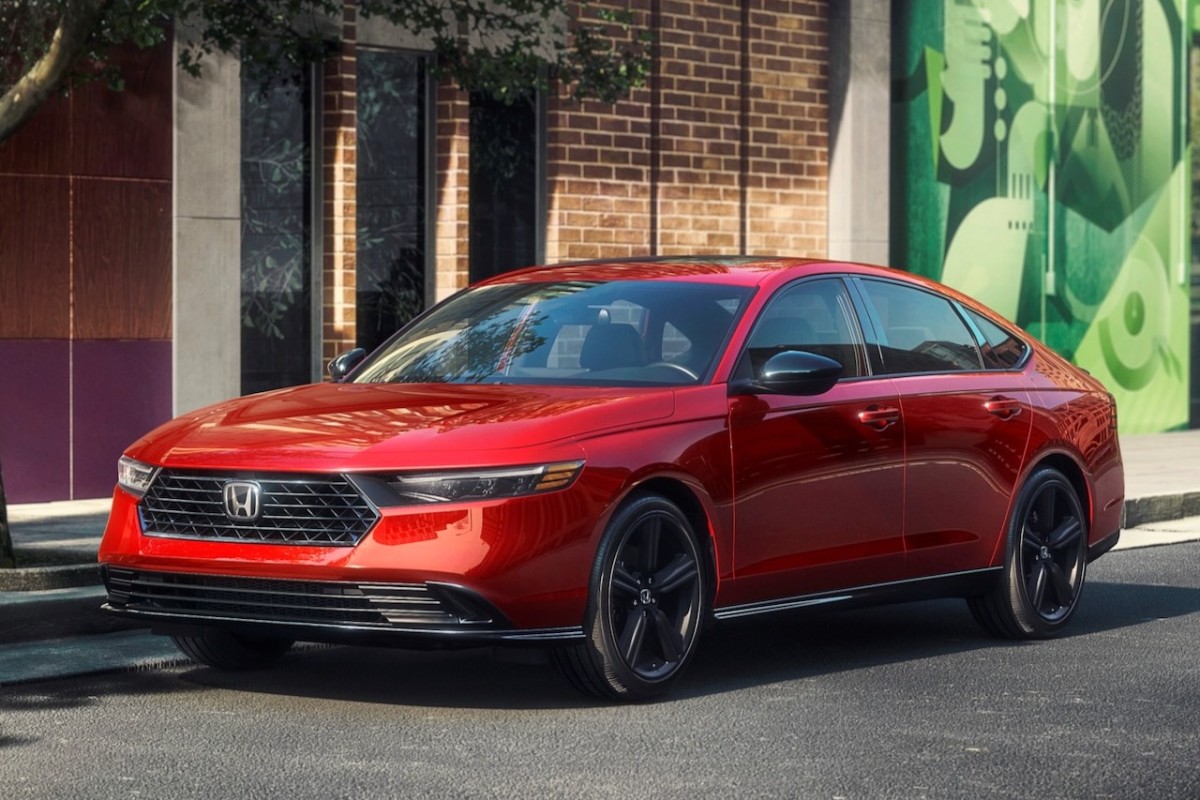
Honda debuted a new Civic for 2022, more refined and more upscale-looking than its predecessor, with strong engine choices and updated technology. Sedan and hatchback carried over, the Type R returned for 2023 as a hatchback only, and the two-door models were gone. This is also the first generation of Civic Hatchback built in the U.S. for an American audience.
The interior was the clearest upgrade, headlined by the signature honeycomb mesh panel concealing the HVAC vents and better materials throughout.
At launch there were four trims and two powertrains. A new 158-horsepower, 2.0-liter naturally aspirated four-cylinder served as the base engine in LX and Sport trims, with a standard continuously variable transmission on the LX and a no-cost six-speed manual available on the Sport. The carryover 180-hp, 1.5-liter turbo powered EX-L and Sport Touring, with the CVT standard on EX-L and the six-speed manual available on Sport Touring. Honda dropped the LX trim in 2023.
The 2025 mid-cycle refresh reshaped the lineup. The 2.0-liter base engine stayed, but the 1.5-liter turbo gave way to a hybrid powertrain, and the six-speed manual left the lineup with it. The post-refresh trim structure is Sport, Sport Hybrid, and Sport Touring Hybrid. The refresh also brought a new front bumper, grille, and wheel designs, updated infotainment software, and Google built-in functionality on the Sport Touring Hybrid.
Honda revived the Civic Hybrid for 2025 after a decade away, and it is the most compelling version of this generation. Instead of the old Integrated Motor Assist, it uses the dual-motor system shared with the CR-V Hybrid and Accord Hybrid, pairing a 2.0-liter four-cylinder with two electric motors for 200 horsepower and 232 pound-feet of torque. That makes it the most powerful mainstream Civic ever sold in the U.S., with performance matching the Civic Si.
There is no CVT and no conventional transmission. The system uses direct drive, clutching the two motors to the front axle along with the gas engine. The result is smooth, quiet, and quick, with EPA estimates of 50 mpg city, 47 mpg highway, and 49 mpg combined in the sedan. The hatchback returns 45 mpg highway and 48 mpg combined. In our testing of a 2026 Civic Hybrid Hatchback, unchanged from 2025, we found both the performance and the four levels of steering-wheel-paddle brake regeneration excellent. It is not a sports car, but it strikes a better balance between comfort and agility than most compact cars.
The Hybrid comes in Sport or Sport Touring trim in either body style. Standard equipment includes Honda Sensing with forward emergency braking, adaptive cruise, lane keep assist, and Road Departure Mitigation, plus blind spot monitoring, auto high beams, and the semi-automated Traffic Jam Assist. Rear side airbags and front knee airbags are standard. Hybrids get a body-colored headlight surround, a lower spoiler, and two-tone 18-inch wheels. Also standard: a 7-inch touchscreen, an eight-speaker stereo, a half-digital instrument panel with a 7-inch display, USB-C ports, dual-zone climate control, LED headlights and brake lights, an acoustic laminated windshield, and a sunroof. Sport Touring adds a 9-inch touchscreen with Google Maps, Assistant, and Play, a fully digital cluster, wireless Apple CarPlay and Android Auto, leather, a 12-speaker Bose stereo, and a wireless phone charger.
Non-hybrid 11th-generation cars come standard with Apple CarPlay and Honda Sensing, along with a 7-inch infotainment screen, LED headlights and taillights, push-button start, and automatic climate control. Options on higher trims include a moonroof, blind-spot monitors, heated front seats, a 60/40 split-folding rear seat, leather, power front seats, a 9-inch infotainment screen, a 10.2-inch digital cluster, a 12-speaker Bose system, a wireless charger, front and rear parking sensors, rear USB ports, and navigation.
Every model in this generation has earned some form of Top Safety Pick designation from the Insurance Institute for Highway Safety. The 2022, 2025, and 2026 model years earned the higher Top Safety Pick+ award.
This generation earns some of the best predictive reliability scores Consumer Reports has given any Civic, but it is not without problems. The most significant is the sticky steering issue carried over from the previous generation, where the steering feels heavy or inconsistent because of a faulty inner gear. Cars from 2022 to 2025 are particularly affected and have been recalled. Oil dilution in the 1.5-liter turbo also carried over, affecting 2022 to 2024 models. The 2022 model year additionally had a front passenger airbag recall tied to a faulty sensor.
Less widespread complaints include interior rattles on 2022 cars, water intrusion after heavy rain, infotainment glitches, and false alerts from Honda Sensing. Run a VIN check to confirm all recall work has been completed.
According to CarGurus pricing trends, average prices for 2022 to 2026 hatchbacks range from about $24,000 to $27,000, with sub-$20,000 examples typically being earlier LX or Sport cars. Used Civic Hybrid list prices averaged about $28,000 for 2025 models and $30,000 for 2026 models at the time of writing.
10th Generation (2016 to 2021)
The 10th-generation Civic earned wide critical praise for its handling, features, and practicality, and was considered a return to form after the disappointing ninth generation. Not everyone liked the styling, and the boy-racer look has not aged especially well, but if you can look past it, nearly every version is a fun, reliable, economical daily driver.
It launched in coupe and sedan form, with the five-door hatchback added in 2017 after a 12-year absence from the U.S. lineup. The hatchback was built at Honda's facility in the United Kingdom, and unlike the seventh-generation hatch it shared the same global platform as the sedan and coupe. This generation also brought the Civic Type R to the United States for the first time; the Si was offered as a sedan or coupe only.
A major step up in size, the 10th-gen Civic had almost as much interior room as an early 2000s Accord. It offered a slate of active-safety features that were rare on small, affordable cars in the late 2010s, it became the best-selling compact car in America, and it is now plentiful on the used market.
The hatchback arrived for 2017 in five trims with two turbocharged powertrains. LX, EX, and EX-L used a 174-hp, 1.5-liter turbocharged inline-four, while Sport and Sport Touring got a 180-hp version of the same engine. LX and Sport came standard with a six-speed manual, with a CVT available on those trims and standard on the rest. All were front-wheel drive.
Standard equipment on the base LX included automatic climate control, a rear-view camera, a folding rear seat, a four-speaker AM/FM audio system with a USB port, and a 5-inch infotainment screen. Available features included remote start, a moonroof, 60/40-split folding rear seats, a 7-inch infotainment screen, Apple CarPlay and Android Auto, leather, heated front and rear seats, navigation, blind-spot monitors, dual-zone automatic climate control, and a power driver's seat. The manual transmission in the LX appeals to some buyers, but EX and above bring phone mirroring and the standard CVT.
The 2020 mid-cycle refresh brought a revised front bumper, a new grille, new wheel designs, additional sound insulation, the return of the volume knob, and better feature packaging. The Sport gained Apple CarPlay and Android Auto, the Sport Touring gained an available six-speed manual, and the LX became CVT-only.
Honda Sensing was optional at launch and became standard across the lineup in 2020, so buyers who want adaptive cruise control, automatic emergency braking, and lane-keep assist should verify it is fitted on any pre-2020 car. The generation earned multiple Top Safety Pick designations from the Insurance Institute for Highway Safety, and the 2017, 2020, and 2021 model years each earned Top Safety Pick with Good crash test scores across the board.
Avoid the earliest model years, which absorbed the worst of the growing pains. The 2017 cars have the highest volume of air conditioning failures, though the defect was widespread across the generation. Honda issued a 10-year, unlimited-mileage extended warranty in the U.S. covering the air conditioning condenser and compressor shaft seal, and a VIN check will confirm coverage or prior repair.
The other significant problem is oil dilution in the turbocharged engines, where unburnt fuel vapors escape past the piston rings and mix into the crankcase oil, compromising engine bearing lubrication. Other known issues include fuel injector failures, the fuel pump failure recall, airbags that may deploy unintentionally during a crash, and sticky electric power steering. Owner complaints reported by outlets such as Consumer Reports also center on HVAC systems and the quality of the car's paint and trim.
Consumer Reports rates reliability below average for hatchbacks built before 2020, and the 2017 to 2019 model years in particular log a high number of consumer complaints. The 2020 model year looks notably better in NHTSA data, with one recall and two complaints for the hatchback, and Consumer Reports gives 2020 and 2021 the highest reliability rankings of the generation.
You should be able to find many decent, low-mileage examples for around $15,000 to $18,000. According to CarGurus pricing data, average prices for 2017 to 2021 hatchbacks range from about $16,500 to $22,000. Do not expect good deals on the Type R.
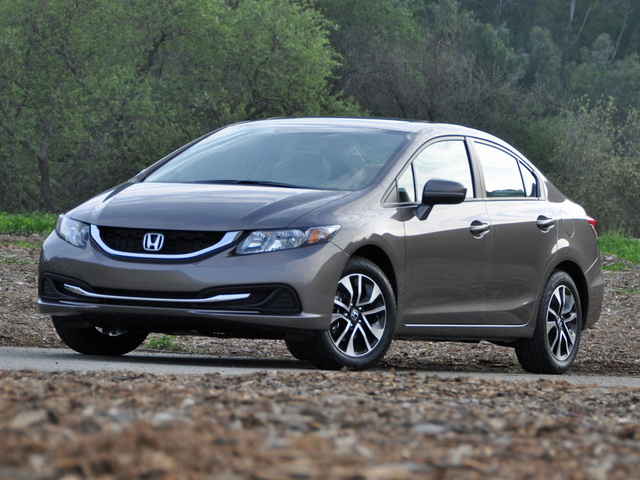
Honda released the ninth-generation Civic in 2012 in coupe and sedan form. No hatchback was offered in the U.S. during this generation. Most critics were unimpressed, faulting the car for lacking the edgy style and driving verve of its eighth-generation predecessor. Developed at the height of the great recession, it also drew criticism for obvious cost-cutting, and the interior quality came in for particular scrutiny when new.
Buyers were less troubled than critics, and the Civic still sold well on price and value. What was not universally loved then still makes good transportation now.
Most were powered by 1.8-liter four-cylinder engines making around 140 horsepower. Efficiency-focused models used a 110-horsepower unit, and the sporty Si received a 201-horsepower 2.4-liter. Honda also built a natural-gas-powered Civic in these years. We do not recommend that one.
The Civic Hybrid continued through these years, but it was not redesigned alongside the rest of the lineup. It remained the second-generation hybrid launched for 2006 and instead received a refresh for 2012, gaining a new 1.5-liter engine and a lithium-ion battery in place of the previous nickel-metal hydride pack, with torque up to 127 pound-feet and efficiency improved across all EPA tests. The 2012 cars also gained 1.6 inches of rear legroom, though the automotive press panned the model year for its downmarket interior design, quality, and performance. A new 5-inch digital display atop the center stack could show album artwork and directions, and the instrument panel changed colors according to speed and efficiency. On navigation-equipped cars, a 16GB flash drive replaced the previous DVD setup.
Responding to the bad press and negative customer reaction, Honda refreshed the car again for 2013 with new exterior styling, revised suspension and steering, more noise insulation, soft-touch dash materials, and better build quality, along with a standard backup camera, Bluetooth, Pandora, and text message readouts. For 2014 it gained a 7-inch touchscreen with LaneWatch, which displayed the right-side blind spot as a live feed when using the turn signal, plus standard push-button start with keyless smart entry. Enhancements to the fuel pump, ignition coil, engine sensors, and regenerative braking lifted the EPA rating to 44 mpg city, 47 mpg highway, and 45 mpg combined. There were no changes for 2015, after which Honda discontinued the model.
This Civic earned Top Safety Pick and Top Safety Pick+ designations from the Insurance Institute for Highway Safety every year it was on sale, and almost all versions returned at least 30 mpg combined.
The ninth generation has a generally stellar reliability record with no obvious pain points, and it is the only Civic generation to earn above-average reliability ratings across the board from Consumer Reports. The main knock is dynamic rather than mechanical: even the ostensibly sporty Si is not much fun to drive.
Non-hybrid cars in good condition with low mileage can be had for $10,000 to $15,000. Clean, low-mileage hybrids are harder to find, both generally and at that price. Across the second-generation Civic Hybrid's full 2006 to 2015 run, prices start under $3,000 for a car with six-figure mileage, rise to at least $6,000 for one below 100,000 miles, and reach up to $14,000 for the lowest-mileage examples.
8th Generation (2006 to 2011)
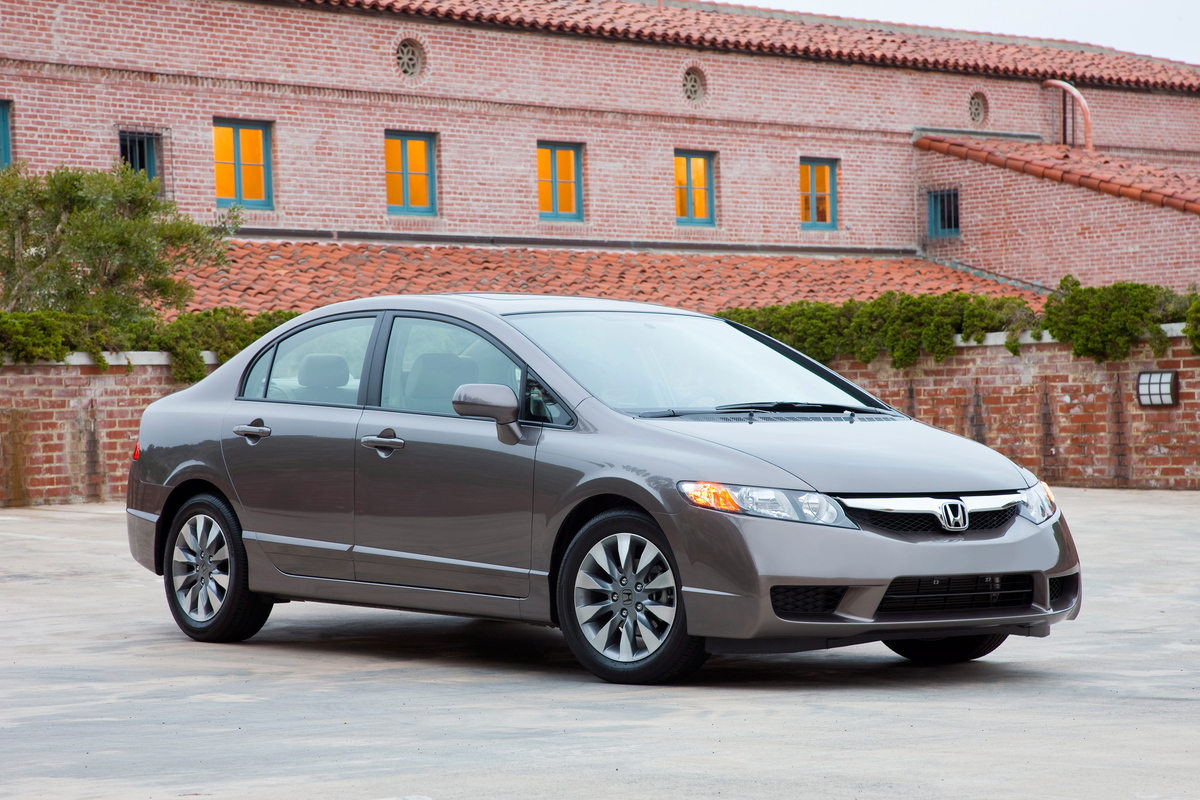
The 2006 model year brought the most radical reinvention of the Civic to that point. Honda ditched the seventh generation's staid styling for swoopy, futuristic lozenge shapes, with an equally unusual two-tiered dashboard inside, a lengthened windshield, opposing wipers, and a wider body. Buyers approved, and more than 1.5 million eighth-generation models had been sold by 2011. The two-door hatchback Si was dropped, but the coupe got much more attractive styling and the Si was available on coupe or sedan bodies. No hatchback was sold in the U.S. in this generation.
Light, fun to drive, and very efficient, this Civic was well liked by enthusiasts and ordinary drivers alike. It is a little noisy inside, and the interior design still reads as odd.
Regular models used 1.8-liter or, in the Si, 2.0-liter four-cylinder engines mated to five-speed automatic or manual transmissions. The Hybrid used a smaller 1.3-liter four and an electric motor with a continuously variable transmission.
The eighth-generation Civic also formed the basis of the second-generation Civic Hybrid. That hybrid generation outlasted the eighth-generation Civic itself, staying in production through 2015 and carrying into the ninth-generation years with a refresh for 2012. The details below cover the 2006 to 2011 cars. Its fourth-generation Integrated Motor Assist system could finally manage electric-only acceleration, though only at low speeds and with limited throttle input. Combined output was 110 horsepower and 123 pound-feet of torque, helped by a stronger electric motor and battery and the addition of i-VTEC, which allowed more control of the valves at higher speeds. Improvements to the CVT, air conditioning, brakes, and the switch to an electronic throttle lifted efficiency to an EPA-estimated 49 mpg city and 51 mpg highway, figures the EPA has since revised downward to reflect current test methods. Steering, suspension, and chassis were heavily revised or completely changed. Like every Civic Hybrid, it is front-wheel drive only.
Newly standard hybrid features included side curtain airbags, active front headrests, 15-inch alloy wheels, and a six-speaker stereo with iPod connectivity, along with a fully digital instrument panel on the new two-tier dash. Navigation was the sole option, raising the price from $21,850 to $23,350. Honda added XM radio with navigation for 2007 and made no changes for 2008. For 2009 it added Vehicle Stability Assist and a USB port, with leather seats and steering wheel, Bluetooth, and heated front seats and side mirrors available on navigation-equipped cars, while new headlights and taillights used clear lenses with amber bulbs and the front bumper gained a new air intake. There were no changes for 2010 or 2011.
Like most Civics, the eighth generation has a good reliability record, but certain years draw complaints for transmission, paint, and HVAC problems. The air conditioning system is particularly troublesome. Hybrids of this era tend to require more costly repairs than gas models, which can offset their fuel savings, and a recall covered 2006 and 2007 Hybrids for a faulty DC-DC converter that could stall the car while driving.
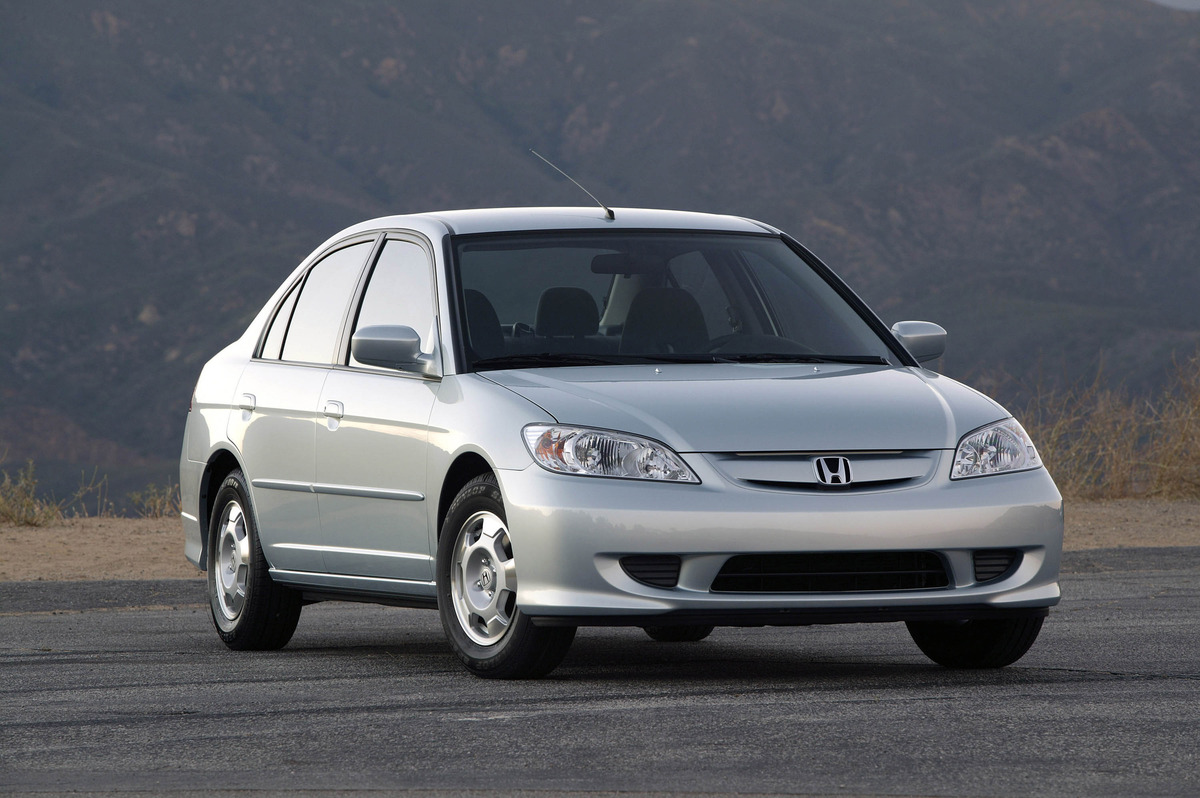
Honda released the seventh-generation Civic for the 2001 model year. It was offered in coupe and sedan body styles and most versions used a 1.7-liter four-cylinder engine producing between 115 and 127 horsepower, depending on the trim level. The sporty Si returned as a three-door hatchback sourced from the United Kingdom. This version, with a 2.0-liter 160-horsepower four-cylinder engine, is quite different from the other Civics of this era as it was part of the European Civic lineup. It has different styling and already attracts interest from collectors.
In 2003, Honda added the first Civic Hybrid to the lineup. The actual design of this hybrid is closer to a modern mild hybrid vehicle than a full hybrid like the Toyota Prius, but it was an impressive vehicle for its time and capable of delivering up to 41 mpg combined where most other seventh-gen Civics got only about 29. Its design also allowed for manual transmissions, unlike most other hybrids, but few were sold.
Generally considered by critics and enthusiasts as not as light or fun to drive as previous Civics, the seventh-gen model was a decent seller but has one of the worst reliability records of any generation. Early 2001 and 2002 models, and hybrids seem worst of all, and any early Civic Hybrid is a very rare bird nowadays. We could only find three of them for sale nationwide on CarGurus during our research. Good ones with under 100,000 miles shouldn't cost more than $8,000, but they aren't as easy to find as later Civics.
6th Generation (1996 to 2000)
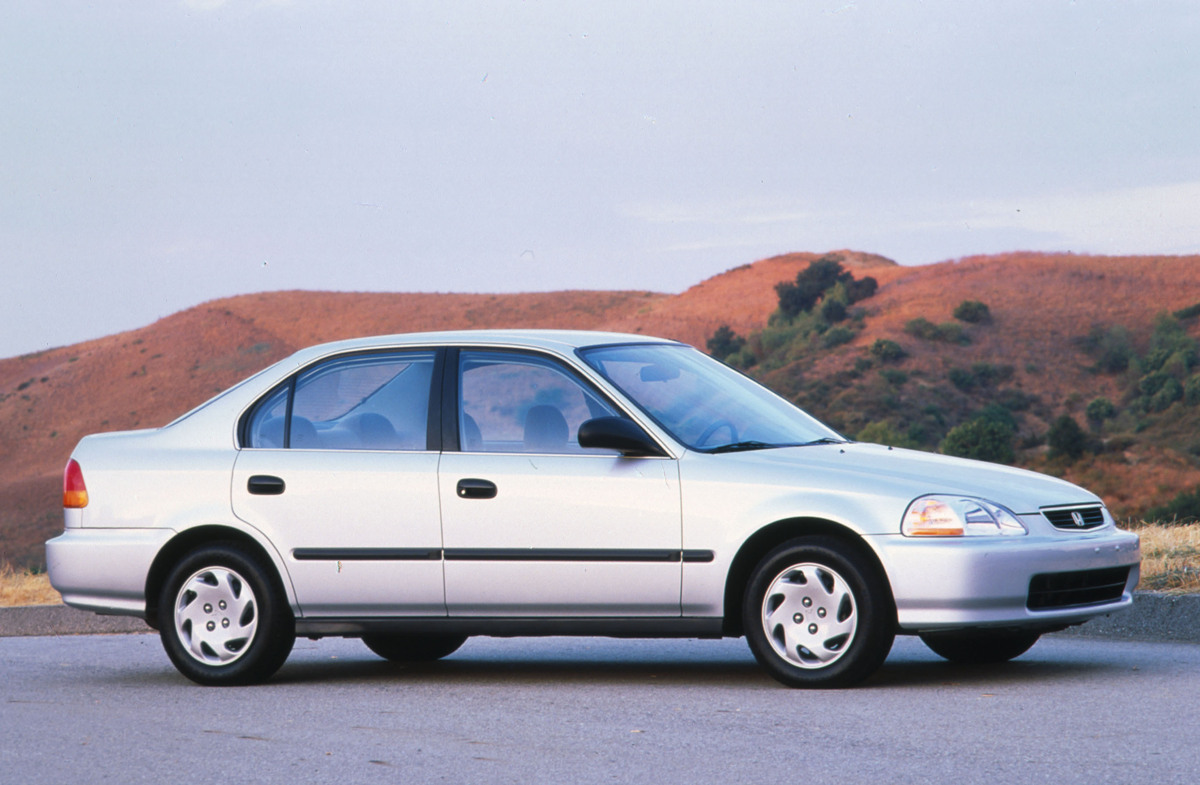
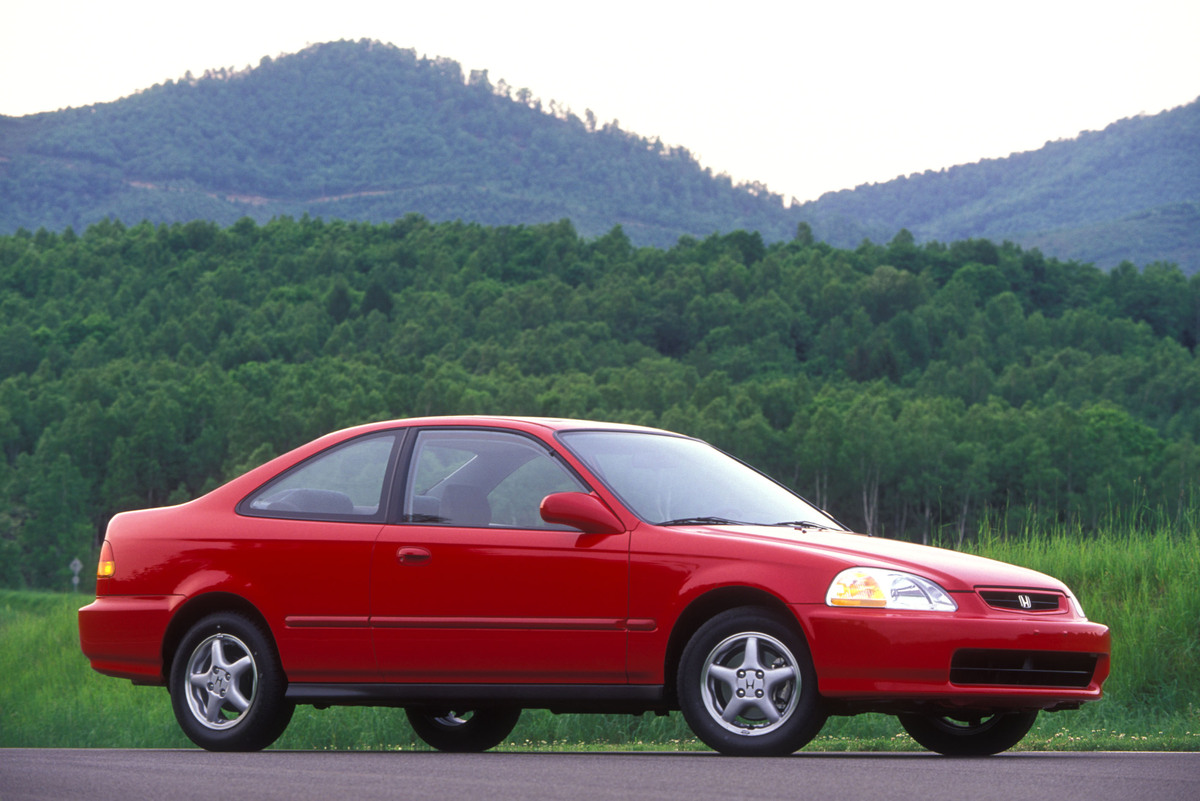
Introduced for model year 1996, the sixth-generation Honda Civic was sold in coupe, sedan, and hatchback form like its fifth-gen predecessor, and it got a pair of new 1.6-liter four-cylinder engines. Though all the engines were 1.6s, power levels were quite varied from 106 to 160 horsepower and the various models could be had with either a five-speed manual, four-speed automatic or continuously variable automatic transmission (on the high-efficiency HX only). Light and lithe, even the slowest of these Civics was fun to drive and back in Japan this model became the basis for the original Civic Type R.
Like most Civics, this car has a great reputation for reliability, with examples lasting well beyond 200,000 miles, but maintenance is important as with the youngest of these cars now pushing a quarter-century old, many have been neglected. They're also fairly basic, and some modern safety equipment that younger drivers take for granted, like anti-lock brakes, wasn't standard on all versions (If you buy a four-door or an Si, it'll have it). You can expect good gas mileage, particularly from the fuel-efficiency special HX model, but all of these Civics have a tight back seat.
You shouldn't have to pay too much to find a good basic four-door from this generation, as this is a bargain-basement machine that you can buy for $5,000 or less, but enthusiasts have already snapped up most of the two-door and hatchback models to modify, and the rare Si, offered in 1999 and 2000 only, is already an appreciating collector car. Don't expect to find a nice example of one of those for less than $15,000.
5th Generation (1992 to 1995)
Today a fan favorite with classic Honda enthusiasts, the fifth-generation Civic debuted in late 1991 with newly aerodynamic styling and lots of technological advancements. Honda's engineers had purposefully designed it to be larger but lighter, using many lightweight materials and soft-edged, contemporary shapes. The result was a timeless look that's aged very well while sacrificing none of the fun and frugality of earlier Civics. The all-new coupe and evolved hatchback looked particularly good, and the latter had a neat split-tailgate opening a-la a Range Rover.
In this generation, power came from high-revving 1.5-liter four-cylinders of 70, 92, or 102 horsepower and a 16-valve, 125-horsepower 1.6-liter four in the Si. Light, fun, and efficient, they were plenty of fun to drive although the efficiency-oriented VX would feel very slow to most of today's drivers. None weighed more than about 2,500 pounds, and most got around 27 to 30 mpg. The 70-horse VX could deliver up to 41 mpg in those pre-hybrid days.
Fifth-gen four-door models and low-end trims are cheap today and ultra reliable, but they are three decades old now so finding a clean one won't be easy, particularly in places where cars rust. Two-door models and hatchbacks, particularly Si models, are already collector vehicles and many have been extensively modified. They'll cost quite a bit more than bargain-bin four-doors, but if you shop around for a long time, you might be able to find one of these for less than $7,000. The Civic Wagovan was dropped for this generation.
4th Generation (1988 to 1991)
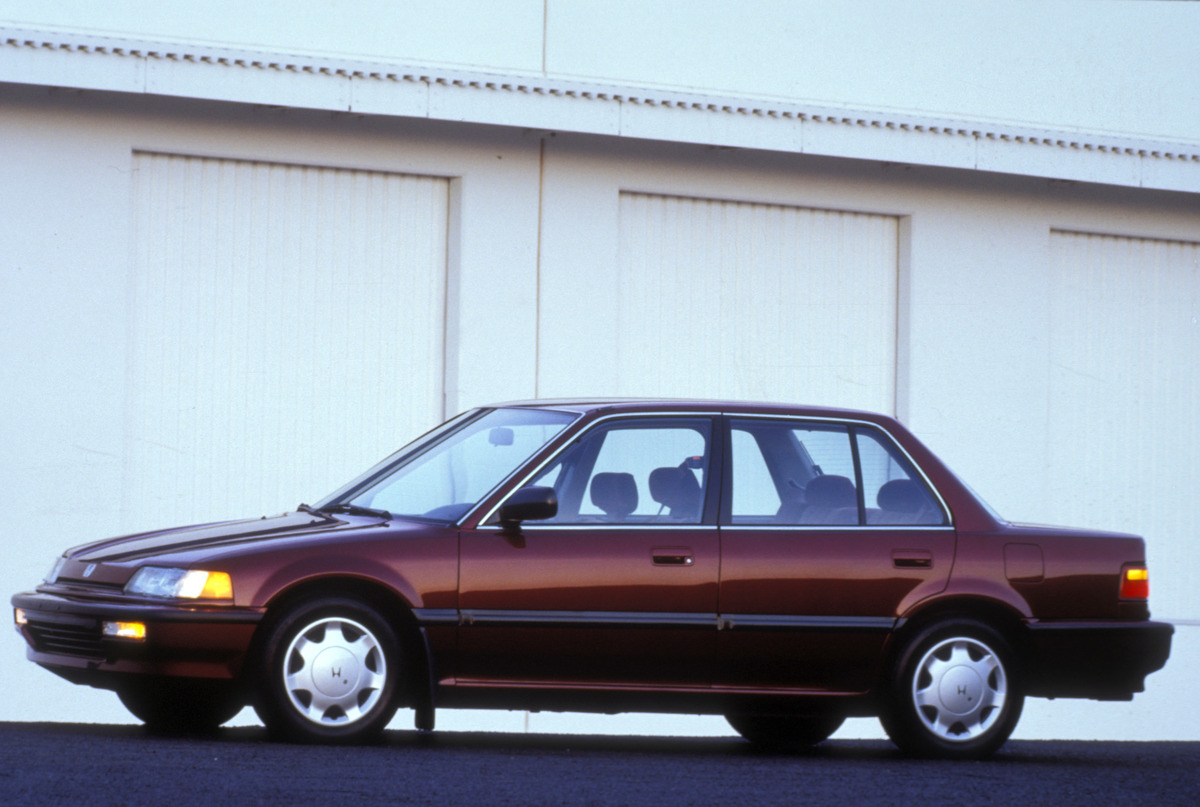
The fourth-generation Honda Civic debuted in late 1987 for the 1988 model year. This Civic was the largest yet, six to eight inches longer than the third-generation model and with smoother, much more aerodynamic styling. The larger dimensions outside also meant a bigger and more usable interior. This is an old car now, but the interior design was ahead of its time, and could easily pass for a car of the early 2000s. It also brought further adoption of electronic fuel injection and more powerful engines.
There were many fourth-generation models, but body styles were still constrained to a three-door hatchback, a four-door sedan, and the tall-roofed "Wagovan," which later evolved into the CR-V. The hatch and sedan models are quite different from the wagon, which could be had with all-wheel drive, but all used the same platform and basic hardware. Power came primarily from 1.5-liter four-cylinder engines with 70 (CX, the high-efficiency model), 92 (DX/LX) or 108 horsepower (EX). The sporty Si, which skipped 1988, also used the 108-horsepower motor. Front-drive wagons used a 92-horsepower 1.5, while all-wheel drive wagons used a 105-horsepower 1.6.
These are essentially classic cars now, and not so easy to find in good condition. Many three-door models and even a few Wagons have been modified by enthusiasts, and very nice examples fetch pretty tidy sums on old car auction sites. This is the first truly modern Civic, with fuel injection and a very modern interior. It's still a decent driver and plenty of fun, but prices are only going to go up, not down, for clean ones.
3rd Generation (1984 to 1987)
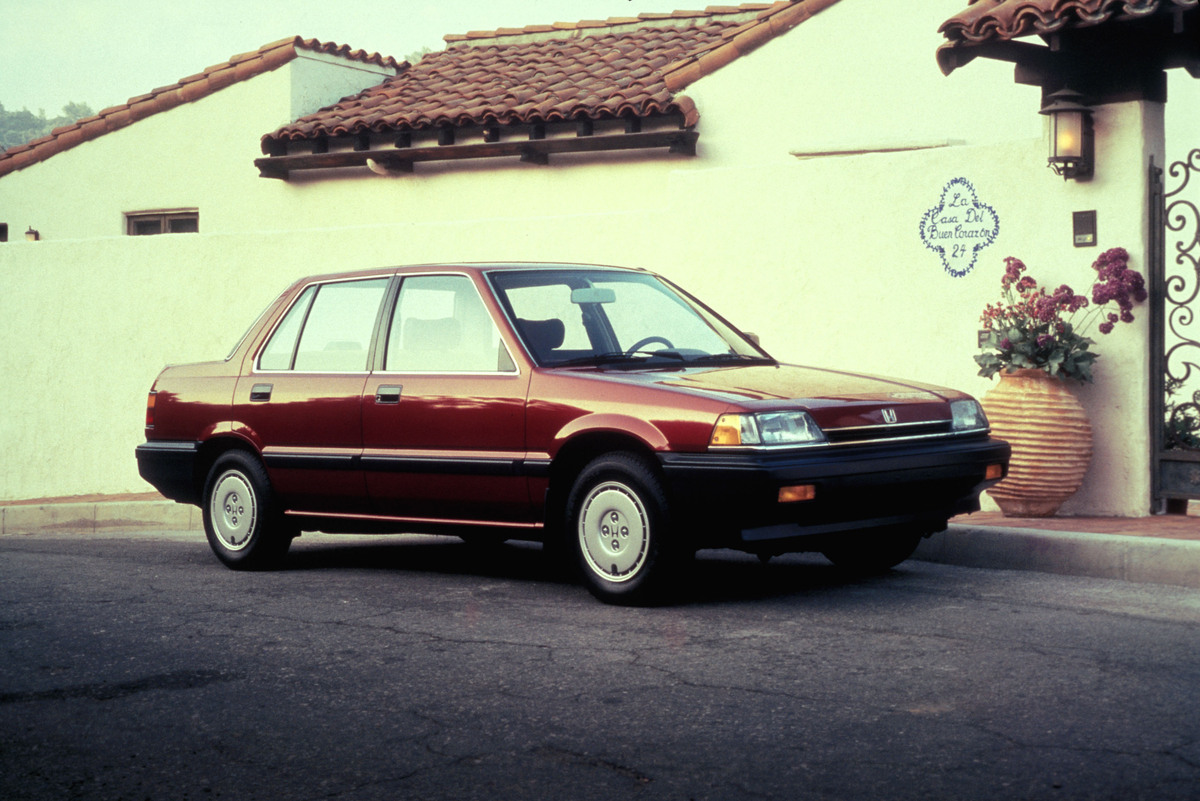
Radically reshaped with angular and aerodynamic styling on a longer wheelbase, Honda unveiled the third-generation Civic for the 1984 model year. In addition to the sleek new shape, the Civic also got a new body style. The former station wagon grew much taller, becoming the "Wagovan" in the process. A cross between a tall car and a small minivan, it proved surprisingly popular and remained a fixture of the Civic line until 1991, eventually evolving into the more SUV-like CR-V for 1996. This Civic was also the basis of the small CR-X hatchback, another popular eighties Honda.
Though quite a bit larger than the first two Civic generations, the third generation was still small and light, the three-door only 150 inches long (smaller than today's Mini Hardtop) and weighing less than 2,000 pounds. That enabled this car to perform pretty well with only a 1.3-liter, 60-horsepower or 1.5-liter, 76-horsepower engine with fuel fed by old-fashioned carburetors. They could also return about 30 mpg. All were front-wheel drive, but the wagon could also be had with four-wheel drive and an unusual six-speed manual transmission, though one of the gears was an ultra-low crawl gear.
In 1986, the sporty Si model debuted, the first U.S.-model Civic with fuel injection. Available only in the three-door hatchback, the Si's fuel injection gave it a heady 91 horsepower, with a spoiler and air dam to match. This is the most collectible of these third-generation Civics today, although it doesn't fetch the high prices of later Sis. Now four decades old, the third-gen Civic isn't easy to find in good shape, but it tends to be cheap even as a collector vehicle, and nice examples should cost less than $10,000. It might be a little small, and slow, as a daily driver, however.
2nd Generation (1980 to 1983)
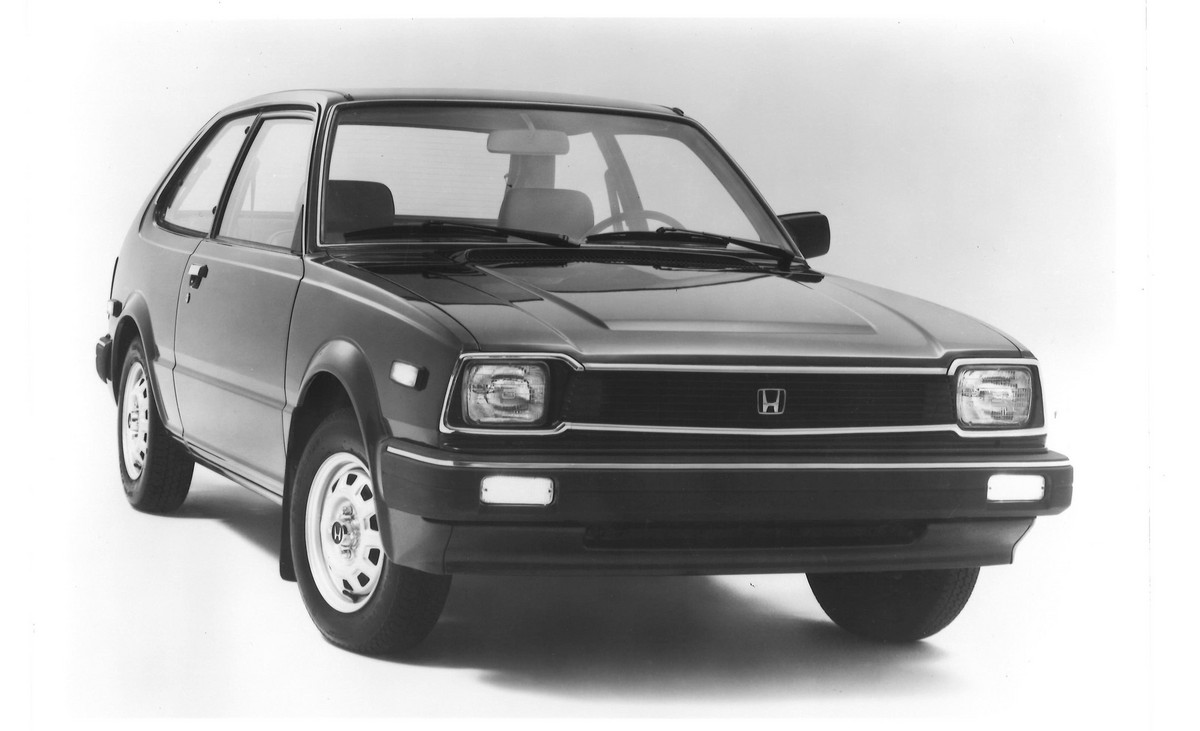
Larger and more mature-looking than the original, the second-generation Honda Civic took a shape that more closely resembled its big brother, the first-generation Accord. Debuting in 1980, it came in more body styles than the original, too, with a popular four-door sedan joining the three-door hatch and five-door wagon. Many of the second-generation Civic's mechanical pieces were evolved from its predecessor, and it used carbureted 1.3 and 1.5 liter four-cylinder engines evolved from the previous car, as well as a version of the CVCC cylinder head.
Reliable and frugal, this Civic wasn't necessarily fun to drive, but as an economy car it excelled, and it proved just as popular as the original. Back in the early 1980s, it was one of the most highly recommended used cars on the market by outlets like Consumer Guide and Consumer Reports, but it wasn't entirely trouble-free. Many of these Civics, like the original, rusted pretty badly and 1980 and 1981 models had a series of brake and carburetor problems that had them cycling in and out of dealerships for repair.
In places where cars don't rust too badly, like California and Arizona, you can still find these Civics in daily use, but they're pretty rare in snowy or wet climates. They also need more maintenance than later models, and most of the remaining cars are manual-transmission models, as the automatics were often trouble-prone and sapped power from the small engines. These should be considered collector cars now rather than potential dailies, and really nice ones can sell for about $5,000 to $9,000.
1st Generation (1972 to 1979)
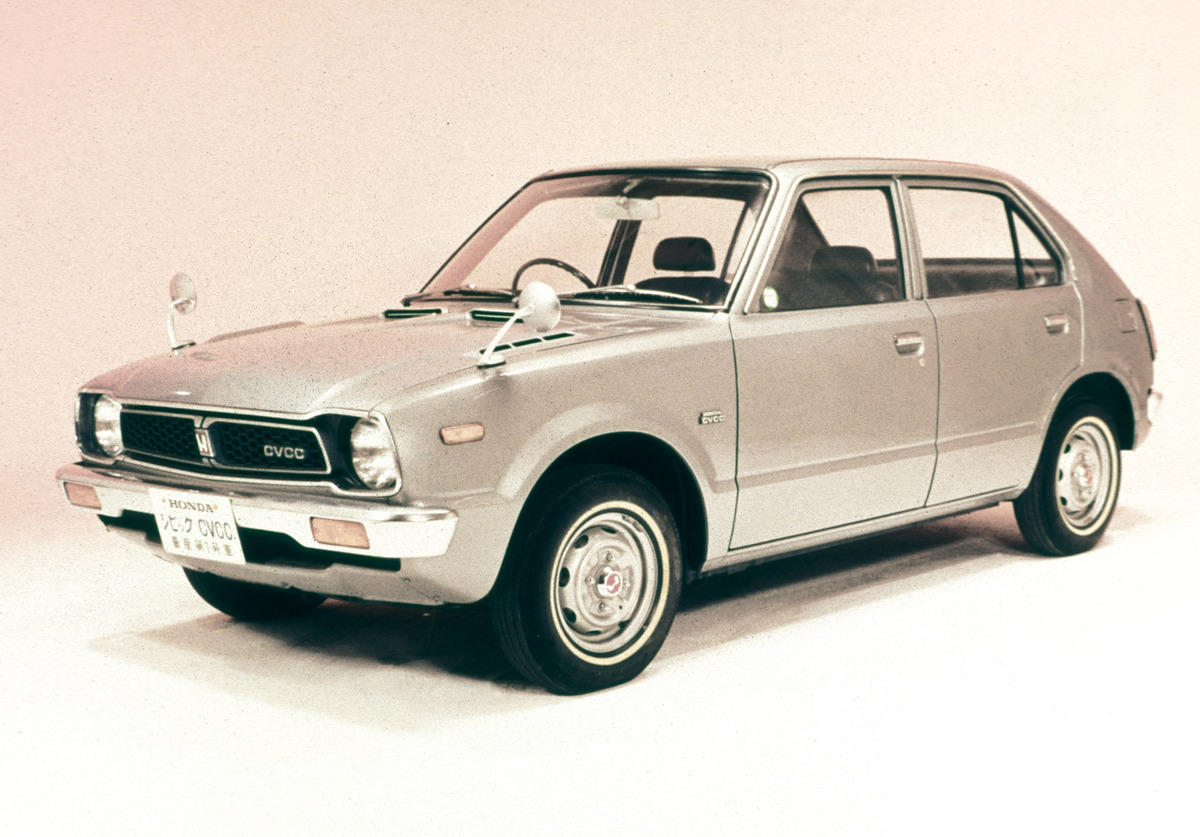
It's not an exaggeration to say that the original Honda Civic is the car that put the automaker on the global map. Honda had already been selling cars for almost a decade by the time the Civic arrived, but aside from the trouble-prone N1300 (not sold in the U.S.), they were truly tiny cars designed for Japanese tastes. The Civic, on the other hand, was a thoroughly modern supermini that was the equal of global small-car powerhouses like the Fiat 127, Renault R5, and Volkswagen Polo. It debuted in the U.S. for 1973, just in time for the first OPEC crisis, and after initially slow sales, it took off like a rocket in 1974.
Powered by a 59-horsepower 1.2-liter four or, later on, a 64-horsepower 1.5-liter, the Civic was tiny, but its stratified-charge CVCC cylinder head allowed it to burn fuel cleanly and efficiently in ways other small cars could not. Though not necessarily stylish, it was cheap, reliable, and fun to drive even if it could barely manage 80 mph. And 33 mpg looked mighty good from behind the wheel of an 18-mpg Plymouth Valiant. It helped establish Honda's global rep as a maker of quality, appealing small cars.
Today, the original Civic is a collector vehicle and it seems very old and small inside, particularly to younger folks used to the modern cars of the 21st century. It also had more foibles than later Civics, with a trouble-prone "Hondamatic" automatic transmission, a need for regular valve and carburetor adjustments, and vast amounts of rust. Rust is this car's mortal enemy, and many of them dissolved long ago. Those that remain are cheap, cheerful collector cars. You could probably find a project car for under $1,000, but good first-gen Civics generally sell for between $5,000 and $10,000. A few have commanded even higher prices.
Sometimes our content pages are the result of a team effort. As with all CarGurus editorial, you can expect high levels of automotive insight and expertise delivered in a style that is approachable and free from jargon.
The content above is for informational purposes only and should be independently verified. Please see our Terms of Use for more details.