Honda Civic Hatchback 11th Generation (2022–Present)
The 11th generation of the Honda Civic Hatchback ushered in a whole lot of change. In addition to a more streamlined and sophisticated design, this new generation is the first one to be built in the U.S. for an American audience. It got a more upscale interior with its signature honeycomb mesh panel that concealed the HVAC vents and more premium materials. The Si still didn’t get a hatchback body style, but the Type R returned in 2023 exclusively as a hatch.
At launch there were four trims and two powertrain options. New for this generation, Honda added the 158-horsepower, 2.0-liter naturally aspirated four-cylinder to the lineup as the base engine, and it was available in LX and Sport trims. The LX had a standard continuously variable transmission (CVT), but the Sport was available with a six-speed manual as a no-cost option. The 180-hp, 1.5-liter turbo from the previous generation was carried over and available on EX-L and Sport Touring trims. The CVT was standard on the EX-L, with the six-speed manual being available on the Sport Touring.
In this generation, the Civic Hatchback came standard with Apple CarPlay and the Honda Sensing safety suite. Other standard features include a 7-inch infotainment screen, LED headlights and taillights, push-button start, and automatic climate control. Available features on higher trim levels included a moonroof, blind-spot monitors, heated front seats, a 60/40 split-folding rear seat, leather seats, power front seats, a 9-inch infotainment screen, a 10.2-inch digital cluster, a 12-speaker Bose audio system, a wireless phone charger, front and rear parking sensors, rear USB ports, and a navigation system.
The LX trim was dropped in 2023, and in 2025 there was a mid-cycle refresh and a big powertrain shakeup. Though the base 2.0-liter engine remained, the 1.5-liter turbo was replaced by a new hybrid powertrain. The Civic Hatchback Hybrid had a 2.0-liter four-cylinder engine paired with a two-motor hybrid system. It delivered 200 hp and 232 pound-feet of torque, which made it the most powerful mainstream Civic ever sold in the U.S. With the pivot to hybrid powertrains in the sportier models, this meant the six-speed manual transmission was also dropped from the lineup.
The new trim lineup post-refresh was Sport, Sport Hybrid, and Sport Touring Hybrid. The refresh also included some design changes and tech upgrades, including a new front bumper, grille, wheel designs, and updated infotainment software, while top-tier Sport Touring Hybrid trim gained Google built-in functionality.
With the standard Honda Sensing and the updated platform, every model in the 11th generation has received some sort of Top Safety Pick designation from the Insurance Institute for Highway Safety. The 2022, 2025 and 2026 model years, specifically, get the Top Safety Pick+ award.
The 11th generation Civic Hatch generally has a strong reliability rating, earning some of the best predictive reliability scores from Consumer Reports across all generations, but there are a few known issues. The biggest carried over from the previous generation, and that’s the “sticky” steering problem where it feels heavy or inconsistent due to a faulty inner gear. The 2022 to 2025 models are particularly affected and have been recalled. Another carryover is the oil dilution issue with the 1.5-liter turbo, affecting 2022 to 2024 models. The 2022 model year was also hit with a front passenger airbag recall due to a faulty sensor. As always when buying used, shoppers should do a VIN check to ensure that all recalls have been conducted. Though less widespread, some owners have also reported interior rattles on 2022 models, some water intrusion after heavy rain, infotainment glitches, and Honda Sensing false alerts.
As this is the current generation for the hatchback, buyers probably won’t have to stray far from home to find a used example. In a quick search, we found more than 2,500 used Honda Civic Hatchbacks for sale nationwide. According to CarGurus pricing trends, average prices for 2022 to 2026 models range from about $23,800 to $27,800. Sub-$20,000 examples are typically earlier in the generation and LX or Sport trims.
Honda Civic Hatchback 10th Generation (2017–2021)
After a 12-year hiatus, Honda brought the hatchback back to the Civic lineup in the U.S. This was the dawn of the modern era for the hatchback, as it was packed with technology such as Apple CarPlay and Android Auto and offered two turbocharged powertrains. It was still built in the U.K. and had sporty European-inspired styling. Unlike the seventh-gen Civic Hatchback, it was built on the same global platform as the sedan and coupe.
The Si in this generation was only available as a sedan or coupe, but the Civic Type R, which had a hatchback-only body style, was available in the U.S. for the first time.
Still a FWD-only model, the 2017 Civic Hatchback launched a year after the 10th generation sedan and coupe came to the States. It was available in five trims and had two powertrain options. The LX, EX, and EX-L trims were equipped with a 174-hp, 1.5-liter turbocharged inline-four, and the Sport and Sport Touring got the 180-hp, 1.5-liter turbo. The LX and Sport trims came standard with a six-speed manual transmission, but a continuously variable transmission (CVT) was available on those trims and standard on all others.
Standard features on the base LX included automatic climate control, a rear-view camera, a folding rear seat, a four-speaker AM/FM audio system with a USB port, and a 5-inch infotainment screen. Available features included remote start, a moonroof, 60/40-split folding rear seats, a 7-inch infotainment screen, Apple CarPlay and Android Auto, leather seats, heated front and rear seats, navigation, blind-spot monitors, dual-zone automatic climate controls, and a power driver’s seat. While the manual transmission in the LX may be desirable for some, EX trim levels and above have phone mirroring systems and the standard CVT.
The Honda Sensing safety suite was an option at launch, so buyers who value the likes of adaptive cruise control, automatic emergency braking, and lane-keep assist should ensure it's fitted to pre-2020 cars; it was standardized on all models in 2020. It’s also worth noting that the 2017, 2020, and 2021 models all received a Top Safety Pick designation from the Insurance Institute for Highway Safety with Good crash test scores across the board.
In 2020, the hatchback received a mid-cycle refresh with a revised front bumper, a new grille, new wheel designs, additional sound insulation, the re-introduction of the volume knob, and improved feature packaging. In this model year, the Sport trim got Apple CarPlay and Android Auto, the Sport Touring got an available 6-speed manual transmission, and the LX became CVT-only.
It’s best to avoid the earlier model years, as they were most affected by glitches and growing pains. The 2017 models have the highest volume of air conditioning failures, though many vehicles in this generation had this defect. Honda issued a 10-year, unlimited-mileage extended warranty in the U.S. covering the air conditioning condenser and compressor shaft seal. A VIN check is recommended to verify if a vehicle is covered or has had repairs carried out. Another big known issue for this generation relates to the turbo engines in the hatchback, where unburnt fuel vapors could escape past piston rings and mix into the engine oil crankcase, diluting the oil, which compromises engine bearing lubrication. Other known issues include fuel injector failures, the fuel pump failure recall, airbags that may deploy unintentionally during a crash, and “sticky” electric power steering.
We found nearly 1,500 used Honda Civic Hatchbacks for sale nationwide. According to CarGurus pricing data, average prices for 2017 to 2021 models range from about $16,500 to $21,500.
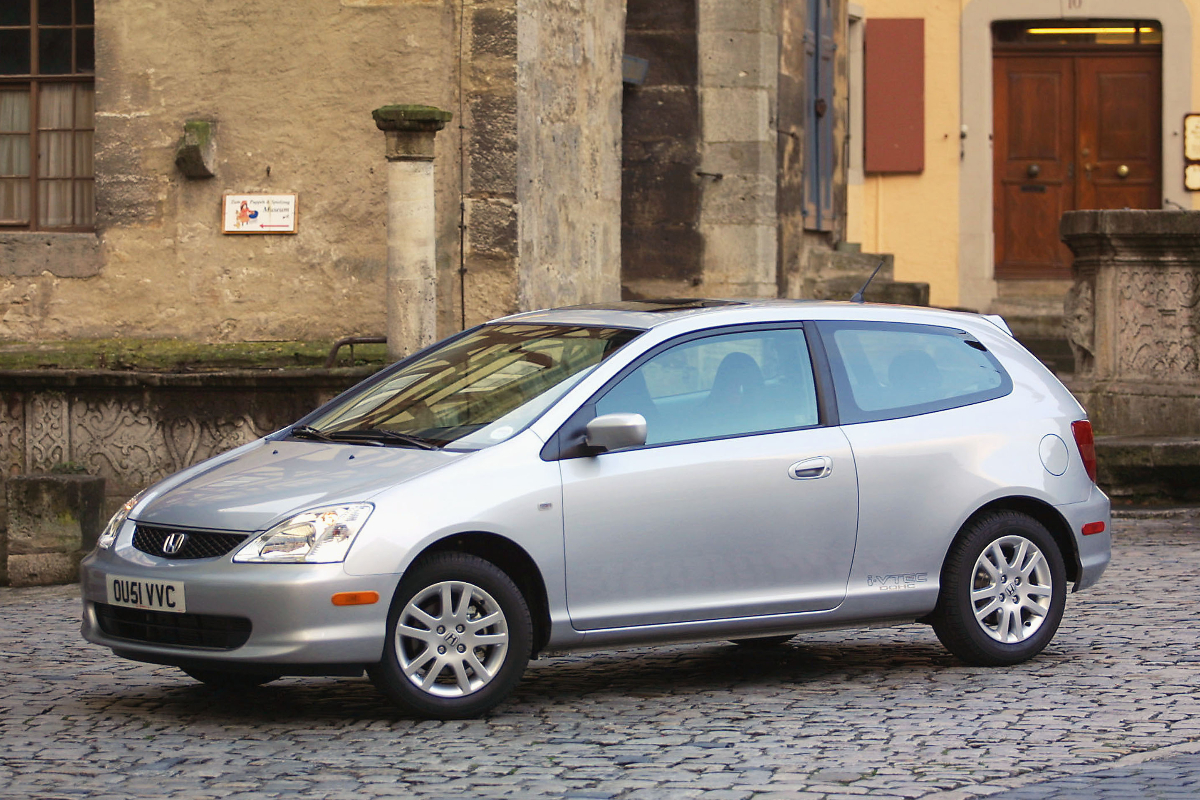
Honda Civic Hatchback Seventh Generation (2001–2005)
The story of the seventh-generation Honda Civic Hatchback in the U.S. is an odd one. First, the economy CX and DX trims disappeared, and the only version available in the States was the sporty Si. Second, it was built in England on a European-market platform and imported to America, so had radically different engineering than the U.S. coupes and sedans. Finally, this was the last generation sold in the U.S. that had any kind of hatchback until 2017.
While it was still a three-door model with front-wheel drive, this generation dropped the double-wishbone suspension in favor of a simpler MacPherson strut front system. The only powertrain available was a 2.0-liter DOHC i-VTEC engine that delivered 160 hp and 132 lb-ft of torque. The only transmission was a five-speed manual.
The Civic Si Hatchback had flat-folding rear seats, a sport-tuned suspension, four-wheel disc brakes, 15-inch alloy wheels, electric power steering, sport seats, and a unique dash-mounted shifter on the center stack. The single trim level meant that every Civic of this era was well-equipped, with features such as a leather-wrapped steering wheel, a power sunroof, power windows, power door locks, power-adjustable side mirrors, air conditioning, a six-speaker audio system with an AM/FM radio and a single-disc CD player, remote keyless entry, cruise control, and a rear windshield wiper.
Though the powertrain remained unchanged throughout this entire generation, the Civic Si hatch was refreshed in 2004 with 16-inch wheels, a revised grille, an updated front fascia, a new instrument cluster, retuned suspension and steering, and upgraded interior accents.
Perhaps the biggest known issue with this generation is the defective Takata airbag inflators that can explode and send shrapnel flying though the cabin. Though many airbags have been repaired under a recall, this is definitely something to check. Another common issue is that the front upper strut mount bearings and rubber isolation spring seats can dry out and bind over time, causing a clunking sound. The manual transmission is another potential pain point, due to the wear of the second- and third-gear synchronizers. The 2002 and 2003 models have a manufacturing metallurgy defect, which can cause exhaust camshaft pitting. Other known issues include hatch and sunroof leaks, VTEC solenoid screen clogging, and engine-mount failures.
The seventh-gen Civic Si Hatchback is a rare find, and no CarGurus pricing data was available at the time of writing.
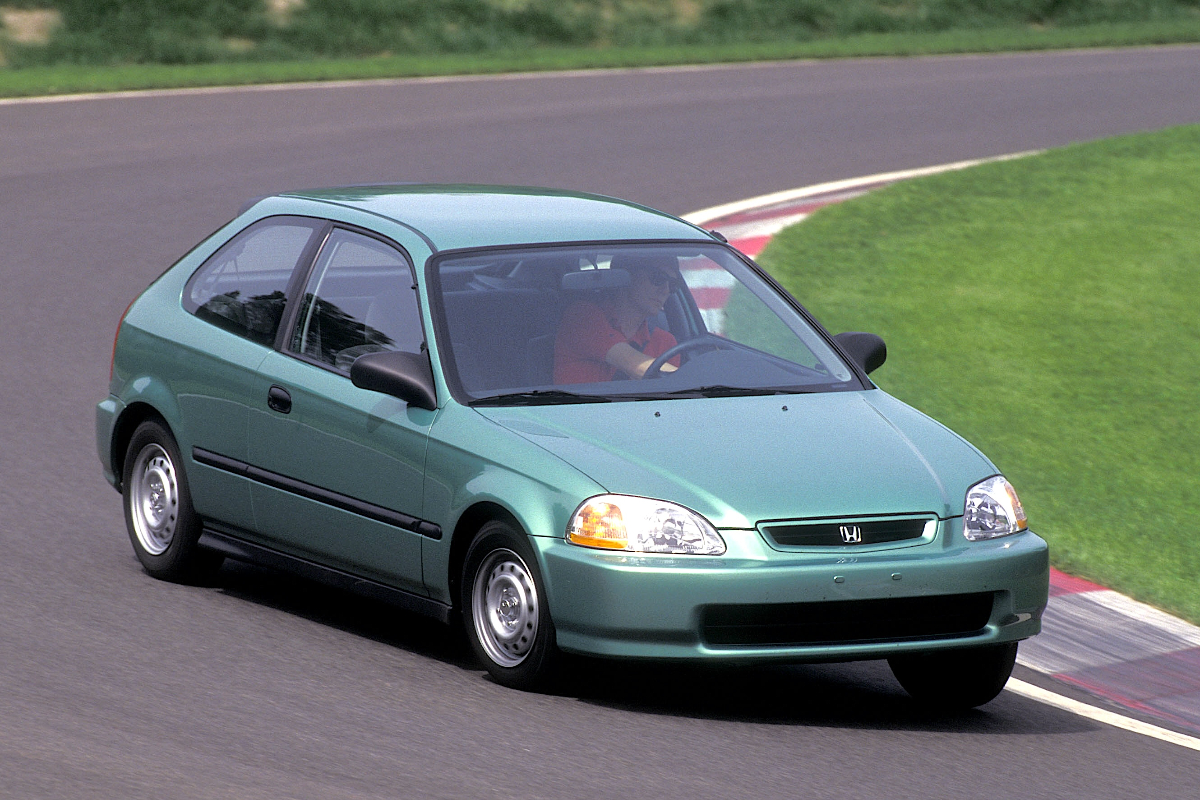
Honda Civic Hatchback Sixth Generation (1996–2000)
The sixth-generation Honda Civic Hatchback represented a maturation and simplification. It had a single powertrain and just two trims, neither of which were the Si. This generation also had a larger body, improved crash protection, better noise isolation, and improved safety equipment. It was still available only as a three-door hatch with FWD, and returned to the traditional hatchback design instead of the clamshell tailgate of the previous generation. This was the last generation with four-wheel independent double-wishbone suspension and the last traditional Civic Hatchback sold in the U.S. before a hiatus.
The sole powertrain for this generation was a 1.6-liter non-VTEC inline-four that delivered 106 hp and 103 lb-ft of torque. It came standard with a five-speed manual transmission, but a four-speed automatic was available on the DX trim.
From 1996 to 2000, the hatchback was considered a budget buy, and both trims were pretty basic. The CX lacked power steering, a rear window wiper, and a factory radio. While the DX had standard power steering, an AM/FM radio with a clock, a rear window wiper and washer, and a tilt steering wheel, it still lacked some of the premium amenities available in earlier generations. Neither trim was available with power windows, power locks, a sunroof, or cruise control.
Even though this generation was underwhelming, it had some notable advancements, including OBD-II diagnostics, side-impact door beams, and an improved crash structure. In 1999, the Civic Hatchback got a refresh with a revised front fascia, new grille, updated headlights and taillights, new bumper designs, and revised interior materials.
Though rust is less severe in this generation, it remains a persistent concern, with rear fender arches and the rear quarter panel particularly susceptible. Another big problem is with the optional automatic transmission, with complaints of harsh shifting, delayed engagement, and slipping between gears. Other known issues include exhaust manifolds that are prone to cracking and the manual-crank windows falling out of alignment due to dry and warped rubber channel tracks.
Finding a vehicle for sale in this generation is difficult, especially the CX and DX trim levels that were sold here in the U.S.. Interestingly, due to the federal 25-year import exemption rule, Japanese Domestic Market (JDM) Type R models from this generation are for sale in the U.S. now. The average price for those models is around $22,000, and we saw at least one for sale on CarGurus.com listed for about $12,000.
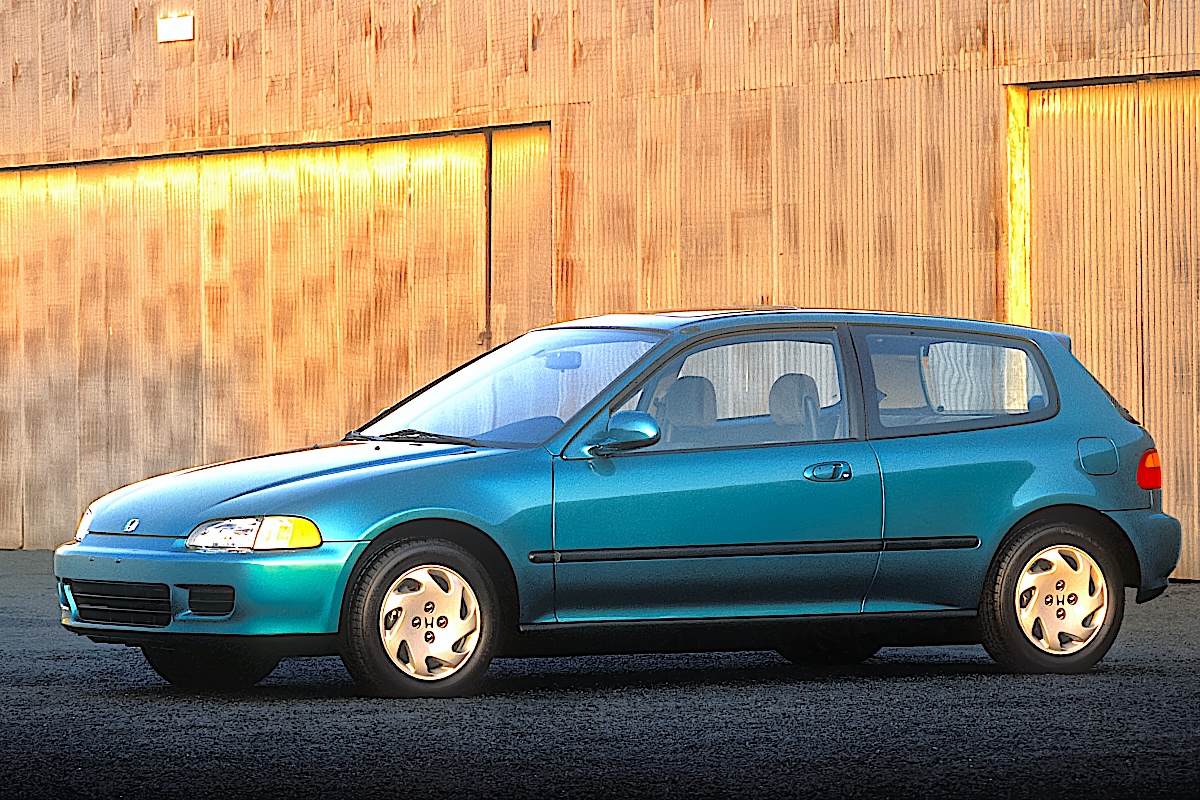
Honda Civic Hatchback Fifth Generation (1992–1995)
The fifth-generation Honda Civic Hatchback came on the scene in 1992 with a more aerodynamic design, a longer wheelbase, more interior space, and a standard driver’s side airbag. This generation is highly sought-after by tuners due to its mechanical simplicity and ease of modification. One of the more unique design features of this generation is the two-piece split tailgate, a feature more often found on old-school SUVs.
At this time, the Civic Hatchback was still exclusively a three-door with front-wheel drive, and offered with four trims: CX, VX, DX, and Si. The base CX was the budget choice and lacked a radio, a rear wiper, and power steering. On the other end of the spectrum, the Si had four-wheel disc brakes, a power sunroof that slid into the roof, 14-inch sport wheels, power side mirrors, cruise control, a tachometer, and sport seats.
Each trim had its own powertrain. The CX had a 70-hp, 1.5-liter inline four-cylinder engine and was paired exclusively with a five-speed manual transmission. The DX got a 102-hp, 1.5-liter inline four-cylinder, paired with a five-speed manual or a four-speed automatic. The VX introduced the VTEC-E powertrain, which included a 92-hp 1.5-liter VTEC-E inline-four and was mated to a five-speed manual transmission. The focus for this trim and powertrain was fuel economy, and it achieved an EPA-estimated 48 mpg in the city and 55 mpg on the highway. The Si also got a VTEC engine, but this one was a 125-hp, 1.6-liter inline-four, and its focus was on performance. The Si was only available with a five-speed manual.
The fifth-gen Civic Hatchback got a mild refresh in 1994 that included a revised grille, updated headlights and taillights, some bumper revisions, and interior trim updates. At this time passenger-side airbags became more widely available throughout the lineup.
Yet again, the biggest known problem with this generation is rust. Similarly to the fourth generation, the rear wheel arches and quarter panels are particularly affected. Additionally, the two-piece split tailgate has a foam and rubber seal that's ripe for leaks, so the trunk floor is also prone to rust. Another potentially big problem is that the interior hood release mechanisms are fragile and can fail, locking owners out of the engine bay. Other known issues include ignition coil and ignition control module (ICM) failure, main fuel pump relay failure, and a failing wiper motor internal switch. The 1995 model year has a higher number of head-gasket complaints, and 1994 to 1995 models equipped with dual airbags have failed occupant sensors.
Because this generation is sought after by enthusiasts, it is often traded privately or through auctions. It's generally hard to find, and no CarGurus pricing data was available at the time of writing.
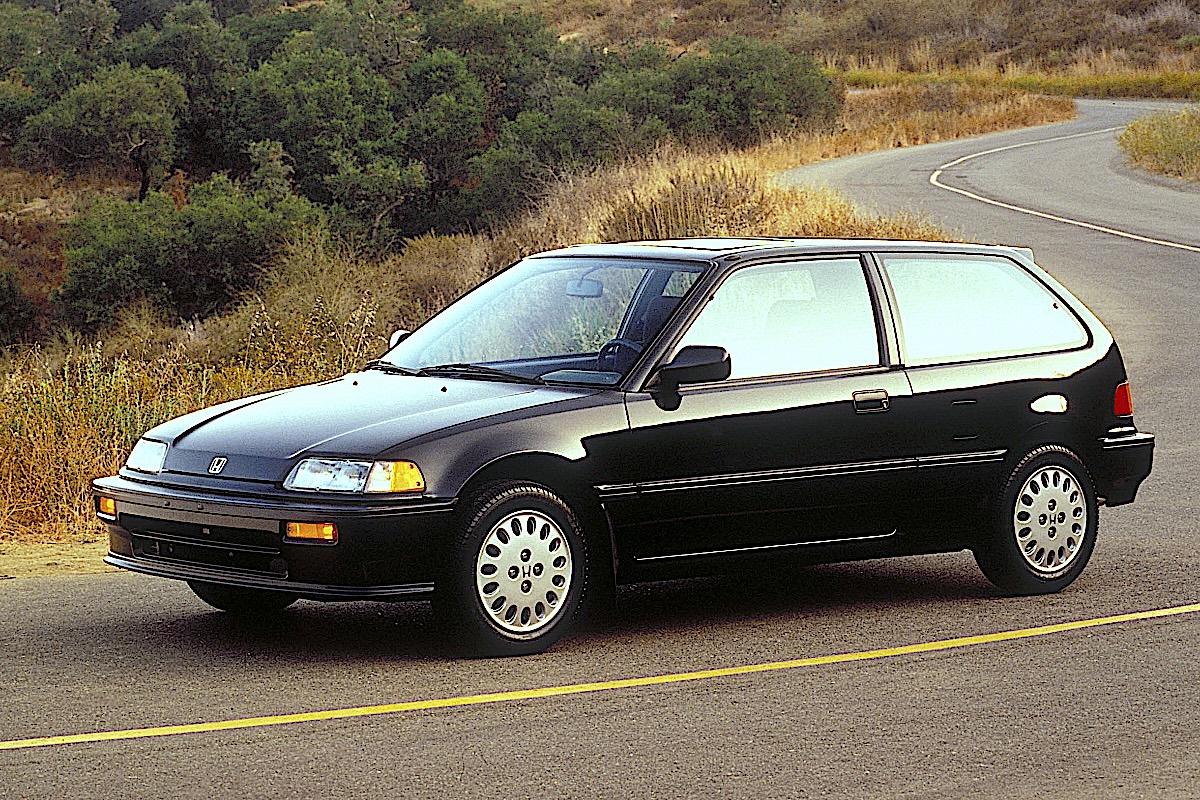
Honda Civic Hatchback Fourth Generation (1988–1991)
The fourth-generation Civic Hatchback made the transition from an entry-level economy car to more of a benchmark for what compact cars should be. It had larger dimensions, more powerful engines, better interiors, and an improved crash structure. This model was important for the enthusiast set, because it introduced a four-wheel independent double-wishbone suspension for improved handling, and available four-wheel disc brakes.
It was available in the U.S. as a three-door hatchback with front-wheel drive. There were three trims levels—Standard, DX, and Si (starting in 1989). The Standard model was fairly basic, with black bumpers, no passenger side mirror, manual steering, no rear wiper, 13-inch steel wheels, and a minimal interior. The DX, which was the volume seller, added the likes of a rear defroster, cargo area lighting, a tilt-adjustable steering wheel, optional air conditioning, and better interior trim. The Si, which wasn’t available in 1988, had more amenities, including a power moonroof, a tachometer, bucket seats, front and rear stabilizer bars, four-wheel disc brakes, a rear spoiler, body-colored bumpers, a unique exhaust system, and wider 14-inch steel wheels.
For the 1988 redesign, Honda ditched the Compound Vortex Controlled Combustion (CVCC) engine, introducing fuel injection systems and replacing carburetors. There were three powertrain options in this generation—a 70-hp 1.5-liter inline-four, a 92-hp 1.5-liter inline-four, and a 108-hp 1.6-liter inline-four. A four-speed manual was standard with the base engine, but the mid-level engine had a five-speed manual or an available four-speed automatic. The top-tier engine got a close-ratio five-speed manual.
The Civic Hatchback received a mid-cycle refresh in 1990 with some styling tweaks and safety upgrades. The front and rear bumpers were completely redesigned, the instrument cluster got a more rounded shape, and Honda added door-mounted shoulder and lap belt mechanisms to meet automatic occupant protection regulations.
Rust remains the biggest known problem for the fourth-generation Civic, and is found primarily in the rear quarter panel and wheel wells. Another common issue in this generation is a fuel pump relay failure, which causes a crank-but-no-start condition. Some things to watch for in Si models include engine swaps, aftermarket modifications and missing Si-specific parts.
This generation is hard to find on the used market, and no CarGurus pricing data was available at the time of writing.
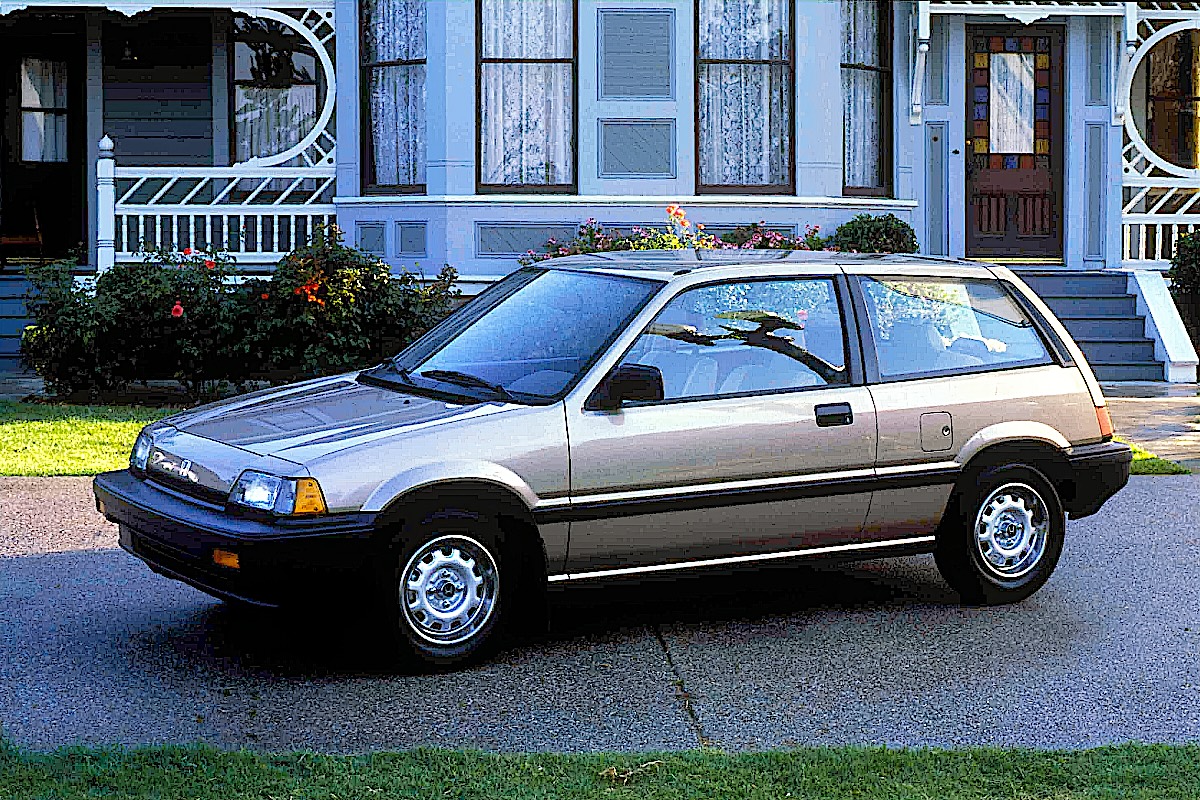
Honda Civic Hatchback Third Generation (1984–1987)
When the third-generation Honda Civic Hatchback came Stateside, it had an entirely new platform and a longer wheelbase, which translated to more passenger space, a better ride, and improved handling. It maintained the front-wheel drive layout of the previous generations, and was available exclusively as a three-door hatch. It also introduced the new D-series engines and, later in the generation, brought the first Si hatchback to the U.S.
At launch, this generation had two powertrain options—a 60-hp, 1.3-liter D-series engine and a 76-hp, 1.5-liter CVCC. With the introduction of the Si in 1986, a new 91-hp, 1.5-liter fuel-injected Si engine came with it. The three trims available at launch were base, DX, and S. The S was replaced by the Si.
The introduction of the Si trim in the Civic Hatchback was the most significant thing about this generation, because it paved the way for Honda’s future high-performance models. In addition to the more powerful engine, it came with a five-speed manual transmission, a removable glass sunroof, a tilt steering wheel, a roof spoiler, a color-coded front air dam, a full-width taillight panel, and unique wheels.
As with the first and second generation, the third-gen Civic Hatchback was plagued by rust and vacuum hose issues. Non-Si models of this generation are also known for carburetor problems with hard starting and rough idling. Other known issues include premature head gasket failures and interior trim degradation with the vinyl material. The 1987 models were also prone to mechanical fuel pump failures.
These models are still incredibly hard to find. Any remaining examples are likely to have been extremely well looked after or restored, so won’t be cheap. No CarGurus pricing data was available at the time of writing.
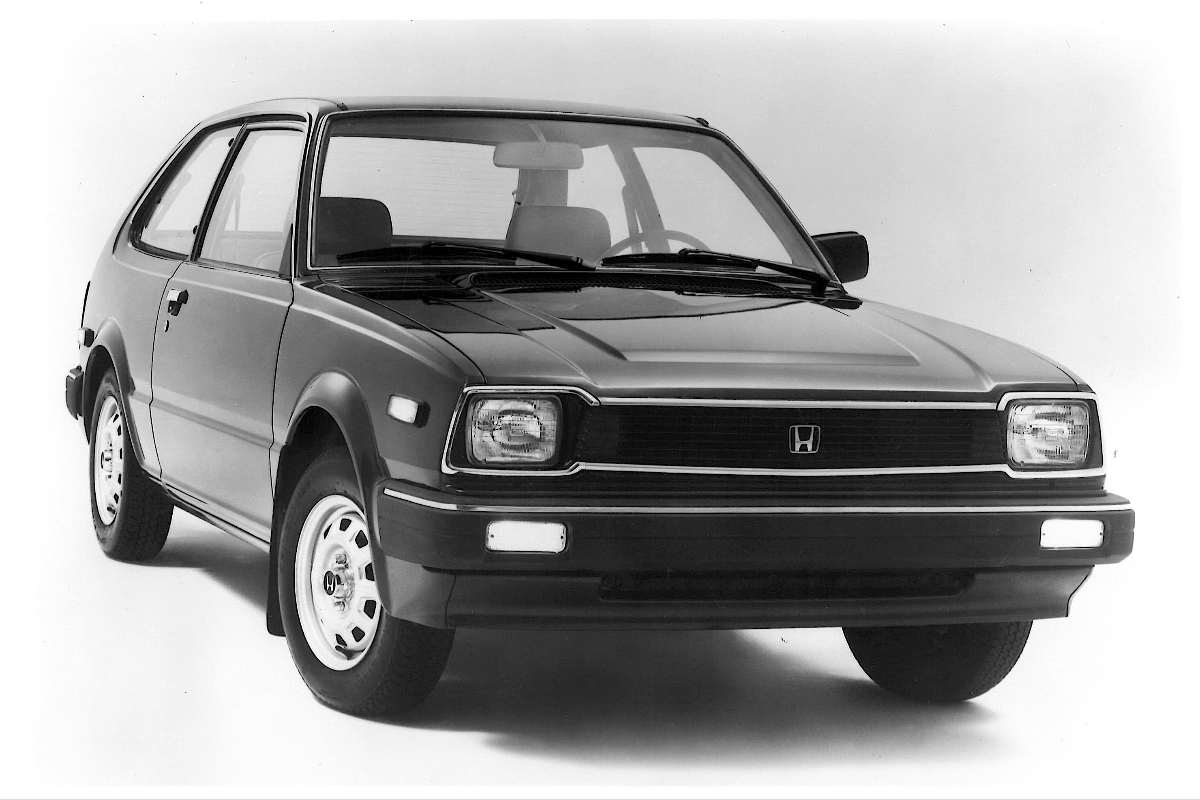
Honda Civic Hatchback Second Generation (1980–1983)
When the second-gen Honda Civic Hatchback came on the scene in 1980, it was more powerful and larger in every dimension. It also dispensed with the non-CVCC engine options and had sharper lines and offered more premium features. It was available throughout this entire generation as a three-door hatchback, though a five-door wagon was also available.
This generation was still FWD-only and offered two CVCC powertrains—a 62-hp 1.3-liter and a 67-hp 1.5-liter. A four-speed manual was standard, and a five-speed manual and Hondamatic semi-automatic transmissions were available. In 1981, the Hondamatic upgraded from two speeds to three.
As with the first generation, this version was also delineated by engine, and 1300 and 1500 models were available. At launch, it was offered in base, DX, and GL (Grand Luxury) trims. The GL, which was only offered on the 1500, was discontinued after 1982 and replaced by the S, the precursor to the modern Si. An FE model was introduced on 1300 models in 1982 with a focus on fuel economy. While the base model emphasized affordability with manual windows and door locks, the GL offered the likes of a tachometer, a rear wiper, an upgraded instrument cluster, side body moldings, and factory radial tires. The Civic Hatchback got a refresh in 1981, punctuated by rectangular headlights and wrap-around bumpers.
Though Honda made improvements in the second generation, these models still suffered from the premature rust and vacuum-hose deterioration issues seen in the first generation. Other issues include carburetor problems (especially on FE models), water pump failures, and camshaft key shearing.
Similarly to the first generation, second-gen models are still relatively rare. Any roadgoing remaining examples will be collectible, with prices to match. No CarGurus pricing data was available at the time of writing.
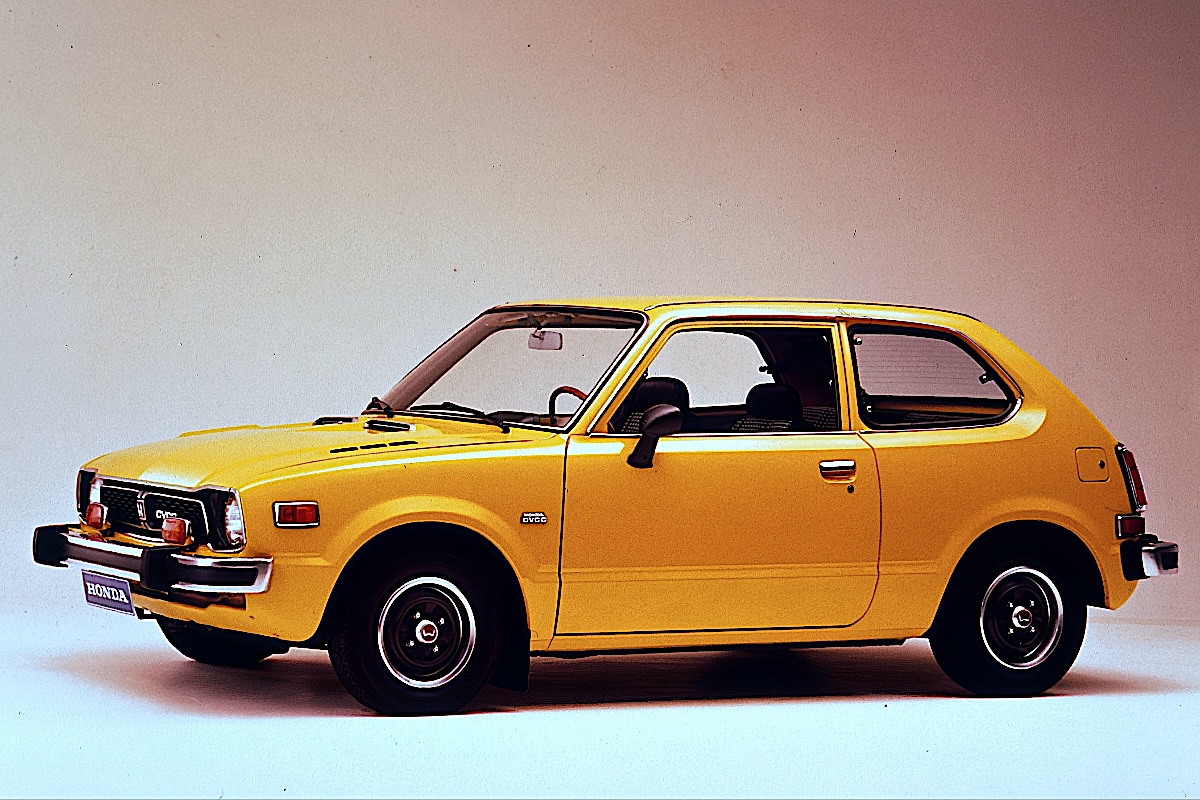
Honda Civic Hatchback First Generation (1973–1979)
Compact and fuel-efficient, the first-generation Honda Civic Hatchback’s arrival in the U.S. was timely. It provided an affordable and reliable alternative when the 1970s energy crisis was gathering steam. It also helped to launch Honda as a mainstream brand in the States.
Available as a front-wheel-drive, three-door hatch, it was initially equipped with a 1.2-liter inline four-cylinder engine that delivered 50 hp. A four-speed manual was standard, and a two-speed Hondamatic semi-automatic transmission was available. In 1975, Honda introduced its low-emission 1.5-liter Compound Vortex Controlled Combustion (CVCC) engine, which delivered 53 hp. This was significant because clean, complete combustion took place internally in the engine, so it was able to pass emissions standards without a catalytic converter. In addition to a four-speed manual and the Hondamatic transmissions, this engine was also available with an optional five-speed manual.
Rather than having trims in this generation, these models were defined by the engine, and the two-model lineup for most of the generation consisted of the base Civic Hatchback and the Civic CVCC Hatchback. At its base level, the Civic Hatchback had minimal equipment, but available features included a rear-window defroster, an AM/FM radio, a clock, air conditioning, and radial tires. While a five-door wagon was introduced into the Civic lineup in 1975, it wasn’t until 1978 that a true five-door hatchback made it into the lineup.
While this first generation is collectible, it has a few well-known issues. First, it was subject to rapid rust and corrosion, and there was a massive recall for the vehicles built between 1972 and 1979 to bolt on replacement parts. This generation was also prone to head gasket failures in both engines, due to warping cylinder heads. Finally, specific to the CVCC engine’s complex layout, the vacuum hoses were prone to dry out and crack, and finding the leak was difficult.