Gas prices have a way of concentrating the mind. When the cost of filling up starts to feel like a decision rather than a routine, it's natural to start looking at whether there's a smarter way to drive.
Hybrid vehicles are an obvious option. They combine a petrol engine with an electric motor, shifting between the two depending on what the car needs—and they do it without any input from you. No plugging in, no range anxiety, no changes to how you refuel or plan your journeys. You drive as normal; the car quietly uses less fuel doing it.
Hybrid Vehicle Guide: The Basics
- A Brief History of Hybrids
- How Does a Hybrid Actually Work?
- What's It Like to Drive?
- How Do Hybrids Compare to Electric Vehicles?
- What About Plug-In Hybrids?
- Is a Hybrid Right for You?
- Learn More
A Brief History of Hybrids
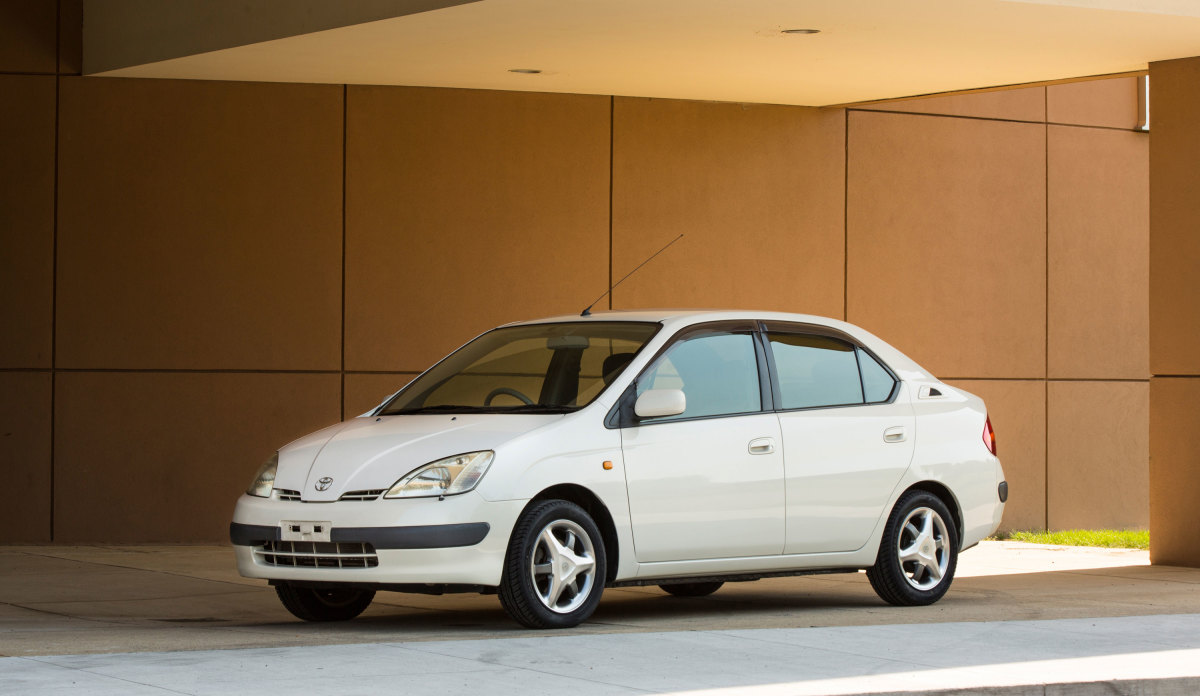
Hybrids first gained mainstream traction in the early 2000s, when the Honda Insight and Toyota Prius introduced the idea that efficiency didn't have to mean sacrifice. Those early models were deliberately modest—compact, aerodynamic, and focused on a single goal.
That focus has since broadened considerably. Hybrid systems are now regularly fitted across compact cars, SUVs, pickup trucks, and performance cars, and can be used as much to improve responsiveness as to reduce fuel consumption. What started as a niche choice for the environmentally motivated has become a mainstream option across almost every segment of the market.
How Does a Hybrid Actually Work?
A hybrid uses both its petrol engine and electric motor, adjusting the balance between them in real time based on speed, load, and driving conditions. At lower speeds and in stop-and-go traffic, the electric motor does most (or sometimes all) of the work. At higher speeds or under hard acceleration, the petrol engine takes over or assists.
The system also recovers energy during braking—rather than letting that energy dissipate as heat, regenerative braking captures it and stores it in the battery for later use. It's particularly effective in city driving, where frequent slowing and stopping create regular opportunities to recharge.
None of this requires any action from the driver. The transitions between power sources are seamless enough that most people stop noticing them within the first few days.

What's It Like to Drive?
Modern hybrids feel largely indistinguishable from their petrol equivalents in everyday use. Whether it's a large SUV or a smaller family car, acceleration is smooth, gear changes (where applicable) are unobtrusive, and the quieter low-speed operation tends to be a pleasant surprise rather than an adjustment.
The one characteristic worth knowing about is the continuously variable transmission fitted to many hybrids for efficiency reasons. Under hard acceleration, the engine note can climb and hold at a steady pitch rather than rising and falling with each gear change. This is a sensation sometimes called "rubber-banding." It's not unpleasant, but it's different, and worth being aware of if you're test-driving for the first time–particularly if you're expecting a sports car-like driving experience.
Most drivers adapt within a week or so, and the longer-term fuel savings tend to make a stronger impression than any differences in feel.
How Do Hybrids Compare to Electric Vehicles?
The honest answer is that hybrid and fully electric vehicles serve different needs, rather than competing directly.
Electric vehicles are more efficient overall, cheaper to run per mile, and simpler mechanically (fewer moving parts means less to go wrong). But they require access to charging, and for drivers without a home charger or a predictable daily routine, that dependency is a real constraint.
Hybrids remove that constraint entirely. Refueling is quick and works anywhere petrol is sold. There's no route planning around charging infrastructure, no anxiety about range on an unfamiliar journey. For drivers who want meaningfully better fuel economy without changing how they live, a hybrid is the more practical choice. Unlike an EV, coming to a hybrid from a traditional gas car is not a compromise, but a reflection of a different set of priorities.

What About Plug-In Hybrids?
Plug-in hybrids (also known as PHEVs) sit between traditional hybrids and full EVs. They carry a larger battery that can be charged from a socket, giving them a meaningful electric-only range (typically enough for a daily commute, often much more) before the petrol engine takes over for longer distances.
For drivers with access to home or workplace charging, a plug-in hybrid can dramatically reduce fuel costs on everyday trips while retaining the flexibility of a petrol backup for longer journeys. The trade-off is a higher purchase price and the added variable of whether you'll actually charge it regularly enough to justify that cost. A plug-in hybrid that never gets charged is essentially just a heavier, more expensive standard hybrid.
Is a Hybrid Right for You?
Hybrids make the most sense for drivers who cover a lot of miles in urban or suburban conditions, where stop-and-go traffic gives the electric motor the most opportunity to work. They're also well-suited to anyone who wants to reduce running costs without committing to the charging infrastructure an EV requires.
They're less compelling for drivers who do predominantly long motorway runs at steady speeds—that's the one scenario where the efficiency advantage over a gas car narrows considerably (much the same can be said of EVs).
The range of hybrid models available has expanded to the point where there's a viable option in almost every segment and at almost every price point. The question is less "should I consider a hybrid?" and more "which one fits how I actually drive?"
Learn More
- The History of Electric Cars
- Electric Vehicles 101
- How The Toyota Prius Transformed the Auto Industry
- What is Regenerative Braking?
- The Hybrid Powertrain Explained: How Do Hybrid Cars Work?
- Existing EV Batteries May Last Up To 40% Longer Than Expected
- Compare the Cost of Electric and Gasoline Cars
- Gas, Hybrid, or Electric? Which One Should You Pick?
- How Long Does It Take to Charge These Popular Electric Cars?
- The Money-Saving Perks of a Hybrid Car