Land Rover Discovery Fifth Generation (2017–Present)
The fifth-generation Land Rover Discovery debuted in the U.S. in the 2017 model year, marking a return of the Discovery name after a 12-year absence (the fourth and third generations were renamed the LR4 and LR3 in North America). In many ways, it was a softening of the model, both in terms of styling and construction.
The exterior adopted a smoother look. Underneath, the Discovery featured a unibody construction, common among SUVs at the time, instead of the traditional body-on-frame that defined previous generations, which alarmed loyalists, as body-on-frame vehicles are typically better off-road and at towing. Those fears were mostly put to rest, as the fifth-generation Discovery was able to tow heavier loads and conquer impressive terrain.
The 2017 Land Rover Discovery debuted with the choice of two engines. The base unit was a 3.0-liter supercharged V6 that produced 340 horsepower and 332 pound-feet of torque. A V6 turbodiesel was available on higher trim levels and good for 254 hp and 443 lb-ft of torque. Both were paired with an eight-speed automatic transmission and four-wheel drive. Properly equipped, the gas engine could tow up to 8,200 lbs. The diesel was rated at 7,700 lbs.
The following year, the diesel was made available with all trim levels. In 2021, the diesel was discontinued in the U.S., and in its place were a new 296 hp turbocharged four-cylinder and a 355 hp turbocharged six-cylinder mild hybrid powertrain.
Initial trim levels included the SE, HSE, and HSE Lux. The SE included two rows of seats, with the third row available as an option, and notable standard features included a power liftgate, a panoramic sunroof, leather seats, and an 8-inch infotainment touchscreen. The HSE was eligible for the diesel engine, while other upgrades included larger 20-inch wheels, a power tailgate, a 10-inch touchscreen running a more advanced infotainment system, and a Meridian audio system.
The top HSE Lux graduated to an air suspension, power-folding third-row seats, improved interior materials, heated first- and second-row seats, and a premium audio upgrade. It also stepped up off-road prowess with a two-speed transfer case.
Supporting trim levels gained more standard features over the years and, for 2024, the trim level names were changed and incorporated engine sizes. By 2026, the available trim levels were P300 S, P300 Dynamic SE, and P360 in either Gemini or fully loaded Tempest Editions. Notable additions included Apple CarPlay and Android Auto in 2020, and in 2021, a styling refresh and a new infotainment system.
Inside, the fifth-generation Discovery continued the exterior's sleek theme and upmarket appearance. As with most vehicles of the time, there were also fewer physical buttons, with many controls moved to the touchscreen. This generation noticeably improved on-road manners over its predecessors and made off-roading easier with the inclusion of more technological assistance. There was less space in the third row, though, which was better suited to small passengers than adults.
Neither the National Highway Traffic Safety Administration (NHTSA) nor the Insurance Institute for Highway Safety (IIHS) has published crash test results for the fifth-generation Land Rover Discovery, but this isn't uncommon for large, luxury SUVs. In the beginning, advanced safety features were available with the Drive package that added blind-spot monitors with rear cross-traffic alert and a driver-attention monitor, while the Drive Pro package included forward-collision warning with automatic emergency braking, adaptive cruise control, and lane-keep assist. By 2026, all of these were standard on all trims, along with a surround-view camera system.
Recalls have been fairly light for the fifth-generation Discovery, and most were addressed within a few years. The more serious issues included rear passenger door latches and problems with the automatic emergency braking in 2017, crankshaft and electrical recalls in 2018, second-row seat fasteners in 2020, and an oil leak in 2022.
According to CarGurus used car price trends, the fifth-generation Land Rover Discovery experienced initial depreciation in line with other luxury SUVs. In the first five years of ownership, data points to the Discovery losing about 40% of its value, with earlier model years normalizing to between $16,000 and $18,000 at eight or nine years.
Land Rover Discovery Fourth Generation (2010–2016)
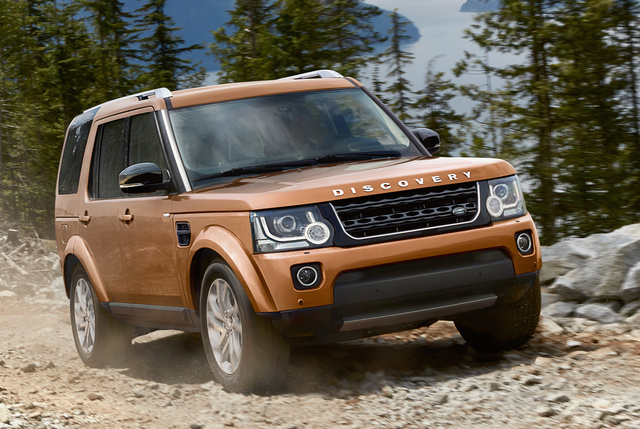
The fourth-generation Discovery was named the LR4 in the U.S. and debuted for the 2010 model year. It was essentially a facelifted version of the previous LR3, with cosmetic updates to make it look and feel more luxurious. There were also improvements to the brakes and suspension and upgraded engines and transmissions, but many parts were carried over.
Inside, the LR4's cockpit was more of an evolution than a complete rethink, with a stout vertical center dashboard section packed with various buttons and knobs for climate, infotainment, and off-road controls. Similarly to its predecessors, the LR4 forced drivers into a more upright seating position than the more relaxed posture that was typical of SUVs of the time.
From its 2010 debut until the 2013 model year, the LR4 was equipped with a 5.0-liter V8 that produced 375 hp and 375 lb-ft of torque. It was paired with a six-speed automatic transmission, and four-wheel drive was standard. In 2014, it was replaced by a 3.0-liter supercharged V6 engine that made 340 hp and 332 lb-ft of torque. It was upgraded to an eight-speed automatic transmission, but the standard transfer case was downgraded to a single speed, while a dual-speed case was optional. Both the V8 and V6 could tow up to 7,700 lbs.
The LR4 was initially only offered in a single trim level, with feature highlights that included 19-inch alloy wheels, rear parking sensors, leather upholstery, dual-zone automatic climate control, dual sunroofs, and a 5-inch infotainment touchscreen. Options included third-row seats, keyless entry/ignition, a surround-view camera system, premium leather, heated second-row seats, a navigation system with a 7-inch display, a premium audio system, and a refrigerated cooler box. Notable additions included standard side steps and adaptive cruise control in 2015.
Recalls for the LR4 included an issue with the fuel filler that persisted throughout production. Other, more serious recalls were addressed sooner and included problems with the stability control, lug nuts, engine seizures in 2015, and a driver airbag issue in 2016. According to CarGurus used car price trends, later LR4 model year prices have stabilized in the $14,000 to $15,000 neighborhood, which is comparable to other luxury SUVs of the era.
Land Rover Discovery Third Generation (2005–2009)
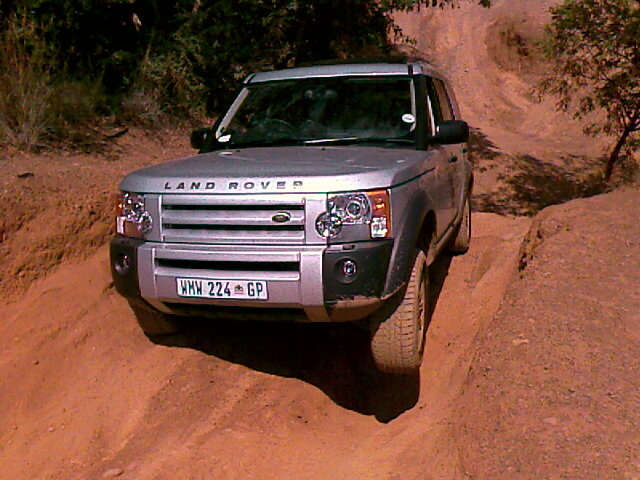
This was the era when Ford owned several other car manufacturers, including Land Rover, and shared components between companies. The third-generation Land Rover Discovery, known as the LR3 in the U.S., introduced an integrated body frame co-developed with Ford, featuring a passenger and engine compartment built as a unibody mounted atop a traditional ladder-type frame that held the suspension and transmission. Ford also dug into Jaguar's parts bin for a V8 engine and Volvo's for safety equipment.
The LR3 was much brawnier and more imposing than the Discovery II it replaced. Thicker body sections and larger expanses of flat sheet metal, combined with a blockier silhouette, made it stand out among more family-oriented SUVs of the time. Inside, the dashboard featured a center stack that connected to the center console, and was packed with buttons and knobs. In the back, the previous side-hinged hatch was replaced with a modern split tailgate, featuring a top-hinged liftgate and a smaller lower tailgate hinged at the bottom.
The 2005 Land Rover LR3 was available with two engines. The base engine was a 4.0-liter V6 that produced 216 hp. Optional for the SE and standard for the HSE was the Jaguar-sourced 4.4-liter V8, which increased output to 300 hp. Both were paired with a six-speed automatic transmission, and four-wheel drive was standard. Maximum towing capacity was 7,700 pounds with the V8 engine.
Standard features included leather upholstery, dual-zone automatic climate control, and a six-disc CD changer. HSE models upgraded to 19-inch alloy wheels, premium audio, a navigation system, and rear parking sensors. A third row of seats was optional for the HSE, but was made standard in 2006. The V6 engine was discontinued in 2007.
Recalls were fairly light for the LR3, with the most serious issues including problems with the steering column, a fuel tank leak, and the parking gear.
There is a limited number of Land Rover LR3 models on the used market, but prices are comparatively low. Buyers should expect to pay somewhere between $6,000 and $12,000, according to CarGurus pricing data.
Land Rover Discovery Second Generation (1999–2004)
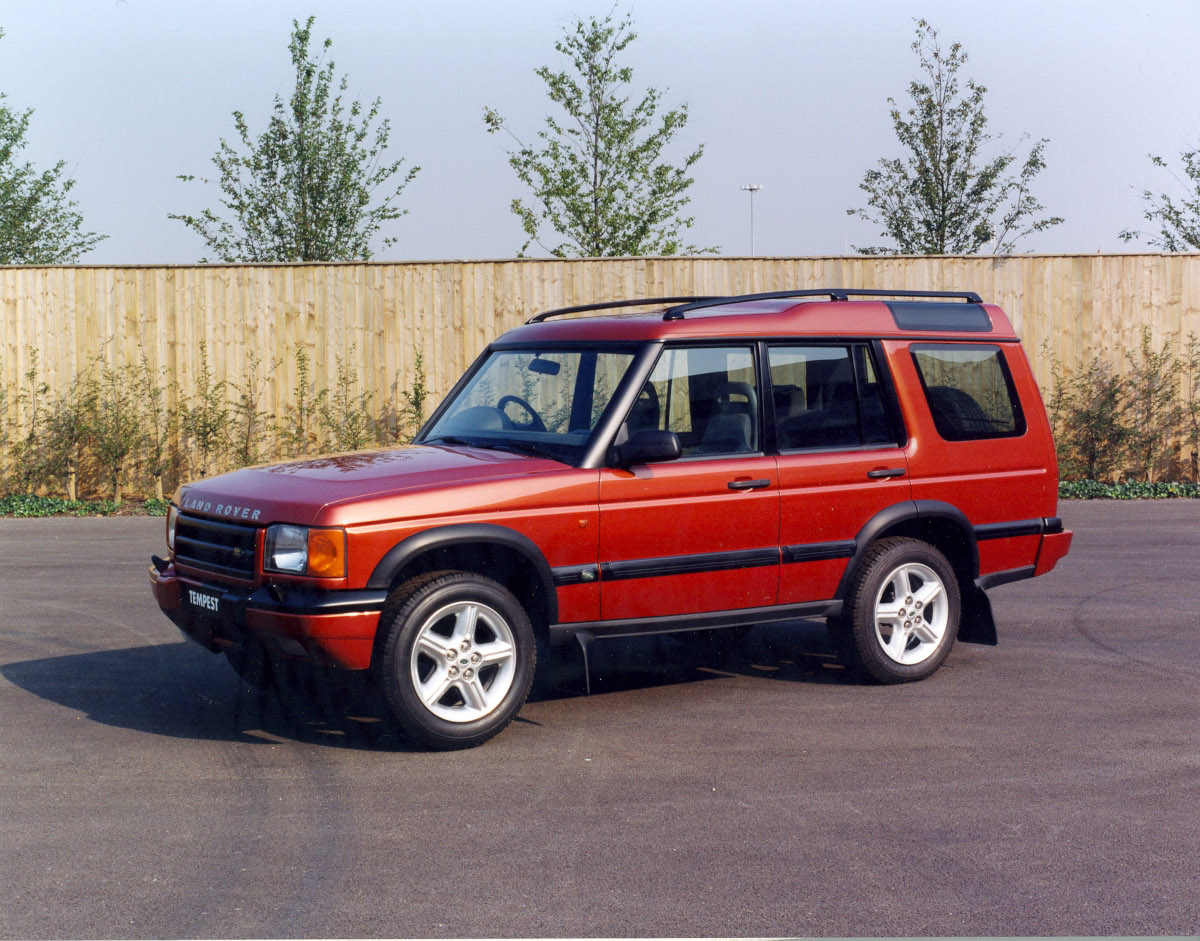
The second-generation Land Rover Discovery was named the Series II, and although it looked very similar to the first, it was 6.5 inches longer and almost four inches wider.
The Discovery Series II carried over the previous generation's engine, a 4.0-liter V8 that produced 182 hp. It came with a four-speed automatic transmission and standard four-wheel drive. New features included a self-leveling suspension and traction control, which proved useful on- or off-road.
The Series II was initially only offered as a single model, but in 2001, the SD, the LE, and the SE trims were introduced. They were similarly equipped, with higher trims upgrading to premium interior materials. The SE did get a premium audio system and a hitch receiver, though. In 2003, the Discovery received a styling refresh that gave it headlights inspired by the Range Rover, an upgraded 4.6-liter V8 engine, and improvements to the steering, suspension, and brakes. The Series II name was also dropped. For 2004, tubular roof rails debuted, as did a lockable center differential and some new interior materials.
During its production run, the second-generation Discovery was subject to several recalls and many took years to address. These included problems with the driveshaft, the anti-lock brakes, the throttle cable, and the engine belts and hoses.
Prices are relatively high for Land Rover Discoveries of this era. On average, CarGurus pricing data suggests $8,000-$18,000 is the norm, but some rare versions command much more.
Land Rover Discovery First Generation (1994–1998)
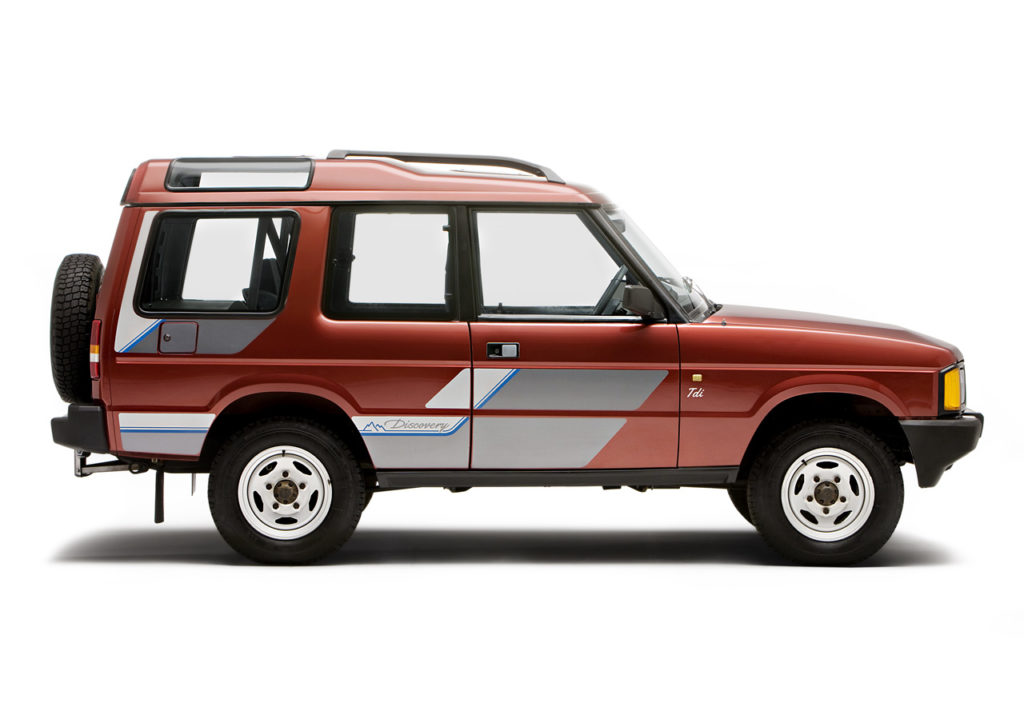
The original Land Rover Discovery began production in 1989 but wasn't imported to the U.S. until the 1994 model year. It coincided with the brief window when the Land Rover Defender was also being imported, with the Discovery providing a more luxurious, modern, and comfortable alternative. Under the hood was a 182-horsepower 3.9-liter V8 with roots tracing back to GM in the 1960s. Shoppers had the choice of either a five-speed manual or a four-speed automatic transmission.
The 1994 Discovery was only available as a single model, but the lineup expanded to include the SD, the SE, and the SE7 trims in 1996. Notable features for the time included anti-lock brakes and dual-front airbags. Those airbags were subject to a recall for the entire production run due to inadvertent deployment, and there was also a recall for a faulty driveshaft. Other recalls included problems with the door latches and a fuel tank leak.
First-generation Land Rover Discovery models are rare on the used market, with no solid CarGurus pricing data available at the time of writing.
Related Topics