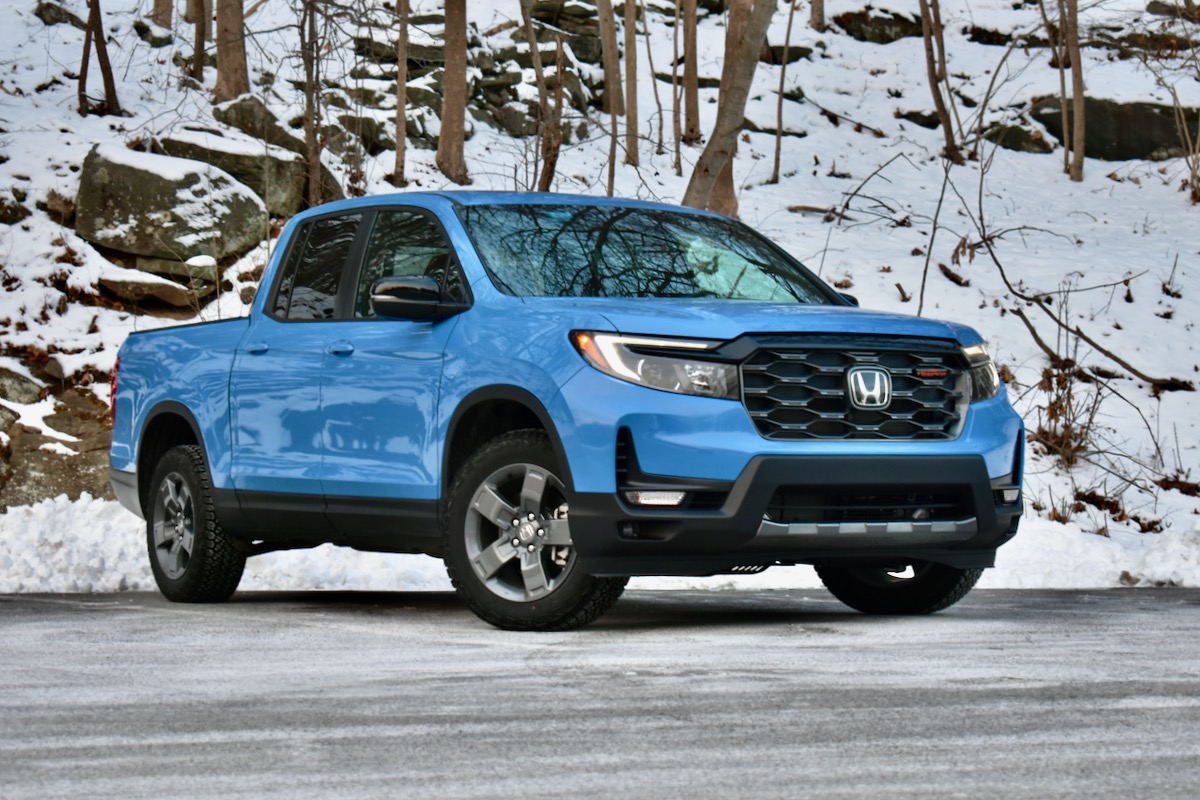
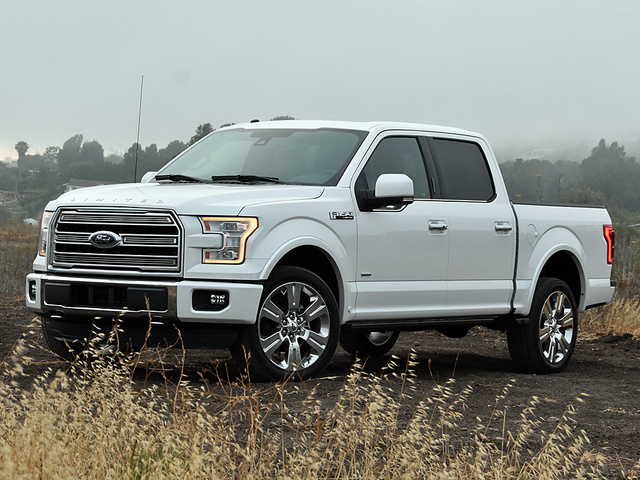
If you're shopping for a new truck in 2026 and want to keep your budget in check, you're facing a market where "affordable" means something different than it did a few years ago. Entry-level pricing has climbed across the board, but there are still pickups that deliver real capability without forcing you into luxury-truck territory. The cheapest new trucks available this year range from compact unibody models that prioritize fuel economy and daily drivability to traditional body-on-frame midsize and full-size pickups built for towing, hauling, and weekend work. Understanding where each truck fits—and what tradeoffs come with a lower sticker price—can help you find the right balance between upfront cost and long-term value.
This guide covers 10 trucks that offer relatively attainable entry points in 2026, spanning compact models like the Ford Maverick and Hyundai Santa Cruz, midsize options including the Toyota Tacoma and Chevrolet Colorado, and full-size pickups like the GMC Sierra 1500 and Chevrolet Silverado 1500. Some deliver standout fuel economy or standard hybrid powertrains, while others focus on maximum configurability or proven off-road capability. We'll walk through what each truck offers for the money, where it excels, and what compromises you'll need to accept if you're chasing the lowest possible price.
What Makes CarGurus Best Cars Guides Different
The Cheapest New Trucks on Sale in 2026
FAQs
Shopping Tools
Related Topics
1. Ford Maverick
CarGurus expert rating: 7.8 out of 10
CarGurus user rating: 4.5 out of 5
Percentage of Good and Great Deals available on CarGurus: 32.0%
Overall CarGurus rating: 4.6 out of 5
| Pros |
Cons |
| Standard hybrid powertrain |
Price has crept up |
| Charming and functional interior |
Advanced safety features are not standard |
| Fun-to-drive Lobo model |
Excessive touchscreen controls |
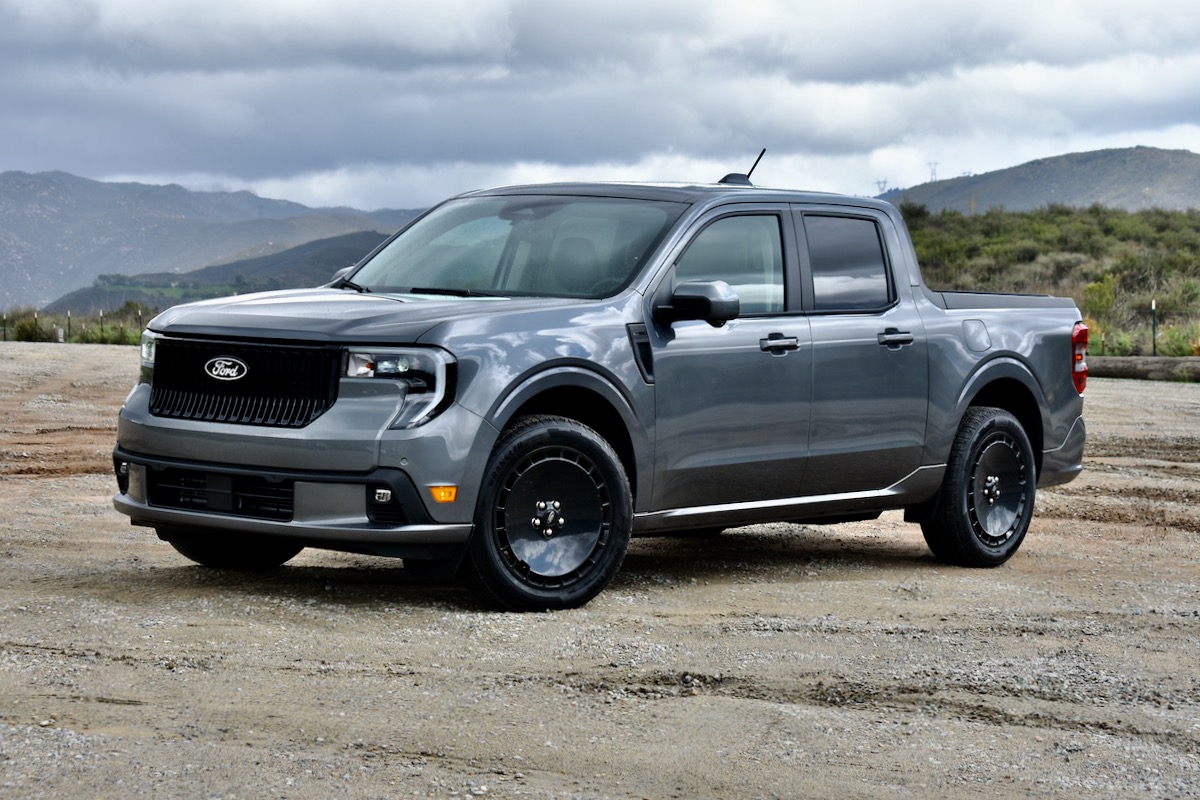
If you're shopping for one of the cheapest new trucks you can buy in 2026, the Ford Maverick belongs on the short list because it mixes real pickup usefulness with car-like efficiency and easy drivability. The lineup's standard hybrid setup makes a big difference at the pump: the front-wheel drive (FWD) hybrid is EPA-rated at 38 MPG combined, and the new-for-2025 all-wheel drive (AWD) hybrid is right behind at 37 MPG combined. Just keep expectations in check on bargain-basement pricing—Ford's own note is that "the Maverick lineup grows as prices rise," and the 2025 Maverick starts at $29,840 including destination.
Even at its compact size, the Maverick is built to do truck jobs: every model tows 2,000 pounds, and most trims (excluding Tremor and Lobo) can be upgraded to 4,000 pounds with the 4K Towing Package; the bed measures 4.5 feet, and the tailgate can be positioned to help carry longer items like 4x8 sheets. For 2025, tech takes a step forward with Sync 4, a standard 13.2-inch touchscreen, wireless Apple CarPlay/Android Auto, and an 8-inch digital gauge cluster, though some climate functions still live in the screen. Safety equipment is a mixed bag for the price, and while National Highway Traffic Safety Administration (NHTSA) gives the Maverick four stars overall, some driver-assist features require moving up the trim ladder.
The CarGurus Verdict: "The Maverick is still a great vehicle, but it's not quite the bargain it once was." - Stephen Edelstein
Read our most recent Ford Maverick review
2. Toyota Tacoma
CarGurus expert rating: 7.8 out of 10
CarGurus user rating: 4.5 out of 5
Percentage of Good and Great Deals available on CarGurus: 31.8%
Overall CarGurus rating: 4.6 out of 5
| Pros |
Cons |
| Excellent reputation for reliability |
Noisy cabin |
| Great off-road capability |
Manual-adjust seats can be troublesome |
| Standard advanced driver-assistance tech |
Interior skews functional even in the top trim |
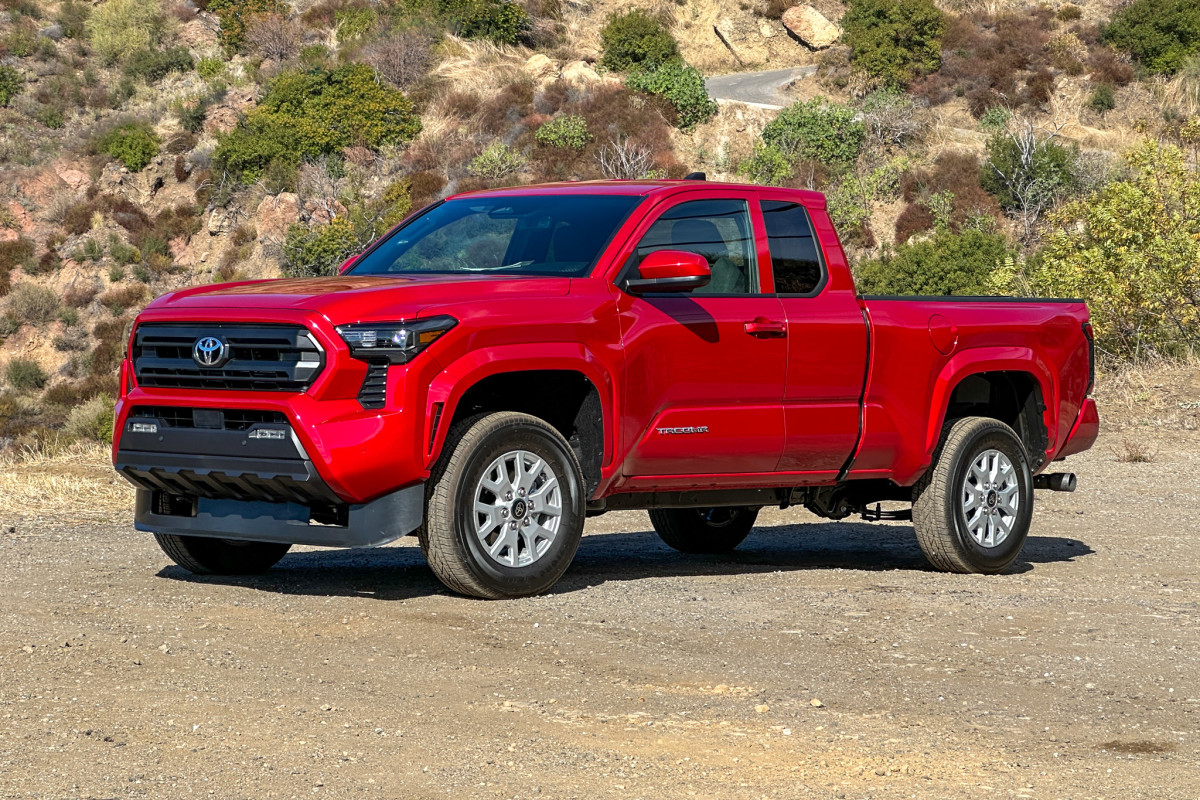
For shoppers cross-shopping the cheapest new trucks available in 2026, the Tacoma's fourth-generation redesign matters because it brings more power and more standard equipment without wandering too far from the simple, tough formula Tacoma buyers expect. Most trims use a 2.4-liter turbocharged four-cylinder making 278 hp and 317 lb-ft of torque (the base SR is tuned to 228 hp and 243 lb-ft), and Toyota pairs it with an eight-speed automatic or an available six-speed manual. Fuel economy is part of the value story, too: Toyota estimates even the least efficient manual four-wheel drive (4WD) version at 20 miles per gallon (MPG) combined, with automatic 4WD up to 21 MPG combined and 2WD versions estimated as high as 23 MPG combined.
Usability got a real upgrade, especially if you've lived with older Tacoma packaging. The old small rear-seat layout is gone, replaced by a two-door XtraCab that treats the space behind the seats as lockable cargo storage, while Double Cab models keep family-duty in play and add more under-seat storage than before. Tech now fits the modern market with an 8-inch touchscreen standard (and an available 14-inch screen), plus wireless Apple CarPlay and Android Auto, and there's meaningful towing help available like a trailer brake controller and an accessory wireless trailer camera. Safety equipment is also stronger for the money, with Toyota Safety Sense 3.0 standard, including lane-centering (Lane Tracing Assist), plus available blind-spot monitoring and rear cross-traffic alert on most trims.
The CarGurus Verdict: "The fourth-gen Tacoma is also the first Tacoma to share a platform with the larger Toyota Tundra. (The TNGA-F platform also underpins the Sequoia and the just-revived Land Cruiser.) It launches in six trim levels, each powered by a turbocharged four-cylinder engine, and the Tacoma's first-ever hybrid powertrain is due in the spring of 2024, along with two additional trims. We traveled to Malibu, CA to drive the all-new Tacoma in all of its gas-only guises." - Natalie Harrington
Read our most recent Toyota Tacoma review
3. Ford F-150
CarGurus expert rating: 6.7 out of 10
CarGurus user rating: 4.5 out of 5
Percentage of Good and Great Deals available on CarGurus: 31.9%
Overall CarGurus rating: 4.5 out of 5
| Pros |
Cons |
| Handsome design |
Lazy naturally-aspirated V8 powertrain |
| Great turbocharged and supercharged engines |
Lack of basic amenities at lower prices |
| Easy tech and analog controls |
Not as luxurious as Ram or GMC at higher prices |
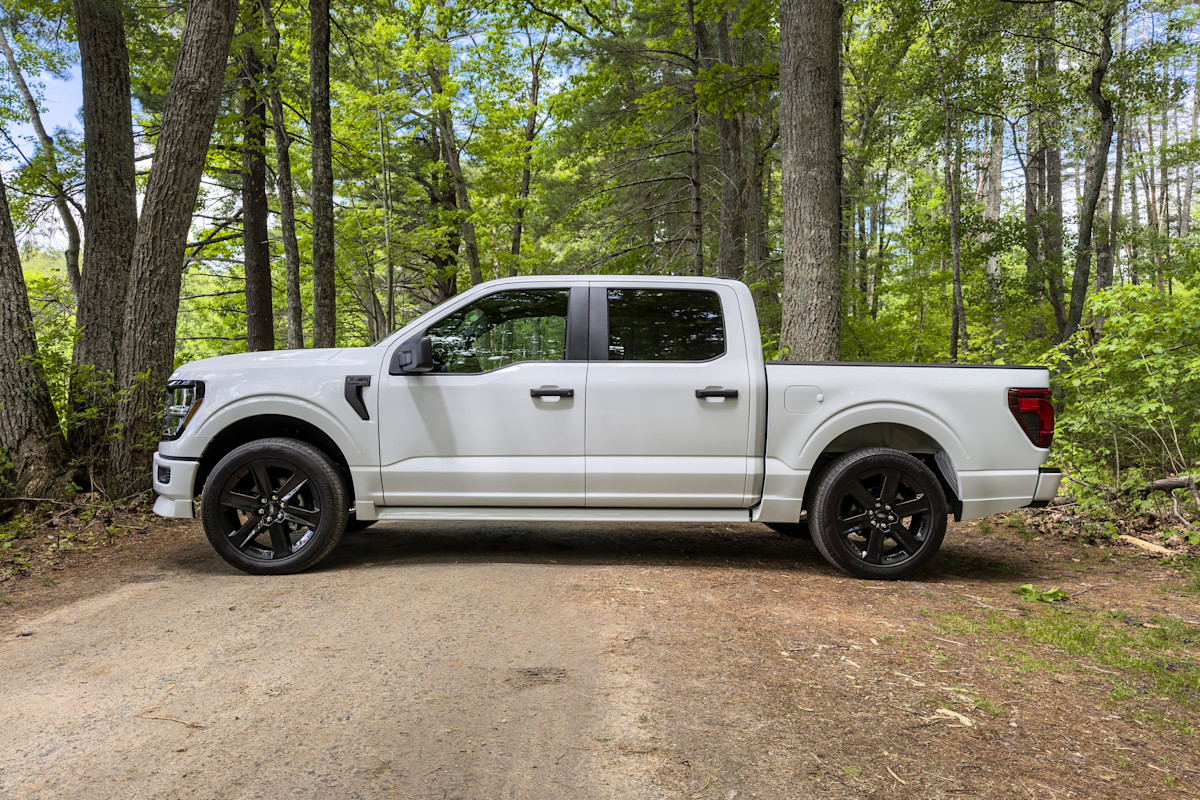
For cheapest-truck shoppers, the Ford F-150’s biggest advantage is how far down the price ladder it reaches while still offering the same core capabilities as pricier trims. The lineup starts around $40,000 for an XL, and there are a ton of ways to configure it—three cabs, three bed lengths, and rear-wheel drive standard on most trims (with 4WD optional). Even at the affordable end, you can choose between the standard 2.7-liter turbo V6 (325 hp, 400 lb-ft of torque) and the available 5.0-liter V8 (400 hp, 410 lb-ft), though Ford’s own tuning can make the V8 feel less responsive than you might expect thanks to the 10-speed automatic’s spacing.
If you’re shopping value, it’s also worth paying attention to what you give up on lower trims: our STX test truck lacked basics like automatic climate control and power seats, a reminder that “cheap” full-size pickups can still feel pretty bare inside. The upside is that the fundamentals remain strong for work and towing, with the F-150 rated up to 13,500 pounds of towing and up to 2,440 pounds of payload depending on configuration, plus useful features like the Pro Access Tailgate and available Pro Power Onboard (up to 7,200 watts on the hybrid). A 12-inch Sync 4 touchscreen is standard, and Ford also includes a long list of standard driver-assist features; NHTSA gives the F-150 a five-star overall safety rating.
The CarGurus Verdict: "The F-150 is the full-size truck with the most versatility and configurations on the market today." - Clifford Atiyeh
Read our most recent Ford F-150 review
4. Ford Ranger
CarGurus expert rating: 7.2 out of 10
CarGurus user rating: 4.3 out of 5
Percentage of Good and Great Deals available on CarGurus: 31.6%
Overall CarGurus rating: 4.5 out of 5
| Pros |
Cons |
| Multiple powertrain options |
Interior materials feel cheap |
| Great handling |
Sluggish touchscreen response |
| Quiet cabin |
Advanced safety features are not standard |
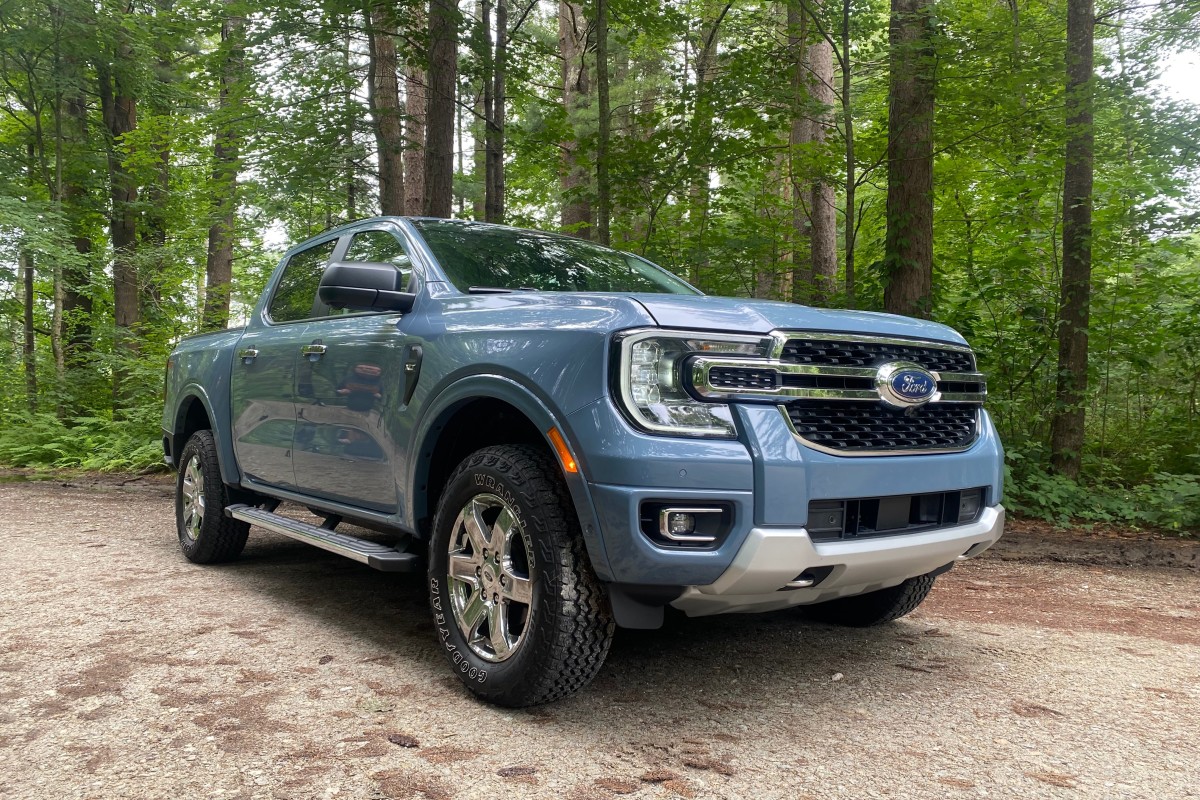
The Ford Ranger earns its place among the most budget-friendly new midsize trucks in 2026, with a relatively attainable entry point and real capability to back it up. Pricing starts at $32,720 for an XL with rear-wheel drive (RWD), and every Ranger comes as a four-door crew cab with a 5-foot bed—useful for daily driving and family duty, even if buyers who want a longer bed will need to look elsewhere. The bed is also thoughtfully updated with a damped tailgate, bumper steps that help you climb in, and up to 43.5 cubic feet of cargo volume, plus options like a spray-in liner and a 400-watt AC outlet for jobsite tools or weekend gear.
Where the Ranger earns its keep for value-focused shoppers is powertrain choice: the standard 2.3-liter turbo four-cylinder makes 270 hp and 310 lb-ft of torque, while an available 2.7-liter twin-turbo V6 bumps output to 315 hp and 400 lb-ft of torque for drivers who tow more often. Properly equipped, the Ranger can tow up to 7,500 pounds, with payload listed at up to 1,805 pounds for RWD models, and it returns EPA-estimated fuel economy of 20 MPG city/24 MPG highway/22 MPG combined with 4WD and the base engine. Tech is modern (a 10-inch portrait touchscreen is standard, with a 12-inch screen on most trims), but the interface can feel slow, and it's worth noting that the base XL skips driver-assist features that become standard on XLT and higher—something budget shoppers should factor in alongside complaints about interior materials.
The CarGurus Verdict: "With new V6 engines and a Raptor trim, the 2024 Ford Ranger offers greater choice and capability to finally match the Chevrolet Colorado, GMC Canyon, Nissan Frontier, and Toyota Tacoma." - Clifford Atiyeh
Read our most recent Ford Ranger review
5. GMC Sierra 1500
CarGurus expert rating: 7.2 out of 10
CarGurus user rating: 4.5 out of 5
Percentage of Good and Great Deals available on CarGurus: 32.6%
Overall CarGurus rating: 4.5 out of 5
| Pros |
Cons |
| Multiple powertrain options |
Not all advanced safety features are standard |
| Easy-to-use technology |
Poor value for money |
| Fuel-efficient diesel engine |
|
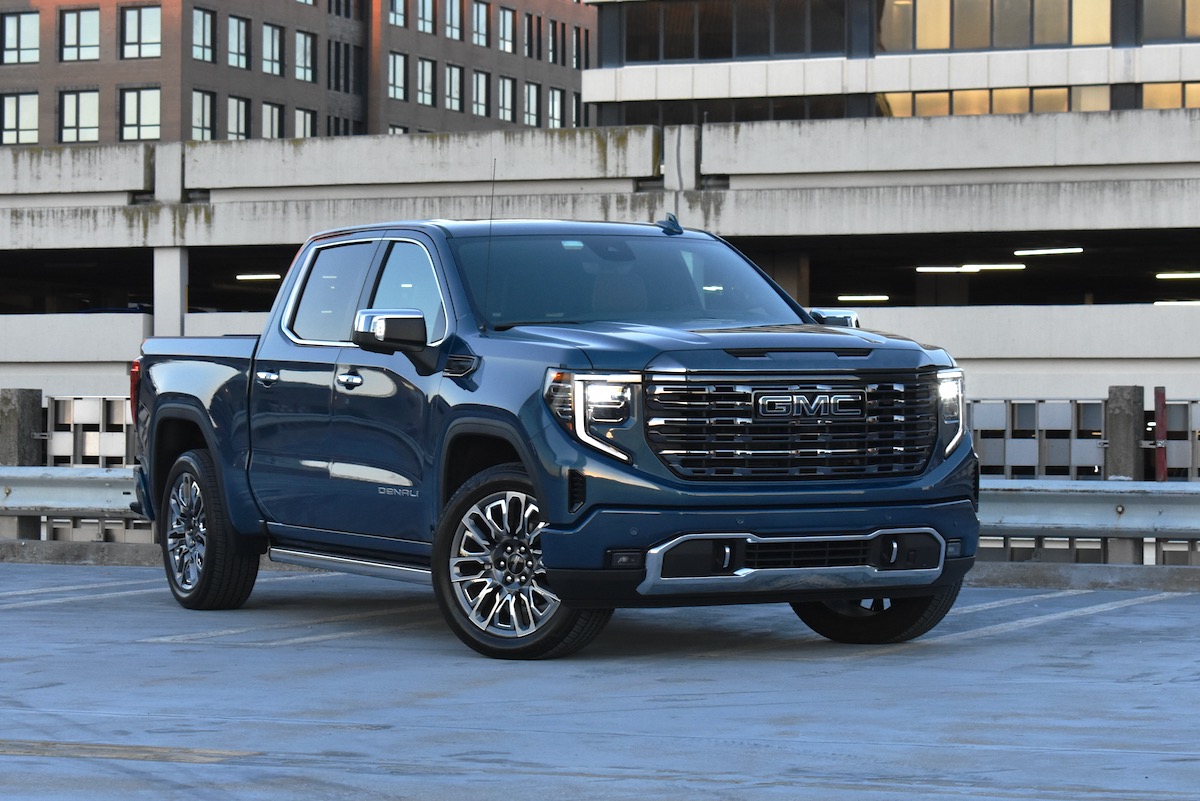
For shoppers chasing a low entry price in a new full-size truck, Sierra 1500 pricing can start at $39,595 including destination in Pro trim, although that no-frills configuration is largely aimed at fleets. The big advantage here is flexibility: the standard TurboMax 2.7-liter turbo four-cylinder makes 310 hp and 430 lb-ft of torque, and buyers can step up to V8 power or the available 3.0-liter Duramax diesel (305 hp and 495 lb-ft of torque) depending on whether the priority is daily driving, towing, or fuel costs.
If your "cheapest" goal includes keeping running costs down, the Duramax is the efficiency play, rated up to 25 MPG combined with RWD (24 MPG combined with 4WD). The Sierra is also built to work, with towing quoted from 9,200 pounds (4WD TurboMax) up to 13,200 pounds (diesel with RWD) and payload up to 2,240 pounds in the right configuration. Tech ranges from a basic 7-inch touchscreen on the Pro to a larger 13.4-inch setup on SLE and up with wireless Apple CarPlay/Android Auto and Google Built-In, but it's worth noting some desirable driver-assistance features—like adaptive cruise control and blind-spot monitoring—are optional rather than standard.
The CarGurus Verdict: "The 2024 GMC Sierra 1500 is a full-size pickup truck that can be configured as a basic work vehicle, an off-roader, or a luxurious long-distance cruiser. However, that can also be said of the rival Ford F-150, Ram 1500, and Toyota Tundra, as well as the GMC's twin—the Chevrolet Silverado 1500. In order to stay competitive with its rivals, the Sierra 1500 offers a number of notable features that combine for a well-executed pickup." - Stephen Edelstein
Read our most recent GMC Sierra 1500 review

6. Hyundai Santa Cruz
CarGurus expert rating: 8.2 out of 10
CarGurus user rating: 4.7 out of 5
Percentage of Good and Great Deals available on CarGurus: 33.2%
Overall CarGurus rating: 4.5 out of 5
| Pros |
Cons |
| Fun to drive |
On-pavement handling with all-terrain tires |
| Impressive technology |
Cramped back seat |
| Great warranty |
Not much cargo space |
For shoppers looking for a cheap new truck in 2026, the Hyundai Santa Cruz is best understood as a compact "sport truck" for light-duty life—weekend DIY runs, bulky big-box-store pickups, and hauling bikes or camping gear—rather than a traditional workhorse. Pricing spans roughly $30,245 to $44,245 (including destination), and the Santa Cruz's value story leans heavily on features you'll actually use every day: a crossover-like cabin, smart interior storage, and a 4-foot bed that includes a locking in-floor trunk for stashing tools or gear out of sight. Just be realistic about space: the back seat is snug for taller adults, and this is not the choice if your priorities are maximum payload or the biggest bed.
If you can swing the higher trims, the turbocharged 2.5-liter four-cylinder is the one to get, with 281 hp and 311 lb-ft of torque on regular gas, plus up to 5,000 pounds of towing capability—helpful for small trailers and weekend toys. Tech is a Santa Cruz strength at any price, with a standard 12.3-inch infotainment setup that includes navigation, wireless Apple CarPlay and Android Auto, and wireless charging, plus available driver-assistance upgrades like Highway Driving Assist on higher trims. On the cost side, Hyundai's 3 years of complimentary scheduled maintenance applies through the 2025 model year (it ends starting with 2026), but the strong warranty coverage and Bluelink+ connected services remain notable ownership perks.
The CarGurus Verdict: "We realize the Santa Cruz's styling isn't broadly appealing, so if this Hyundai trucklet's appearance is just too hard to accept, its direct rival, the Ford Maverick, might be more to your liking. If you like the 2025 Hyundai Santa Cruz, consider getting a turbocharged version. It's not as fuel-efficient, but it's a ton more fun to drive." - Christian Wardlaw
Read our most recent Hyundai Santa Cruz review
Search for Hyundai Santa Cruz
See all
7. Chevrolet Colorado
CarGurus expert rating: 6.7 out of 10
CarGurus user rating: 4.2 out of 5
Percentage of Good and Great Deals available on CarGurus: 31.4%
Overall CarGurus rating: 4.4 out of 5
| Pros |
Cons |
| Stylish design |
Poor fuel economy |
| Fun to drive |
Interior materials feel cheap |
| Easy-to-use technology |
Poor ergonomic design |
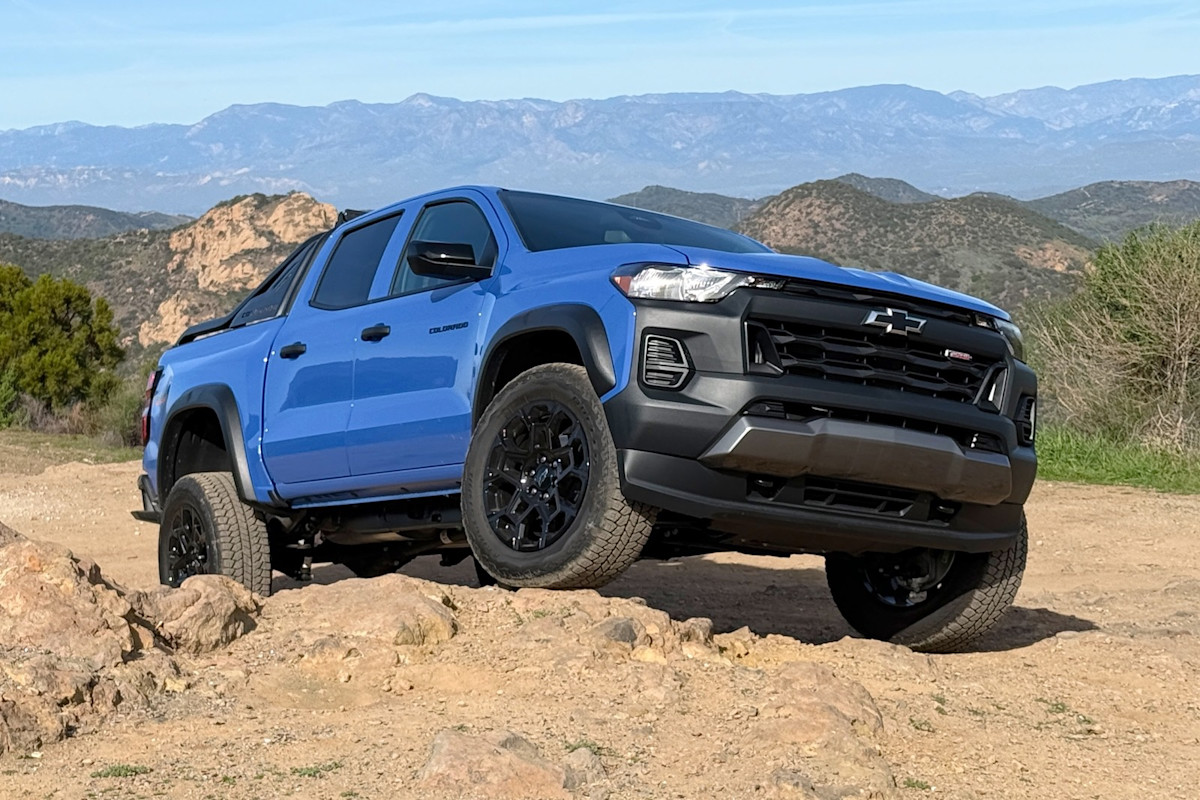
For shoppers who want a new truck without jumping to full-size pricing, the 2026 Chevrolet Colorado keeps the formula simple: one crew-cab, short-bed configuration, one turbocharged 2.7-liter four-cylinder (310 hp, 430 lb-ft of torque), and a choice of RWD or 4WD across five trims. That straightforward lineup helps when you're trying to hit a budget, and Chevy's equipment strategy is strong at the low end—start with a Colorado WT and you can add key upgrades like 4WD and a spray-on bedliner while staying under about $40,500, according to the review.
Even in cheaper trims, the Colorado feels modern where it counts, thanks to an 11-inch digital driver display and an 11.3-inch Google built-in infotainment system with wireless Apple CarPlay and Android Auto. It's also legitimately capable for work or weekend tasks, with towing up to 7,700 pounds (and payload up to 1,846 pounds in RWD form), but running costs can rise quickly: EPA combined fuel economy is up to 21 MPG (RWD), and our observed mileage in a Trail Boss was 17.5 MPG. It's also worth weighing the truck's disappointing crash-test results and available safety tech packaging if value is your main priority.
The CarGurus Verdict: "In most ways, the 2026 Colorado is an impressive midsize truck. However, it plays runner-up to the Toyota Tacoma, which is not only more versatile and available with a wider range of dealer accessories, but also trades on its legendary reputation for long-term reliability." - Christian Wardlaw
Read our most recent Chevrolet Colorado review
Search for Chevrolet Colorado
See all
8. Chevrolet Silverado 1500
CarGurus expert rating: 5.3 out of 10
CarGurus user rating: 4.5 out of 5
Percentage of Good and Great Deals available on CarGurus: 32.2%
Overall CarGurus rating: 4.4 out of 5
| Pros |
Cons |
| Spacious |
Poor fuel economy |
| Easy-to-use technology |
Blind-spot warning not standard |
| Diesel engine option |
Concerning safety ratings |
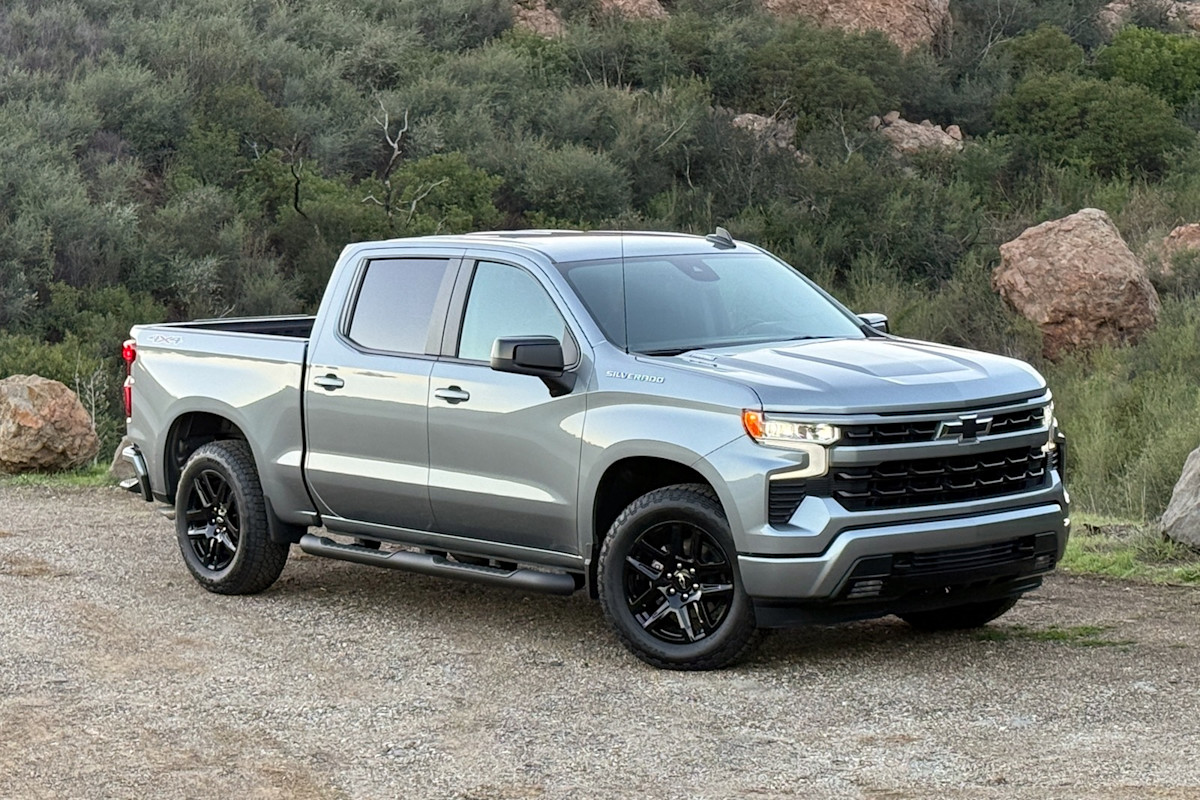
If you're shopping the cheapest new trucks in 2026, the Silverado 1500's biggest advantage is simply how many ways you can configure it without immediately being forced into a luxury-truck price. It comes in regular, extended, and crew cab styles with multiple bed lengths, plus a broad trim walk from WT to ZR2. Chevy says pricing ranges from $39,695 to $74,595 including destination, and in higher-volume trims you can sometimes land on equipment-for-the-money wins (our RST 4WD test truck, for example, rang up at $54,205 after a sizable package/engine credit). Cabin tech is also a strong point in most trims, with a 12.3-inch digital gauge cluster and a 13.4-inch touchscreen running Google built-in, along with wireless Apple CarPlay and Android Auto.
The value story gets more complicated once you look at real-world operating costs and capability tradeoffs. The standard TurboMax 2.7-liter turbo-four makes 310 hp and 430 lb-ft of torque, but we saw 15.4 MPG versus an 18-MPG EPA combined estimate, and it limits towing to 9,000 pounds on a Crew Cab 4WD; the available 3.0-liter Duramax turbodiesel costs extra, but it's rated at 23–24 MPG combined and can tow up to 13,000 pounds. Safety equipment can also be a sore spot on cheaper builds: While Chevy Safety Assist is standard (automatic emergency braking, lane-keep assist, etc.), common features like blind-spot monitoring and parking sensors weren't on our test truck, and the Silverado's IIHS results were subpar at the time of writing.
The CarGurus Verdict: "Chevrolet needs to go back to the drawing board to design and engineer a competitive full-size pickup truck. Keep the Duramax, the Google-built-in infotainment system, the CornerStep bumpers, and the Super Cruise option. Ditch everything else, because brand loyalty can't support sales forever, and time is running out." - Christian Wardlaw
Read our most recent Chevrolet Silverado 1500 review
Search for Chevrolet Silverado 1500
See all
9. GMC Canyon
CarGurus expert rating: 6.5 out of 10
CarGurus user rating: 4.3 out of 5
Percentage of Good and Great Deals available on CarGurus: 32.8%
Overall CarGurus rating: 4.4 out of 5
| Pros | Cons |
| Stylish design | Poor fuel economy |
| Fun to drive | Cramped back seat |
| Impressive technology | Poor value for money |
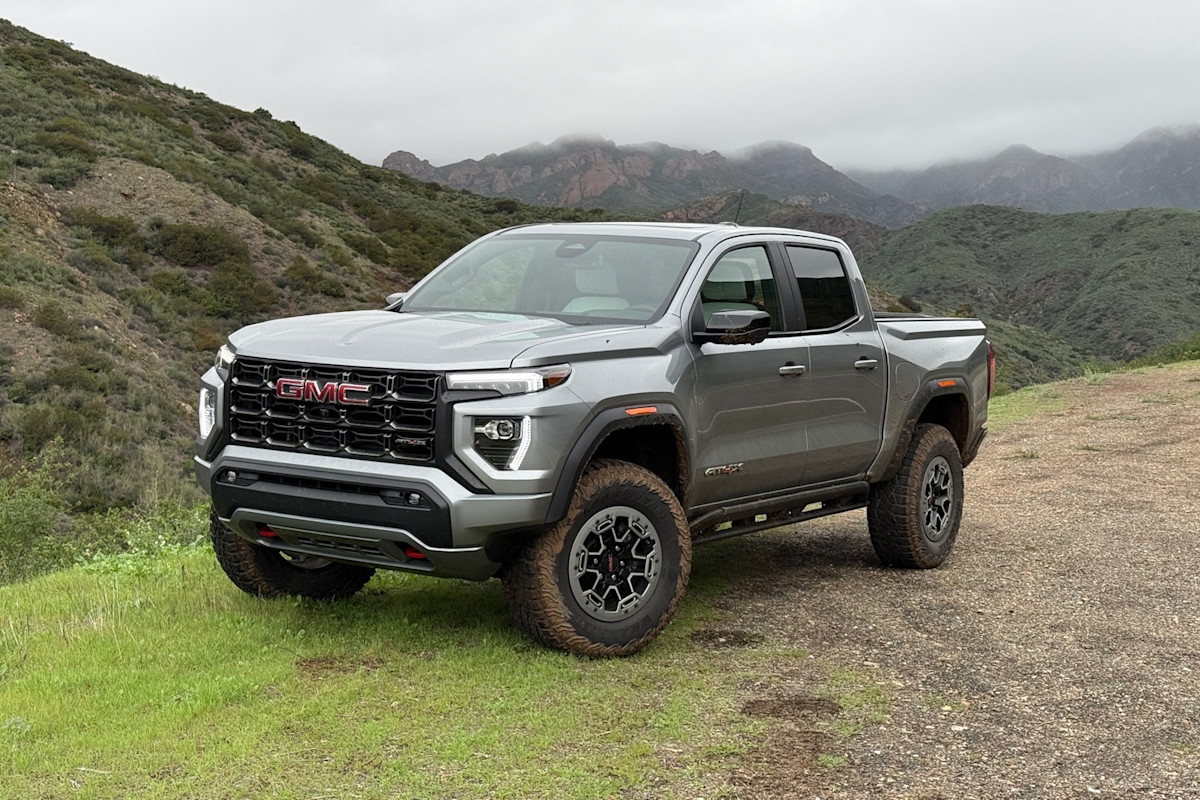
The GMC Canyon is a reminder that "midsize" doesn't automatically mean "budget." It's sold only as a crew-cab, short-bed truck, and while that simplifies shopping, it also limits choices if you're trying to dial in the lowest possible payment. Pricing is on the high side for the segment, and the Canyon's hefty destination charge and extra-cost paint colors can push it further from bargain territory—especially when the base Elevation trim starts with rear-wheel drive while many rivals include 4WD as standard.
Where the Canyon earns its keep is in capability and day-to-day polish, particularly if your idea of "cheap" is about getting a lot of truck for the money rather than chasing the lowest sticker. Every Canyon uses a turbocharged 2.7-liter four-cylinder making 310 hp and 430 lb-ft of torque with an eight-speed automatic, and most trims get standard 4WD plus a factory-lifted off-road suspension. Properly equipped, towing reaches 7,700 pounds (though the AT4X tops out at 6,000 pounds), and the available tech is a highlight, with an 11.3-inch touchscreen, an 11-inch digital gauge cluster, and Google built-in alongside wireless Apple CarPlay and Android Auto. Just be aware that fuel economy is a weak point, the back seat is tight for taller adults, and while driver-assistance features are plentiful, the Canyon's safety scores include a four-star NHTSA overall rating and an IIHS "Poor" result for front-crash prevention tech.
The CarGurus Verdict: "The GMC Canyon isn't a bargain, but it's an undeniably appealing truck. Good looks, a stout powertrain, user-friendly tech, and terrific off-roading capability are the selling points. The Canyon's fuel economy, value, and safety ratings need improvement. Nevertheless, it's a likeable pickup truck." - Christian Wardlaw
Read our most recent GMC Canyon review
10. Nissan Frontier
CarGurus expert rating: 6 out of 10
CarGurus user rating: 4.5 out of 5
Percentage of Good and Great Deals available on CarGurus: 31.9%
Overall CarGurus rating: 4.4 out of 5
| Pros | Cons |
| Powerful V6 engine | Low payload rating |
| Comfortable driver's seat | Cramped back seat |
| Impressive Fender stereo | Outdated technology |
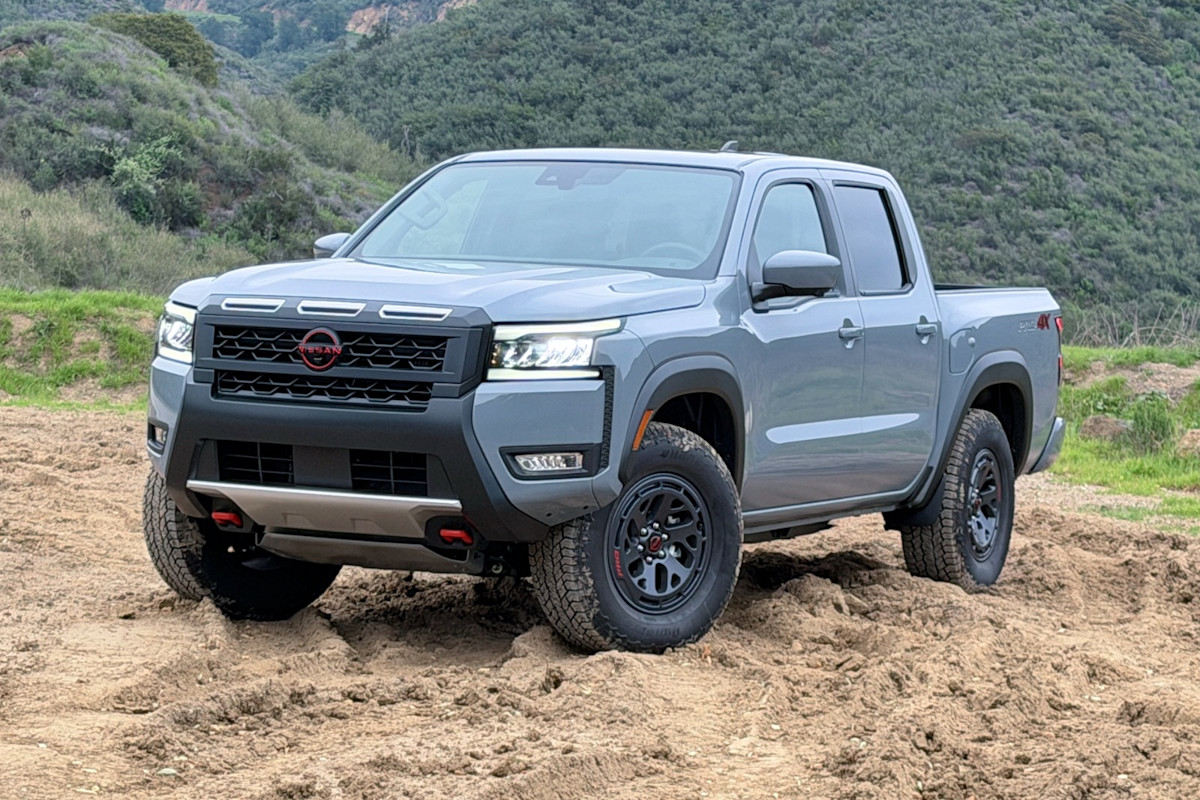
The Nissan Frontier appeals by keeping the formula simple: a standard 3.8-liter V6 making 310 hp and 281 lb-ft of torque, a straightforward cabin layout with big knobs and buttons, and a lineup that starts in the low-$30K range (including destination). You can choose King Cab or crew cab on the S trim, with a 5-foot bed standard and a 6-foot bed available on SV and Pro-4X, and Nissan has added value for 2026 with new option packages like the SV All-Weather Package (heated seats and steering wheel, remote start, and dual-zone climate control).
For everyday use, the Frontier's V6 feels strong around town and is reasonably efficient for a midsize truck, with our Pro-4X test vehicle returning 18.3 mpg on a real-world loop, and it can tow up to 7,150 pounds depending on configuration. The tradeoffs are the ones budget-minded buyers should consider up front: the rear seat is tight for adults, the infotainment voice assistant is frustrating enough that you'll likely default to Apple CarPlay/Android Auto, and the Frontier's NHTSA overall rating is four stars with a concerning three-star front-crash score.
The CarGurus Verdict: "We like the 2026 Nissan Frontier despite its old-school nature. It feels solid, it's simple, it exudes quality, and it's reasonably fuel efficient. Plus, it can tow more than a Toyota Tacoma. An obtuse digital assistant and a concerning crash-test rating are primary reasons to consider alternatives." - Christian Wardlaw
Read our most recent Nissan Frontier review
Frequently Asked Questions
What is the cheapest new truck you can buy in 2026?
The most affordable new trucks in 2026 generally start in the high-$20,000 to low-$30,000 range, depending on the model and configuration. Compact and sport-truck options tend to carry the lowest base prices, while midsize and full-size trucks typically start higher. Keep in mind that destination charges, required packages, and popular options can push the final price well above the advertised starting MSRP, so it's worth checking current listings in your area for real transaction prices.
What's the difference between a compact truck, a midsize truck, and a full-size truck?
Compact trucks (sometimes called "sport trucks") are the smallest and most car-like in the segment, prioritizing fuel efficiency and everyday drivability over heavy-duty capability. Midsize trucks offer a balance of capability and manageability, with more towing and payload capacity than compact options while still fitting in a standard garage. Full-size trucks are the largest and most capable, with the highest tow ratings and payload numbers, but they also carry the highest base prices and operating costs. Your best choice depends on how you plan to use the truck day-to-day.
Are cheap new trucks good on gas?
Fuel economy varies widely across the segment. Hybrid-powered compact trucks can achieve impressive efficiency — some exceeding 35 mpg combined — while midsize and full-size trucks with turbocharged four-cylinder or V6 engines typically return 18–23 mpg combined in real-world driving. Diesel engine options on full-size trucks can improve highway efficiency significantly. If fuel costs are a priority, it's worth comparing EPA estimates alongside real-world owner-reported figures before making a decision.
What should I look for when buying a cheap new truck? Beyond the sticker price, focus on total cost of ownership: fuel economy, standard safety features (some budget trims omit blind-spot monitoring and other key driver-assistance tech), warranty coverage, and projected reliability. Also consider how you'll actually use the truck — towing capacity, payload rating, bed length, and cab size all affect whether a given model fits your needs. CarGurus Deal Ratings and Instant Market Value (IMV) pricing can help you determine whether a specific listing is priced fairly relative to the market.
Do cheap new trucks come with modern safety features?
It depends on the model and trim level. Some manufacturers include a robust suite of driver-assistance technology as standard equipment even on base trims, while others reserve features like blind-spot monitoring, adaptive cruise control, and rear cross-traffic alert for higher trim levels. Before purchasing, review the standard safety equipment on the specific trim you're considering, and check available crash-test ratings from NHTSA and IIHS to get a complete picture of real-world safety performance.
What Makes CarGurus Best Cars Guides Different?
Most car-shopping websites publish lists of the best cars across a variety of categories, with recommendations generally driven by editorial expertise. Here's what makes ours different: In addition to the insights and verdicts of our team of car-testing experts, our best cars guides take into account other factors that we know matter to buyers-real owner experiences and current market value.
Our expert reviewers are among this country's most trusted automotive journalists, also writing for publications including US News and World Report, Edmunds, Digital Trends, J.D. Power, and Car & Driver. They put each car through real-world testing and create detailed reviews of performance in a range of categories, from practicality and driving manners to cost-effectiveness and safety.
We also analyze hundreds of thousands of used car listings on CarGurus.com to track which models consistently offer the highest percentage of best deals relative to how many are listed for sale. Then we factor in reviews from owners-people who actually live with these cars every day. Our proprietary Best Cars algorithm then creates a final Overall CarGurus rating combining expert scores, user reviews, and the percentage of listings that have earned the Good or Great Deal rating. This multi-pronged approach reveals not just which cars excel on paper, but which ones deliver satisfaction and value when you're ready to buy.
The CarGurus market data used in this guide was last updated in September 2026. Values were accurate at time of publication and should be used as a guide only.
Shopping Tools
Related Topics