When you're buying a used RAV4, the odometer reading alone won't tell you what you really need to know. A 140,000-mile RAV4 with the right engine and a solid maintenance record typically has a lot more life left than a 70,000-mile one that's been neglected—or one that left the factory with a powertrain known for specific, costly failures.
This guide covers Toyota RAV4 engine longevity across its three main powertrain families: the 2.5L four-cylinder gas engine, the Hybrid eCVT, and the older 3.5L V6. We'll break down the durability of each, the failure points most likely to define their lifespan, and what the service history needs to actually show for you to be sure whether a used RAV4 is worth buying.
- The Toyota RAV4 Average Engine Lifespan
- Engine Reliability Rankings: Which RAV4 Engine Lasts the Longest?
- RAV4 Mechanical Failure Points: Which Engine-Related Components Break Down by 100,000 Miles?
- RAV4 Transmission Health and Engine Stress
- Toyota RAV4 Engine Longevity vs. the Competition
- Should You Buy a Toyota RAV4 With Over 100,000 Miles?
- Why the Right Year Beats a Low Mileage
Toyota RAV4 Engine Longevity: At a Glance
| Expected Mileage Range | 200,000–300,000 miles (with proper maintenance) |
| Most Reliable Engine | 2016+ 2.5L Four-Cylinder (2AR-FE / Dynamic Force) |
| Highest Failure Risk | 2.4L engine (2006–2008 oil consumption); RAV4 Prime (2019–2022 cable issue) |
| First Major Failure Window | Oil consumption/seals: 100,000–130,000 miles (2.4L & V6) |
| Transmission Concern | 8-Speed Automatic software lag: 2019 gas models (pre-TSB update) |
| Best Production Year | 2016–2018 (2.5L Gas) or 2016+ (Hybrid eCVT) |
The Toyota RAV4 Average Engine Lifespan
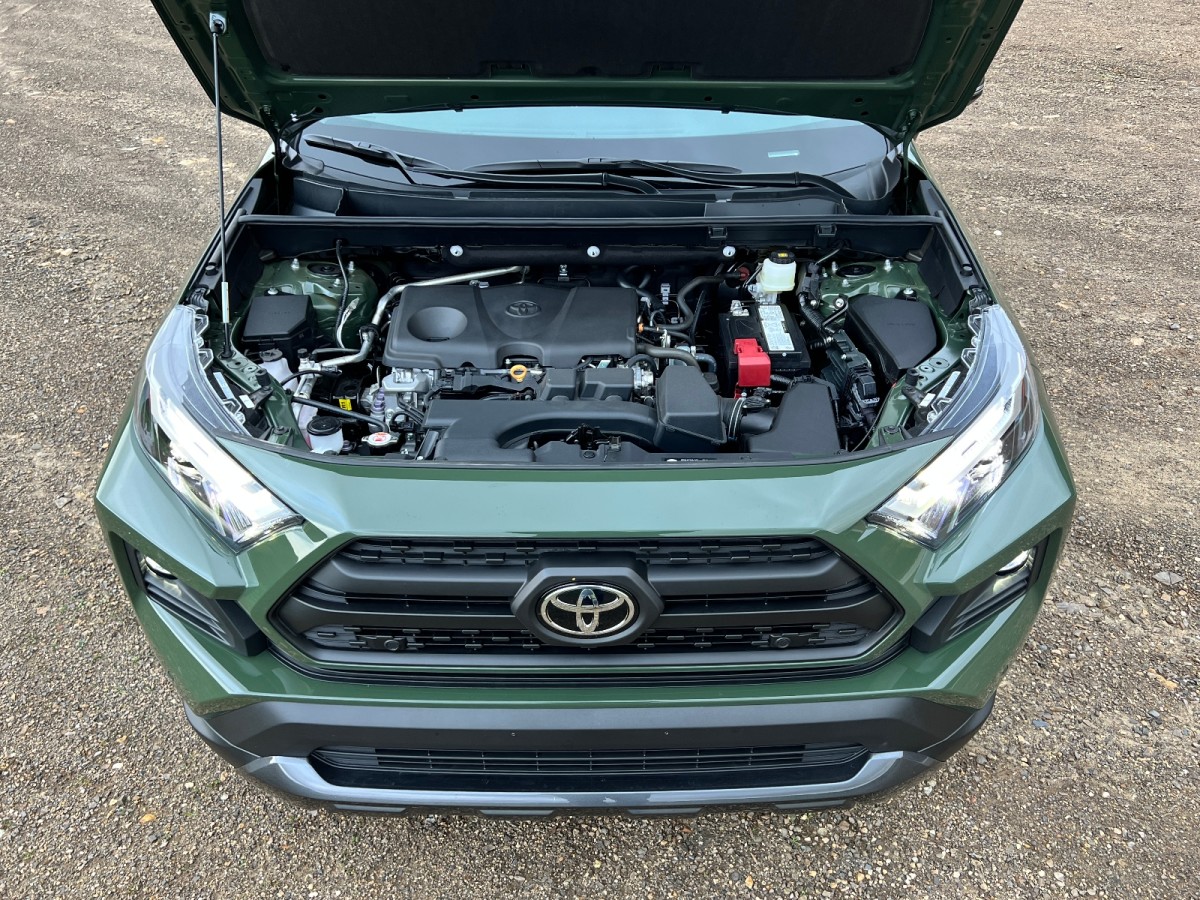
The average Toyota RAV4 engine is engineered to last between 200,000 and 300,000 miles. Known as a benchmark for durability in the compact SUV segment, the RAV4's 2.5L four-cylinder powerplants—both the venerable 2AR-FE and the modern Dynamic Force engines—regularly surpass the 250,000-mile mark without requiring major work.
The reality is that most RAV4s won't suffer a catastrophic mechanical failure in the engine—they simply reach an "economic expiration date." Ownership of RAV4s typically ends when a major repair bill—like an aging transmission or a suspension overhaul—finally outweighs the vehicle's trade-in value. While strict maintenance keeps the engine humming, a RAV4 driven under "severe conditions"—such as constant short-trip city errands, idling in school pickup lines, or frequent mountain climbs—will typically hit that financial tipping point 30,000 to 50,000 miles sooner than one that spends its life on the open highway.
Engine Reliability Rankings: Which RAV4 Engine Lasts the Longest?
The 2.5L four-cylinder (2016+) and the Hybrid eCVT are the two engines most likely to reach 300,000 miles with proper upkeep.
While mileage is an important consideration, a RAV4's real engine lifespan comes down to its design and how much stress its components accumulate over time. Some RAV4 powertrains are built around keeping things simple; others trade a degree of durability for more power or better fuel economy.
2.5L Four-Cylinder Gas Engine (2013 & Onward)
If you want a used RAV4 that's straightforward to maintain and built to go the distance, the 2.5L four-cylinder is where you'll want to start. No turbochargers, no timing belt, no cylinder deactivation system—just a timing chain, a proven Dual Overhead Camshaft (DOHC) layout, and a parts network wide enough that virtually any local shop can work on it.
- Engineering Advantage: The 2AR-FE uses cast-iron cylinder liners inside an aluminum block, which holds up well against wear over high mileage. The Dynamic Force version added higher compression and better thermal efficiency in 2019 without sacrificing durability.
- The Trade-off: On higher-mileage RAV4s, valve cover gaskets and oil pan seals are the most common wear items. They're inexpensive to fix but can go unnoticed long enough to cause secondary oil consumption issues if levels aren't being checked between changes.
- Buyer's Tip: The 2016–2018 model years are the sweet spot with the 6-speed automatic being its most reliable, and these are the years with the cleanest long-term track record in the 4th-gen lineup.
2.5L Hybrid / eCVT (2016 Onward)
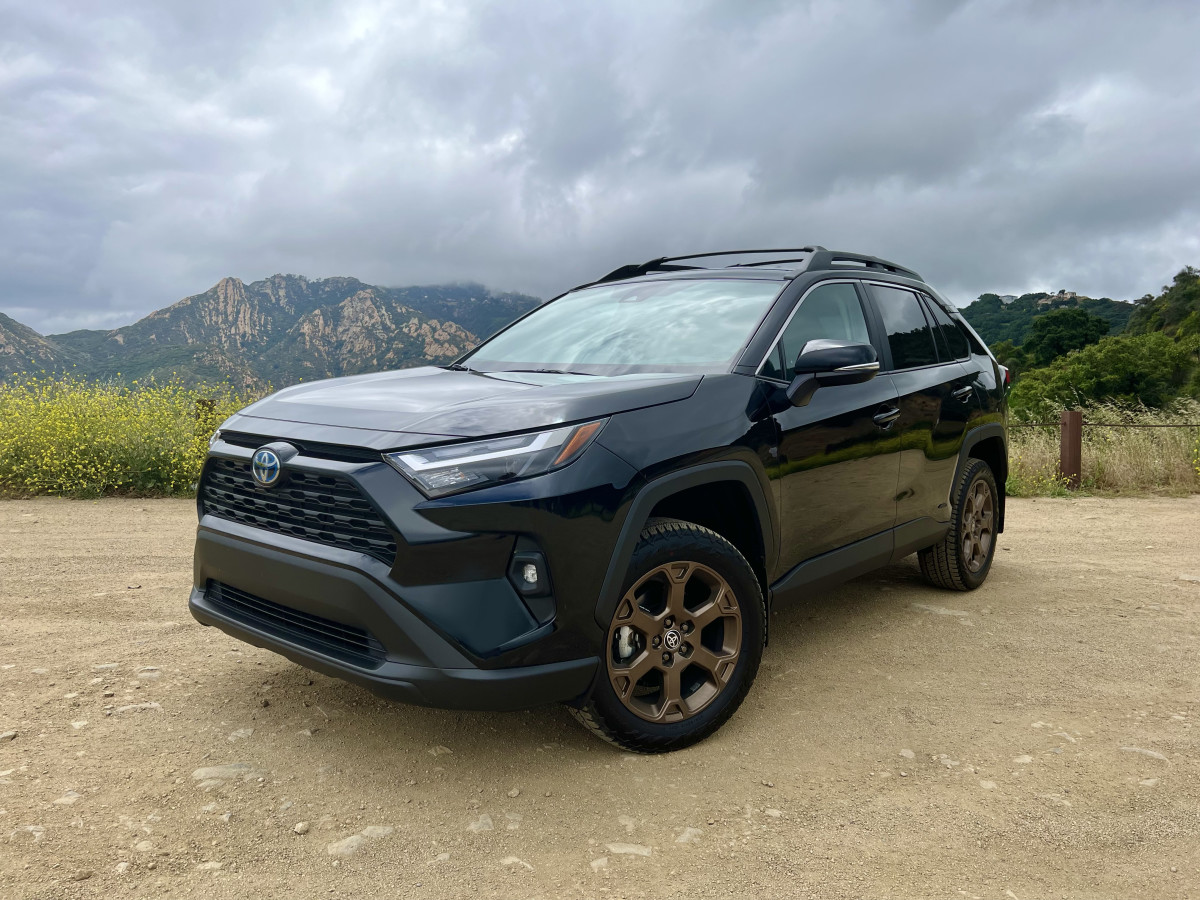
The RAV4 Hybrid's eCVT takes a different approach to drivetrain wear. No clutch packs, no torque converter, and no traditional gear sets—which removes the parts most likely to need replacement on a conventional automatic over a long ownership period.
- Engineering Advantage: The electric motors absorb most of the demand at low speeds and during stop-and-go driving, so the gas engine runs under less load in daily use. Toyota's Atkinson-cycle combustion setup also reduces internal engine stress compared to a standard gas engine.
- The Trade-off: The hybrid battery pack is the variable that gas-only buyers don't have to consider. Toyota covers it for 10 years / 150,000 miles in most states. Real-world data suggests most RAV4 Hybrid batteries outlast the warranty, but it's a cost to factor in if you're buying a higher-mileage unit past that threshold.
- Buyer's Tip: If you live in the "Salt Belt" or a coastal area, inspect the high-voltage cable connector located near the rear axle. Look for white crusty buildup or heavy corrosion on the orange cable housing. For 2019–2022 models, verify if the vehicle has received the updated "open-shield" cable design or if it qualifies for Toyota's extended 150,000-mile warranty for this specific part.
3.5L V6 (2006–2012)
The V6 was Toyota's performance option for the 3rd-gen RAV4. It pulls harder than the four-cylinder without a turbocharger, which keeps thermal stress relatively low. The catch is that it asks more of its owner once the mileage climbs.
- Engineering Advantage: The 2GR-FE is naturally aspirated and has shown 250,000-mile capability in other Toyota platforms, including the Camry and Highlander. It's not a fragile engine—it just has specific wear items that need attention at higher mileage.
- The Trade-off: Water pump failure is the biggest risk on high-mileage V6 RAV4s. When the pump goes undetected long enough to cause overheating, the cylinder heads can warp—a repair that usually costs more than the vehicle is worth on an older RAV4.
- Buyer's Tip: Never buy a V6 RAV4 over 100,000 miles without asking about the water pump. If the seller can't show service documentation, budget for replacement and factor it into your offer. On a test drive, keep an eye on the temperature gauge.
RAV4 Prime — The Plug-In Option (2021 Onward)
The Prime layers a larger battery and plug-in charging onto the Hybrid's existing architecture. The same gas engine durability that applies to the Hybrid applies here. The added consideration is the high-voltage system—specifically, a cable issue that affected a defined production window.
- Engineering Advantage: When charged regularly, the Prime's gas engine can go extended stretches without engaging at all, which means owners who drive mostly on electric power accumulate less engine wear per mile than in a comparable gas-only RAV4.
- The Trade-off: On 2019–2022 Hybrid and Prime models, corrosion on the rear motor's high-voltage cable connector was identified as a concern that Toyota addressed through a warranty extension.
- Buyer's Tip: Prioritize RAV4 Primes with a documented history of oil changes every 5,000 miles or 6 months—regardless of how little the gas engine was actually used. Frequent oil changes are the only way to flush out the fuel and moisture contaminants that accumulate when the engine isn't allowed to reach full operating temperature.
Related Reading: For more tips on buying a used Toyota RAV4, check out the Toyota RAV4 Buyer's Checklist for a quick overview of what to inspect before buying.
RAV4 Mechanical Failure Points: Which Engine-Related Components Break Down by 100,000 Miles?
Even the most reliable RAV4s eventually need more than oil changes. Once a RAV4 crosses 100,000 miles, the engine block is usually in good shape—but the smaller components around it start reaching the end of their design life.
These are the engine-related components most likely to need attention at this milestone:
| Engine-Related Component | Affected Engine(s) | Failure Point | Why It Matters for Engine Longevity |
|---|---|---|---|
| Oil Consumption / Piston Rings | 2.4L (2006–2008) | Ring wear allows oil to burn into the combustion chamber | Running low on oil starves the engine of lubrication. Bearing wear accelerates quickly and can shorten engine life significantly |
| Water Pump | 3.5L V6 | Internal bearing and seal failure | Coolant stops circulating; the engine overheats fast. One sustained overheat can warp the cylinder heads permanently |
| Valve Cover Gaskets / Oil Pan Seals | 3.5L V6; high-mileage 2.5L Gas | Rubber hardens and cracks over time | Oil leaks onto hot exhaust parts and can mask low-oil conditions that quietly damage internal engine surfaces |
| High-Voltage Cable Connector | 2019–2022 Hybrid / Prime | Corrosion on the rear motor connector | Compromises rear motor function; can trigger limp mode and lead to broader hybrid system faults if left unresolved |
| 8-Speed Transmission (Software) | 2019 Gas RAV4 | TCM calibration causes harsh shifts | Repeated hard shifts put abnormal stress on drivetrain mounts and degrade powertrain components over time |
RAV4 Transmission Health and Engine Stress
The engine and transmission function as a single powertrain system—when one starts struggling, the other absorbs the consequences. For the RAV4, this is most relevant on 2019 gas models with the 8-speed automatic, which arrived with a software calibration issue that caused real drivability problems in its first year.
Two things to watch on higher-mileage RAV4s:
- The 2019 RAV4 Shift Problem: The hesitation and lurching on 2019 gas models force the engine to operate outside its ideal RPM range during acceleration. Repeated mismatched power delivery events stress the drivetrain mounts and internal components over time. If a 2019 RAV4 hasn't had the TSB software update applied, confirm that before buying.
- Transmission Fluid on Used RAV4s: Toyota's schedule doesn't always call for fluid replacement, but on a used RAV4 with an unclear service history, treating it as a wear item is the right call. Degraded fluid increases friction and makes the engine work harder—wear that won't show up in a routine inspection until it's already underway.
Thinking about buying a used Toyota RAV4? Check out the Toyota RAV4 Reliability Guide on CarGurus for a full breakdown of which configurations hold up best over time.
Toyota RAV4 Engine Longevity vs. the Competition
The RAV4 is the best-selling compact SUV in the country, but it's probably not the only vehicle you're considering.
Here's how its engine longevity stacks up against its two closest competitors—the Honda CR-V and the Mazda CX-5:
| The SUV | Estimated Engine Lifespan | Most Durable Engine | The Longevity Trade-Off |
|---|---|---|---|
| Toyota RAV4 | 200,000–300,000 mi | 2.5L Four-Cylinder / Hybrid eCVT | The hybrid system adds complexity at high mileage, but the gas engine is a proven long-haul unit with a wide service network |
| Honda CR-V | 200,000–250,000 mi | 1.5L Turbo (2017+) | Turbocharger adds maintenance demands; 2017–2019 models had an oil dilution issue in cold climates |
| Mazda CX-5 | 200,000–250,000 mi | 2.5L Skyactiv-G | Strong, naturally aspirated engine, but a smaller parts network means high-mileage repairs often cost more than a comparable RAV4 service |
The RAV4's 2.5L four-cylinder is one of the few compact SUV engines that's naturally aspirated, uses no cylinder deactivation system, and has a track record stretching past 250,000 miles. In a class that's largely moved to smaller turbocharged engines, that's a real differentiator for buyers focused on longevity.
The Honda CR-V's 1.5T is a capable engine, but 2017–2019 models had a specific oil dilution problem in cold climates where gasoline mixed into the engine oil during short winter trips. It's been addressed in later production, but it's a vetting step RAV4 buyers don't need to worry about.
The Mazda CX-5's Skyactiv-G engine is well-regarded, but Mazda's smaller dealer network means high-mileage repairs and parts typically cost more than an equivalent RAV4 job—a real factor when comparing total cost of ownership past 150,000 miles.

Should You Buy a Toyota RAV4 With Over 100,000 Miles?
Yes—but the engine, the service history, and the specific model year matter far more than the mileage alone.
Here's how to weigh the risk by powertrain configuration:
- 2.5L Four-Cylinder (2016–2018) — The Strongest Option: With documented oil changes and no signs of seal leaks, a RAV4 in this range at 100,000–150,000 miles likely has plenty of life left. These are the most mature and well-sorted years in the 4th-gen lineup.
- RAV4 Hybrid (2016+) — Solid, with One Check: A strong choice at high mileage, as long as there are no hybrid battery fault codes and the battery filter has been serviced on schedule. Toyota's hybrid track record makes these dependable used buys.
- 3.5L V6 (2009–2012) — Viable, with Water Pump Verification: Worth buying if water pump history is documented or if you're prepared to replace it immediately. Without that confirmation, the risk needs to be reflected in the price.
- 2.4L Engine (2006–2008) — Approach with Caution: The oil consumption history on these engines makes them a higher-risk buy. Without a complete and verifiable service record, it's not worth the risk.
- RAV4 Prime (2019–2022) — Verify the Recall First: Confirm the high-voltage cable service campaign has been completed before moving forward. Once verified, these are capable vehicles—but skipping that step isn't an option.
You can verify any active recalls using the VIN for any RAV4 you're considering at NHTSA.gov
Why the Right Year Beats a Low Mileage
A high-mileage RAV4 from a strong production year is almost always a better buy than a low-mileage one from a weaker year. Toyota RAV4 engine longevity isn't just about how far it's already traveled—it's about how much is left, based on the specific engine and what the service record actually shows.
Ready to start shopping? Browse Toyota RAV4 listings on CarGurus and use the Deal Rating and Instant Market Value tools to find a RAV4 with a clean service history and plenty of life left—so you can buy with confidence, not guesswork.