2025 Land Rover Range Rover Sport Reviews, Pricing & Specs

Pros & cons
What we like
Multiple powertrain options
Stylish design
Great handling
What to consider
Poor value for money
Unintuitive technology
The CarGurus verdict
Want a Range Rover, but don’t have a country estate to park it in? The slimmed-down Range Rover Sport might be the answer.
Now in its third generation, the Range Rover Sport is a smaller alternative to the traditional Range Rover, and a more stylish alternative to the utilitarian Land Rover Defender and Discovery. Competitors include two-row midsize luxury SUVs like the BMW X5, Mercedes-Benz GLE Class, and Porsche Cayenne. This generation was introduced for the 2023 model year, so the 2025 Land Rover Range Rover Sport sees minimal changes.
Verdict: Blending traditional Land Rover looks and luxury with sportier on-road driving dynamics, the Range Rover Sport justifies its place in the automaker’s convoluted lineup, but not in the larger luxury SUV market.
out of 10 expert review
Look & feel
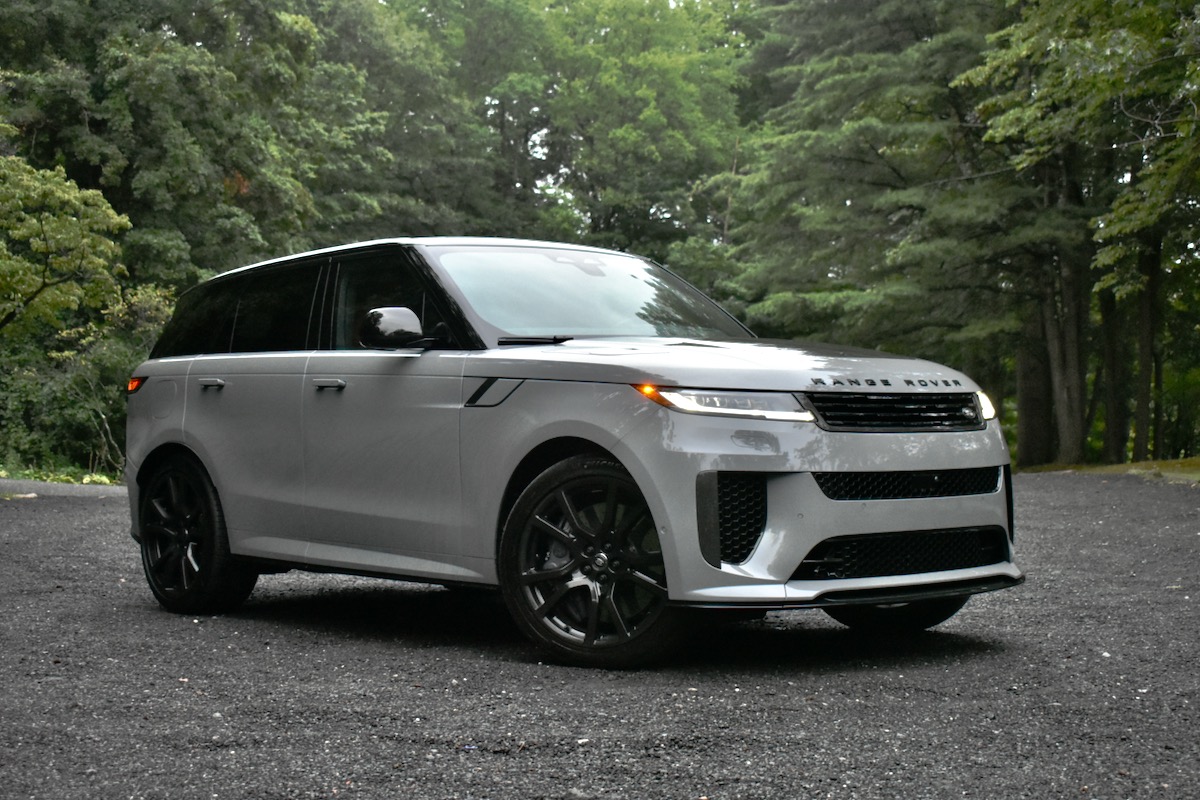
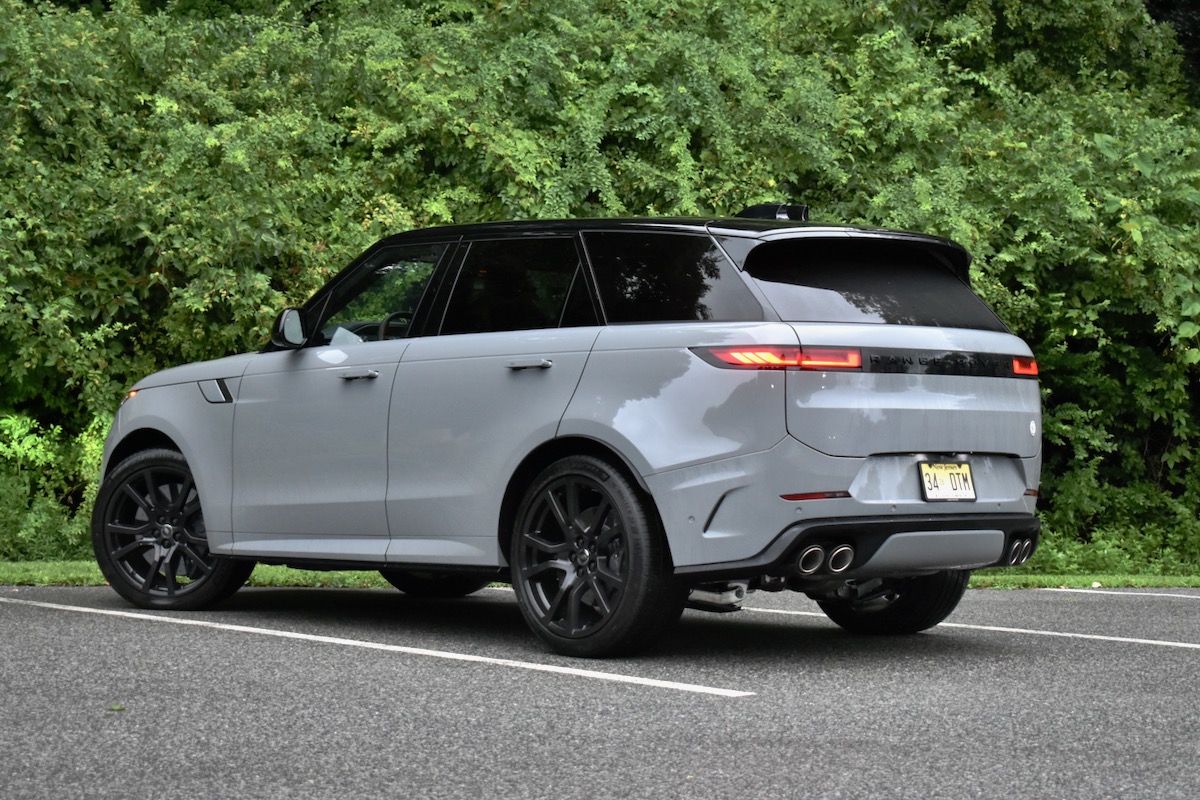
The Range Rover Sport’s styling reinforces Land Rover’s positioning of this model as a sportier SUV within the Range Rover family. It stands taller than nearly everything else on the road, but its shorter wheelbase and chopped top give the Sport a more athletic appearance than the traditional Range Rover. Large front air intakes and a complement of fake vents on the hood and front fenders add to the look. But, in the metal, the Sport appears a bit too tall and narrow from some angles. It lacks the wide, planted look of some other luxury SUVs.
For the 2025 model year, the Range Rover Sport lineup includes SE, Dynamic SE, Autobiography, and SV Edition Two trim levels. A Stealth appearance package is now available for the Dynamic SE that includes Carpathian metallic-gray paint with a satin-finish clear wrap, gloss black exterior trim, and black 23-inch wheels (base models have 21-inch wheels) and brake calipers. The gothic exterior is paired with Ebony or Light Cloud leather upholstery inside.
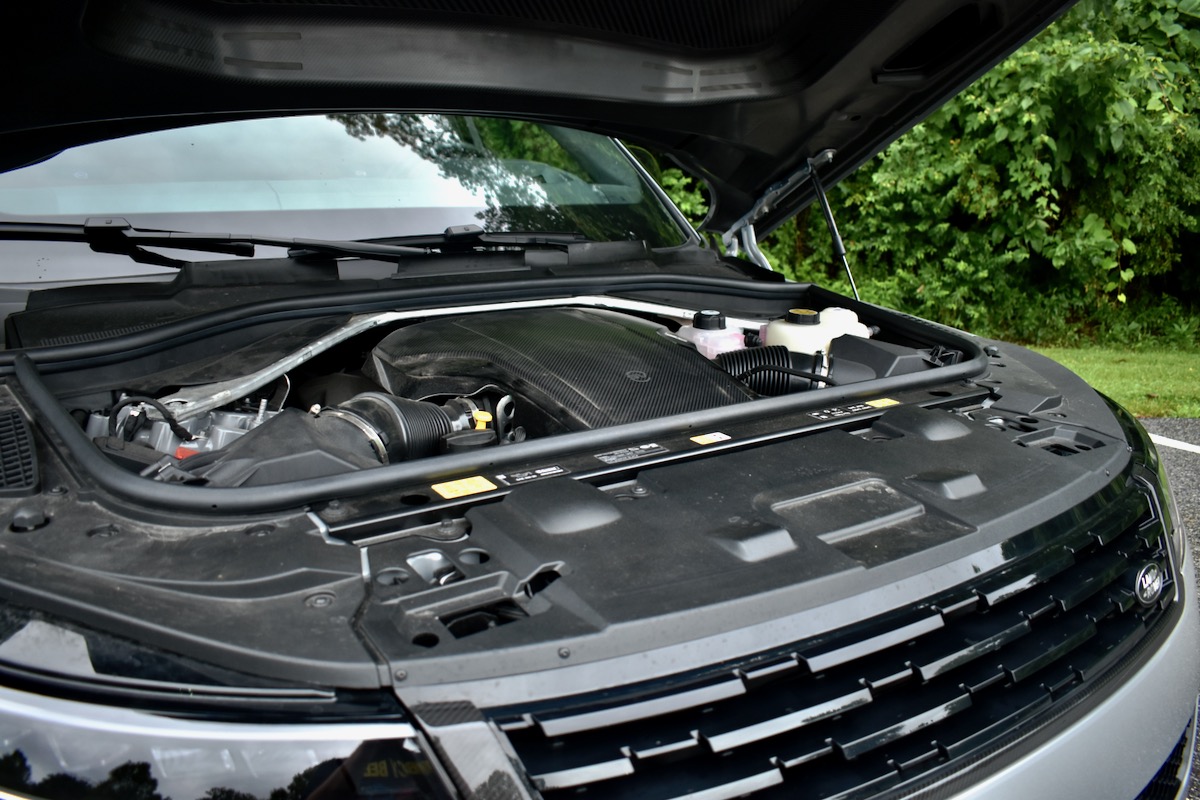
Our test car was an SV Edition 2, the highest-performance model within the Range Rover family and, with the possible exception of the new Defender Octa, the Land Rover brand itself. In addition to mechanical upgrades, the SV Edition 2 can be equipped with 23-inch carbon-fiber wheels. The hood is made from carbon fiber as well, with an exposed patch to show off the lightweight material. Nonetheless, in Marl Grey our test car made a more plausible sleeper than typical specs of the BMW X5 M, Mercedes-AMG GLE 63 S, or Porsche Cayenne.
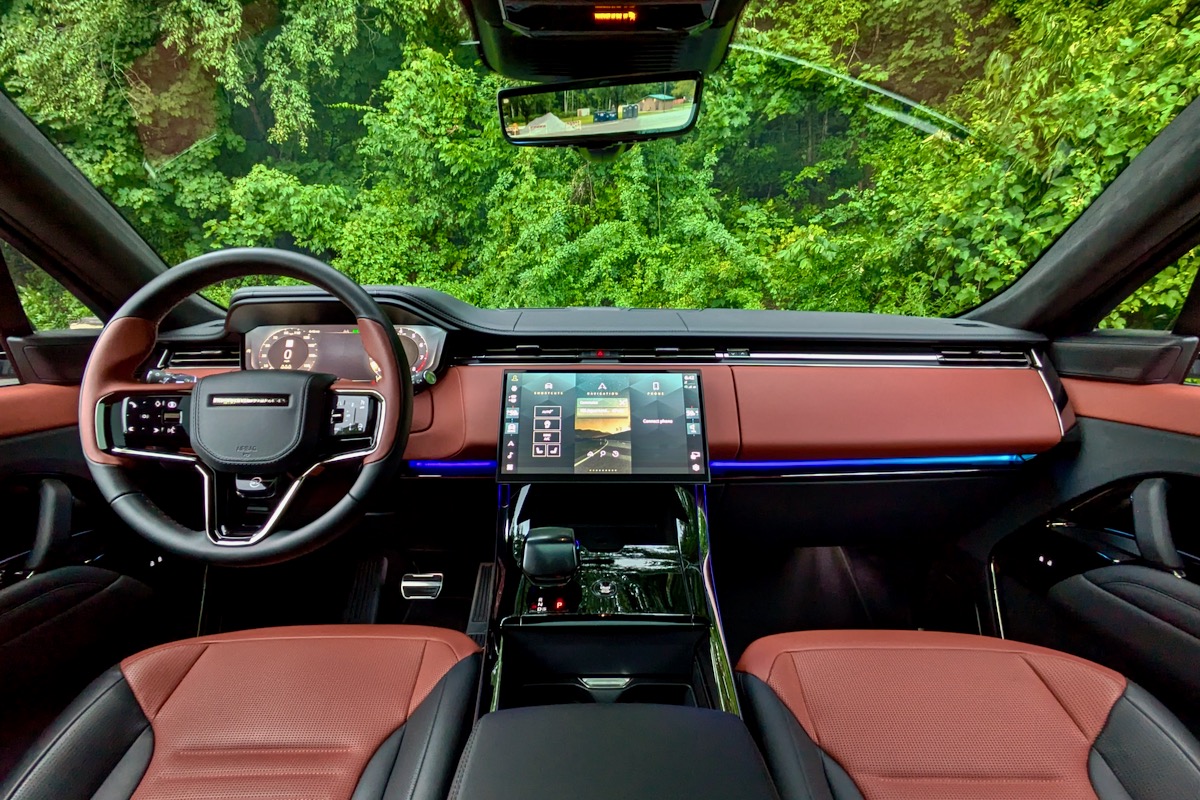
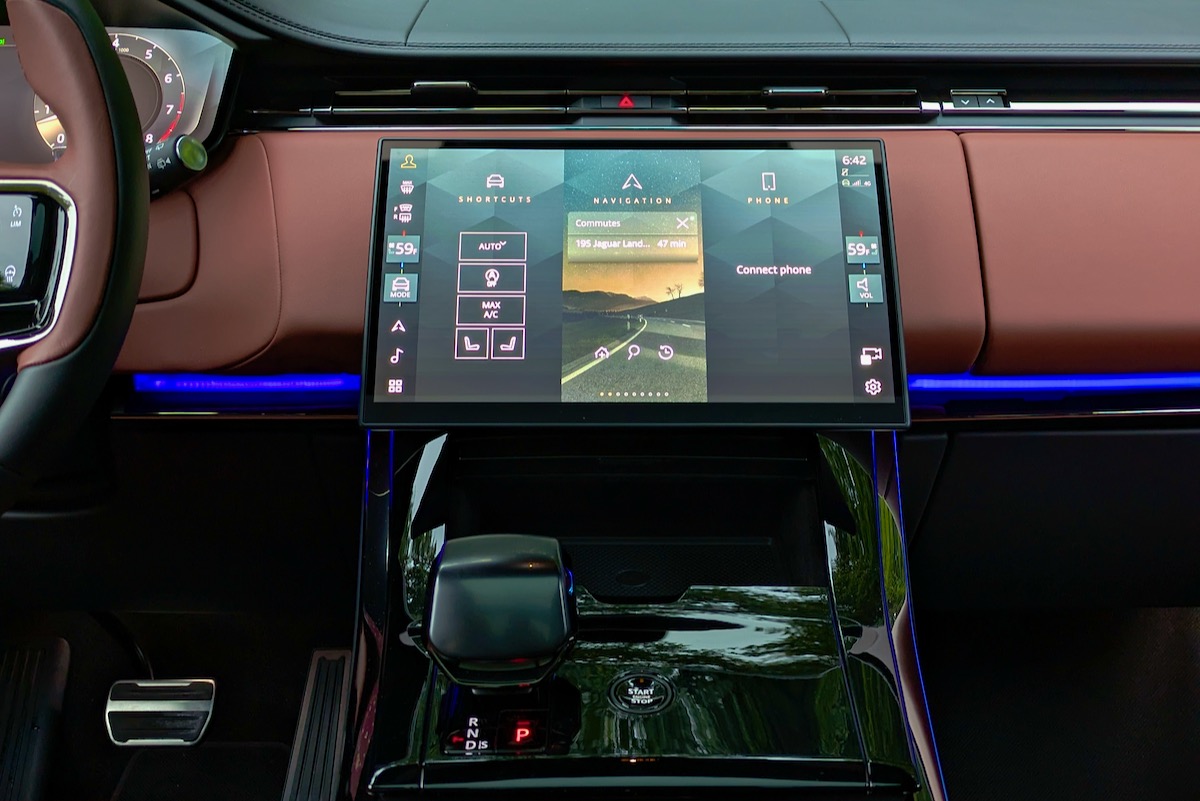
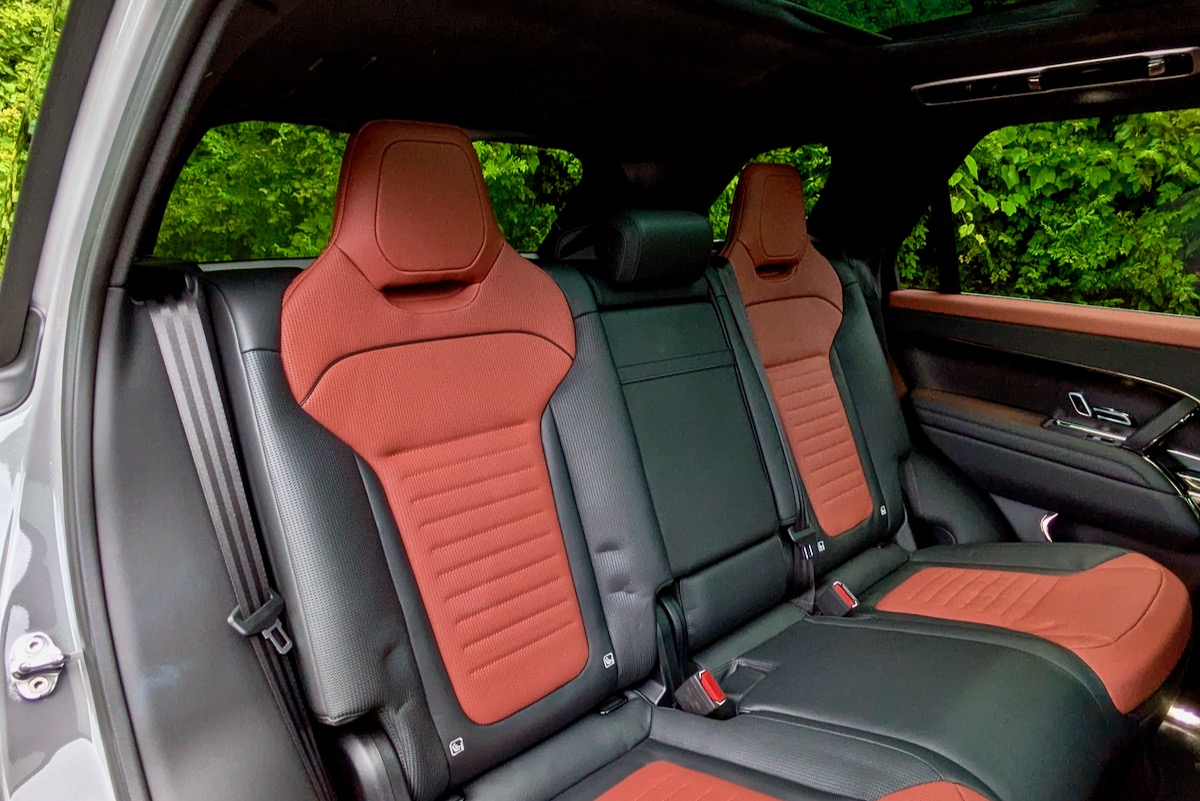
The subtle exterior belied an interior adorned with red leather upholstery, sport seats with light-up “SV” inserts, and even illuminated steering-wheel paddle shifters. That look is unique to the SV Edition 2, but all Range Rover Sport models have an overall minimalist aesthetic, with only a touchscreen, stubby shifter, and engine start button interrupting the smoothness of the dashboard and center console.
Like previous Range Rover Sport models, the console, dash, and door panels are quite high to create a more enclosed, cockpit-like feel. That makes sense given this SUV’s sporty mission, but also makes the front seats feel a bit cramped for a vehicle of this size. Material quality was up to the standards of the luxury segment, although like many automakers Land Rover was a bit too indulgent with the reflective, easily-smudged piano black plastic.
Performance
Land Rover offers multiple powertrain options, depending on trim level, all with an eight-speed automatic transmission and standard four-wheel drive (4WD).
The Range Rover Sport SE base model is powered by a 3.0-liter turbocharged inline-six tuned for 355 horsepower and 369 pound-feet of torque. The Dynamic SE is also available with this engine, but offers a higher output of 395 hp and 406 lb-ft of torque, plus a six-cylinder plug-in hybrid powertrain rated at 454 hp and 487 lb-ft.
The Range Rover Sport Autobiography is available with the plug-in hybrid powertrain as well, but here output increases to 543 hp and 590 lb-ft of torque. Autobiography models can also be equipped with a BMW-sourced twin-turbocharged 4.4-liter V8 producing 523 hp and 553 lb-ft. This engine and the base inline-six also have mild-hybrid assistance to eke out better fuel economy.
The same twin-turbo BMW V8 is also used in the SV Edition Two, but with output pushed to 626 hp (torque is unchanged). That makes the SV Edition Two the most powerful production model to ever wear the Range Rover badge, and it’s tied with the Defender Octa as the most powerful Land Rover model overall. Land Rover says it will do zero to 60 mph in 3.7 seconds—the same as a Mercedes-AMG GLE 63 S Coupe and BMW X5 M Competition, and just a few tenths off the quickest Porsche Cayenne models. The top speed is a stupendous 180 mph.
The Range Rover name might be primarily associated with off-roading, but with its sport-tuned air suspension, the Range Rover Sport SV Edition 2 carved corners as well as the German competition. Instead of the frenetic character of many performance cars, the Range Rover Sport had a calm and confident demeanor that also contributed to a luxurious ride at normal speeds. Four-wheel steering and brake-based torque vectoring made our test car feel more agile than it otherwise might, and its carbon-ceramic brakes required barely a brush of the pedal to scrub off speed. But even without these features, the basic Range Rover Sport platform imparts impressive levels of comfort and refinement.
Regarding the Land Rover brand’s more traditional strength, all Range Rover Sport models have the automaker’s Terrain Response system for off-roading, as well as hill descent control and ascent control, but only Range Rover Sport Autobiography models have a two-speed transfer case with low range. All models except the SV Edition 2 have 8.5 inches of ground clearance, but standard air suspension increases that to 11 inches when raised to off-road height. That also provides a 33-degree approach angle, 29.8-degree departure angle, and 26.9-degree breakover angle for clearing obstacles.
Form & function
In the Range Rover lineup, the Sport sits between the Range Rover Velar and the full-size Range Rover dimensionally. It offers a bit more room than the Velar, but remains comfortably in the midsize range. Some competitors offer a third row of seats, but the Range Rover Sport is sold only as a two-row, five-seater.
Front-seat occupants will find similar headroom to other midsize luxury SUVs, but the Acura MDX and Audi Q7 have about an inch of additional legroom. The Land Rover’s sloping roof also doesn’t impact rear-seat headroom as much as it might seem; only the BMW X5 and Mercedes-Benz GLE-Class offer more, and only a smidge at that. The Mercedes also offers 3.1 inches of additional second-row legroom over the Land Rover, but most people should still find adequate room to stretch out—especially because reclining rear seats are standard, as are 20-way power-adjustable front seats with heating, ventilation, and memory.
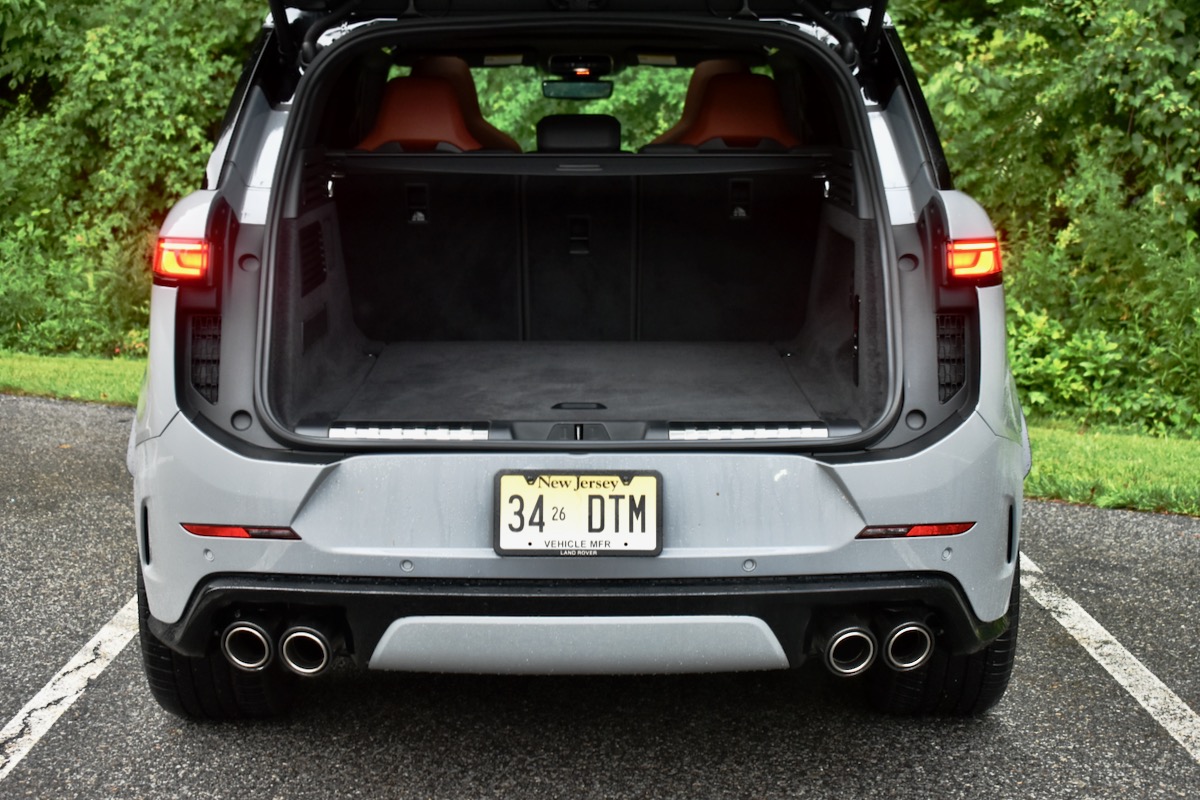
The Range Rover Sport contains a substantial 31.9 cubic feet of cargo space behind its second row. That’s more than in a Lexus RX, but less than you get in an MDX, X5, GLE, or Genesis GV80. The 53 cubic feet of available cargo space with the rear-seats folded is also a lot less than most competitors offer, but still a large amount nonetheless.
It doesn’t have a split tailgate like the big Range Rover, but power operation and an “access height” setting for the standard air suspension that lowers the vehicle makes loading and unloading cargo easier. Inside, deep door pockets and large center-console cupholders ensure your Yeti will have a secure home.
The Range Rover Sport’s 7,716-pound maximum towing capacity for turbo-six and V8 models (plug-in hybrids are rated at 6,614 pounds) is in line with the rest of the segment. The Land Rover’s Audi, BMW, Mercedes, and Porsche rivals can all tow at least 7,000 pounds, but the Range Rover Sport offers appreciably more towing capacity than an Acura MDX, Genesis GV80, Lexus RX, or Volvo XC90.
Technology
The standard screen setup is the same as what you get in a big Range Rover. A 13.7-inch screen serves as a digital instrument cluster, while a 13.1-inch touchscreen handles infotainment functions. Wireless Apple CarPlay and Android Auto are standard as well, along with Amazon Alexa integration.
The two screens look great, with the instrument cluster mounted in a neat little pod and the central touchscreen appearing to float atop the smooth surface of the dashboard. But the clean, minimalist design has some functional shortfalls, as it leaves few options beyond the touchscreen. Not only is tapping the screen more difficult than twisting a knob to adjust the climate control, or pushing a button to select a different drive mode, those functions also require their own widgets on the screen. So while the physical dashboard may look nice and uncluttered, the screen doesn’t.
Steering-wheel controls give the driver an alternative, but their functions are limited. But at least Land Rover’s Pivi Pro infotainment system has gotten a lot more responsive in its more recent iterations, and has added usable natural-language voice recognition closer to what Audi, BMW, and Mercedes have. When you just need information, the gauge cluster’s various configurations also provide plenty of options.
Our Range Rover Sport SV Edition 2 test car was also equipped with what Land Rover calls “Body and Soul Seats” with embedded transducers that make the seats pulse with the music from the Range Rover Sport’s standard Meridian audio system (up to 29 speakers are available, depending on configuration) or just vibrate in time to its own sound-based relaxation programs. The experience was fairly pleasant—like a more energizing version of conventional seat massagers—but also felt a bit tacky in an amusement-park ride way. Perhaps a longer drive would have given us time to overcome that feeling, but for now we’re not surprised that other automakers haven’t adopted this feature.
Safety
The Range Rover Sport’s standard driver-assist features cover the bases, with automatic emergency braking, forward collision warning, adaptive cruise control, lane-keep assist, traffic sign recognition, blind-spot monitoring, rear cross-traffic alert, and a driver attention monitor all included from the base SE trim level on up.
The standard 360-degree camera system, along with our test car’s digital rearview mirror, helps take the guesswork out of parking and helps compensate for the Range Rover Sport’s fairly tall hood, which otherwise impedes forward visibility. However, we found the standard parking sensors to be overly sensitive, and would’ve preferred a shortcut button to activate the cameras before getting close enough to objects to trigger those warnings.
The Insurance Institute for Highway Safety (IIHS) and National Highway Traffic Safety Administration (NHTSA) had not released safety ratings for the current-generation Range Rover Sport at the time of publication.
Cost-effectiveness
The base six-cylinder powertrain is EPA-rated at 22 mpg combined (20 mpg city, 25 mpg highway). Fuel economy drops to 19 mpg combined (16 mpg city, 23 mpg highway) with the V8 (SV Edition 2 models get 22 mpg highway), while plug-in hybrids offer 53 miles of electric range and 21 mpg combined after that.
Land Rover’s warranty coverage—including a four-year/50,000-mile new-vehicle warranty and complimentary roadside assistance over the same period—is comparable to what most other luxury brands offer.
Pricing starts at $85,325 for the Range Rover Sport SE (all prices include a mandatory $1,625 destination charge), with the Range Rover Sport Dynamic SE and Range Rover Sport Autobiography trim levels priced from $92,425 and $120,325, respectively. The more niche SV Edition 2 starts even higher, at $182,325, and options like carbon-fiber wheels and carbon-ceramic brakes pushed the sticker price of our test car beyond $200,000.
With that pricing scheme, the Range Rover Sport doesn’t really make sense in the context of other midsize luxury SUVs. As nice as it is to look at inside and out, and as capable as it is off-road and on, new car buyers who just want a nice SUV will spend a lot less by going with other brands. It appears to exist mostly to fill the considerable gap between the Range Rover Velar and the full-size Range Rover in Land Rover’s lineup, giving buyers a more manageable package and sportier driving dynamics while maintaining the exclusivity and prestige of the bigger Range Rover.
What owners say
Trims & specs
Base MSRP $83,700 | Seating 5 |
Engine 3.0L 355 hp I6 | Cargo Capacity 31.9 cu ft |
Combined MPG 22 | Drivetrain AWD |
Base MSRP $95,100 | Seating 5 |
Engine 3.0L 454 hp I6 Hybrid | Cargo Capacity 31.9 cu ft |
Combined MPG 53 | Drivetrain AWD |
Base MSRP $180,700 | Seating 5 |
Engine 4.4L 626 hp V8 | Cargo Capacity 31.9 cu ft |
Combined MPG 19 | Drivetrain AWD |
Base MSRP N/A | Seating 5 |
Engine N/A | Cargo Capacity 31.9 cu ft |
Combined MPG N/A | Drivetrain N/A |
Base MSRP $90,800 | Seating 5 |
Engine 3.0L 395 hp I6 | Cargo Capacity 31.9 cu ft |
Combined MPG 22 | Drivetrain AWD |
Base MSRP $79,700 | Seating 5 |
Engine 3.0L 355 hp I6 | Cargo Capacity 31.9 cu ft |
Combined MPG 22 | Drivetrain AWD |
Base MSRP $123,400 | Seating 5 |
Engine 4.4L 523 hp V8 | Cargo Capacity 31.9 cu ft |
Combined MPG 19 | Drivetrain AWD |
Base MSRP $118,700 | Seating 5 |
Engine 3.0L 542 hp I6 Hybrid | Cargo Capacity 31.9 cu ft |
Combined MPG 53 | Drivetrain AWD |
Base MSRP $109,700 | Seating 5 |
Engine 4.4L 523 hp V8 | Cargo Capacity 31.9 cu ft |
Combined MPG 19 | Drivetrain AWD |


Pricing trends
MSRP range
$79,700 - $180,700
Current avg. market price
$81,125
Trending down by 1.0% this month
May 2026 - November 2026


