Crossovers and SUVs have dominated the automotive landscape for well over a decade, which means today's used-car market is packed with outstanding options to suit virtually every buyer. If you're shopping for a used small SUV, we recommend widening your search to include the 2017 model year — that's when many small SUVs truly came into their own and began establishing the segment's modern standards.
Whether you're drawn to an Acura, an Audi, a GMC, or a Volvo, today's new SUVs are more capable and refined than ever — though that quality comes at a cost. One smart strategy is to let the original owner absorb the steepest depreciation and step in at the right moment.
A used SUV won't come wrapped in a new-car warranty, but later-model examples may qualify for certified pre-owned (CPO) coverage. Some low-mileage finds might even remain within their original factory warranty windows. Here are our top picks for the best used small SUVs available right now, covering a wide price range and a diverse lineup of manufacturers.
What Makes CarGurus Best Cars Guides Different
The Best Used Small SUVs in 2026
FAQs
Shopping Tools
Related Topics
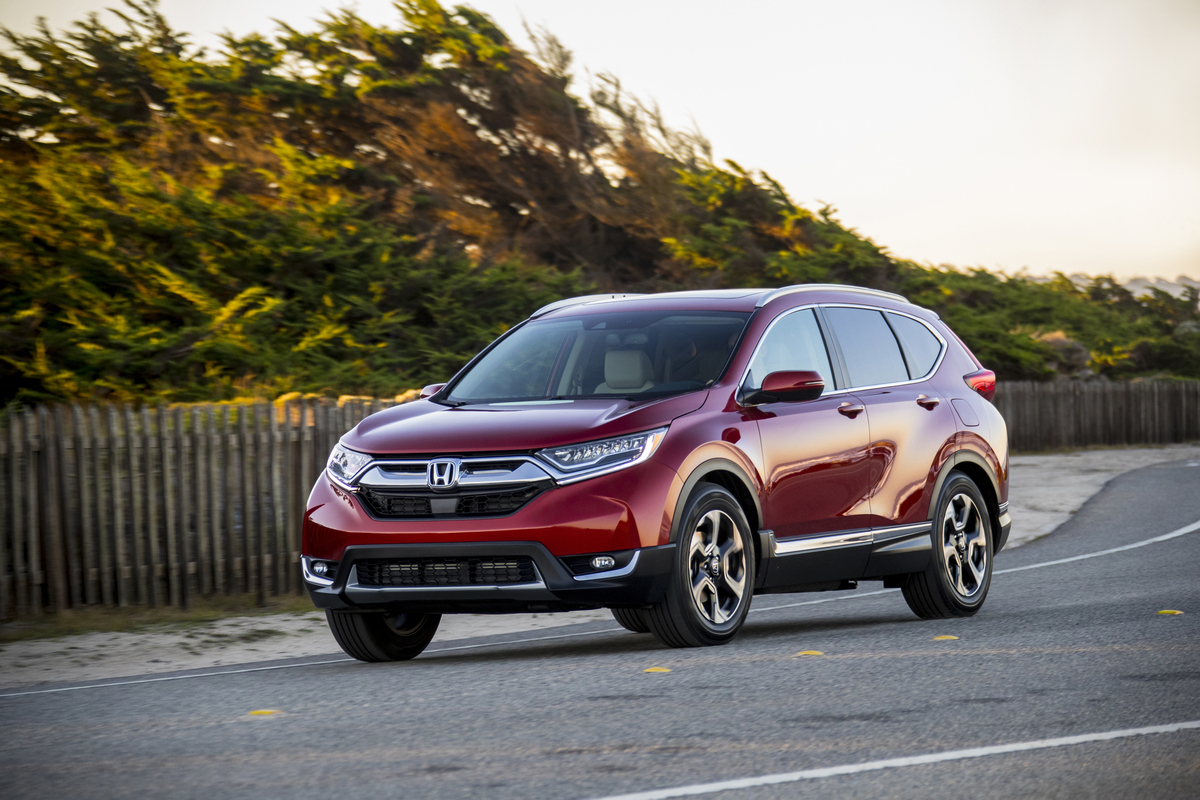
2018 Honda CR-V
The Honda CR-V is a perennial bestseller that underwent a full redesign in 2017, but its most meaningful update for the 2018 model year was the welcome return of a rotary volume knob for the audio system. The CR-V has built its reputation on comfort, practicality, and long-term reliability. The 2018 model's 75.8 cubic feet of cargo space ranked it at the top of its competitive class, and it was equally impressive for occupants, with ample head- and legroom in both rows.
The 2018 CR-V offered a choice between a 184- or 190-hp four-cylinder engine. Neither prioritized outright performance, but both returned strong fuel economy numbers. Standard equipment included a 5-inch infotainment touchscreen, with an available 7-inch unit that brought Apple CarPlay and Android Auto into the mix. Buyers could also option in Honda's well-regarded Sensing suite of driver-assistance technologies.
Read our Honda CR-V Buying Guide
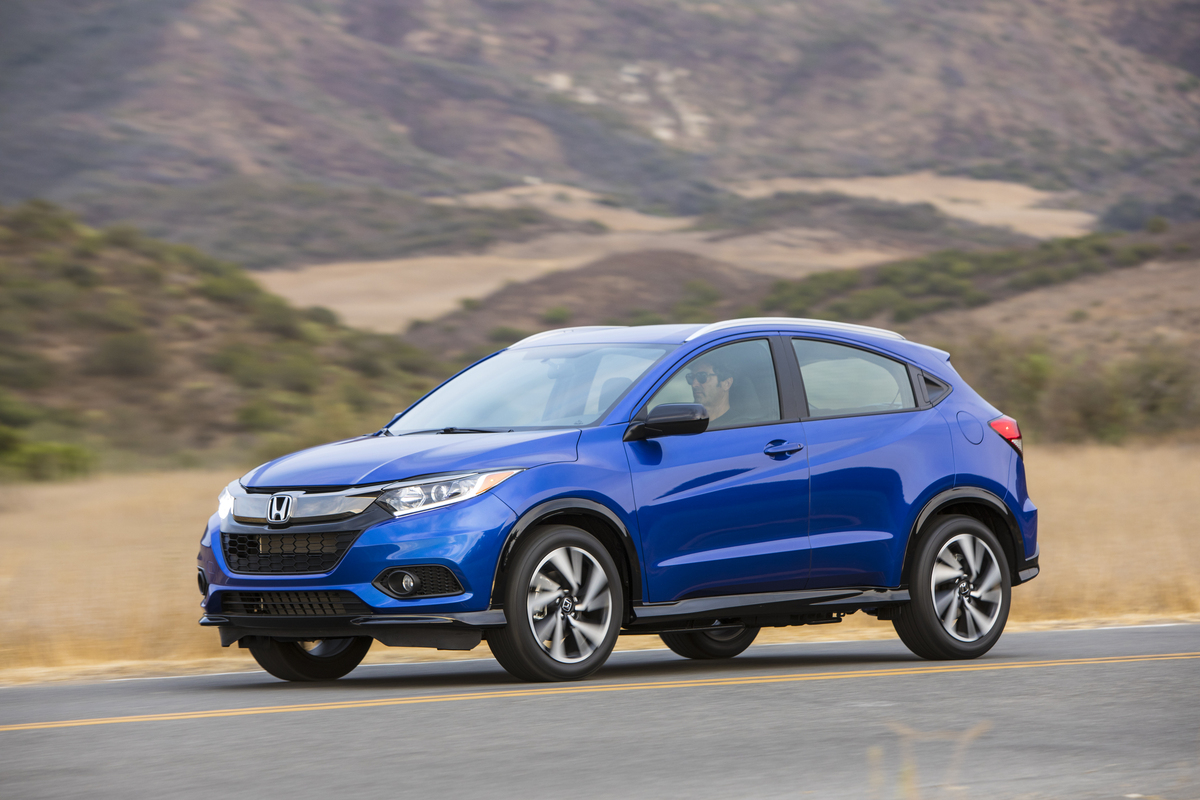
2019 Honda HR-V
The HR-V is built for comfortable, spacious, no-fuss daily driving. Beyond its smooth and composed ride, the 2019 edition of Honda's smallest crossover was surprisingly generous with interior room, offering 58.8 cubic feet of cargo space with the rear seats folded flat. With the rear seats upright, both rows provided plenty of headroom and legroom for passengers of most sizes. The HR-V also featured the clever Honda Magic Seat system, which unlocked multiple cargo and passenger configurations to suit a variety of hauling needs. Apple CarPlay and Android Auto became standard features for 2019, adding even more appeal to an already strong value proposition.
The HR-V's 141-hp engine won't quicken anyone's pulse, but it delivered highway fuel economy on par with the Mazda CX-3, and Honda refined the 2019 model's continuously variable transmission (CVT) to improve its responsiveness and overall feel. The HR-V leaned firmly toward on-road comfort rather than sporty handling, which is exactly what most buyers in this segment are looking for. One caveat worth noting: higher trim levels came with an infotainment interface that some owners found less than intuitive. Opting for the base trim with its more straightforward controls may be the wiser choice.
Read our Honda HR-V Buying Guide
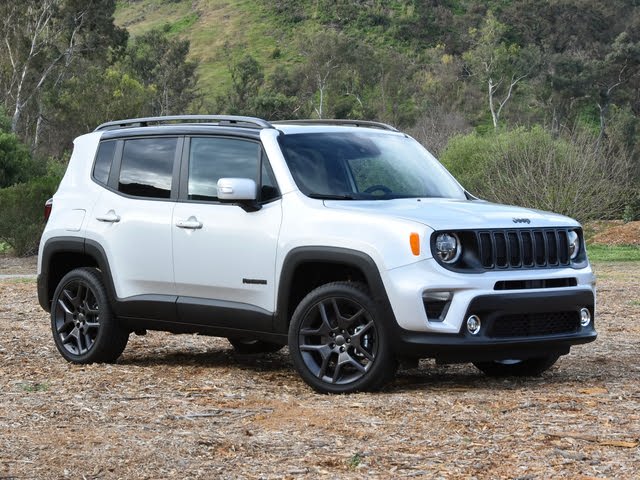
2019 Jeep Renegade
The 2019 Jeep Renegade carved out a distinct identity among subcompact SUVs in both appearance and real-world capability.
Its tall, upright proportions translated into excellent outward visibility and a commanding driving position. At 50.8 cubic feet, cargo capacity fell short of some rivals, but the Renegade's squared-off rear hatch opening made loading bulkier items considerably easier. The only American-made SUV on this list received a well-timed refresh for the 2019 model year, bringing updated styling that felt more current. It also arrived a year after Apple CarPlay was introduced to the Renegade lineup — though it remained an optional feature, so it's worth verifying the equipment list on any specific example you're evaluating.
Powertrain options for the 2019 Renegade included a 2.4-liter four-cylinder producing 184 hp and a then-new 1.3-liter turbocharged four-cylinder rated at 177 hp. Each had its strengths and compromises. The nine-speed automatic transmission drew some criticism for its tendency to hunt between gears in everyday driving.
For buyers with genuine off-road intentions, the Renegade Trailhawk is the trim to seek out. It carried a price premium but delivered skid plates, an enhanced four-wheel-drive (4WD) system, and increased ride height over standard models.
Read our Overview of the 2019 Jeep Renegade
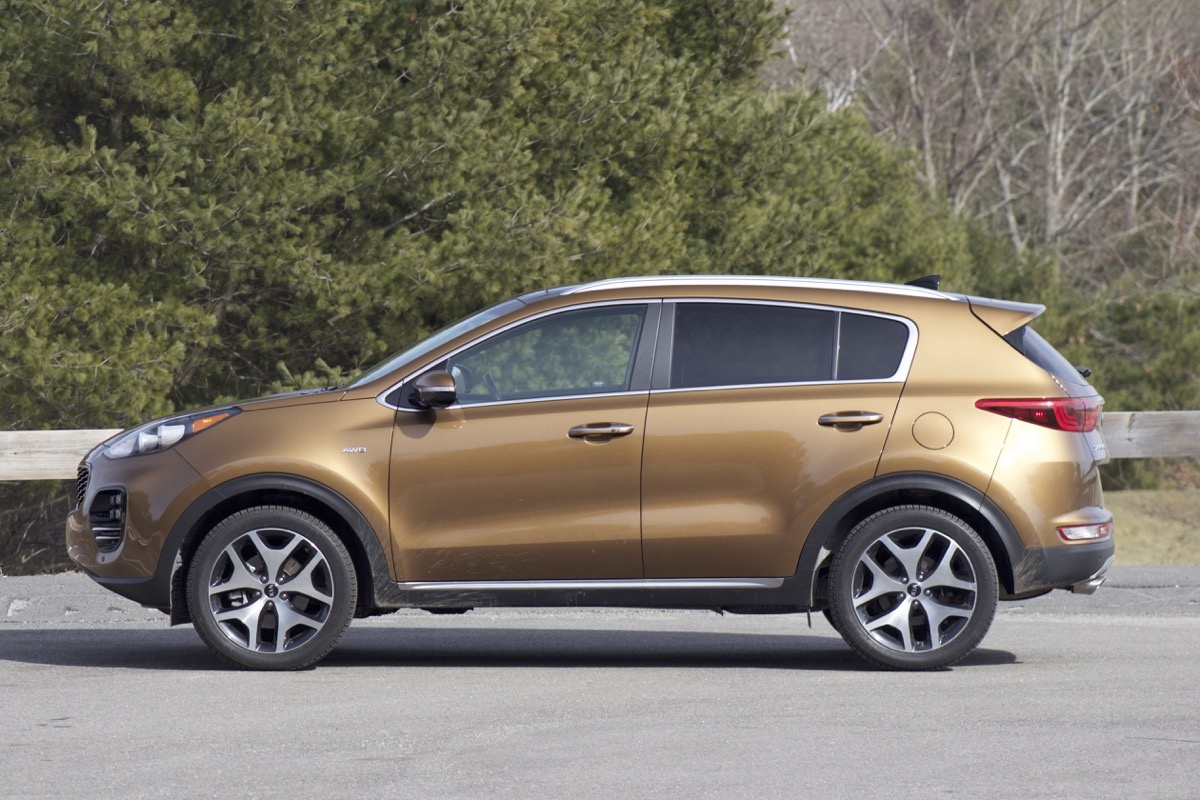
2017 Kia Sportage
The 2017 Kia Sportage arrived wearing bold, attention-grabbing styling that felt genuinely fresh at the time and continues to hold up well today. While the Sportage didn't lead the segment in fuel economy or cargo volume, it struck a well-balanced ride and delivered genuinely engaging handling. When hunting for a used example, it's worth bypassing the base engine and tracking down a Turbo model. Its 240-horsepower turbocharged four-cylinder brings a level of performance that meaningfully elevates the driving experience.
The Sportage's cabin was thoughtfully designed and logically arranged, anchored by a standard 5-inch touchscreen. Select trims were available with a larger display and Apple CarPlay and Android Auto connectivity. The 2017 Sportage offered 60.1 cubic feet of cargo space, putting it roughly in line with the class average. Second-row seating was as comfortable and roomy as the front buckets, making it a genuinely strong choice for passengers of all sizes.
Read our Kia Sportage Buying Guide
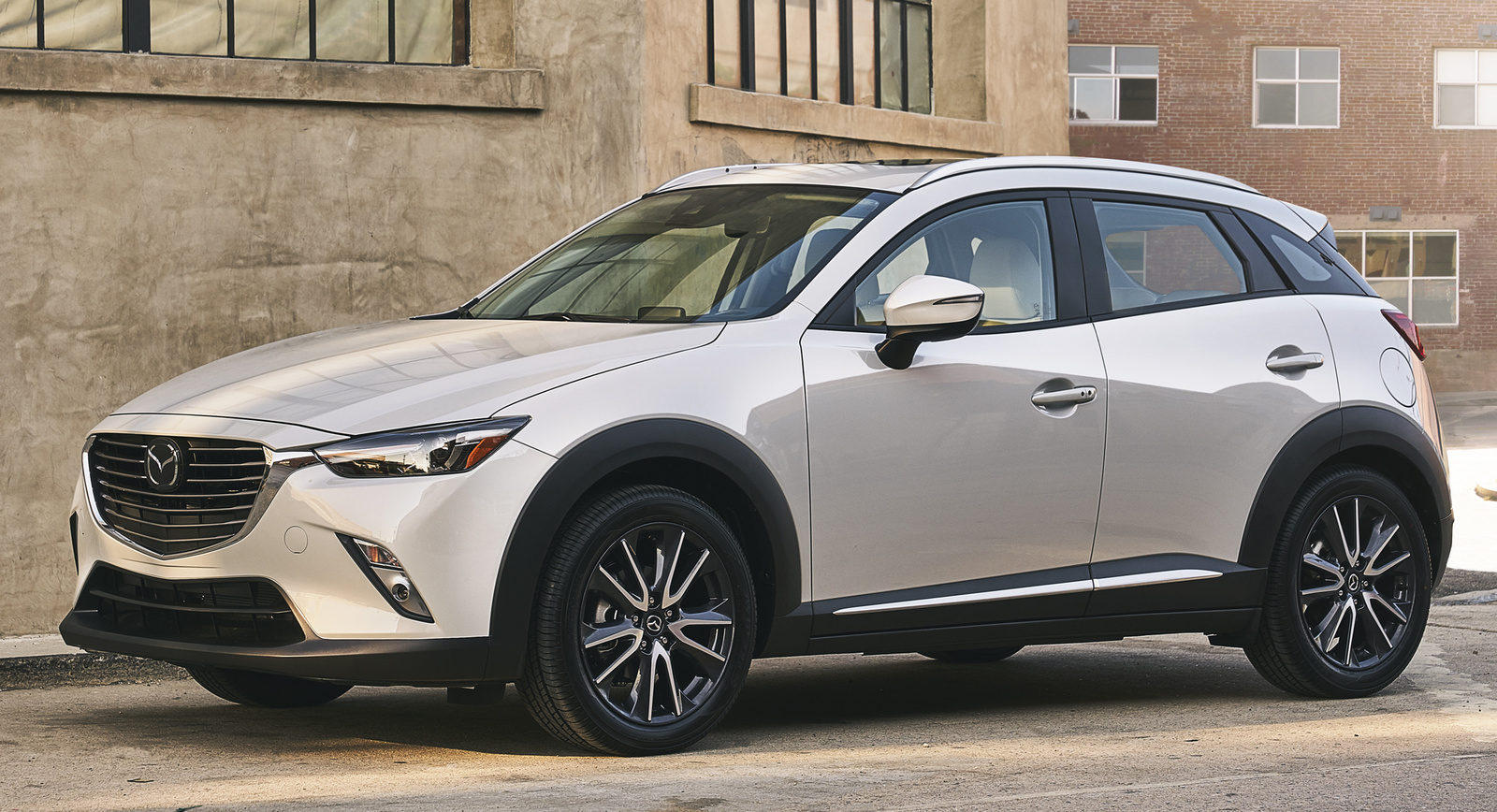
2018 Mazda CX-3
If most of your driving happens on paved roads, the 2018 Mazda CX-3 is well worth your attention. It offered impressively sharp, responsive handling that could give some sporty hatchbacks a run for their money — particularly from the 2018 model year onward, when Mazda introduced its G-Vectoring Control technology to the CX-3. The 146-hp engine provided adequate acceleration and excellent fuel economy. The front-wheel-drive (FWD) version returned 29 mpg city, 34 mpg highway, and 31 mpg combined, while the all-wheel-drive (AWD) model was nearly as frugal at 27 mpg city, 32 mpg highway, and 29 mpg combined.
Inside, the 2018 CX-3's cabin punched well above its price point. The upscale, minimalist dashboard felt more at home in a sports car than a compact family hauler. The CX-3 featured a hybrid infotainment interface: touch-operated when the vehicle was stationary, and controlled via a rotary dial in the center console while moving — a setup reminiscent of what you'd find in a luxury vehicle.
Read our Review of the 2018 Mazda CX-3
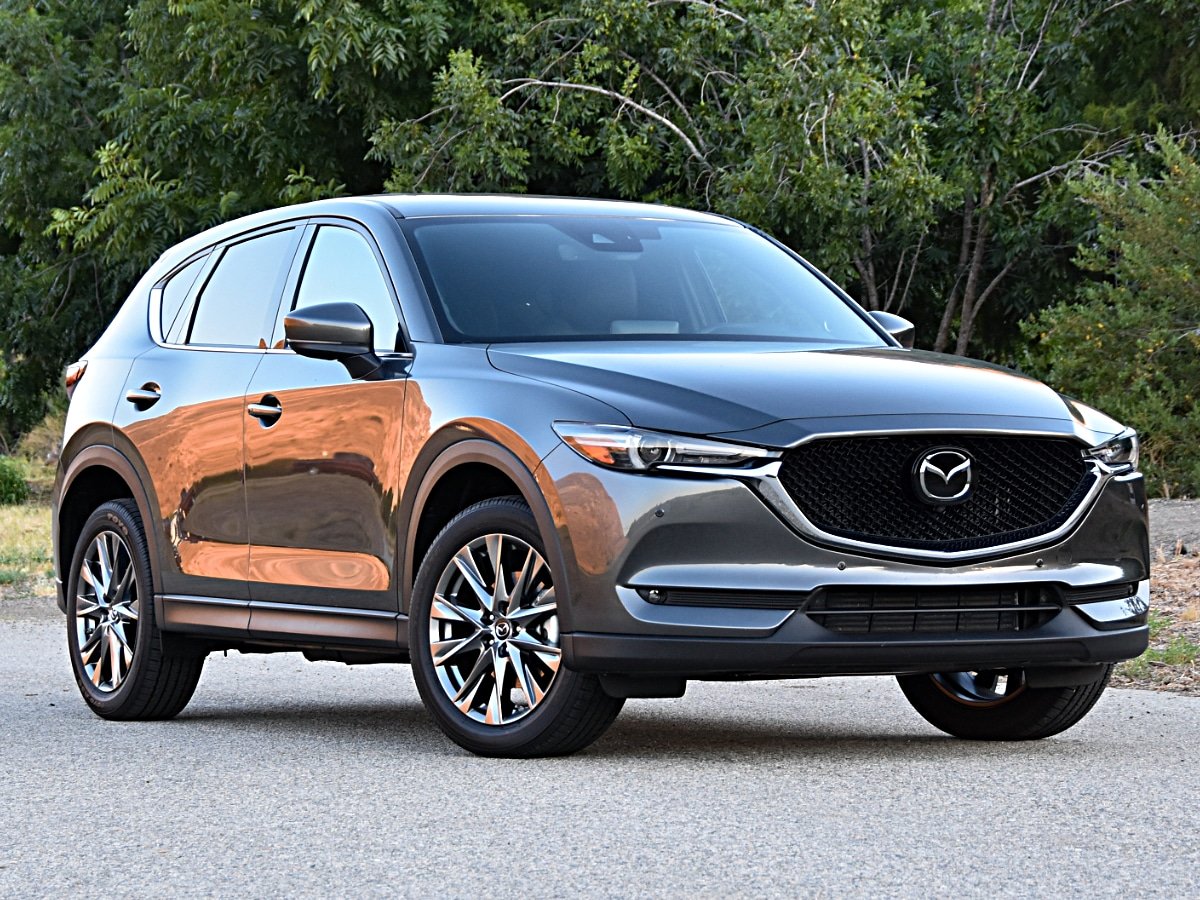
2020 Mazda CX-5
Much like its smaller CX-3 sibling, the 2020 Mazda CX-5 delivered polished performance and a premium interior experience. The CX-5 was fully redesigned for the 2017 model year, and by 2020 it had matured into something of a bargain luxury vehicle. As a used compact SUV, the 2020 CX-5's design still reads as fresh and sophisticated — and it's the kind of styling that should continue to age gracefully. The exterior is clean and contemporary, though the prominent C- and D-pillars do compromise rear and side visibility to some degree.
Cargo space was arguably the CX-5's weakest attribute, but it more than compensated with its exceptional cabin quality. The seats were genuinely supportive and comfortable, and the fit and finish rivaled vehicles commanding significantly higher prices. The MazdaConnect infotainment system used a rotary dial in the center console, echoing the approach taken by premium European brands. The CX-5 also delivered confident acceleration and handling dynamics more commonly associated with a luxury SUV than a mainstream compact. For 2020, Mazda made its i-Activsense suite of advanced driver-assistance systems standard across the entire trim lineup.
Read our Mazda CX-5 Buying Guide
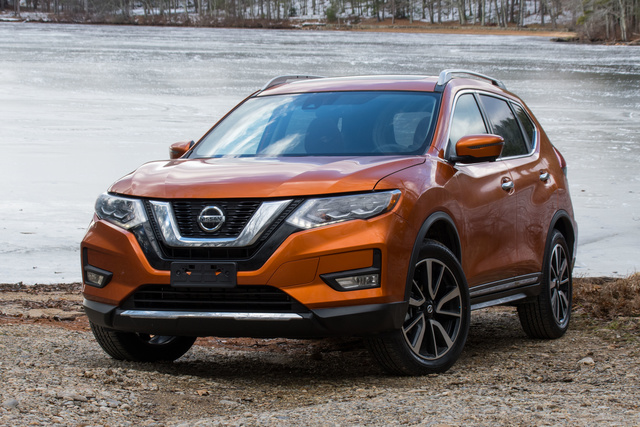
2018 Nissan Rogue
Few compact SUVs can rival the 2018 Nissan Rogue when it comes to passenger and cargo flexibility. It stood as one of the only compact SUVs available with an optional third row of seats. For buyers who only need two rows, the Rogue's 70 cubic feet of cargo space placed it firmly among the class leaders. The third row was tight but workable in a pinch, while the first and second rows offered generous head- and legroom for everyday use.
The 2018 Rogue's control layout was refreshingly user-friendly, with physical dials for the radio and climate system positioned exactly where you'd expect them. There was a noticeable price step between the 2017 and 2018 models, but it was justified: Nissan added standard Apple CarPlay and an expanded suite of advanced safety features for 2018. If those are important to you, the 2018 model is the clear target. If not, the 2017 Rogue still represents solid value and includes several meaningful driver-assistance features, among them adaptive cruise control and automatic emergency braking.
Read our Nissan Rogue Buying Guide
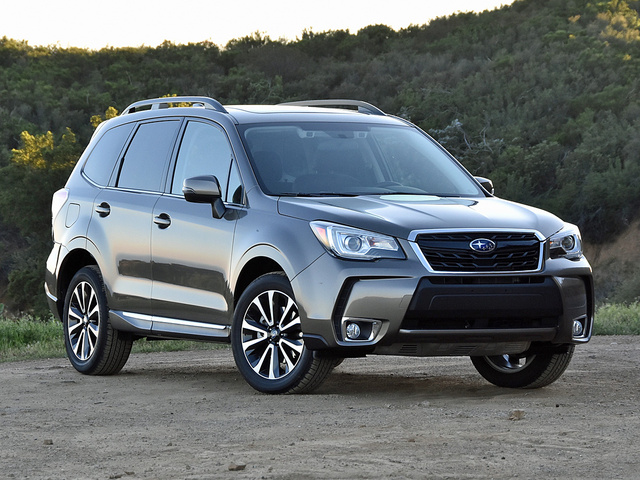
2017 Subaru Forester
The 2017 Subaru Forester was engineered with practicality as its guiding principle. It came standard with AWD, off-road-ready 8.7 inches of ground clearance, and a class-competitive 74.7 cubic feet of cargo space. The function-forward interior delivered generous headroom and legroom in both rows of seating. The dashboard wasn't the most visually exciting design on this list, but it offered plenty of practical storage and an intuitive layout that made everyday use effortless.
A few other models here have an edge on fuel economy, particularly when comparing against the available 250-hp engine option. This generation of the Forester came standard with a touchscreen infotainment system and offered a comprehensive array of driver-assistance features, including forward-collision avoidance, lane-departure warning, adaptive cruise control, automatic high beams, reverse automatic emergency braking, and blind-spot monitoring.
Read our Subaru Forester Buying Guide
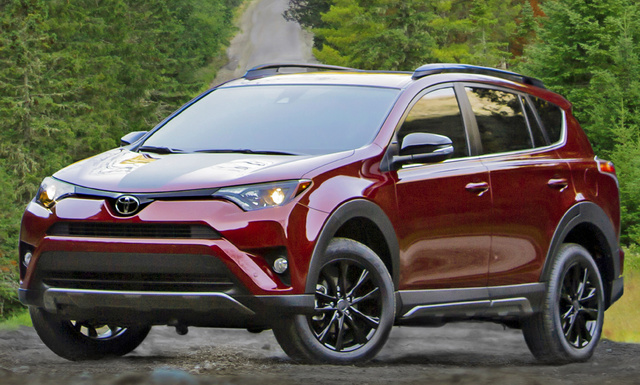
2017 Toyota RAV4
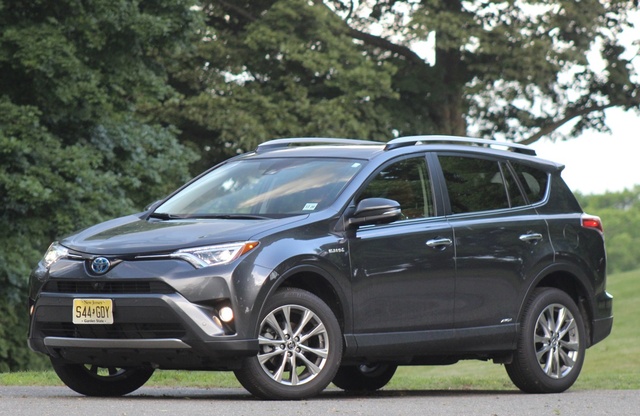
The 2017 RAV4 delivered an impressive 73.4 cubic feet of cargo space alongside one of the most spacious rear seats in the compact SUV class. The top-tier Platinum trim even offered a motion-activated power liftgate, making it a natural fit for rideshare duty or road trips with four adults on board. Toyota's hard-earned reputation for long-term reliability also makes this one of the most dependable used SUV choices you can make.
The 2017 RAV4 came standard with a 176-hp four-cylinder engine that struck a sensible balance between performance and fuel efficiency. This was also the first model year to include Toyota Safety Sense as standard equipment — a comprehensive driver-assistance package that bundled forward-collision avoidance, lane-departure warning, adaptive cruise control, and automatic high beam headlights, among other features. If modern safety technology is high on your priority list, any 2017-or-newer RAV4 is worth a serious look.
Other small SUVs in this price range worth considering include the Jeep Cherokee, Ford Escape, and Hyundai Tucson, but it's worth avoiding Chevrolet SUVs from this era due to documented quality concerns — specifically the Chevy Equinox and the first-generation Chevy Trax.
Read our Toyota RAV4 Buying Guide
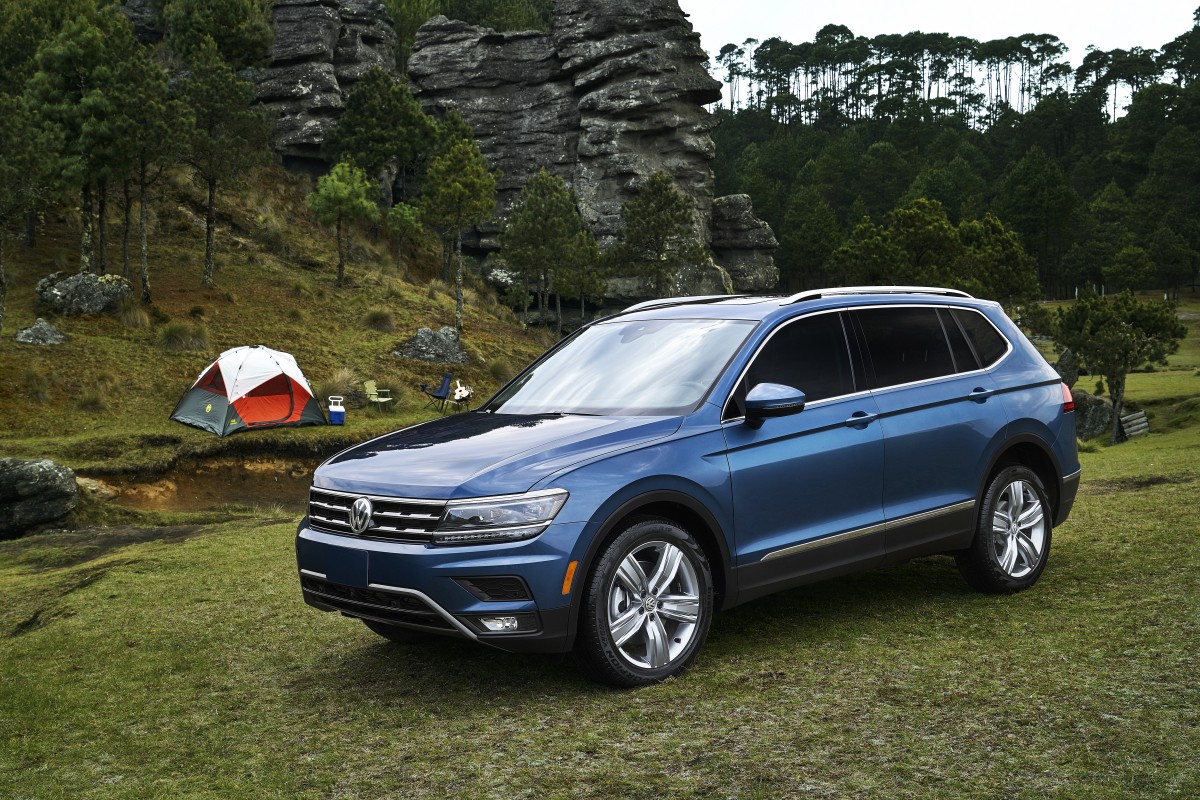
2019 Volkswagen Tiguan
The 2019 Volkswagen Tiguan brought a compelling combination of qualities that set it apart from the competition. It offered distinctly European crossover sensibility, with a tastefully understated interior and a clean exterior design that has aged just as gracefully as it looked when new in 2019. It also came paired with a capable turbocharged four-cylinder engine, available 4Motion AWD, and a ride quality that was consistently comfortable and composed.
What truly distinguished the 2019 Tiguan from its rivals, however, was its available third row of seats — a feature that was virtually nonexistent in the compact SUV segment at the time. For most shoppers, accessing a third row meant stepping up to a midsize SUV or committing to a minivan, which made the Tiguan an unusually practical and versatile option in its class.
Read our Volkswagen Tiguan Buying Guide
Search for Volkswagen Tiguan
See all
The Best Used Small SUVs in 2026 FAQs
What is the best used small SUV to buy?
There's no single right answer, but the 2017 Toyota RAV4 and 2020 Mazda CX-5 stand out as especially well-rounded picks. The RAV4 offers Toyota's legendary reliability, generous cargo space, and standard safety technology, while the CX-5 delivers an upscale interior and confident driving dynamics at a mainstream price. The best choice ultimately depends on your priorities — whether that's practicality, driving enjoyment, or long-term dependability.
What model year should I look for when buying a used small SUV?
The article recommends casting your net back to at least the 2017 model year, as that's when many small SUVs matured significantly in terms of features and refinement. Many 2017 and newer models came standard with driver-assistance technology and Apple CarPlay or Android Auto connectivity. Some low-mileage examples from this era may even still be within their original factory warranty periods.
Which used small SUVs are best for families who need extra seating?
If you need more than five seats but don't want to move up to a midsize SUV, the 2018 Nissan Rogue and the 2019 Volkswagen Tiguan are your best bets — both offered an optional third row of seats, a rare feature in the compact segment. The Rogue also delivered up to 70 cubic feet of cargo space in its two-row configuration, making it one of the most versatile options in the class. The Tiguan added European styling and a turbocharged engine to the mix, giving it a distinct character alongside its practical credentials.
Which used small SUV is the best choice for off-roading?
The 2019 Jeep Renegade is the standout pick if you plan to venture off the pavement, particularly in Trailhawk trim. That version came equipped with skid plates, an upgraded four-wheel-drive system, and additional ride height compared to standard models. The 2017 Subaru Forester is also worth considering, as it came standard with all-wheel drive and a capable 8.7 inches of ground clearance.
What Makes CarGurus Best Cars Guides Different?
Most car-shopping websites publish lists of the best cars across a variety of categories, with recommendations generally driven by editorial expertise. Here's what makes ours different: In addition to the insights and verdicts of our team of car-testing experts, our best cars guides take into account other factors that we know matter to buyers-real owner experiences and current market value.
Our expert reviewers are among this country's most trusted automotive journalists, also writing for publications including US News and World Report, Edmunds, Digital Trends, J.D. Power, and Car & Driver. They put each car through real-world testing and create detailed reviews of performance in a range of categories, from practicality and driving manners to cost-effectiveness and safety.
We also analyze hundreds of thousands of used car listings on CarGurus.com to track which models consistently offer the highest percentage of best deals relative to how many are listed for sale. Then we factor in reviews from owners-people who actually live with these cars every day. Our proprietary Best Cars algorithm then creates a final Overall CarGurus rating combining expert scores, user reviews, and the percentage of listings that have earned the Good or Great Deal rating. This multi-pronged approach reveals not just which cars excel on paper, but which ones deliver satisfaction and value when you're ready to buy.
The CarGurus market data used in this guide was last updated in July 2026. Values were accurate at time of publication and should be used as a guide only.
Shopping Tools
Related Topics